In many ways, 2020 has been a strange year. With cinemas closing, subsequently re-opening in a limited window and the genuine safety concerns of returning to them: watching newer movies has been a frustrating experience. This is even without considering the fact that a lot of films have been delayed due the pandemic. With this in mind, I abandoned trying to ride the awkward wave of newer releases. Instead, I decided to treat the blog as a blank canvas for some of the nutty post ideas I’ve had. These have varied from posts about film music, themed months and some top five lists thrown in for good measure. As a result, I’ve not seen as many newer titles, and in good conscience, I could not present a typical top ten list.
However, here’s my top five films of 2020. What are your top films of 2020? Did you see any at the cinema? Let me know in the comments below.
5) Uncut Gems
Uncut Gems is an alarming experience. Watching the film is akin to being a third wheel on a date where you feel uncomfortable being around the general chaos going on from all corners off the screen. However, the Safdie brothers commendably mix the film with non-actors and veterans to make this sleazy and disconcerting world feel raw and real. Combined with some chilling tension and Adam Sandlar’s electrifying central performance, Uncut Gems is a film that I will not be forgetting any time soon.
4) Soul
Pixar’s latest is a charming and often amusing tribute to life. It’s about the sense of blues that kick in when you’ve reached the end of a goal. It’s also about appreciating the small throwaway aspects of our lives that we often take for granted. Aside from these aspects, Soul is remarkable in how it harmonises Jazz with its central theme, and its use of animation in depicting some of our most blissful moments.
3) Parasite
Bong Joon-ho’s Parasite more then lives up to its Oscar and Palme d’Or prestige. The film captivates with its story of an impoverished family working in the employ of an upper class family. It also features a darkly comedic edge, and potent relatability that in its best moments, cosmically illustrates how the best laid plans are sometimes to no avail.
2) The Lighthouse
However you choose to interpret The Lighthouse, there’s no denying it’s power to enthral and disturb. It’s a film that does not walk the tight rope of convention but instead runs at its own frantic and strange pace. It also cements Robert Eggers as a director, who’s able to chart lengthy excursions into the dark corners of the human psyche, with flair and ease.
1) The Invisible Man
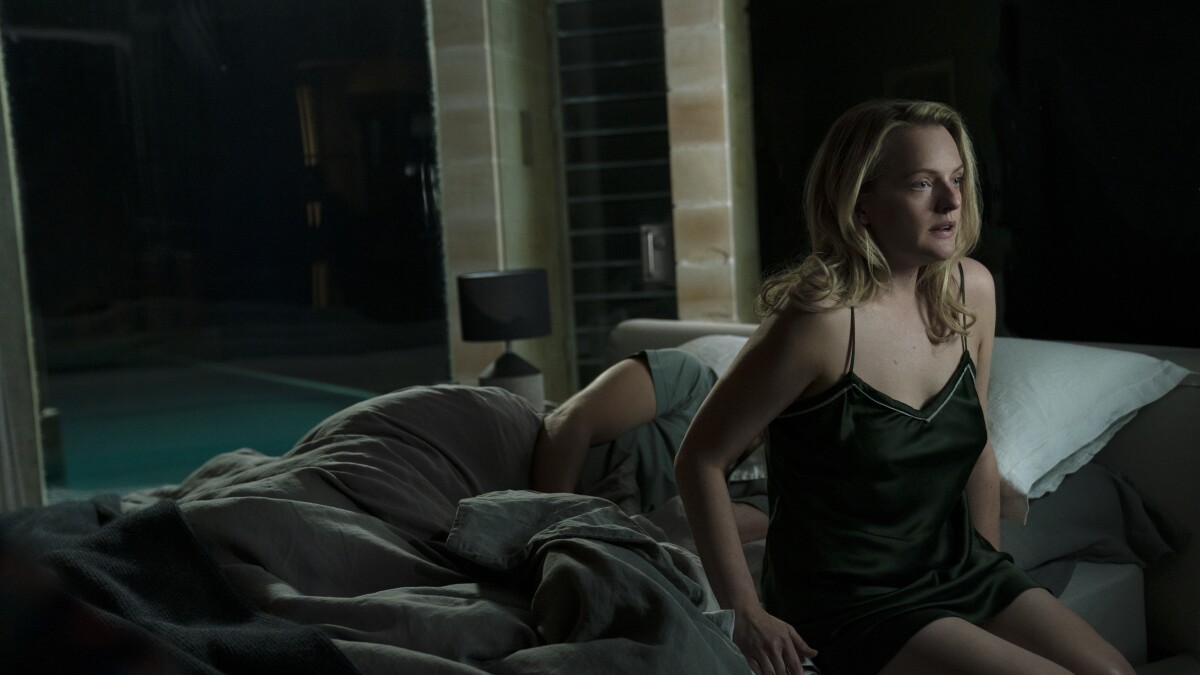
The Invisible Man is a fresh and engrossing interpretation of a classic premise. It’s made by someone who understands the genre’s blurred lines between horror, comedy and the victim and killer vantage points. The fact that it’s never satisfied with indulging in one of these exclusively is remarkable. But it’s even more commendable for illustrating the genre’s ability to depict fears, that largely go unseen in life. It was also the last film I saw on the big screen. More than anything I’ve seen this year, it powerfully spoke to why the cinematic experience needs to be preserved. There’s nothing like collectively taking in a movie together.
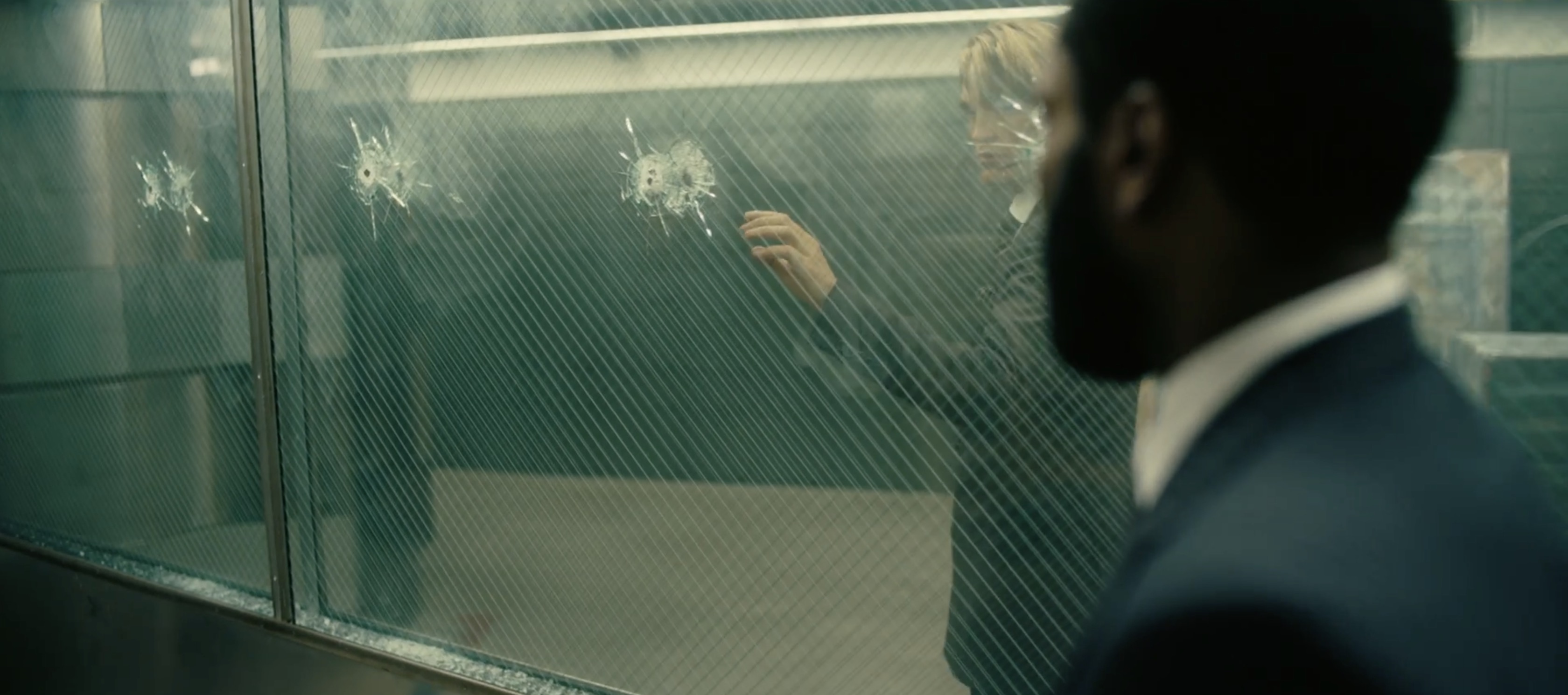
Depending on who you ask, Tenet’s release in 2020 became symbolic for something larger about the medium. At worst, it represented a trend for art to trump all adversity (even amidst a pandemic) or at best: the film that will save the cinematic experience by keeping many theatres in business. Going by the UK box office, it certainly achieved the latter to a certain degree, ruling as the number one movie for an impressive eight weeks.
However, despite this huge burden the film hoisted upon its shoulders (with the hard worn weariness of a turtle), my curiosity about Tenet came from what it says about Christopher Nolan’s style. Having made a movie backwards, elevated the comic book movie to such a degree that it ignited a whole trend (heightened realism), and depict the true cost of time on a group of scientists; Tenet had my attention.
The end result is something of a mixed blessing. Tenet is certainly engrossing, ambitious and Nolan’s most primal film. However, it’s also an effort that exposes some of his problems as a screenwriter.
Tenet is about a secret agent called The Protagonist, (John David Washington) who finds himself thrust into the world of futuristic espionage after surviving an interrogation. In his new role, he has to track down a Russian arms dealer- Andrei Sator (Kenneth Branagh) to prevent him from hatching a world annihilating plan. He does this by trying to befriend Sator’s wife- Kat (Elizabeth Debicki). Along the way, Washington’s CIA agent is allied with Neil (Robert Pattison) and Priya (Dimple Kapadia) whose insights provide him with a vital grounding about his current predicament.
On the surface, Tenet is Nolan’s closest attempt at making a James Bond film with an emphasis on globe trotting, impressive set pieces and Washington’s cool but dangerous persona. However, the story contains a “mind bending” premise that attempts to prevent the film from becoming a Bondian facsimile.
Notably, Sator has discovered a means of travelling back in time and wants to destroy the past via a series of artifacts that will trigger an algorithm that inverts entropy (the idea that time has a single direction like an arrow).
While this concept results in some spectacular sequences, particularly a series of car chases on a freeway, and a crucial moment where Sator is viewing a tense scene through the vantage point of how the audience just saw it, Nolan’s portrait of time in Tenet feels like it’s lacking.
In his previous films, Nolan’s high concepts were often married with crucial revelations that would greatly speak with an emotional truth about the human condition. In Memento, the director not only used the central character’s inability to form short-term memories to make the audience feel like they have the condition, but also make points about how we often lie to ourselves to keep going in life. Equally, in Intersteller, time is arguably the overarching antagonist. It forces the characters to assess their priorities and reflect on their losses (amid the central plan of saving humanity by finding a habitual planet).
In Tenet, the inversion of time instead comes across as a fuel for the action sequences and plot as opposed to something revelatory. To make matters worse, the concept gives rise to an overabundance of exposition that at times is poorly handled. One scene that’s particularly troublesome is when Washington’s character and Neil are sketching out a plan. The scene is scored and directed as though it’s a montage as opposed to a long scene that’s meant to impart crucial information. Consequently, vital information can be lost based on Nolan’s approach to conveying it.
The screenplay also feels overwritten with character motivations often told as opposed to shown to us. One example is the revelation that Sator is slowly passing away from Pancreatic Cancer, resulting in why he wants to take the world with him. Rather then this being an emotional moment that’s communicated from the character, it’s lumped in with other exposition to set up the climax.
Interestingly, Tenet feels closest to Sergio Leone’s Once Upon a Time in the West insofar as its subtext is concerned. There’s a potentially intriguing thread about Washington’s character, via a persistent conversation he has with Priya about his place in the mission and story at large. Conceptually, it feels like Nolan is making a primal point about the nature of storytelling, and a character’s attempt to carve an identity as the centrepiece of the narrative. However, in execution, it lacks depth and instead feels as a means to get to a clumsy final twist. This is also a far cry in comparison with Leone’s film, whose existential grappling made larger points about the genre, and the characters place in a changing America.
In spite of this, Tenet does have a few things going for it. Hoyte Van Hoytema’s cinematography is stunning. One memorable instance comes in the film’s closing moments where three characters are framed in a large circle amid the backdrop of a desert. In its colours (a chalky brown mixed with muted gray) composition and blocking, the scene evokes the iconic duel at the end of Sergio Leone’s The Good, The Bad and The Ugly. Moments like this illustrate Nolan’s deft understanding of the medium, and its power to cast larger then life imagery (even out of seemingly ordinary interaction).
Between Blackkklansman and Tenet, John David Washington has illustrated a knack for being able to show the underlying emotions that fuel his characters. Some of the actor’s best moments in the film are when these come to the fore: such as his sadness at failing his team at the start of the film or snappy line readings, hinting at his deadly side. Robert Pattinson steals the show as a British agent whose nonchalance matches the spirit of Bond actors gone by. And Kenneth Branagh proves to be a formidable presence as Sator.
Ludwig Göransson’s score is an experimental treat. Some tracks give you the impression you’re listening to a propulsive series of waves. And others wonderfully take cues from Nolan’s high concept with some parts sounding like the forward and backwards motions of time are engaged in a tense tug of war with one another.
Part way through Tenet, a character simply muses- “Don’t try to understand it. Feel it.” The line encapsulates the central problem with Tenet. Its high concept hits you at the speed of a Concorde. But it ultimately leaves you empty and unfulfilled, due to not being anchored by anything meaningful or something that has a semblance of emotional truth.
Straight up, I don’t like Jingle All The Way. It ruins the holiday spirit with a full embrace of cynical commercialism (via its plot of a father’s search for a hot new toy for his son). This is coupled with awful casting and a screenplay that does not care about its family dynamics. However, this year, I think the film does have its place as an ironic mirror, reflecting the hunt for the season’s must have items. In this way, the film is a timely reminder that it’s not worth punching a reindeer or teaming up with Sinbad to get a PS5.
4) Lethal Weapon (1987)
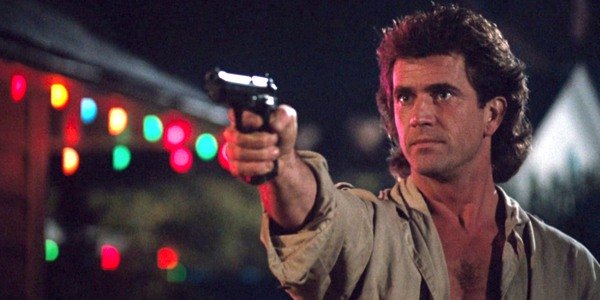
At first, you could raise your eyebrow, shake your head, and make a snorting sound of disbelief at this pick. That’s understandable. In fact, the traditional favourite movie in this spot is Die Hard. However, that film uses the Christmas setting as a backdrop as opposed to a tool to say anything meaningful about the season. By comparison, Lethal Weapon does.
It takes one of the season’s most tragic realities (the time of year where suicide is most apparent) and uses it as a backbone for the film. Suicide is not only the inciting incident that triggers the film’s narrative, but it’s also soberly depicted with Martin Riggs.
After his wife dies in a car accident, Riggs becomes committed to taking his own life (via various attempts and brash behaviour in the field). With this in mind, it could be argued that Lethal Weapon is about Riggs finding light in his life again, through friendship and the festive spirit of fellowship and family. The film also marks a start for Shane Black’s (the movie’s screenwriter) penchant for using Christmas as a backdrop for many of his movies.
3) The Nightmare Before Christmas(1993)
Ah, The Nightmare Before Christmas, a film that manages to blur the line between Christmas and Halloween. I’ve always thought of it as a Halloween movie, attempting to dress up and pretend it’s a Christmas movie for a day. The plot reflects this point with Jack Skellington wanting to oversee Christmas by dressing up as Santa and giving presents from Halloween town. In this way, Nightmare is an alternative Christmas film because it’s about an attempt from an outsider to spread the joy of the season without understanding its full ramifications.
2)Black Christmas (1974)
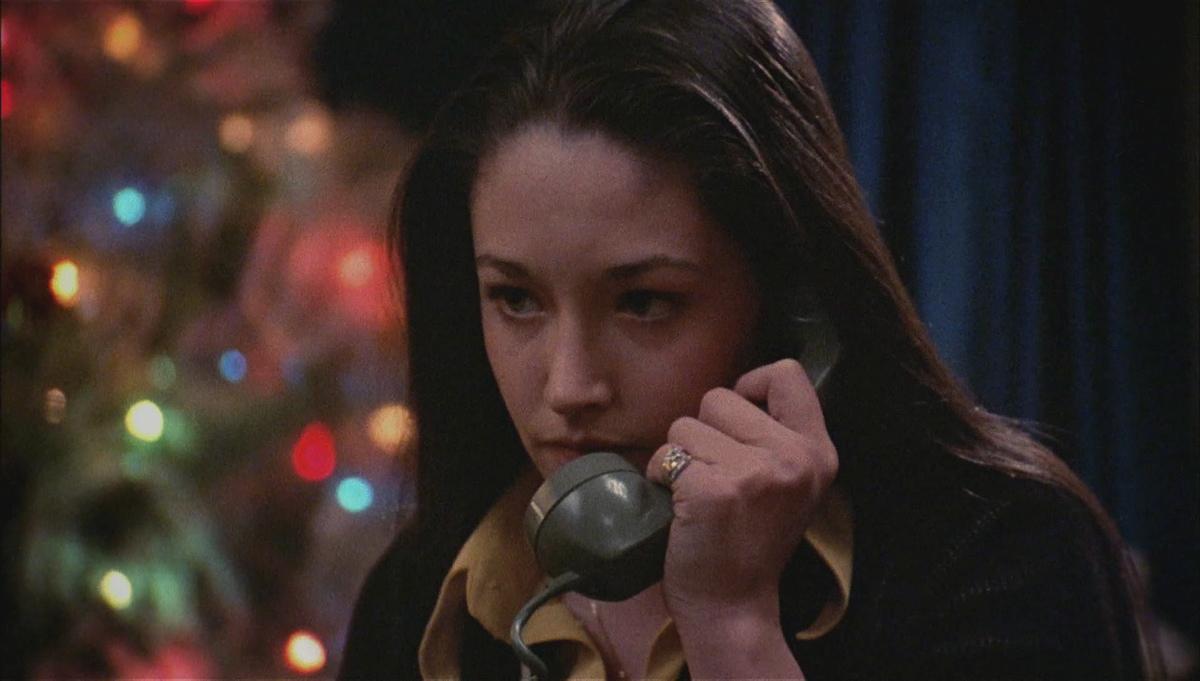
Out of all the films on this list, Black Christmas would appear to be the outlier. Sure, it’s set at Christmas but does it use that backdrop in an interesting way? I think it does. There’s potent subtext with its central couple (Jess and Peter) whose argument about whether or not to keep their baby is fascinating in the context of the Nativity Story. At the same time, it juxtaposes the innocence of the season with the cold and harsh nature of its murders. But its best trick is taking the good cheer of the season and subverting it into something alarming, elusive and scary.
1) Batman Returns (1992)
There’s nothing quite like putting a live canary in your mouth or a bit of nose biting to bring in some festive cheer. In all seriousness, Batman Returns is the text book definition of an alternative Christmas film. It takes the central aspects of the season and uses them as a canvas for something that’s unique and meaningful about the holiday.
In particular, one could interpret Tim Burton’s second Batman film as a riff on Charles Dickens’ A Christmas Carol. Penguin, Catwoman and Max Shrek all represent certain aspects of the title character. Penguin is a mirror of the orphan who lost his parents or in this instance was purposefully given up by his parents (Ghost of Christmas past). Max Shrek is a dark mirror of Bruce Wayne’s businessman persona, whose out to consolidate his power by being a metaphorical vampire with his power plant sucking power out of unsuspecting Gothamites (Ghost of Christmas present). The naming allusion to the actor who played the original cinematic vampire (Nosferatu) feels purposeful in cementing this aspect of his character. And Catwoman/Selina Kyle mirrors Batman’s vigilante side, a sobering reflection of what his crime fighting career could become (Ghost of Christmas future).
Above all, I truly appreciate Batman Returns as an alternative Christmas movie because it takes an aesthetic I love (German Expressionism) and melds it with a season that’s meant to bring and joy and cheer.
The trailer for Songbird snuck up on me with the hard hitting force of a snowball to the ear (true story). Through a conversation with a dear confidante, I was made aware of the controversy of the trailer that seemed “too real” for our current pandemic times. Naturally, this piqued my interest and made me go to YouTube with the speed of a locomotive train.
With buzz words and phrases like “COVID-23, lockdown and grim new reality”, the trailer for Songbird does hit quite close to home. However, this is not necessarily a bad thing. At its best, the horror genre can be a canvas for our fears to be projected and explored (be they realistic, supernatural or even outlandish). In turn, the best movies in the genre powerfully speak to our fears and in a sense allow us to achieve a degree of catharsis.
With this in mind, movies that deal with the pandemic should not be dismissed out of hand, in the same way that a movie like The Strangers should not be disregarded for depicting our fear of home invasion. In fact, it would not surprise me if the horror genre deals more with the pandemic in the coming years. Indeed, the upcoming Halloween Kills (sequel to the 2018 reboot) has some trace element of post pandemic subtext. In describing what the film is about, director David Gordon Green said:
“This [Halloween Kills] is more about the unraveling of a community into chaos. It’s about how fear spreads virally.”
My biggest problem with the trailer comes from its behind the scenes talent. The ghost at the feast is producer Micheal Bay. The infamous director and producer’s company (Platinum Dunes) have been responsible for insipid horror remakes such as Friday the 13th and A Nightmare on Elm Street. While there’s no source material to butcher here, Bay’s loud and regressive aesthetic can infect his producer efforts.
The true horror of Songbird could perhaps be its button pushing premise being slowly drowned out by Bay’s style. As it stands, the trailer sells a film with some intriguing elements. But will it have anything to say about our post Coronavirus world? That remains to be seen.
What’s Halloween without an anthology film to make your blood run cold? Mario Bava’s striking, colourful and dreamlike film tell stories that vary from telephone stalking to a chilling vampire tale. Aside from inspiring the name of British heavy metal band- Black Sabbath, the film had quite an effect on Quentin Tarantino. In shaping Pulp Fiction, he looked to this film, stating- “what Mario Bava did with the horror film in Black Sabbath, I was gonna do with the crime film.” In many ways, the 1963 film legitimised the horror anthology as a meaningful sub-genre that could be gripping and artful.
4) The Black Cat (1934)
Despite being a horror film from the 30s, there’s something deeply unsettling about The Black Cat. Part of this comes from the film’s understated creepiness, be it Hjalmar Poelzig’s (Boris Karloff) insidious intentions or the use of shadow. One such scene has an implied torture that particularly feels boundary pushing in the pre-code era. Boris Karloff and Bela Lugosi are electrifying in a story that pits their characters in a bitter conflict. Beneath the veneer of Hollywood respectability, Black Cat has a horrific and rotten core. The careful dance between these elements is the film’s true power.
3) The Haunting (1963)
Despite a glowing endorsement from Martin Scorsese, The Haunting has always felt like an undervalued movie within the genre. This has become even more apparent with Mike Flanagan’s dramatic and emotionally nourishing Netflix adaptation. However, the film still proves to be a excellent exercise in ambiguity (built upon the foundation of solid character work). The film’s spooky bumps in the night can either be the manifestation of the supernatural workings of its central location (Hill House). Or the product of a psychologically scared woman who yearns for acceptance and a place to belong.
2) Demons (1985)
Demons wreck shit in a cinema, with thumping metal music blaring and occasional self referential moments. Nothing much to say here. The premise speaks for itself. But in all seriousness, this is one of those trashy horror films that you’d be enticed to see because of its intriguing poster. Fortunately, Demons lives up to the promise of its foggy and elusive wrapper.
1) Prince of Darkness (1987)
I love Prince of Darkness. It’s bonkers, disconcerting and ambitious in its melding of scientific intrigue and supernatural horror. In what feels like an ode to Italian horror cinema, John Carpenter constructs a film that’s leisurely paced but potent in the evoking of its central evil. It may not be as celebrated as Halloween or The Thing, but for my money, it’s Carpenter’s most fascinating film.
Some films fill you with a feverish excitement and the ability to endlessly rhapsodise about them like a hyperactive parrot. Hellraiser is one of those films. Since I first saw it in my late teens, the film has disturbed and fascinated me.
Written, adapted and directed by Clive Barker from his novella- ‘The Hellbound Heart’, the 1987 film is about a couple who have moved from Brooklyn to England. For wife, Julia (Clare Higgins), the move represents an awakening of the past, as the house is where she had an affair with her husband’s brother- Frank (Sean Chapman). While moving a mattress upstairs- Larry’s (Andrew Robinson) hand is caught on a nail. When his blood spills on the floor panels of the upstairs attic, Frank awakens in a horrific state.
To restore his human appearance, he has to feed on strangers and absorb their blood. He makes a pact with Julia to do this to hide from the Cenobites. They’re hellish demons who respond to the call of people who summon them (via a puzzle box). Frank previously escaped from the clutches of their continual torture.
In the context of the late 80s horror scene, Hellraiser is an interesting outlier. The slasher genre was still stoking the genre’s popularity in multiplexes. And films such as Evil Dead 2 and Re-Animator were experimenting with the genre’s blurred line between horror and comedy.
Hellraiser in part represents a return to the genre’s roots as well as a bold step forward for it too. The film is fundamentally a Gothic horror picture that plays with eroticism. In fact, in its best moments, the film blurs the line between the Gothic and erotic, essentially making them exist on the same plane of existence.
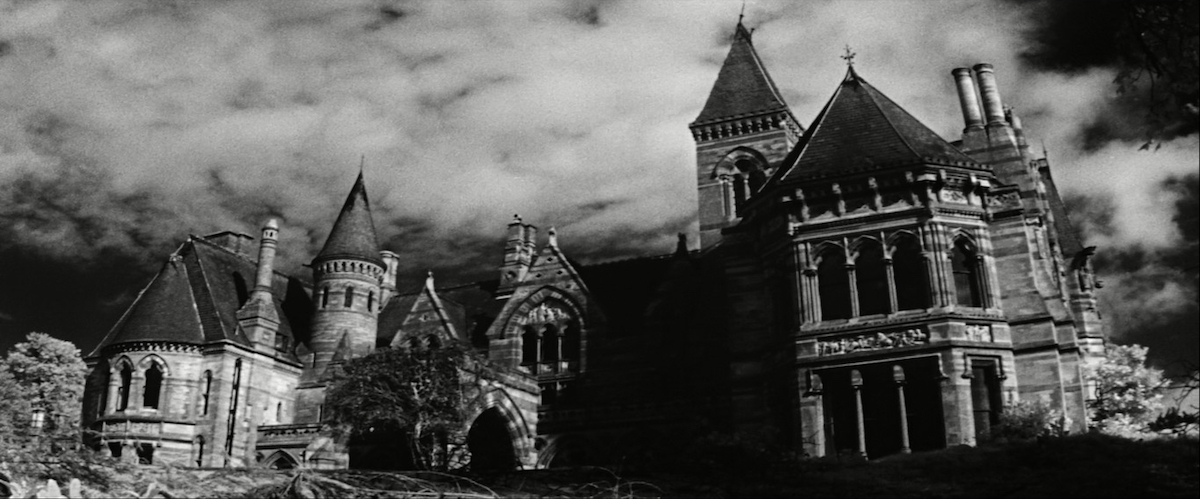
The premise of a puzzle box that promises a world of indescribable pleasure feels in keeping with the sweeping and sublime qualities of Gothic fiction. At the same time, the central house is a great inversion of the typical looming Gothic mansions that permeate the genre.
Clive Barker’s best moments of direction are when he evokes the typical elements of Gothic stories and harmonises them with the film’s erotic subtext. One moment that stands out is when Julia is engulfed in shadow at the top of a stairway.
In similar stories, there would have been something ominous about a character in this pose. However, Barker frames Julia as someone whose trying to hide the shame of sexual longing that she clings to with desperation.
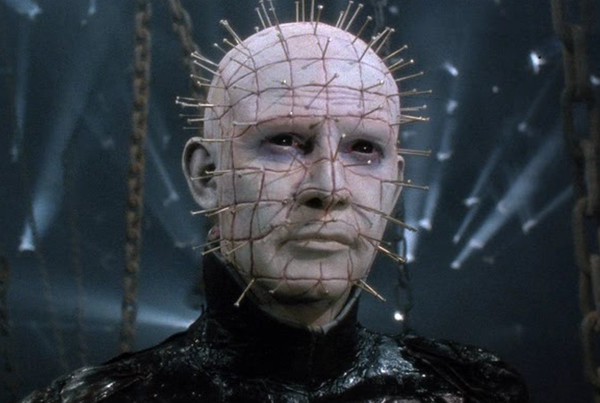
Despite the film representing the debut of horror icon- Pinhead (Doug Bradley), the character is interestingly quite limited in his screentime. While Doug Bradley casts a looming presence with his detached and forthright vocals as the lead cenobite, Clare Higgins proves to be the centrepiece of the film.
Higgins impresses in her subtle changes of character that manifest throughout the film, such as a small moment where she collects herself after a murder or her imposing physicality when confronting Larry’s daughter- Kirsty (Ashley Laurence).
Through Julia, the puzzle of Hellraiser’s appeal is unlocked with the film being about a marriage in its last throes. It becomes quite drastic that the equilibrium between Julia and Larry gets restored (albeit in a twisted way). In this way, the 1987 picture takes on a dramatic quality, with the lack of intimacy and warmness between the pair becoming quite potent and apparent to the viewer.
However, the reason that Hellraiser has resonated and stuck with me for many years is how it constructs its horror. Most films in the genre involve the protagonist being complicit in the evil that befalls them: going to a forbidden place, reading from an ancient scroll or meddling with something forbidden. On the surface, Hellraiser has this quality with Frank opening the puzzle box. But the film has this eerie quality that the supernatural is so present in the mundane that it could spill into it.
Subtle choices such as echos of Frank’s voice when Julia first walks up into the attic illustrate this. But Barker also has sequences that greatly rely on the juxtaposition between the surreal and mundane, such as a scene where a hobo eats flies while Kirsty is on shift at a local pet shop.
In this way, Hellraiser portrays the every day like a puzzle box that’s slowly being unravelled by the supernatural forces, who plie the characters with seductive promises of new sensations. But like the core of most H.P. Lovecraft stories, the knowledge and reality of such supernatural entities are inherently maddening.
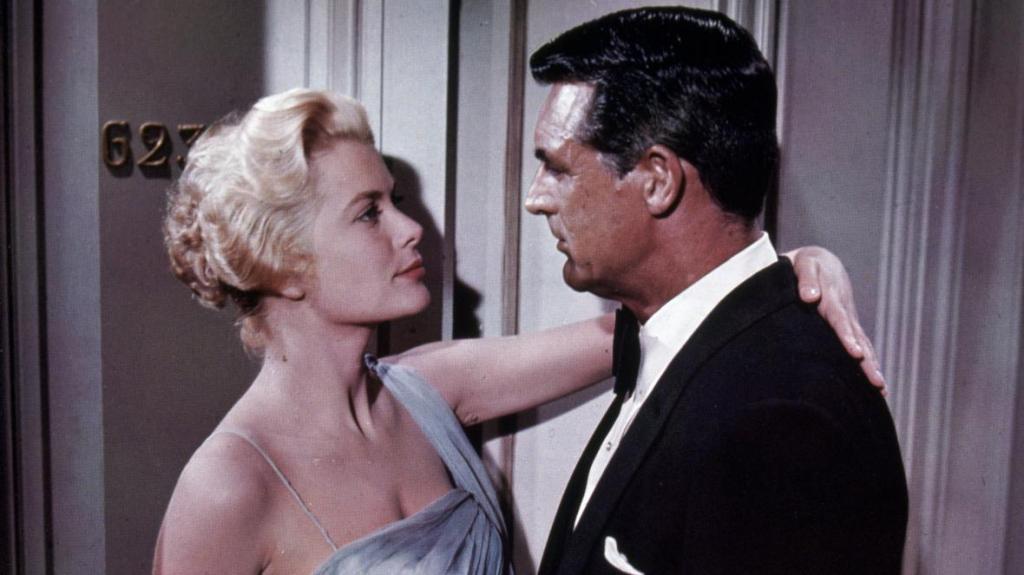
Alfred Hitchcock’s North by Northwest has been often interpreted as his version of a James Bond picture. However, To Catch a Thief is equally worthy of consideration for the crown. Cary Grant’s John Robie (a former cat burglar) has to go undercover with a fake alias in an exotic location (the French Riviera) and catches the eye of a beautiful woman- Frances Stevens (Grace Kelly). Kelly’s character has a Bond nickname of sorts. She prefers that everyone calls her Francie. Okay. It’s not a cringe-worthy name that resides in innuendo town, but it’s cute. Barring a world domination plot, an egomaniacal villain who likes to monologue, and a gimmicky henchman whose primary occupation is scowling: To Catch a Thief is a pleasant and witty primer to the Bond franchise.
Like the famous spy franchise, it’s an appealing travelogue with the lush French Riviera taking centre stage. However, unlike the franchise, it’s a heightened fantasy with much more humble ambitions. Instead of presenting an appealing lifestyle filled full of adventure, intrigue and hedonist fulfilment, Thief is about the moment to moment delights.
This comes from John Michael Hayes’s screenplay that’s filled with such wit that you could feel the writer hugging himself after each zinger. It’s intentionally catty (particularly between Stevens and her mother). But it’s also filled with joyful curiosity. The dialogue is used as a tool to tease and unmask, particularly illustrated in Robie’s and Steven’s combative but flirtatious relationship. In this way, To Catch a Thief is about the power of the encounter, meeting someone, figuring out their motives, and trying to unpick them with sharpness.
Cary Grant has always come across as the affable reluctant hero. He’s also someone who’s on the cheerier side of Humphrey Bogart in portraying his cynicism and annoyance at his plight. However, his performance in Thief is striking for its flickers of humanity. These come in moments where he’s protesting his innocence, hinting at a quiet desperation for people to understand him. But his best moment is when Stevens and a French girl he meets called Danielle Foussard (Brigitte Auber) are trading barbs and he’s caught in the middle. Stevens asks him- “Enjoying yourself, Mr Burns?” Nearly every Bond actor would have played that moment like an amorous Cheshire cat. But Grant’s facial expressions hint at a relatable awkwardness.
Grace Kelly is impressive in portraying a sense of nonchalance and scepticism that make her character intriguing. But her later moments of elation at discovering Grant’s character make the actress particularly impressive. She balances a sense of girlish glee and seductiveness in wanting to be complicit as Robie’s partner in crime.
Nowadays, we often think of Hitchcock as a cinematic auteur whose films contained strange and interesting subtext of his predilections towards his actresses (among other things). However, before this French revisionism of his work (courtesy of François Truffaut), the British director was thought of as a populist who made light fare. To Catch a Thief is an encapsulation of this pre-Truffaut mindset.
Hitchcock’s direction is playful. There’s a sense of wryness going on behind the camera, particularly in the opening robbery that’s juxtaposed with a slinking cat. Even Hitch’s trademark tension has this quality. A shotgun is set up and used as a prank to fool the audience as well as the French police that Robie is attempting to escape from.
To Catch a Thief may not hold a candle to other Hitchcock films, it’s nevertheless, spirited, enjoyable and embodies the director as a skilled craftsman of well put together features. Its screenplay and main actors lead the way in making the film charming. Along with North by Northwest, the film deserves recognition in inspiring the Bond franchise.
If there ever was a trailer that was going to make me drop everything and immediately watch (with the mad crazed energy of a chihuahua on a sugar high) then it’s the one for Denis Villeneuve’s Dune. In a year that’s been unpredictable and scary, Frank Herbert’s book series has been my one constant haven. But even before that, the David Lynch film was my pathway to my love affair with the director’s surrealist films, the music of Brian Eno and ambient music.
Remarkably, the trailer does effortlessly sell the appeal of the celebrated book series, while also providing enough for general audiences to raise a curious eyebrow. Part of this comes from the framing of the trailer. The novel’s tense and dramatic opening is the backdrop for the trailer. The protagonist (Paul Atreides) is tested by Gaius Helen Mohiam via putting his hand in a box where he will feel pain. If he removes it, he dies via a poisoned needle (referred to as a Gom Jabbar in the novel).
By showing us this scene, the filmmakers illustrate some of the things that Paul has to consider, such as leadership, legacy and what he does when he’s caught in a tough spot. At the same time, these scenes hint at some of the themes that Herbert contended within the novel, namely what differentiates human beings from animals and the inheritance of power.
For the casual moviegoer, the trailer impresses with some stunning imagery (courtesy of DP Greig Fraser). The planet Arrakis is shown in full bloom with sweeping desert vistas and intimate granular detail. But the trailer’s starker scenes, such as the one where we see a full display of military power that’s arranged in front of a tall rock formation and line of ships, particularly catch the eye. I love the scene’s use of light (via the sun) that breaks through some spots of the clouds and randomly illuminates some of the elements we see in the scene (such as the soldiers and parts of the ships).
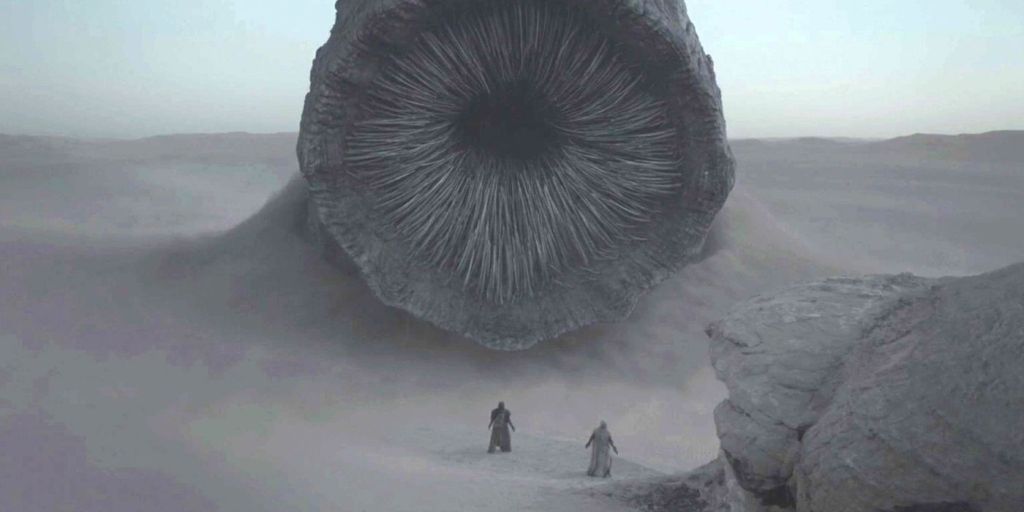
But if there’s one scene from the trailer that personifies this dance of appeal for the Dune trailer, then it’s the final one with the Sandworm. It’s a stunning spectacle, particularly when we see the creature’s full open mouth. There’s a sound design choice of a protracted intake of breath that makes me think of vintage science fiction movies (particularly Alien and 2001). A moment like this would emphasis the excitement, but there’s almost a haunting quality with this sound design choice, proving that Dune might follow in the footsteps of its genre brethren of stimulating the senses and mind.
Out of all the animated features that graced the 90s Disney renaissance, Mulan was the most intriguing. The film proved to be an interesting inversion of the Disney formula: justifying the existence of its central sidekick (Mushu) by paralleling his plight with that of the main character. The narrative also existed as a post-modern commentary and subversion of Disney Princesses (namely their place in society and the movies at large). By comparison, the 2020 live-action remake is a resplendent war epic that is allowed to soar by leaning into the realism and genre conventions of its premise.
Mulan (2020) tells the story of a young woman who is expected to bring honour to her family by being a dutiful suitor to an aspiring husband. However, Mulan (Liu Yifei) has always had boundless energy (Qi) that she’s had to suppress to conform to her station in life. However, when the Chinese Emperor (Jet Li) issues conscription for every family, Mulan takes her ailing father’s place by masquerading as a man to fight in the upcoming war. China is under threat from a vengeance filled warrior known as Bori Khan (Jason Scott Lee), who is allied with a witch called Xian Lang (Gong Li). He seeks revenge on the Emperor who killed his father.
Despite being stripped of the musical element, comedic sidekicks and occasionally goofy tone, the live-action remake proves to hold its own. This is partly due to its change in emphasis. If the original was about a woman trying to bring honour to her family in an unconventional manner, then the new movie is about what happens when society discourages potential.
This is most clearly drawn in the relationship between Mulan and Lang. The female antagonist is a dark reflection of Mulan insofar as her path shows what could happen if Mulan is rejected by society because of revealing her full self and skill as a warrior in battle. Lang’s realisation of trading societal subjugation for a loss of personal control is when Mulan’s screenplay is at its best.
But the film does manage to retain some of the original’s spirit. Harry Gregson-Williams’s score gives the tunes of the animated film an orchestral makeover that provides some of the film’s most emotional moments. And the film does lean into the ickiness that Mulan found with spending time with the male soldiers (via a recurring physical comedic joke).
As the title character, Yifei proves to be a versatile actress who is able to admirably balance the comedic awkwardness of her predicament and the dramatic moments of internal strife. Gong Li is a striking presence with her bird-like physicality and imposing costume design. Meanwhile, Donnie Yen and Jet Li add prestige and gravity to their brief roles.
At times, the film staggers into the overwrought territory. There’s an overabundance of narration from Mulan’s father, which seeks to over-explain aspects that the viewer is pretty clued in on. There’s also a magical realism motif in the form of a Phoenix who follows Mulan throughout her journey. The metaphor and continued use of the creature prove to bludgeon the audience senselessly, particularly when a character uses it as a motivational tool in the last act.
Mulan’s greatest strength proves to be a double-edged sword. Visually, the film is a sumptuous effort with some epic vistas where the characters appear like microscopic specs in comparison with the looming portrait of nature. One moment that particularly struck me was a scene when Mulan is looking at her horse on a mountain amid the backdrop of a beige twilight. The frame is engulfed with the mountainous terrain and you almost have to squint to notice the character in the top left-hand side of the frame.
Director Niki Caro also employs some breathtaking sweeping shots, quaint stop motion photography and bird’s-eye shots to cement the film’s war epic status. The imagery and filmmaking actually solve a problem that’s plagued previous live-action remakes, which is making the visuals as imaginative and absorbing as their animated counterparts.
With its striking cinematic moments, Mulan is made to be seen on the silver screen and the film loses power at home. In this way, the film is akin to a West End production, awkwardly shuffling on a small and cramped high school stage.
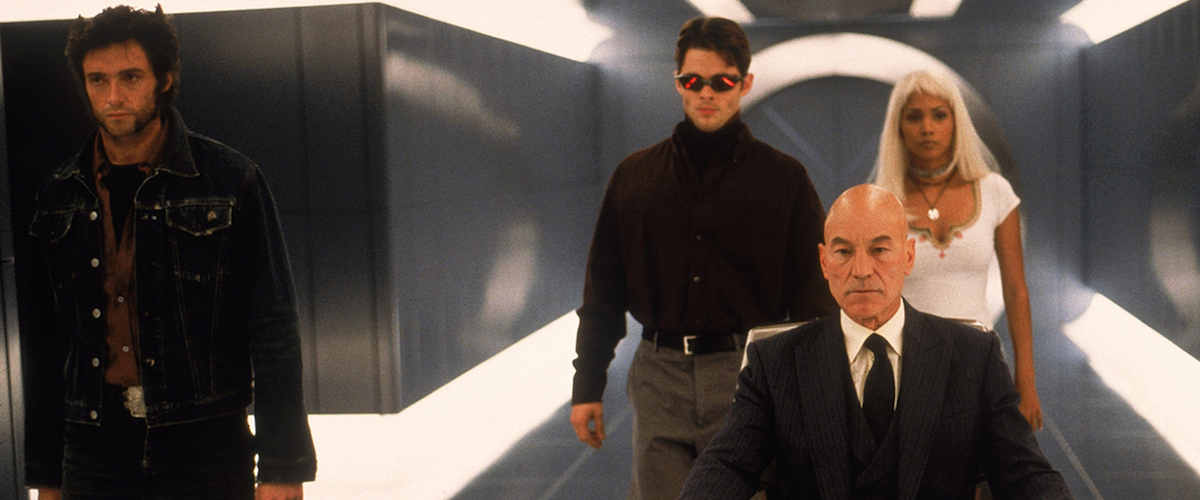
In the context of the booming comic book movie genre, returning to watch X-Men is akin to looking through old photos of yourself as a teenager. Sure, you looked goofy trying to be a goth or regret that one time you climbed up a flag pole to impress a crush, but you nevertheless understand the choices you made at that age. The same applies to X-Men, a flawed pilot that’s more interesting as a road map for the genre than a fulfilling singular experience.
The 2000 superhero film is about a bitter struggle between two mutants. Mutants are human beings who are born with powers that first manifest under highly emotional situations or in early adolescence. Charles Xavier aka Professor X (Patrick Stewart) advocates peaceful co-existence with the human race through education and understanding. Whereas Eric Lensharr aka Magneto (Ian McKellen) believes that mutants are the next stage in human evolution, who should take their place as the dominant species on the planet.
Caught in the middle are two lone mutants- Marie aka Rogue (Anna Paquin) and Logan aka Wolverine (Hugh Jackman). They attempt to find their place in Xavier’s school for gifted youngsters amongst the backdrop of the US Senate’s continual pressure for mutant registration.
Bryan Singer’s choice of a stripped down, colourless and plausible reality (with allusions to real world history) in which mutants can exist feels like a foreshadowing of Christopher Nolan’s Dark Knight trilogy. But on this viewing, Singer’s film has the closest relationship with Nolan’s Batman Begins. Just like that film posited fear as a weapon of its protagonist and antagonist, Singer’s uses fear as the main driving force of his movie.
This comes into play with the presentation of the powers. There are many sequences that illustrate the revealing of the character’s abilities as a horrific moment of self discovery, whether it’s a young Eric Lensharr’s magnetic powers being revealed as a response to being separated from his mother or the first time Wolverine unleashes his claws on a man in a bar. Singer even extends this aspect to some of the X-Men with Storm’s (Halle Berry) and Cyclops’s (James Marsden) first appearance having an ominous quality.
In fact, fear is a major factor of the plot. To end many people’s fear and uncertainty of mutants, Magneto creates a machine that will induce mutation in all the world leaders of of an international summit. The first time Magneto tests the machine results in some of the film’s most striking imagery, with Senator Kelly’s (Bruce Davison) new form being a cross between Cronenberg body horror and comic book imagery.
Ian McKellen steals the show as a central antagonist. Despite the character’s horrific backstory, McKellen plays the part with a deep seated sense of superiority and condescension, manifesting in biting asides (delivered with great comic timing) and quite pointed observations. Hugh Jackman’s performance proves to do a lot of heavy lifting. Not only does Jackman deftly play the character’s animalistic aggression and tendencies with ease, but he also plays a reluctant mentor, romantic lead and the film’s sole postmodern voice (via calling out the absurdities of the source material) remarkably well.
X-Men’s problems come from integrating aspects from the source material within the established plausible aesthetic. Some of the elements such as Magneto’s sidekicks (Toad and Sabretooth) come across as too campy to exist within the world established in the film. And the love triangle between Jean Grey, Logan and Scott Summers comes across as forced. There’s a sense that the screenwriters and Singer added these aspects as an afterthought as opposed organically integrating them. In their current form, they seem quite shallow and underdeveloped (particularly Sabretooth and Wolverine’s relationship or lack thereof).
For Singer, it would be a slow climb to embracing the colourful and melodramatic flair of the source material. But as it stands, X-Men feels like a small scale television pilot that’s laying out the table for its conflict. However, aside from Rogue and Wolverine, there’s little consideration for the other characters and their place in the larger conflict. One gets the sense that the screenwriters don’t know what to do with some of the more ancillary pieces in Magneto’s and Professor X’s seemingly eternal game of Chess.













 SGS On Film