Unlike Evil Dead Rise, Renfield has been on my radar for a bit. Beyond Nicolas Cage putting on the fangs as cinema’s favourite vampire, the premise sounded intriguing and had the potential to be interesting. Does it live up to it? Let’s find out after the jump. Have you seen Renfield? Let me know in the comments below.
Brief Consideration
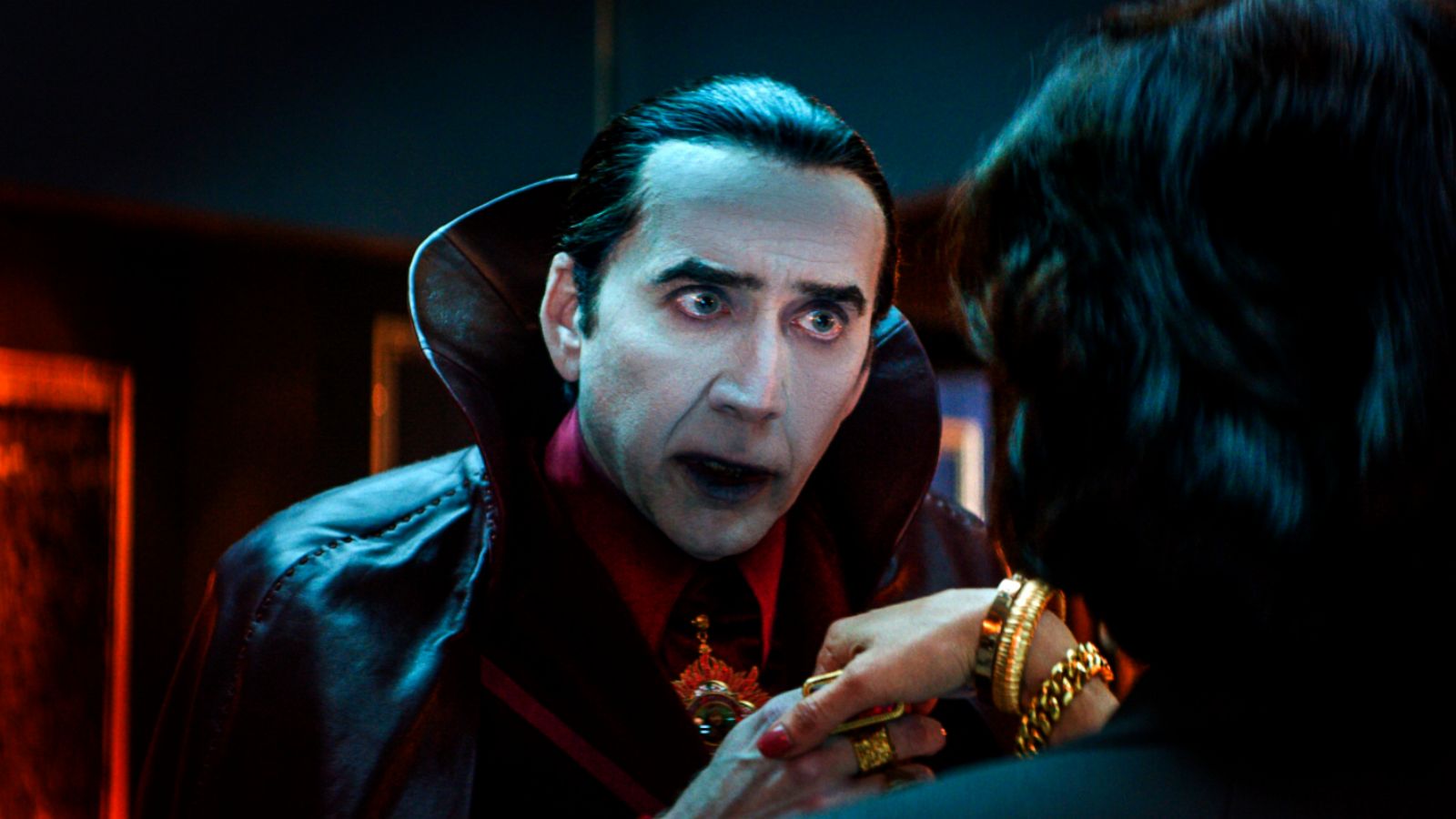
From Dwight Frye to Tom Waits, Renfield has been a zany and maddening harbinger that’s almost carried the tone of each respective Dracula film adaptation. Now in Renfield, the title character takes centre stage in an irreverent riff on Horrible Bosses. Introducing himself as Robert Montague Renfield (Nicholas Hoult), the familiar of Count Dracula (Nicolas Cage) now seeks to escape from his servitude when he starts going to group therapy and meets a brash cop, Rebecca (Awkwafina).
Renfield is a mixed affair comprised of limb-slicing gore and tiring zinging humour. While I appreciated the approach of the film insofar as portraying Renfield realising he’s in a toxic codependent relationship with Dracula, I felt the film surrounding this central journey to be so excessively tongue-in-cheek that somewhere the theme gets lost in the shuffle. Some of the jokes such as sight gags and calling out of the sheer ridiculousness of the Ying and Yang dynamic in the film are clever and funny. However, everything else is mostly delivered in the same stale and loud pitch that it ends up becoming excessive instead of cute.
Nicolas Cage makes Dracula his own by playing him like a broadly drawn theatrical agent who minimizes and tempts via various guises and exaggerated gestures. Meanwhile, Nicolas Hoult is a charming and nebbish presence with a dry wit that often takes chunks out of the scenery as much as Cage.
Much like The Lego Batman movie, Chris McKay directs Renfield with a frenetic verve via camera moves that vary from fast-moving single shots and exacting close-ups (mostly illustrated in a scene when Dracula barges in on Renfield’s support group). And Marco Beltrami’s score is a treat that mixes melancholic jazzy notes with a pulsating electric edge. But for all these virtues that attempt to paper over the cracks in a slick fashion, Renfield’s premise and theme never get to fully soar due to a flippant approach that often feels like it’s denigrating even when it tries to be earnest. In the end, Renfield hisses more then it bites.
Well, this is a little strange. No preamble. No framing of the discussion. And, let me see if I got this right, *checks notes*, an entire blog post that’s reflective in nature. Cue the Fry quote that’s been memed to death at this point, “I’m shocked. Shocked. Well, not that shocked.”
Ladies and gents, I tried. I really did try. I had enough ideas to mark my 350th blog post that they could be immortalized as chicken scratchings on a scrunched-up piece of paper that’s no doubt made a new home in a nearby mini bin. But for whatever reason, none of them clicked in place for me and I was essentially not feeling them.
However, I think it’s important to ruminate from time to time on the larger questions that can sometimes keep you up at night. And the question of why I continue writing has been on my mind lately. This year, I fulfilled two writing goals that I’ve had for a while. The first was the publication of an article in a UK film magazine (Filmhounds Magazine), which felt like a godsend after trying to hit my native market for so long. And the second was the publication of my first-ever video game review (via Horror Obsessive), which felt extra meaningful because it was for a remake of my favourite title in the medium.
Naturally, after any endeavour, there’s an understandable case of the blues, that kicks in because something you’ve been fixated on for a certain amount of time is gone. However, the feelings I sat with after achieving these two goals were scary. I felt akin to someone who had reached the summit of a great mountain and had no other rocky terrains to conquer. In other words, I hopelessly felt as though I had nothing else to say. This lasted about a week, and since then, more ideas (thankfully) have started to inspire me a lot.
But the central question has loomed in my mind since then. I guess the answer to why I continue writing is twofold. Firstly, I think it’s essential to my internet identity. Collectively, we all have an internet footprint that we choose to express, be it via photos or a daily account of our thoughts on a social media platform/blog. I’ve never felt comfortable about sharing my entire life on social media, so writing about films (among other things) is my way of making my mark on the world wide web. There’s a pride in developing a body of work that people can see.
And as odd as it may sound, I do think that it’s my legacy. I’ve never wanted kids. But I do think there are other ways to leave something behind. Fundamentally, my reviews and pieces that grace the blog, as well as other sites, are my way of doing that.
The second reason why I continue writing is the challenge. I never take the proverbial blank page for granted, and sometimes it is a struggle to get what you’re feeling on paper. But it’s something that I do my utmost to not shrink from at all. Self-expression (via the written word) is essential and something that requires constant attention, like preparing a well-cooked meal or looking after a plant.
More than ever, I want to thank each and every one of you who has read, commented or liked my posts over the years. It’s never ceased to be appreciated. And I hope you continue to join me on this crazy blogging ride. When time permits, I’d like to return to long pieces as well as experiment with some new segments and themed months.
Hey everyone. It’s really been a while since I last blogged. Apologies for that. Work has been the busiest it’s been in quite some time. And I was working on something (that I will mention soon). But the time off has given me a lot to think about. Suffice to say, I will try from now on to deliver on the posts that I want to see. It’s easier said then done but writing for others has made me lose sight of that simple notion. There’s no point in just sprucing up your house when guests come along, you have to maintain it at all times. The same could be said for my upkeep of the blog and writing (at large at the moment).
But terrible metaphors aside, let’s get to the film of the day. I tend to say this about a lot of films these days, but Evil Dead Rise has truly felt as though it has snuck up on me. While I’ve had the idea of this film in the back of my mind, it’s only in the last few weeks that I became acutely aware of its existence. I even embarrassingly forgot to include it on my top ten most anticipated films of 2023. To quote the Pharoah from YGOTAS, “Dick move, bro!” So, with that said, have you seen Evil Dead Rise? If not, are you planning to see it this weekend? Let me know in the comments below.
And if you like my ramblings on horror then you can read more at my second home, Horror Obsessive. My recent post on there is a review of the remake of Resident Evil 4. It’s my first ever video game review and a genuine labor of love for a title that’s meant a lot to me.
The Evil Dead was a formative horror movie for me. When I saw it at age 18 during my first year of University, I was shocked by its purity as a horror movie in the sense that most movies within the genre play by the rules of set-up and characterization. However, much like a rabid and rage-fueled dog, the 1981 picture unshackled itself from all that pretence and delivered an unrelenting ride of low-budget thrills and scares. Despite the infamous sequence (involving the tree) that arguably got the film on the Video Nasty list in the UK, I never found the movie to be mean-spirited or nasty for the sake of it. Instead, director Sam Raimi had the puckishness of an adolescent who wished to say he got the audience good.
It was this quality that came to define later entries. Evil Dead 2’s semi-remake nature was imbued with a comedic edge that brought a great deal of zaniness and love of early cinema. It’s an effort that greatly carries a certain history of the medium. Army of Darkness is an outlier insofar as being a vehicle for Bruce Campbell to schmooze his way through a Medieval England that feels at home in an early Terry Gilliam movie. And the 2013 remake is a slick and dramatic retelling of the first film. It’s remarkable for arguably being an elevated horror movie, with its depiction of the blurred line between Mia’s (Jane Levy) drug withdrawal and demonic possession.
The fifth Evil Dead confidently rises to the occasion of its franchise legacy with an entry that emphasizes the sheer psychological terror of its domestic and familial setting.
Evil Dead Rise tells the story of Beth (Lily Sullivan), an indie music technician who returns to see her sister, Ellie (Alyssa Sutherland), who is raising three kids by herself. They are youngest daughter, Kassie (Nell Fisher), middle child, Danny (Morgan Davies) and eldest daughter, Bridget (Gabrielle Echols). After surviving a mild earthquake, Danny finds an ancient book hidden beneath the depths of his high-rise home. Little does he know that the records of passages from the book hold a sinister curse that will bring ruin to his family.
Part of the uniqueness of the Evil Dead franchise is that each instalment is a riff on its simple premise of demons being summoned via the Necronomicon (aka Book of the Dead). Much of my delight during the movie came from sequences that played on familiar notes in new and unique ways.
From the protracted opening fast-motion demon point of view shot to the possession scene taking place in a lift, Rise easily subverts the standard tenants of the franchise. But the emphasis in the subversions made the experience interesting.
Rise has a tactile quality that makes its horror quite appealing. In fact, this aspect is best illustrated in the scenes where characters are listening to records of the Book of the Dead being found while gently massaging the center of the vinyl to keep the audio logs going. This also extends to the setting that’s creatively used.
The typical trapping of the central demon being locked in the cellar by the survivors is updated here to be outside an apartment. And our glimpse of the creature comes from a small mirror built into the front door. These point-of-view shots whereby we’re seeing the demon unleash upon unsuspecting neighbours embrace the found footage genre that ruled the early 2000s. Along with gnarly imagery later in the film that evokes the body horror of the Human Centipede, Rise is on the pulse of the horror that fueled it, much like the early cinematic comedies that inspired Sam Raimi’s 1987 sequel.
But beyond its tactile and subversive power, Rise comes closest to the psychological horror that’s lurked beneath the surface of the famed horror franchise. This comes from the domestic situation that’s presented to the audience. By having Ellie as the central victim of demonic possession, Rise plays on the primal fear of maternal harm and spurned affection. This quality is juxtaposed with Beth who is about to become a Mum and now has to rise to the challenge of looking after and protecting her sister’s kids.
In fact, in the movie’s most touching moment, Kassie says to Beth that she will be a great Mum because she knows how to lie to kids. The screenplay has many moments like this that do not talk down to kids but instead realistically shows how they can pick up on the stressed emotions going on around them. Writer/director Lee Cronin punctuates these heartfelt scenes with moments that are directed as though some of the demons are the figment of a feverish childhood dream. One memorable scene is when one of the demons (covered in blankets) floats across the space like a ghost. Cronin’s use of long shots give these scenes an eerie edge.
Cronin juxtaposes this with visceral camera moves whether it’s sped-up footage of Beth running to save Kassie that’s meant to evoke the frenetic demon point-of-view shots or shaky first-person shots that end the movie. Lily Sullivan is appealing as a determined mother to be, who will stop at nothing to protect her nephew and nieces. And Alyssa Sutherland is terrifying in her flickering states of being an attentive mother and a monstrous demonic presence.
If there’s one problem that permeates the movie it’s some of the sound design that occasionally drowns out the dialogue. And many scenes do rely on an annoying problem that plagues many modern horror movies namely using loud noises to deliver their scares. While Evil Dead can somewhat get a pass on this based on the over-the-top nature of its prior instalments, I still found it tiresome that Rise constantly attempts to break the sound barrier.
Emotionally soapy preamble alert! This blog post marks my final review of The Last of Us Season 1. I want to thank everyone who has read, liked, and generally engaged with the posts. It’s been an experiment of sorts, and I’m glad you’ve all shown up for the ride. Have you seen Episode 9 of The Last of Us? If so, what did you think? Let me know in the comments below.
Review
Given my criticisms of last week’s episode (namely the truncated run time and handling of David’s character), I approached the season finale with a mild bit of caution due to it having the shortest length of any episode. However, my misgivings proved to be all for nought. Episode 9 is a powerful and poignant ending for the series.
Joel and Ellie find themselves on the last leg of their journey. After a peaceful and nature-bound excursion, the pair find themselves captured by the Fireflies. Upon waking, Joel finds out a dramatic truth about Ellie’s fate and must decide whether to save her or leave her behind. The result of the latter means possible earth-shattering consequences for the remaining humans in the country and world.
The episode’s opening depicts Ellie’s mother, Anna (Ashley Johnson), giving birth and subsequently giving her daughter to the leader of the Fireflies, Marlene (Merle Dandridge), after being bitten by an infected.
Aside from being a mirror for Joel’s actions insofar as the lengths he would go to keep Ellie safe and alive, the opening is an emotionally touching piece of metatextual casting. Ashley Johnson did the motion capture and vocals for Ellie in the original game, and for her to give birth to the show’s incarnation of Ellie is profoundly moving. Johnson captures the almost feral quality of her daughter in subtle movements and physical gestures.
I’ve really liked the arc of Pedro Pascal’s Joel in the series, going from someone who closes himself off (emotionally) to someone who is almost bursting with warmth and empathy. Pascal’s quiet desperation to almost express everything to Ellie is heartbreaking to watch. It makes the violence he commits to saving her quite tragic as he’s expressing how he feels about her in the only way that makes sense to him (and perhaps the only way he can).
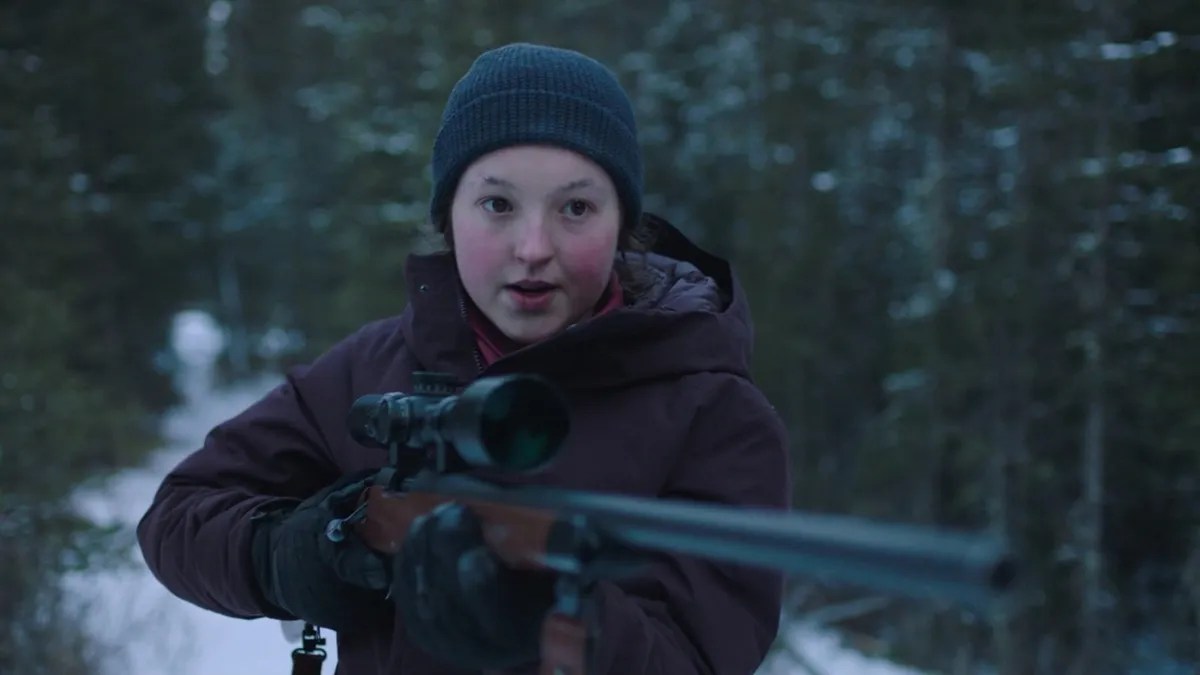
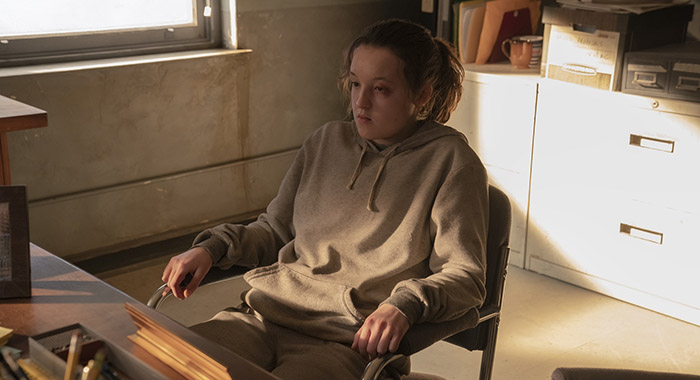
However, Bella Ramsey steals the episodes in a melancholic turn as a character who is burdened by the guilt of surviving an ordeal that could have saved millions of lives. In translating her character from pixel to screen, Merle Dandridge brings a steely authority that suggests a softer side to the choices she has to make.
Cinematically, the episode impressed me, whether it’s Joel’s prolonged montage of violence or a naturally lit medium shot where a ladder is dropped from a great height. Gustavo Santaolalla and David Fleming’s score was quite effective too, particularly during the Joel montage, which bridges the gap between a pulse-pounding Carpenter-esque score and a lamenting version of the main theme, which attempts to be heard through the mayhem.
Compared to a lot of other movies in recent years, Scream VI is a movie I’ve genuinely been hyped for. Part of this is still some post-pandemic effects insofar as still being thrilled at going to cinemas (after nearly two years). At the same time, Scream is a series that I have grown to appreciate and have a lot of affection for. With that said, have you seen Scream VI? Let me know in the comments below.
And as alluded to in my Scream 3 review, I will very soon be having a piece published in Filmhounds Magazine about Scream VI. I examine if New York City will work for the horror sequel through the prism of other Big Apple based horror movies as well as the use of LA and Hollywood in Scream 3. Once the issue goes on sale, I’ll link to it in a future preamble.
Review
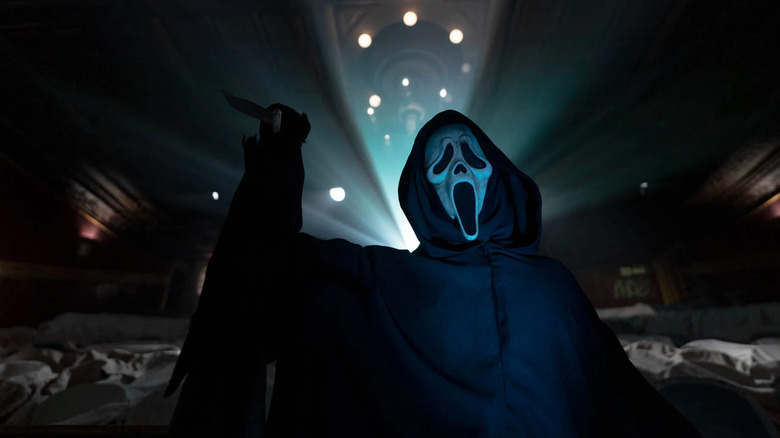
Scream is no stranger to a larger city. Its use of LA and Hollywood in the franchise’s second sequel, Scream 3 (2000) engaged as a meta-commentary on the horrors of an industry that had hidden and perpetuated a cycle of abuse. With that in mind, the famed self-referential horror series foray into the Big Apple proves to be a mixed blessing. In fact, Scream VI does little to move the needle on commentary for the genre at large, opting instead to reflect on its internal mythology and coast on impressive set pieces.
Picking up a year after the events of Scream (2022), Tara Carpenter (Jenna Ortega) has moved to New York for college with her friends and survivors from the last movie, Chad Meeks (Mason Gooding) and Mindy Meeks (Jasmin Savoy Brown). Meanwhile, Tara’s half-sister, Sam (Melissa Barrera), is finding it difficult to come to terms with her recent experiences, with a revolving door of therapists and a paranoid eye on her sister’s wellbeing. Things become complicated when a new Ghostface (voiced by Roger L. Jackson) starts a murder spree in the Big Apple.
By its own admission, Scream VI is a sequel to a requel (or sequel to the legacy sequel), which is pitched as something unpredictable because it’s working within the confines of a larger franchise and no longer following traditional sequel rules. Paired with a larger setting, Scream VI should have an air of tension.
And yet it often feels like it’s pulling its punches with a lot of its deaths, often poking the audience with a prospect of finality but walking it back sometime after. This imbues the movie with a slightly campy quality that plays like a morbid and darkly comic cartoon. This is a shame, as some of the setups for these deaths are well done.
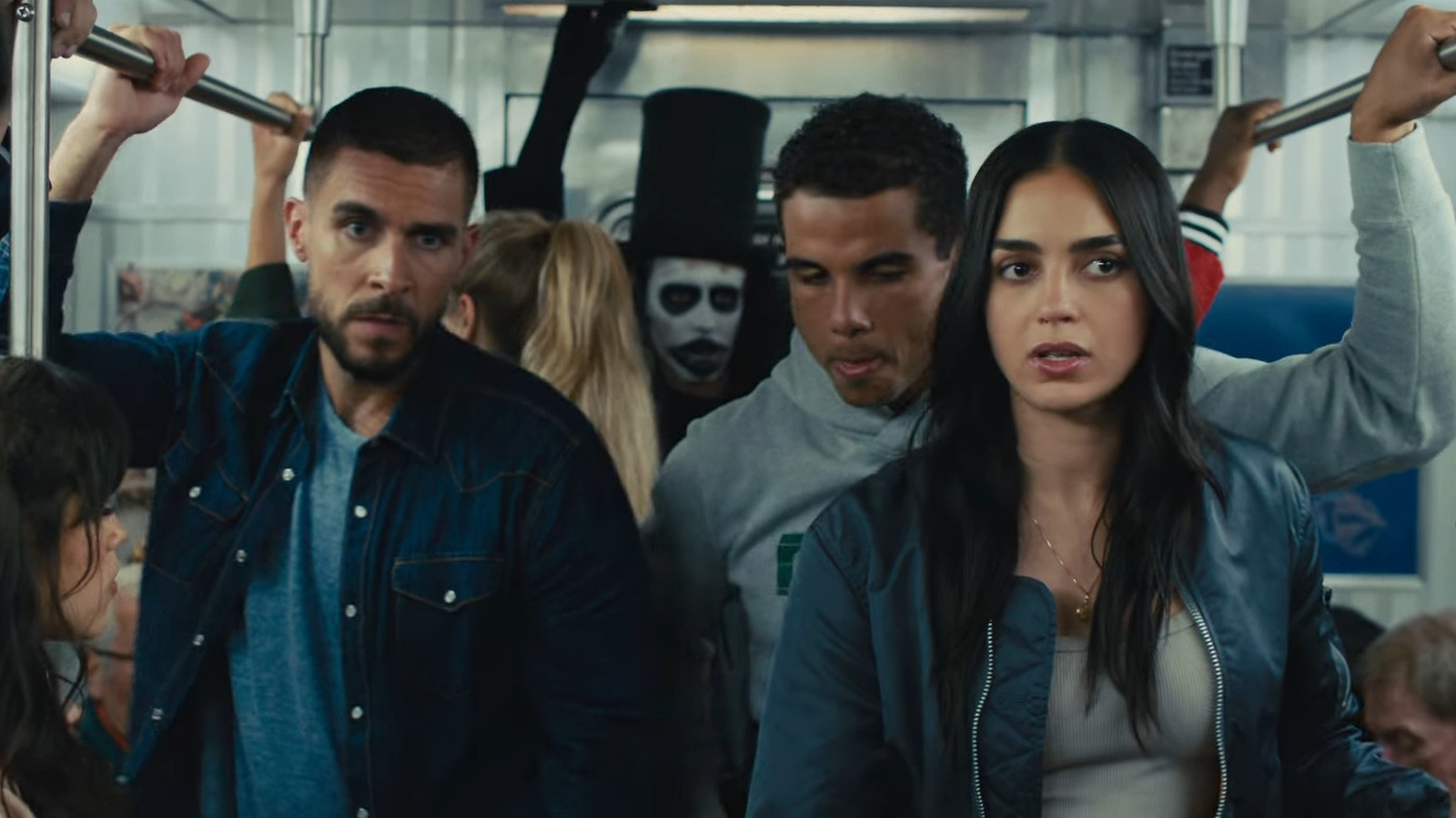
One sequence takes place on a busy subway ride on Halloween. It proves to be a tense ping-pong match of close-ups between Mindy and Ghostface (the latter hiding amongst a crowd of costumed people from different horror movies). The flickering lighting and dark blue/yellow strobe effects give the sequence a nightmarish quality. It’s the film’s standout sequence and comes closest to the dreamy European flair that typified Wes Craven’s prior instalments.
Another similar sequence comes from a simple scene about a third of the way through. The characters discover a shrine containing all the collector items that have pervaded the entire series. Rather than being an exercise in empty nostalgia, the scene instead plays like a clever bit of meta-commentary as each of the characters contends with their place in the franchise up until this point. The scene punctuated by Brain Tyler’s atonal score makes the wounds of yesterday feel present and alive in subtle and creepy ways.
Along with a scene that dissects Gale Weathers’s (Courtney Cox) place in the franchise and Scream VI engages as a movie that somberly reflects on the internal mythology that’s built the franchise. However, the movie is missing some biting social commentary that pervaded previous entries. The thread about misinformation and conspiracy theories being spread about Sam’s role in the finale of the previous movie feels more superficial than revelatory. Even when the previous instalments swung for the fences (and sometimes missed), I at least admired the reach and scope of the themes of Screams gone by.
Instead, the revelations here only feel novel in a superficial sense, with the temporary tension being wrung out of an increase in the number of killers. And the motives play like a reheat of the killers from Scream 2. This is a shame due to the shrine and the opening sequence feeling like a set-up for a larger Ghostface conspiracy.
And this is the most confounding element of Scream VI. It plays like a streamlined and more adrenalized version of Scream 2, complete with its cast imbuing a lot of charm and fun into their parts. But more often than not, the latest Scream sequel is more fleeting than haunting.
I have to start this preamble with a bit of an apology. While I intended to cover all of the Scream movies as a lead-up to the sixth instalment, I’ve decided to hold off on my review of Scream (2022). The reason for this is that I’m seeing Scream 6 as part of a double bill with last year’s movie. I think this provides an invaluable experience to look at the film in the context of it being part of a newer (supposedly) trilogy of films. So, I apologize for that. So, with that said, have you seen Scream 4? Let me know in the comments below.
Review
I adore Scream 4. And that feeling has not changed in the intervening years. In fact, since becoming more familiar with the horror genre, my esteem for it has only grown. For a series that’s had inconsistent sequels, Scream 4 represents a perfect melding of fulfilling drama and meta-commentary.
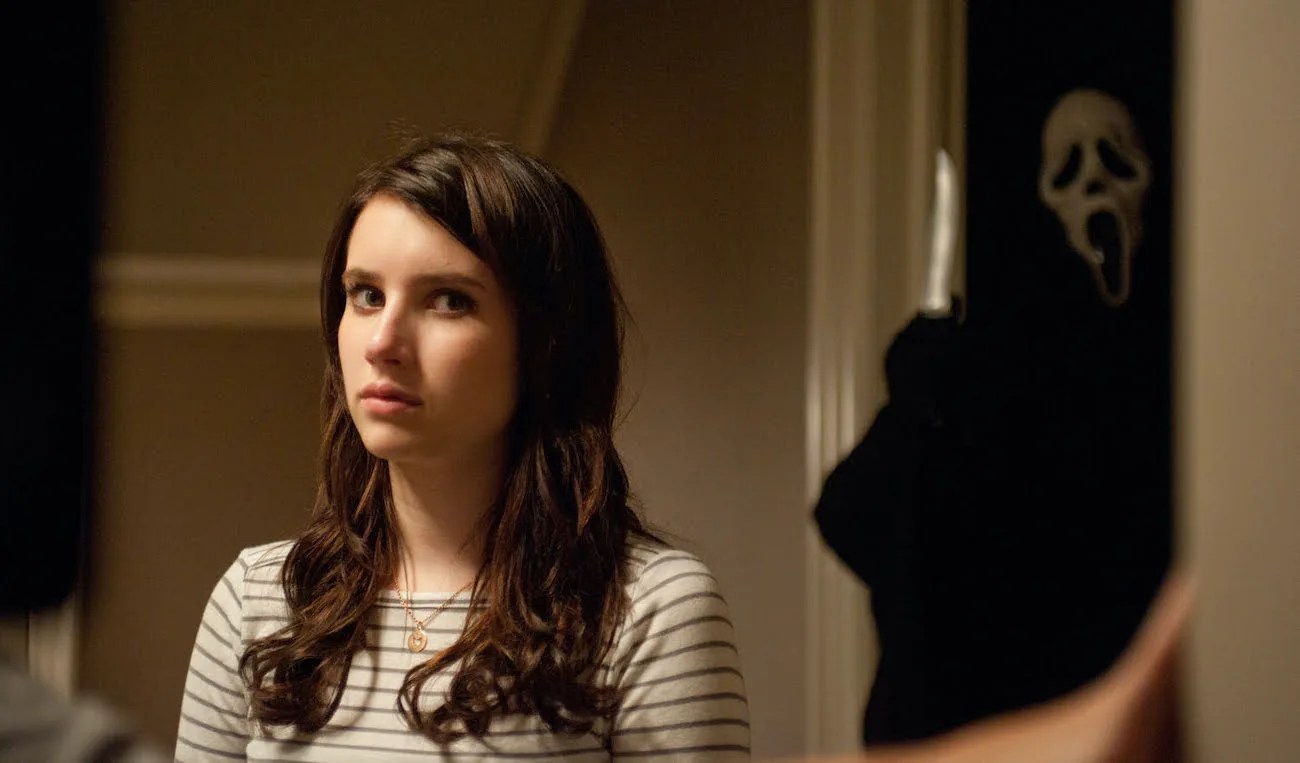
Taking place 15 years after the events of Scream, the third sequel sees Sidney Prescott (Neve Campbell) return to Woodsboro on the last stop of her book tour. Her sentimental visit turns into a vicious bloodbath as Ghostface (voiced by Roger L. Jackson) prays upon a new generation of teenagers, including Sidney’s distant cousin, Jill Roberts (Emma Roberts).
Part of Scream 4’s appeal comes from what it does with the notion of the Final Girl. While previous movies provided shading and a credible emotional context for the concept, the 2011 movie subverts the troupe. This is done in part by posing the question of how the Final Girl leaves a mark on the people around them. In the case of Sidney, how have her traumatic Ghostface incidents affected her family insofar as her aunt and cousin are concerned?
In a way, it’s left a long and lingering shadow for the pair. In terms of Sidney’s aunt, Kate (Mary McDonnell), she believes she’s been scarred by Sidney’s attacks and, by extension Maureen’s murder. In a sense, she feels she’s been left out and quietly speaks from the sidelines of her experiences (via one line where she says, “I’ve had scars too.”).
For Jill, it’s been a burden to live in Sidney’s shadow as she’s often been cited as an omnipresent figure to idolize and be like. To this end, Jill chooses to become like Sidney by taking on the Ghostface persona to stage a series of murders where she appears to be the victim. To achieve fame, Jill believers that messed up things have to happen to an individual, illustrating the all-consuming power of social media fame. In 2011 when the film came out, shows like the X Factor were famed for their performative circus qualities, whereby a bad act was denigrated and mocked. And in a post, Tik Tok era, Scream 4’s social commentary feels even more chilling when fame is presumed to be achieved by jumping on harmful viral trends.
At the same time, the meta and personal combine to create the idea of the horror remake (embodied by Jill) directly attempting to replace the original (Sidney). Scream 4 has many of these instances, whether it’s Sidney’s final line to Jill, “You forgot the first rule of remakes. Don’t fuck with the originals,” or Kirby (Hayden Panettiere) desperately reeling every horror remake during a tense phone call with Ghostface (during the tail end of the movie).
In a film that boasts a lot of excellent performances from the young cast, Hayden Panettiere stands out as Kirby. On the page, the character is a lighthearted and playful horror geek who likes to keep some people on their toes. Panettiere illustrates these qualities with subtle gestures that go a long way to make the character quite appealing. Emma Roberts is equally impressive in a surprisingly physical performance that speaks to Jill’s unrelenting desire to be famous.
David Arquette brings an authentic sense of world-weariness to Dewey without losing his nebbish and hopeful qualities. And Neve Campbell has a quiet intensity that imbues Sidney with a lot of dramatic weight. The most meaningful scene that illustrates this is when she has a catch-up conversation with Dewey. It speaks volumes in what is not said between the characters, the subtle what-ifs and chances that have passed both of them by (throughout the years).
Scream 4 represents Wes Craven’s last directorial effort in the series, and it’s pretty effective. I’ve liked how in previous films, Craven has brought a dreamy European flair to the filmmaking. In Scream 4, there’s less of a dreamy quality, and instead, some sequences are directed as though they would not feel out of place in an Italian horror picture. The most notable is a sequence in a hospital car park. With its use of yellow (via naturally lit car park lighting), insert shots of Rebecca’s shoes and protracted medium shots, the scene plays like a scene from a Giallo movie, as opposed to a conventual American slasher movie.
We’re here at last, the penultimate episode of The Last of Us. It’s felt like it has flown by in what has been a whirlwind series so far. With that said, have you seen Episode 8 of The Last of Us? Let me know in the comments below.
Review
In the PS4 and subsequent PS5 remake, the Winter section was a tough and brutal stretch of the story that cemented Ellie’s and Joel’s relationship insofar as the violence they would commit to protect one another. Despite being flawed, Episode 8 is still a difficult and sobering watch that ties Joel and Ellie’s bond in blood.
The penultimate episode of the series finds Ellie still watching over an injured Joel. However, this is disturbed when she finds two strangers from a nearby improvised community who are attempting to steal her food. After a tense standoff, the three agree that in exchange for some medicine, the pair can take half of her food. However, the leader of the community, David (Scott Shephard), may have other plans for the young girl.
In what has been a fantastically consistent and exceptional show so far felt like it took a step down this week. Part of this comes from the rushed approach to the story and elements where the active experience of the video game trumped the inherent passivity of the medium.
The choice of distilling several hours-long sections into less than an hour of television, the story loses something in translation. Part of this comes from the gameplay being quite impactful in what they were saying about the character. For example, the final confrontation between David and Ellie was a terrifying experience that aligns the player with Ellie’s fear. But in the show, it plays like a sped third-act sequence from a slasher movie.
The same could be said about the portrayal of David. While the character fits within the grand scheme of the show’s theme of how leaders within insurgent groups function, I think they overegged the pudding on him. Part of this does come from the mentioned rushed approach, which goes from 0-60 on the ultimate reveal. At the same time, there’s a lot revealed about David that feels like it muddies the water on what they’re trying to say about him.
He’s someone who starts as a Maths teacher, whose very logic-based, finds religion but has darker tendencies, is willing to do unspeakable things to keep his community alive, and ultimately fakes his belief to keep order. I suppose you could take all that and interpret him as someone who perpetuates a cycle of abuse and evil (within a religious context in a post-apocalyptic setting). But that feels like quite a stretch and quite a cliché in what has felt like a nuanced show so far. I think I prefer the simplicity of the character in the game whose more predatory predilections were confined to subtext rather than overt declaration.
But for what it’s worth, the performances of the episode provide some semblance of emotion that filled this section of the video game. In particular, Bella Ramsey was a force of nature in her completely dangerous edge as someone who could commit violence within a heartbeat. Pedro Pascal was incredible in conveying a subtle sense of quiet desperation. And it was great to see Troy Baker (the actor for Joel in the videogame) in a supporting turn that illustrated so much in the flickers of eye movements and still moments of contemplation.
Are there any good horror movie trilogies? That’s a genuine question that’s been crossing my mind since rewatching Scream 3. It’s hard to make a case for many because they tend to become series that expand beyond the scope of three movies. Anyways, I’ll leave you to ponder that question. Have you seen Scream 3? Let me know in the comments below.
And if you like my ramblings on horror, then you can find more at my second home, Horror Obsessive. In my second piece on Final Girls, I examine Sally Hardesty from The Texas Chainsaw Massacre (1974).
Compared to my memory of the previous two Scream movies, I had no prior strong sentiments about my first viewing of Scream 3. However, out of the three so far, it may have been the most fascinating to revisit. While it does riff on the horror genre, Scream 3 engages more as a black comedy about the exploitation of the Hollywood machine.
After the murder of LA-bound talk show host Cotton Weary (Liev Schreiber), his girlfriend, Christine (Kelly Rutherford) and actress Sarah Darling (Jenna McCarthy), things become tense around the set of Stab 3 (the film within a film that’s based on the events of the Scream movies). As members of the movie are killed, Sidney (Neve Campbell) reluctantly finds herself drawn back into the fray when she begins experiencing quite vivid visions of her deceased mother, Maureen Prescott (Lynn McRee).
On the surface, Scream 3 has a lightness by going to Hollywood. Various scenes have cute cameos, whether it’s Jay and Silent Bob or Carrie Fisher. And there are also a handful of moments where the production of Stab is mirroring the murders in a comically absurd version of life imitating art. However, a lot of other threads feel like takedowns of Hollywood. Part of this, comes from the unravelling of Maureen’s past when she was in Tinseltown. The fact that her past as an abused Hollywood actress was covered up by producer John Milton (Lance Henriksen) to ensure that the Stab movies remain lucrative perpetuates a cycle of abuse that carries on with Sidney.
In the film’s most moving moment, Sidney stumbles upon the set of her old house, where she experienced the terrifying events of the first movie. In a sense, her traumatic experiences have now become a cheap commodity to be thrown around for the titillation of many people, just like Maureen was when she was an actress.
In moments such as this, I was reminded by the sobering power of Wes Craven’s New Nightmare insofar as carrying the indelible sense of a horror director earnestly reflecting on a genre that he had defined for an entire generation. There are also threads about how Scream 3 works as a post-Me Too commentary that I discuss in an upcoming piece for Filmhounds Magazine. I’ll link to it in an upcoming preamble.
Additionally there’s something darkly comic about the identity of the Ghostface killer who, on the one hand (in his civilian identity), bemoans his film career being cursed but is directly responsible for its downfall due to his murderous actions. The plot point and ironies feel like a satirical knife, which aims for the extremes that Hollywood deals in. Despite being saddled with a lot of exposition, I found the motivation for this Ghostface to be quite inspiring, particularly in their relationship with one of the killers in the first movie.
Scream 3 represents a series first insofar as Kevin Williamson is not responsible for the story or screenplay. The result is a mixed bag. While Scream 3 thematically feels the strongest and closest to what I loved about Craven’s New Nightmare, it falls as a meaningful showcase for Sidney.
Part of this comes from Neve Campbell only having 20 shooting days due to other commitments. Consequently, it often feels that Sidney is passive rather than active. It’s a credit to Campbell that in her limited screentime, she still illustrates the indelible fiery spirit and coy wit that partly makes Sidney a great character.
This aspect is compounded by quite inane and paper-thin supporting characters who often feel like they’re indulging in one of the cynical cliches of the slasher genre, namely rooting for the killer to dispatch the cast because they’re so unlikeable. Even some of the main players feel oddly placed in with the Hollywood antics, most notably Dewey (David Arquette), who feels too sweet and upstanding to keep the company he does in the movie. The sole character who escapes this is newly introduced, Detective Mark Kincade (Patrick Dempsey), who is a good match for Sidney in more ways than one. Dempsey effortlessly walks a razor edge between charming, haunted and suspicious.
Finally, Ghostface’s voice imitator device proves to be a double edge sword. On the one hand, it’s goofy and contrived beyond all measure. And on the other hand, its use does lead to some of the movie’s effective sequences. In particular, an early sequence involving the ghost of Sidney’s Mum is effective as a Gothic-inspired sequence that would feel at home in a surreal Mario Bava movie (via its framing and use of colour).
Much like Episode 3, this week’s episode of The Last of Us feels like it comes with some semblance of anticipation. While the episode (for the most part) does not strictly adhere to the game, it comes from something that’s become so ingrained with the original experience that’s become the equivalent of rewatching the Lord of the Rings (in their extended forms). With that in mind, have you seen Episode 7 of The Last of Us? Let me know in the comments below.
Review
Despite being downloadable content (DLC), Left Behind was a remarkably moving experience that juxtaposed the coming-of-age antics of its two female characters with the impending doom of the post-apocalyptic setting. It comes as something of a relief that Episode 7 is a weighty and poignant experience that captures the tragic nature of its DLC source material.
In the present day, Ellie is frantically trying to find some things around an abandoned house to stop the bleeding from Joel’s severe wound. However, most of the episode is dedicated to Ellie’s last night with her friend, Riley, who is due to leave the city to be with the insurgent group known as the Fireflies.
Left Behind expands the scope of the DLC by showing us some of Ellie’s school life. By making this choice, we’re shown how Ellie attaches herself to people as opposed to causes. This is shown by how a superior officer pitches to her the importance of his role and how it keeps a community from descending into chaos. This aspect is juxtaposed with Riley, who chooses to attach herself to a cause (aka the Fireflies) that she sees as a surrogate family.
With this in mind, the change from many zombies to a singular one that causes Riley’s death and Ellie’s awakening as someone immune is quite tragic. It’s pitched as something random akin to an act of nature that awakens the dead creature from his long-gestating sleep. In fact, this was my favourite moment of the episode, as it’s a horrifying reminder of the omnipresence of the disease and how it can linger even in the most innocent of places.
Bela Ramsey is remarkable in the moments where the character is silent, whether it’s the trusting physicality she displays towards Riley or the knowing glances of adoration as she’s riding a merry-go-round. Storm Reid provides a low-key cool performance that’s commanding and emotionally authentic in equal measures.
My issues with the episode are twofold. Firstly is the juxtaposition between Ellie showing frustration over her and Riley’s terminal predicament in the past and Joel’s worsening condition in the present. Rather than being an elegant parallel, I instead found it jarring due to its suddenness and lack of set-up. Finally, I wish we got more of Ellie’s backstory. While I appreciate, this episode being a sound emotional context to some of the declarations Ellie made last week, I think her backstory could have contrasted well with Riley’s notion of chosen family.
But those issues aside, Left Behind is still a powerful adaptation of its DLC source material, perhaps made even more tragic as a contrast to Episode 3. While love flourished and lingered with Bill and Frank, it was mealy a passing shadow with Ellie and Riley.
I think it’s becoming quite something that I feel more nervous about writing the preambles then actual blog posts. But hey, ho, there’s only so much you can do to frame the discussion or warm up before the post. So, with that in mind, have you seen Scream 2? Let me know in the comments below. And if you like my ramblings on horror, then you can find more at my second home- Horror Obsessive.
In the first of two pieces that I wrote on Final Girls in the slasher genre, I discuss Jess Bradford from Black Christmas (1974). The article is also available in audio format (read by the sublime Anne Flowers).
In many ways, I remembered Scream 2 as an indulgent exercise in meta-commentary on the nature of sequels. However, in returning to the 1998 film, I found it to be an odd misfire. It’s a movie where its set pieces are effective (for the most part), but its ideas lack any shading.
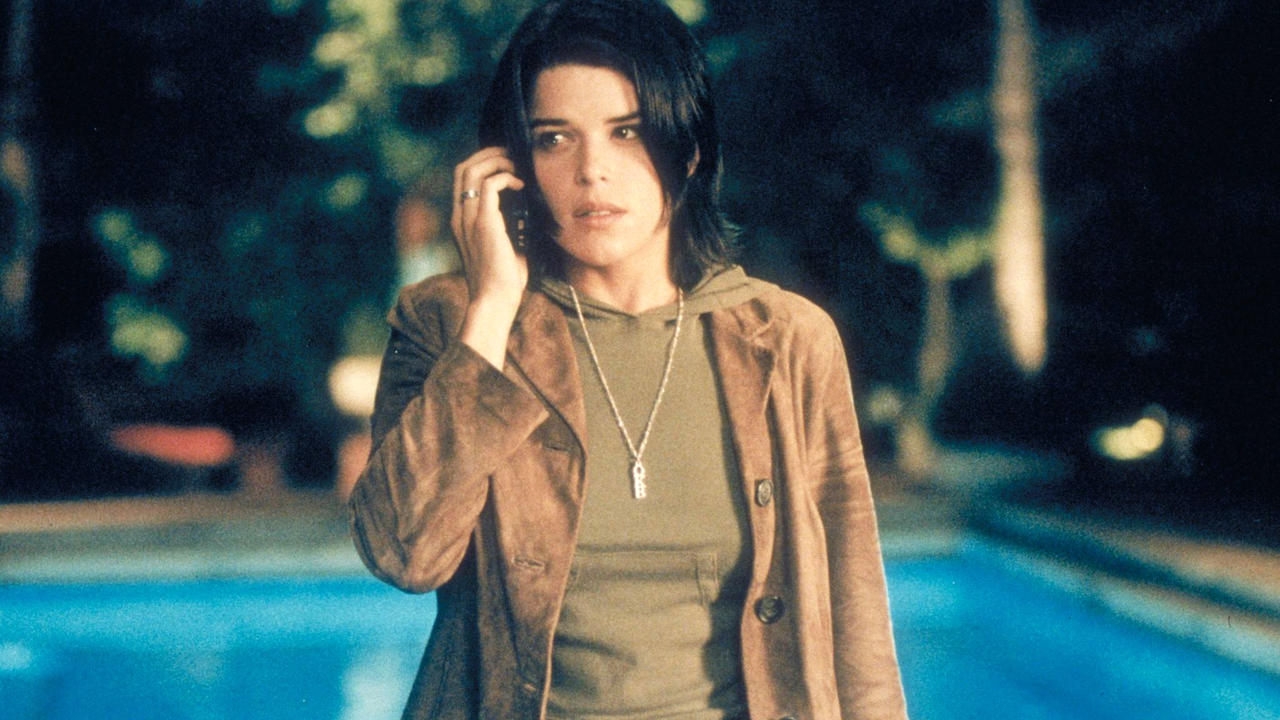
Picking up two years after the original film, Scream 2 sees Sidney Prescott (Neve Campbell) settled into college life with a new best friend, Hallie (Elise Neal) and boyfriend, Derek (Jerry O’Connell). However, this seemingly peaceful existence is interrupted when two college kids are murdered during a screening of Stab (a movie based on the events of the first film that’s adapted from Gale Weather’s book). With the return of an old friend, Dewey (David Arquette) and Gale Weathers (Courtney Cox), Sidney must navigate the trials and tribulations of college life whilst figuring out whether or not she can trust those closest to her.
Scream 2 has many thoughts occupying its mind. On a basic meta-level, it wants to explore the nature of sequels, the rules that come with surviving a horror movie sequel, and the effect horror movies have on actual violence. Many of these threads feel like sketches for great themes but are often confined to one scene. In particular, the effect of cinema on real-life violence feels particularly shallow. There’s a debate on it that regresses into a conversation about movie sequels. This is compounded by the reveal of the motives of the killers at the end, which sees a literal murder of this thread when one of the killers says (after shooting their partner in crime), “MY GOD, that old “Blame The Movies” motive. Did you buy that for one second?”
And the opening murder sequence hedges its bets on the issue, with one moment giving way to the erratic fervor of seeing cinematic violence to the horror of seeing it play out in real life. The opening sequence instead works as a meta-commentary on the nature of the first Scream, clearly showing how it bucked many of the slasher trends (including gratuitous nudity and instances of shallow writing) with clever set-up and genuine horror.
It’s ironic then that certain moments in Scream 2 feel like they’re from an inferior slasher movie wherein the characters make silly choices. One such scene comes near the end, where Sidney (after a harrowing escape from Ghostface) goes back to unmask him. It’s framed as an empowering moment due to Sidney choosing to no longer hide from the horror she’s experienced. But it comes across as silly particularly, as Hallie warns her about how smart people would not do what she’s about to do. And the ending to that choice left my eyes rolling.
Despite this problem, some scenes are exceptional. For example, a sequence depicting Sidney in a dress rehearsal for a staging of The Oresteia is effective in its metaphorical potency. In the play, Sidney plays the role of Cassandra, who is cursed by Apollo. Much like her character, she must embrace her burden of fighting Ghostface. This theme of the battle for the soul being played out on the stage, and by extension through art itself, is a fantastic embodiment of the plight of the Final Girl.
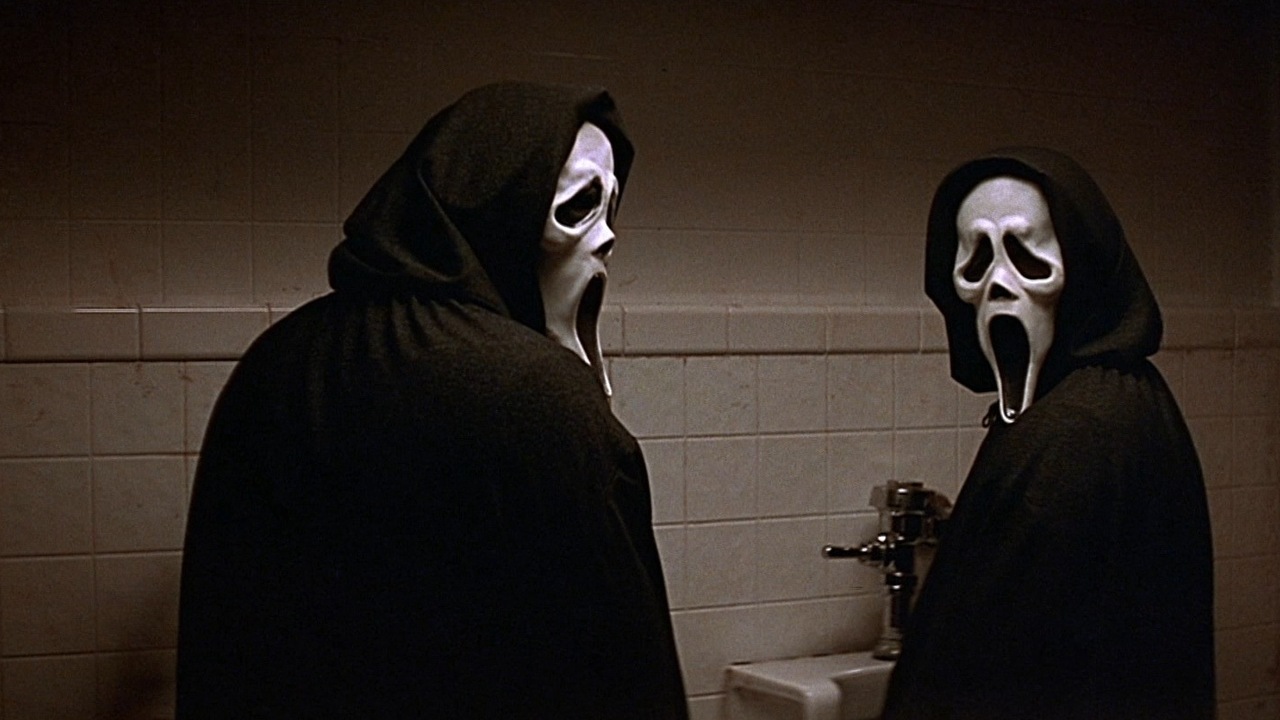
At the same time, some of these sequences contain the best instances of filmmaking. In particular, the scene where Sidney (as Cassandra) is running from various masked figures (including Ghostface) is nightmarish in its use of medium shots and flickering editing. The result is a scene that blurs the line between perceived reality and the possible paranoid delusions of the main protagonist.
Elsewhere, the performances fuel the lack of new interesting teenage characters (on the page). In particular, Timothy Olyphant casts an impression as Mickey, who walks a fine line between edgy and empathetic. But the performance that impressed me the most was Liev Schreiber as Cotton Weary. In a film that’s often pulling punches with its satire, Schreiber’s performance carries the weight of ambiguity that defined a collective fascination with figures such as OJ Simpson in the 90s. Schreiber is an amusing and tension-filled presence, from subtle knowing glances to nearby cameras to moments of personal space-breaking confrontation.
This aspect applies to the rest of the cast, who provide the film with a lot of drama and fun, whether it’s David Arquette’s assertive turn as Dewey or Neve Campbell’s slight cheeky edge as Sidney. These smaller character moments are charming, but can’t disguise the film’s lack of substance. Scream 2 often barks more than it bites (via its many tantalizing ideas) but often falls short in seeing them through.








 SGS On Film