With the series being well over the half way point, The Last of Us has not slowed down in its interest to me. On the contrary, the latter stretches of the game (namely the section entitled Winter) enthralled me the most. With that in mind, have you seen this week’s episode of The Last of Us? Let me know in the comments below.
Review
On the surface, Kin has the grandiose and expansive qualities that have come to define the series. However, the episode plays like an intimate and therapeutic bottle episode that tests Joel and Ellie’s relationship.
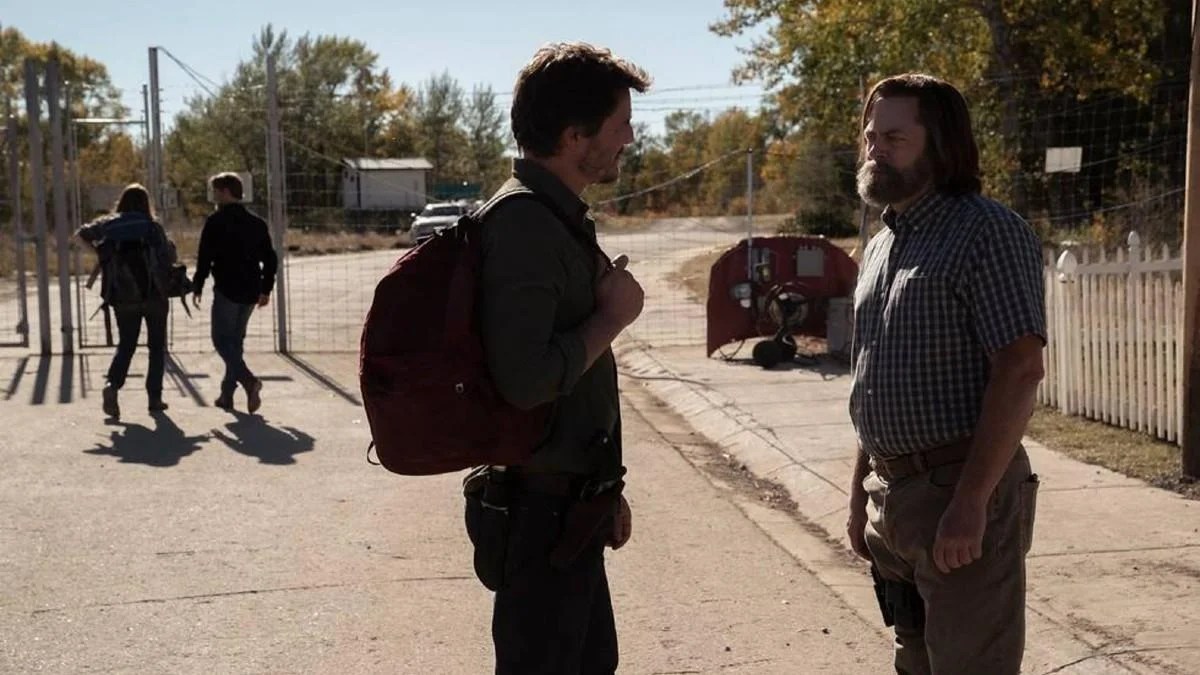
After the harrowing events of last week’s episode, Joel and Ellie continue their search for Tommy (Joel’s brother). Eventually, they both find Tommy settled in a community that has a semblance of normalcy. However, things become complicated when Joel tasks his little brother with taking Ellie to the last stop of their journey.
Perhaps more than in any other episode, Kin truly attempts to get beneath the surface of Joel and Ellie. This is not only from the vantage point of their induvial fears but how those hang-ups manifest in how they behave with one another. Joel fears that his age and competency have caught up with him and will eventually get Ellie killed. This is compounded by the guilt of not being able to save his daughter who he is still haunted by.
Despite the tough front that Ellie puts up, she’s truly afraid of being abandoned because deep down, there’s still a semblance of a child who is looking for guidance and hope. Bella Ramsey steals the episode with a comedic and empathetic turn as a character who seeks assurance and comfort. Pedro Pascal is heartbreaking in the scenes where he’s discussing his frailties and failures. And Gabriel Luna brings a subdued sense of sympathy as Joel’s settled and frightful younger sibling.
It would not be a review of The Last of Us without a reference to the second game. And Kin had plenty for me to chew on for the eventual adaptation. Aside from featuring part of the setting of that game (Jackson), the episode featured several seeds that will eventually flourish in the second season. The most notable is a prolonged scene where Ellie and Joel are discussing their dreams. The former is expressing her admiration for a female astronaut and wanting to go up to space. Without spoiling it, this sets the stage for one of the most heartwarming scenes in the second game. I hope it’s adapted in the second season.
In the same scene, Joel expresses his dream of wanting to own a farm with a bunch of sheep. This is a potential foreshadowing for a plot point in the second game insofar as a place where Ellie finds herself. But above all, the episode alludes to Joel’s violent past. Aside from serving the episode and its theme of who you should put your trust in, it also alludes to a theme that’s explored in Part 2, which is the unravelling of treasured generational figures.
I know. I know. I’m late to the party on this one. Thanks to the Super Bowl, Episode 5 of The Last of Us was streamed early. This had a ripple effect in jolly old England with the newest instalment hitting our streaming service in the early hours of Saturday. However, my weekend was quite busy, and I thought four blog posts in a week was tantamount to torture. Plus, I do like a routine. So, here we are. Have you seen Episode 5 of The Last of Us? Let me know in the comments below.
Review
For once, I was at a loss for words at the end of Episode 5 of The Last of Us. Instead, I was a tearful puddle who was trying to comprehend what I had just seen. But in the hours since being in that state, I can say this now. Perhaps more than any other episode, Endure and Survive made me think of the nature of video game adaptations insofar as how fidelity and change can walk hand in hand with one another.
Joel and Ellie’s temporary shelter is disturbed by the arrival of Henry and his little brother, Sam. After a tense standoff, Henry tries to persuade Joel to help him escape the city via a series of underground tunnels. However, things become harder as the sibling pair are being hunted by the leader of a local resistance group, Kathleen, who is hell-bent on killing them for their betrayal of the overarching cause.
Conceptually, Endure and Survive has the skeleton of the Henry and Sam section from the video game in terms of getting to the same emotional endpoint. But the deviations to get us there are fascinating and meaningful. Firstly is the difference in Sam. In the game, he was a talkative person who still had a sense of innocence. While this latter quality is retained in his television counterpart, the former is lost due to the character having contracted leukaemia. This subtle change results in a theme that gets to the heart of the game, which is the lengths you would go to for your loved ones.
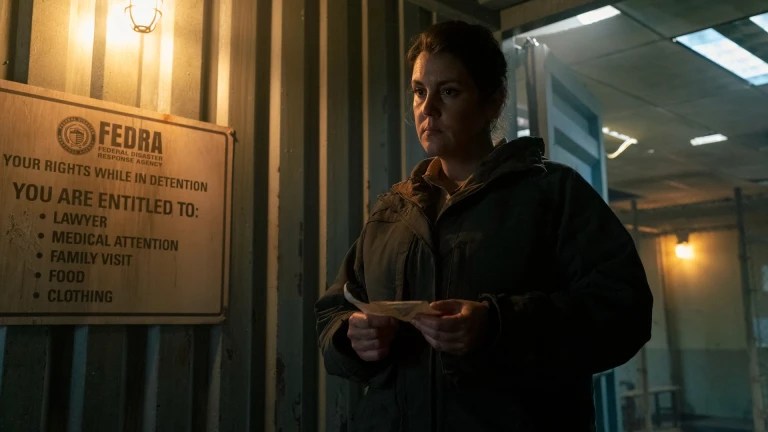
To get medicine for his brother’s condition, Henry had to rat out one of the community’s best people, which resulted in his death. Lamar Johnson during the moment where he says he’s the bad guy provides an incredibly moving performance that carries the weight of ambiguity in this post apocalypse world. Equally as compelling is Melanie Lynskey as Kathleen, whose seemingly sweet and soft-spoken nature hides a dangerous side.
This juxtaposition between Sam and Kathleen not only plays like a parallel of that previously mentioned theme (with Kathleen being a dark mirror of Sam insofar as her relationship to her sibling is concerned). It also greatly informs Joel’s journey as someone who initially sees Ellie as cargo to be delivered but opens up to be a meaningful person that he grows an attachment to. This seeming change in attitude is the episode’s best moment of filmmaking. The camera captures Joel in a medium shot as he ruminates over a person’s grave. Ellie is faded in the background. Pedro Pascal captures an authentic sense of loss and wistfulness that seek to get the character to reflect on what’s been and very well could be lost.
But above all, the episode made me consider and reflect on the differences in how leadership between these insurgent groups. That’s an interesting shade of grey that the game never delved into but is great thematic material for the television adaptation.
I’ve been meaning to write about the Scream series for a while. And now with the upcoming Scream VI less than a month away, there’s no better time to revisit the famed horror franchise. In covering the movies, I hope to cement my opinion on the slasher films, as I’ve never particularly had firm thoughts on them. Have you seen Scream? And in keeping with the movie’s antagonist, “What’s your favourite scary movie?” Let me know in the comments below.
And if you like my ramblings on the horror genre, then you can find more at my second home, Horror Obsessive. One of my recent pieces was about the film’s full trailer that promises a Ghostface unlike any other.
Looking back, it’s almost too easy to remember Scream as the cinematic equivalent of an annoying audience member who bellows out every cliché, problem and general grumbling annoyance with the horror genre at large. In returning to the film several years later, Scream plays like a refined and upmarket slasher film, one in which the genre conventions are acknowledged and affectionally used to fuel its meta-commentary.
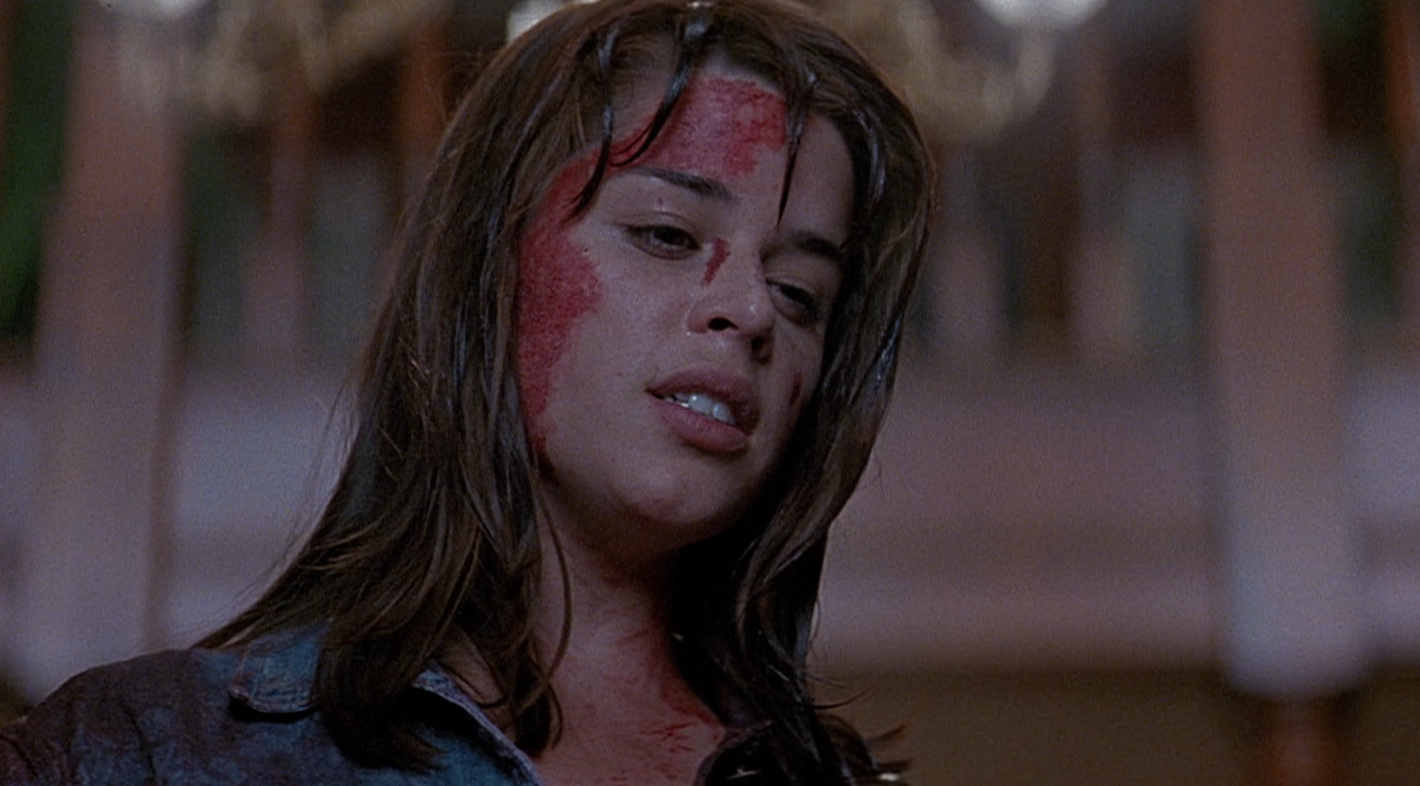
After a pair of gruesome murders, the quiet and small town of Woodsborough is shaken to the core. None of its residents is more affected than Sidney Prescott (Neve Campbell) whose mother was recently raped and murdered. As the number of murders grows and intense media scrutiny increases, Sidney must battle for survival and attempt to keep her relationships in check.
The appeal of Scream comes from two elements it takes from the slasher sub-genre of horror. The first is the notion of the Final Girl. Typically, these characters are defined by their innocence, singledom, and virginal status. The last quality, in particular, is something that’s become so ingrained, it’s become a subconscious association with the genre at large. It can be argued that Scream popularised this last quality.
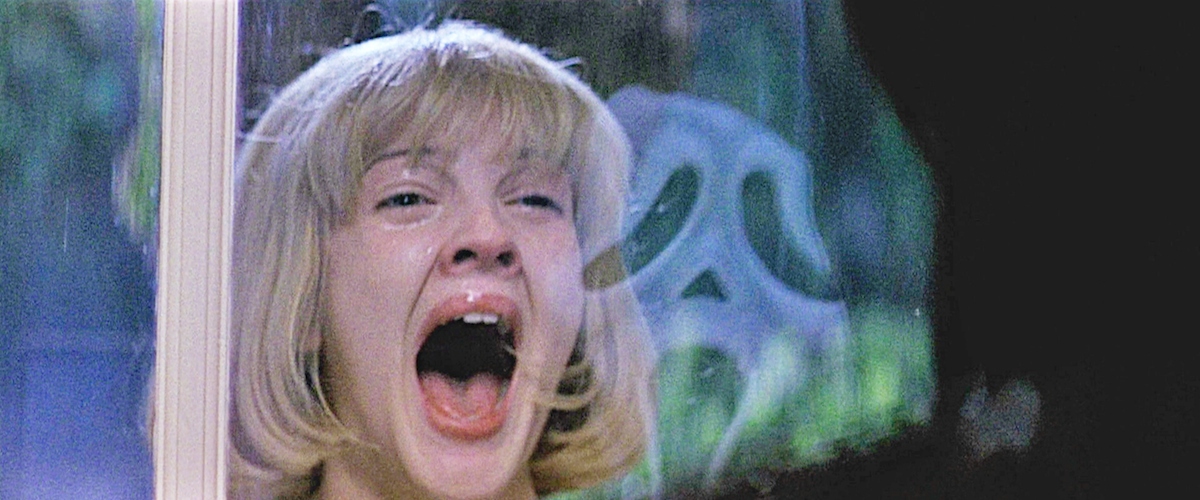
While the movie demonstrably calls this aspect out as a cliché, Scream also gives the concept a credible emotional context. Aside from surviving various reprisals from the central killer, Ghostface (voiced by Roger L. Jackson). Sidney also has to contend with her relationship with her boyfriend. There’s an inherent fear of her being sexually intimate because she does not want to turn out like her mother, whose she’s still grief-stricken about. This contention and Sidney’s choice to express herself sexually is an excellent way of bucking the Final Girl trend insofar as unshackling from its partial virginal definition by showing a considerable amount of agency.
The second aspect that Scream takes from the slasher sub-genre of horror is the convention of the murder mystery. While a few slashers have flirted with the conventions of the long-standing genre, the execution has often left a lot to be desired. Scream not only plays with the standard aspects of the genre, but some of its characters are acutely aware of their place in the chopping order (namely Randy, played by Jamie Kennedy).
This sense of characters who know they’re in a horror movie or frequently referencing other ones in everyday conversation would prove to be a staple of 90s horror. This comes courtesy of screenwriter Kevin Williamson whose arguably the closest the genre would come to the screenwriter trumping the director insofar as auteurist vision is concerned.
On the whole, the screenplay is fun and loose with the referencing. It can also be a double-edged sword. Some of the dialogue in the tail end where characters talk about their place in the story and endings can be a little trite. This is compounded by a thread of the older generation denouncing the younger generation. As a theme, it feels shallow and reactionary. It also pales in comparison to Wes Craven’s much more personal and salient reflections on the genre and its effect on people in New Nightmare (1994).
From the hypnotic use of Dutch angles to a medium shot depicting Ghostface in someone’s eye, Wes Craven directs the film with a dreamy European flair that understands tension and uses it as savage punctuation marks.
There’s also an operatic quality to some of the performances in Scream. In particular, the largeness of Kennedy and Matthew Lillard stands out, not only from physicality but also from facial expressions and vocals too. Skeet Ulrich bears a striking resemblance to Andrew Robinson in the tail end of Hellraiser. Much like that character, Ulrich is effective in portraying a sense of contained rage that threatens to bubble to the surface. Neve Campbell strikes a chord with her vulnerability and fierce determinism (particularly evident in the third act). David Arquette is a sweet and endearing presence as hapless cop, Dewey. And Courteney Cox is formidable as the go getting television reporter Gale Weathers.
The Whale has been on my radar for a while. Aside from being Darren Aronofsky’s latest effort, which in itself holds a huge sense of appeal, it has also been touted as Brendan Fraser’s comeback movie. With that in mind, I was eagerly awaiting its release in the UK. Have you seen The Whale? Let me know in the comments below.
Review
In contemporary American movie-making, there’s no one quite like Darren Aronofsky. He’s thematically ambitious in ways that are dizzying and crazy. This scope is often paired with a fascinating cinematic eye that often viscerally leaves an indelible mark on the psyche of moviegoers. Having said that, I found The Whale to be an empty and emotionally deficient experience.
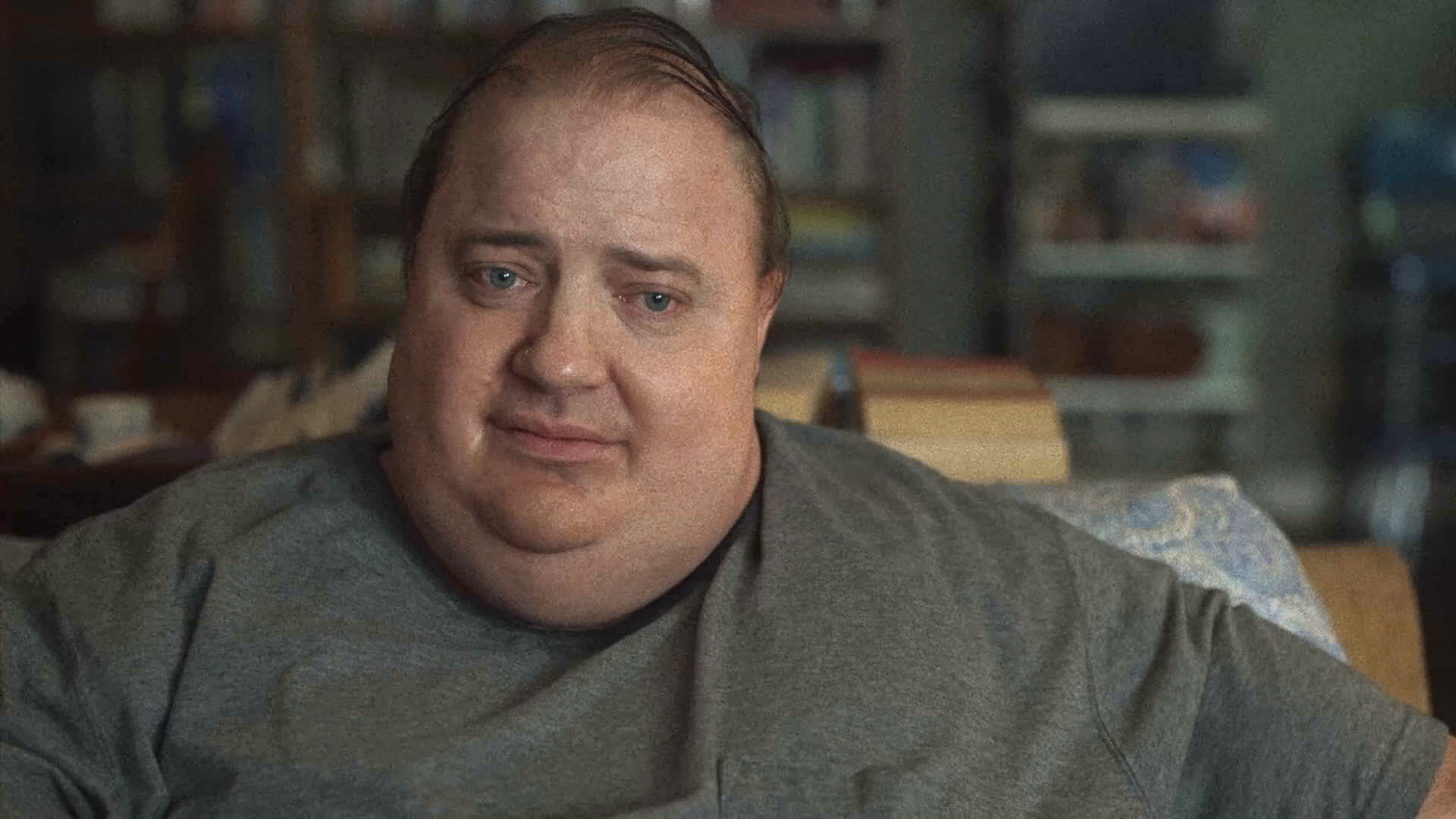
Based on the play of the same name by Samuel D. Hunter, The Whale is about a morbidly obese man called Charlie (Brendan Fraser). Realizing he is close to death, he attempts to make amends with his teenage daughter, Ellie (Sadie Sink), to who he offers a substantive amount of money alongside helping her with her English essays.
For much of The Whale, I felt it was engaged in a tug of war between being a life-affirming picture and a brash, darkly-pitched black comedy. Part of this comes from the approach to its central character. Shot using an aspect ratio of 4:3, the film attempts to make us empathize with Charlie by showing how cramped and boxed-in he feels as someone who never leaves his apartment. However, the cinematic choice instead is used to make the audience revel in Charlie’s condition akin to witnessing an old-school freak show (made worse by Ellie posting pics to social media that often paint her Dad’s condition in quite unpleasant terms).
There’s a detachment I felt to Aronofsky’s direction that plays like a scientist being fascinated by an ongoing experiment. However, I think the miscalculation comes from the director pairing this with a sense of overwrought drama. Aside from a few moments where I was charmed by Charlie’s delight (in the form of laughter) that’s often paired with heart-wrenching pain, I found Fraser’s acting to be too performative for its own good. In fact, I found Hong Chau gave the most emotionally true performance of the film. Between her sharp and caustic nature, there’s an acute sense of subtle resignation and loss that Chau brings to her role as Charlie’s nurse and only true friend.
By the same token, Aronofsky’s usual juggling of biblical and personal themes feels like an exercise in crass judgement, culminating in a scene where a missionary called Thomas (Ty Simpkins) is being confronted by Charlie, suggesting his lifestyle is disgusting etc. In the past, Aronofsky’s biblical preoccupations have delivered (for the most part) quite profound truths about the human condition. I felt here it was used as a metaphorical stick to beat the main character with.
Ultimately, there’s a nugget of a good movie in The Whale. But it’s buried under a rubble of elements that often clash quite drastically with one another. For every darkly comedic moment (particularly apparent in Chau and Samantha Morten’s scenes), there’s a crass moment of sentimentality. Charlie often calls for honesty throughout the movie. However, the truth is that between mother! and The Whale, Aronofsky’s trapped narratives have often felt muddled at worst and one note at best. I’m yearning for the Aronofsky of Black Swan and The Fountain, who was able to pair the intimate and profound with delicate beauty.
In contrast to previous preambles, there’s nothing substantive to say other then it’s been a joy carrying on watching and reviewing this show. It has become appointment television in an era when that has faded in importance. Have you seen this week’s episode of The Last of Us? If so, what did you think? Let me know in the comments below.
Review
So far, I’ve appreciated The Last of Us for how it stands in contrast to its source material, whether it’s major changes like Frank and Bill’s relationship in the last episode or small changes that either juxtapose or paint fascinating portraits of its characters. With this in mind, Episode 4 engages as a fascinating singular experience that’s about the core human values and instances of culture we have left in the show’s post-apocalyptic world.
After exiting Frank and Bill’s privately closed town, Joel and Ellie go in search of the former’s brother, who should be near a Firefly base of operations.
Perhaps more than its source material, Episode 4 of The Last of Us tightens its focus to ask about what we have left in a post-apocalyptic world. In an early section, there’s almost a wistful quality as Ellie hands Joel a tape of Hank Williams’s “Alone and Forsaken” to play. The cheery campfire quality of the song excellently contrasts with long shots of ravaged and run-down industrial spaces filled with car traffic jams and abandoned military hardware. It reminded me of the following point: cultural things like music, art, film and theatre only carry meaning because they exist and have lived within the confines of a stable society.
Once that society breaks down, there are only a few of us who carry the memory and meaning of that piece of art. There was a slightly melancholic edge when Joel says to Ellie that Hank Williams was before his time. It truly made me think of the title of the show and video game insofar as there are very few of us who carry the memory of works of art. The same could be said of human laws. There’s a scene in the middle of the episode where a woman called Kathleen is interrogating a medical doctor. She lists basic human values from a relief group. Like the point with the Hank Williams song, it reminded of just how fragile the constructs of human law can be when society breaks downs. They’re not fixed and are only carried as maxims by a few of us.
Aside from this philosophical point, the rest of the episode is dedicated to the further bonding between Ellie and Joel. I appreciated how their bond gets them to change roles as the episode goes on. At first, Ellie is a persistently fun and curious person who seeks reassurance from Joel. The scene at the camp illustrates this quality as Joel is kept awake but wants to remain tight-lipped with Ellie.
And to get my obligatory reference to The Last of Us Part 2 out of the way, some of the sound design and tension that came from the ominous wood setting did remind me of how terrifying the Seraphites can be in the show’s second series.
By the end of the episode, Ellie is a somewhat closed person who wishes to keep some elements of her past a secret. And Joel is the curious one who wants to know about the other time that the young girl used a gun.
It was heartwarming to see Bella Ramsey cut loose as Ellie in the episode. Her lighthearted moments of jostling and almost whimsical curiosity were a treat to see from a character who has been caustic and fierce. Likewise, it was also great to see Pedro Pascal cut loose. The almost absent-minded qualities that came from Pascal’s performance during the Sarah scenes in the pilot return here. There’s something almost quite bittersweet about their resurgence as he tries to console Ellie after a traumatic incident.
Much like the philosophical qualities that defined the episode, the revolving door of traits that Ellie and Joel imprint upon one another is perhaps a good indication of any of the bonds of human connection. They still somewhat hold true, even when the world around us has gone to hell and so few of us remain.
On my first and subsequent playthroughs of The Last of Us, two sections really struck and stayed with me. The first was the stretch entitled ‘Winter.’ And the second was Bill’s Town. The latter appealed to me because its environmental storytelling said so much about its central figure. And the hidden story of a man called Frank who grew tired of living within the confines of Bill’s paranoid lifestyle, that he resorts to suicide was haunting. So, with that in mind, I was very curious about episode 3 as an adaptation. You could even say it was the first time I felt a semblance of preciousness about the show and the choices it was making. But with that in mind, have you seen the third episode of The Last of Us? Let me know in the comments below.
Review
So far, The Last of Us has had subtle, if not entirely subdued moments of deviation from the famed source material. They exist almost as faint flickers amongst the blowing candle of the HBO adaptation. However, the show’s third instalment changes that. It draws a line in the sand and differentiates itself from the video game with a powerfully raw and emotive episode.
After the tragic events of the last episode, Joel and Ellie continue their journey. Along the way, they go in search of Bill and Frank, who live in an abandoned town that’s filled with booby traps and supplies.
Rather than using Bill’s town as a landscape to illustrate the character’s fervent paranoid survivalist lifestyle, the episode instead dims its attention to focus on the relationship that Bill has with Frank. In the videogame, the character has a lingering presence due to a series of optional notes that the player can pick up and read.
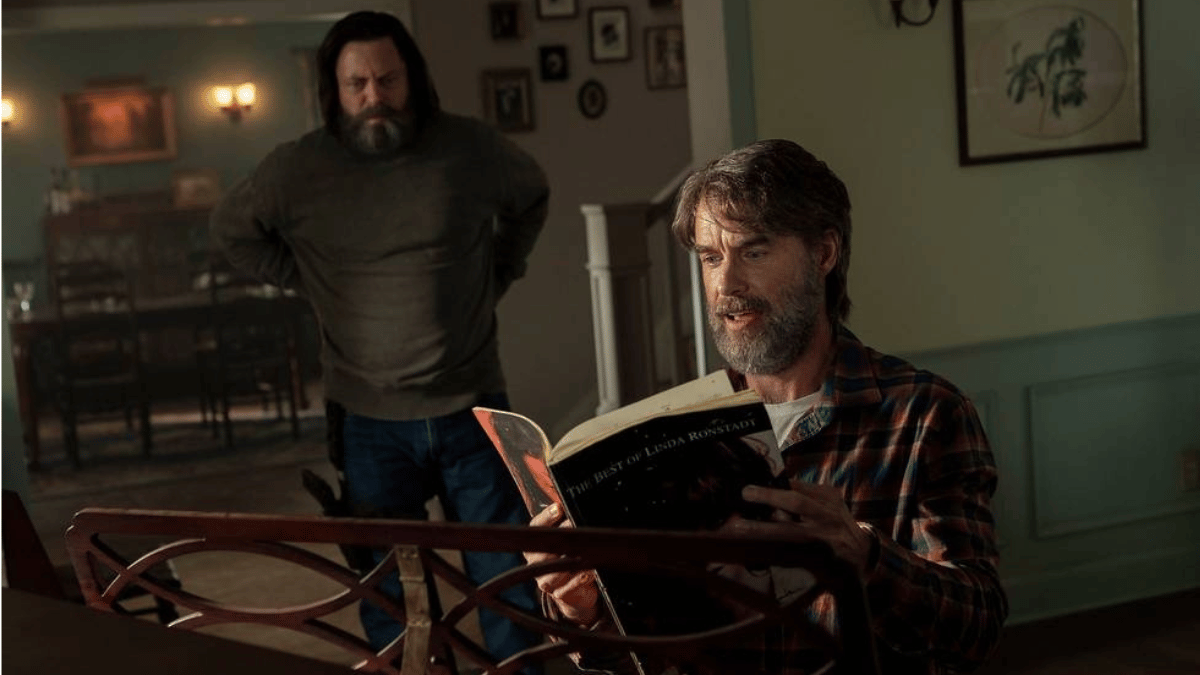
The change results in a powerful series of scenes that depict a sweet and endearing romance that carries the weight of tragedy from a couple trying to make a life together, after the world has gone to hell. The change retains some of Bill’s paranoid spirit as he argues with Frank about doing up certain sections of the town for a potential group of friends.
I really appreciated how Nick Offerman takes the brash and loudmouthed Bill from the game and turns him into a sensitive person who is still not willing to put aside his paranoid delusions. At the same time, there’s something almost machine-like in Offerman’s performance. One good example is after he hears Frank say how amazing it is to have a shower after ages. There’s almost a mechanical way he responds to the words as he efficiently turns and leaves the room. It’s akin to someone who is so clockwork to surviving that the precision in his body movements is the only response when it comes to emotions. This results in the subtle instances of Bill’s emotions throughout the episode all the more striking in their power.
In her brief scenes, Bella Ramsey impressed me in this episode. In particular, the scene where she finds an infected creature whose been crushed is particularly heart-wrenching. Ramsey balances an almost scientific curiosity with sadistic cruelty. Pedro Pascal continues to be the show’s most impressive acting element and seeing him absorb the gravity of Bill’s parting words was beautifully poignant.
Like previous episodes, the changes in a roundabout way get to the heart of what made the Sony game work; whether it’s the lengths you would go to for your loved ones (in the tragic final moments that Bill and Frank have with one another) or the darkly comic spirit that pervades Bill’s letter (much like Frank’s in the game).
But above all, the changes are interesting to see how they affect the final outcome and potential events of Part II. There’s a tragic irony to Bill and Frank’s life together, knowing what happens to Ellie in the second video game. And it’s a mark of an excellent show that gets you to reconsider events of multiple source materials.
TV, TV! I’m almost one review away from a meme-worthy pile on the conference for Microsoft’s Xbox One, whereby the word TV was said a lot. In all seriousness, it’s honestly great to be back reviewing movies. And I could not think of a better one to start the year with. While January is a quiet month across the pond, in the UK, it’s the time when all the Oscar-type movies release and vie for attention. With this in mind, I sense a bit of a theme with this year’s crop, which is a celebration of movies as a whole (between The Fabelmans, Empire of Light and Babylon) So, I’m curious how Damien Chazelle’s latest contends with this overarching theme. Have you seen Babylon? Let me know in the comments below.
Review
So far, Damien Chazelle’s films have excelled at juxtaposing the ambitions of his main characters with the personal toil it takes on them, whether it’s Andrew’s internal life in the pursuit of musical perfection in Whiplash or the central couple’s relationship in La La Land, that’s sacrificed on the altar of their ambitions. Babylon is an enrapturing follow-up to themes that Chazelle has explored in his other movies, existing as the cinematic equivalent of a Jackson Pollak painting. It has the veneer of being unruly and erratic, but it’s a film that viscerally celebrates the era of early Hollywood while denigrating its larger-than-life excesses.
Set in the years between the peak of Silent Cinema (the 1920s) to the advent of the sound and musical era, Babylon depicts two people’s ever-changing fortune in the industry. The first is Manuel Torres (aka Manny) (Diego Calva). He’s a Mexican film assistant who yearns to have a large footprint in the industry. The second is Nellie LaRoy (Margot Robbie), who aspires to be a star on the silent screen. Through various trials and tribulations, the pair experience the highs and lows of being in the Hollywood machine.
In contrast to Chazelle’s other movies, Babylon is an effort that demands your attention in rather showy and bombastic ways. This comes in the form of many parties that are depicted throughout the runtime. In one breath, they can be seen as juxtapositions between an era in its infancy (Hollywood) and the last days of Rome in their sheer acts of surreal debauchery. But I found them quite interesting. In particular, the opening one (before we’re treated to the title) feels like a truthful depiction of the roaring twenties in a manner that would make Jay Gatsby blush, say blimey and promptly take a long lie down.
They also reminded me of the chaotic verve of some of Terry Gilliam’s movies, which equally had a satirical eye in their anarchic spirit. In the case of Babylon, it uses its chaos to both illustrate the unwieldy nature of early movie-making and the delusions our central figures indulge in being part of that system.
Take the famed silent actor Jack Conrad (Brad Pitt). He is a vocal advocate for the virtues of Hollywood movies in people’s lives and the new ways they can innovate (namely sound). However, he’s often aloof at his continued irrelevancy and power as a star in the face of Hollywood steamrolling into progress and modernity. If Conrad is an ignorant frog who is unaware that he’s slowly been boiled alive, then LaRoy is a tragic flame that’s swiftly snuffed out.
Due to the character’s insecurity and exposure to the excesses that come from the Hollywood lifestyle, LeRoy chooses to become the embodiment of it by acting out in impulsive ways. However, when the system requires her to be well-mannered, she chooses to become the contemptible figure that people secretly think about her. These scenes where LeRoy has to be at a buttoned-up doner party felt like Chazelle’s critique of the Oscar-baiting campaigns that require excessive sucking up and swooning. Even LeRoy’s last appearance in the film, disappearing into the night and subsequently being reported dead in a newspaper montage, feels like a commentary on the fate that befell many early stars of the silver screen.
While the first two characters in Babylon’s triad feel completely in synch with the themes and satire of the picture, Manny gets lost in the shuffle. This is due to the screenplay saddling the character with a never-ending feeling of passivity. Many things happen to Manny rather than the character having any sense of agency. Even the life-changing event that ignites a wave of success (for the character) comes from someone else’s suggestion rather than Manny himself. It is a shame as Calva gives a committed and passionate performance (especially in the opening where he delivers a barnstorming speech about what it would mean to be part of movies).
Pitt’s performance at the tail end of the film, as he realizes his time is up as a star, is the most striking, particularly as they contrast with the bravado displayed at the beginning of the movie. Robbie delivers a star-making turn worthy of Katherine Hepburn as the live wire LeRoy who always feels like she’s performing (even privately). And in a film littered with excellent performances from characters actors such as Jean Smart and Eric Roberts, Tobey Maguire steals the show. It’s fun to see his infectiously dorky and puckish charm being filtered through a disarming mobster who has a rancid idea of entertainment.
In his direction, Chazelle channels Gillam too. In particular, one scene reminded me of the Brazil filmmaker’s theatrical tendencies. There’s a scene where we see a closeup of Manny, half-lit by a green-tinted colour. During this moment, he has to tell Lady Fay Zhu (Li Jun Li) that she’s no longer needed for writing intertitles for silent movies. The simple almost spotlight moment is an effective illustration of the twin faces that Manny now carries as a human being and studio executive.
Likewise, an early scene in which we’re shown a tracking shot of a historical silent movie is amusing for its sheer disordered nature that at times feels Python-esque in its humorous reach. The same could be said for Babylon’s editing which wrings quite a few instances of black humour out of its pauses and slow moments early on. These go a long way to showing the cruel nature of Hollywood as its popularity comes at the price of its increasingly merciless soul. In those instances of clarity, the sheen of Hollywood loses its lustre, much as Chazelle intends. And that in essence is partly why Babylon engaged, moved and thrilled me to no end.
In stark contrast to last week, there’s almost a sense of relief to this preamble. No longer is there a protracted clearing of the throat or long-winded history that has to sound interesting (in so many words). Instead, it feels as casual as drifting onto the bottom of the escalator. The destination is clear, and now I can enjoy my journey to the top. Bad analogies aside, have you seen this week’s episode of The Last of Us? Let me know in the comments below.
Review
Much like the pilot episode, the second episode of The Last of Us represents a fascinating case of adaptation. But it also plays like a clear thesis statement for the show as a whole, namely the blurred line between fidelity to the visuals of the acclaimed video game and documentary realism (via the filmmaking).
Similarly to the first episode, Infected has a cold open. This time, it depicts a female mycologist investigating the outbreak of a fungal virus among a group of factory workers. She concludes that there’s no discernable cure or vaccine that can be manufactured, so, therefore, a scoured earth approach is required (via bombing major cities to stop the virus from spreading). Meanwhile, in the present day, Joel and Tess continue to transport young Ellie as they venture into a seemingly abandoned post-pandemic Boston.
From the opening that’s hauntingly real in its sobering implications to the use of shaky cam esque camera moves, Infection establishes a grandiose documentary style that gives us a credible and immersive view of a post-virus America. This is combined with a subtle change in perspective when engaging with imagery that harkens back to the game. A great example is a moment early on that starts as a medium shot of Ellie looking up at these fixed tall buildings. Then the perspective turns to a low-angle shot as the camera almost breathlessly captures Ellie’s awe-induced reaction to the majestic display.
The game’s creator (Neil Druckmann) makes his directorial debut, and moments such as the above represent a firm understanding of the subtle changes the medium of television can make in the adaptation process.
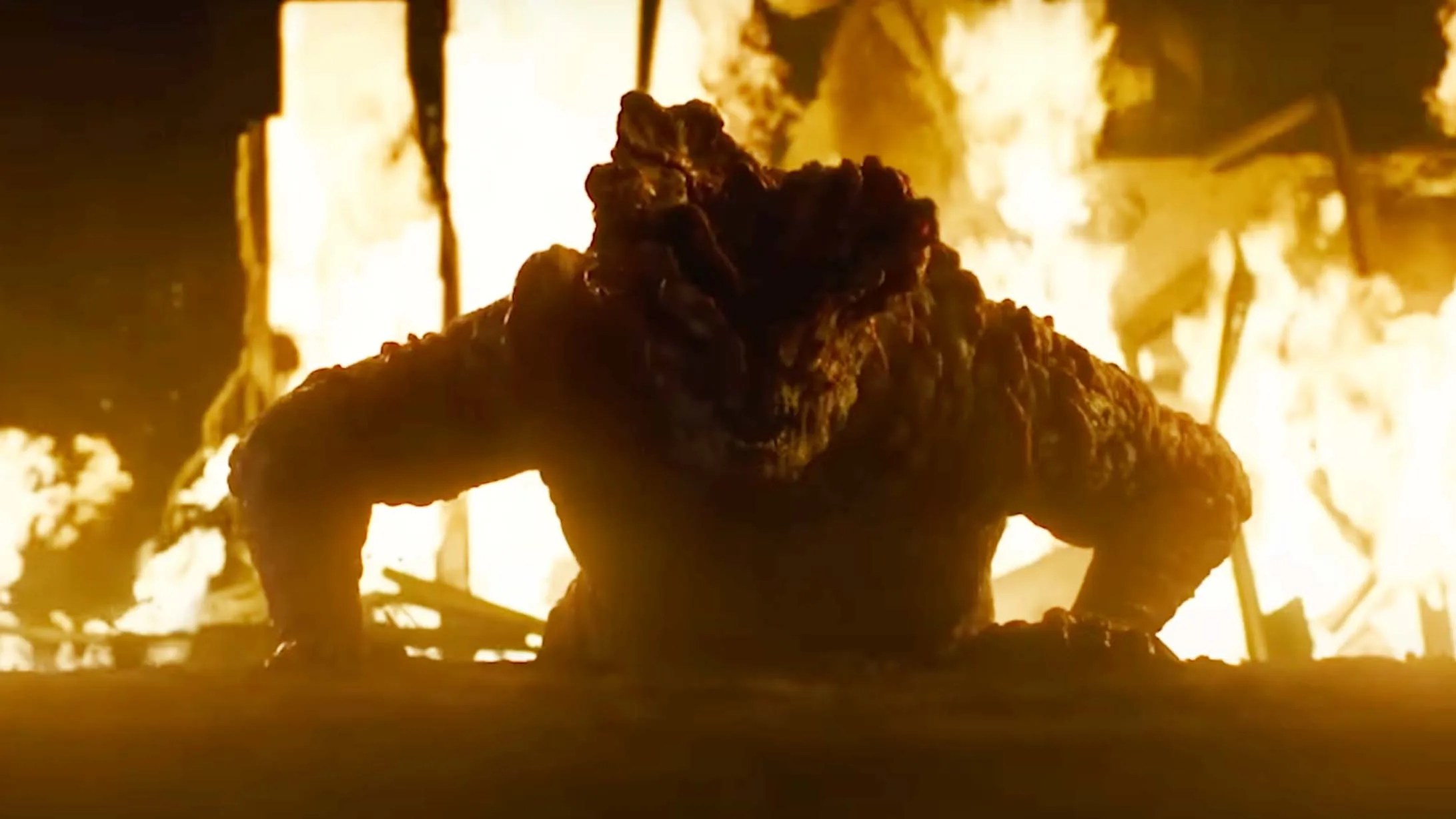
Much less clear is a change that happens near the end of the episode. The moment has a frightened Tess being kissed by an infected creature. At first blush, the moment is seemingly created as a sense of tension as the character is trying to ignite a light. However, on further inspection, it appears to be a grotesque instance of violation. It plays like an odd reference to a line that Tess says to Ellie earlier whereby even though she’s immune, she can still be ripped apart and that’s what she requires protecting from. Along with discussions about the infected still seemingly having some if a little semblance of their original thought process. The moment could be played as an odd moment of the creature reaching out to reassure an afraid Tess. However, you slice it, it’s quite a record-scratch moment.
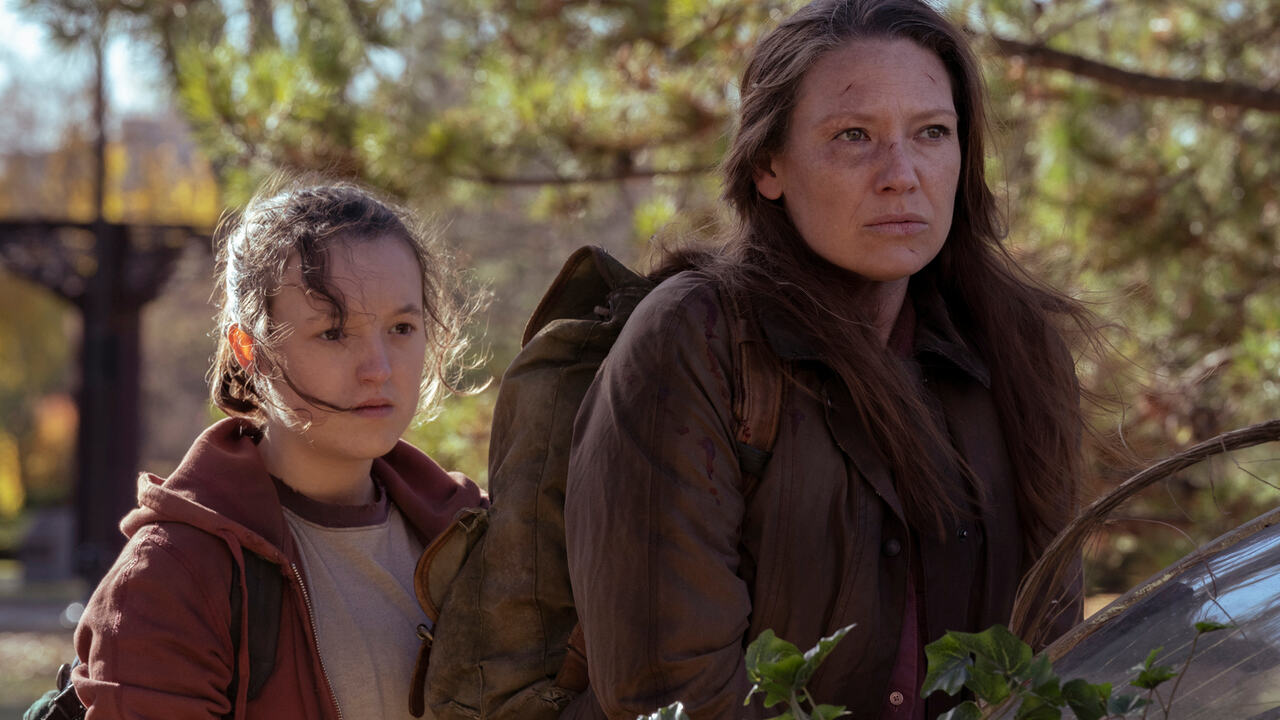
Anna Torv provides the episode’s best performance in a fiercely commanding turn as a figure who feels like she has to atone for the choices she and Joel have made. Pedro Pascal’s silent moments, whether its his hand shaking or his various gestures to Ellie (in an abandoned museum), kept me riveted. In fact, they remind me of just how much of a godsend he is in the part. And Belle Ramsey continues to impress me in a performance that walks a tightrope of childlike and curious.
Finally, the episode gives a lot more space for Gustavo Santaolalla’s score. The composer who also scored the video games turns in a suitably disturbing discordant score along with a few gentle grace notes of peace and happiness. Much like the adaptation process itself, I’m impressed with the splitting of the difference between faithfulness and something unique.
To me, The Last of Us is akin to being the Casablanca of video games insofar as being a much beloved and weighty experience. It also defines and becomes synonymous with an era in a medium’s history (much like Casablanca has become a movie that springs to mind when someone says the Golden Age of Hollywood). The 2013 video game was certainly a paradigm shift for the medium, proving that it can tell gripping, emotive tales that are thematically rich and worthy of being called art.
It’s funny thinking back that I was rather mixed on The Last of Us on my first playthrough. I don’t know if I had become jaded by the zombie sub-genre or the weight of expectation that the game carried with it, but my arms were somewhat crossed throughout. I certainly enjoyed the gameplay loop that stuck an excellent balance of stealth, action and environmental storytelling (via problem-solving) etc.
Without going too much into it, I thoroughly loved Part 2. Its scope, ambition, themes and how it used the controller to make the player complicit in some of Ellie’s heinous acts stuck with me. On a subsequent playthrough via the PS5 remake, Part 1 resonated with me a lot more, with themes and emotions bubbling to the surface with greater clarity.
And now we come to the HBO adaptation of The Last of Us. There is something somewhat ironic and meta about the fact that many reviews of the game have cited it as HBO esque series in its scope and ambition. So, to now see it being adapted to something it was held up against just amuses me to no end.
But before I get to my thoughts on the first episode, let me address the big elephant in the room. As the name of my blog implies, it’s dedicated to discussion and reviews of films etc. However, I have tackled Twin Peaks in the past (through the prism of Fire Walk With Me and some episodes of Season 3) and The Mandalorian. Both those properties had roots in cinema, be it David Lynch’s cinematic prequel or Mando’s first episode being screened at select UK cinemas.
The Last of Us is arguably my first full dip into the waters of television. With this in mind, the reason why I’m asking you all to indulge me is that I want these to be like entries in a diary (much like blogging can be) as I tackle an acclaimed game being adapted to another medium. I think it will be an interesting challenge and a nice change to my other writings. At the same time, my experience with these games has been quite profound and private. Due to reviewing the series, I’m taking myself out of the general noise of the discourse (not watching various breakdowns and reviews etc) and instead focusing on my thoughts on each instalment of the show. So, I hope you join me as I intend to be back here every Monday evening with my thoughts on the latest episode from HBO’s The Last of Us series.
Have you seen the first episode of The Last of Us? And have you had any prior experience with the video game? Let me know in the comments below.
Review
By the end of the first episode of The Last of Us, I was reminded of a simple and effective quote from Doctor Who’s 50th-anniversary episode, “The Day of the Doctor.” At the end of that episode, after reflecting on what he dreams about, the Doctor says, “Home. The long way round.” Much like the Zack Synder-directed Watchmen movie and the Damon Lindelof-penned Watchmen series, The Last of Us pilot carries the convictions of its source material but goes about setting up its themes in fascinating new ways.
After a lengthy and tense opening, which has a scientist outline how the human race can be brought to its knees via a fungal virus: the first episode of the HBO series introduces us to Joel Miller (Pedro Pascal), his brother, Tommy (Gabriel Luna) and daughter, Sarah (Nico Parker). Amid the backdrop of a fungal virus, the family unit befalls a devastating tragedy. 20 years later, Joel is working various jobs in a Boston quarantine zone and is trying to contact his brother. He is joined in his search by his frequent smuggling partner, Tess (Anna Torv). However, life becomes complicated for the pair when the leader of an insurgent group (The Fireflies), Marlene (Merle Dandridge), tasks them with transporting a 14-year-old girl, Ellie (Bella Ramsey).
The appeal of the pilot episode is from its dance between faithfulness to the source material and inversion of what we know. The best example is Sarah’s point of view. In the game, we get a brief sense of her relationship with Joel before the action starts. However, here, we get more scenes as the structure is a day in her life.
These scenes where Sarah acts as someone who is almost a parental figure to a dozy Joel are a sweet reminder of how kids are as important in providing a sense of calm and rationality in our everyday chaotic existence.
At the same time, the filmmaking in these sections is quite subtle and impressive. There are a few locked down shots, which occasionally obscure the background. They go a long way in emphasizing tension and the subtle instances of Sarah missing allusions to the brewing horror of the pandemic. Sarah’s perspective is also crucial for the introduction of a theme that could permeate the entire series.
After finding her elderly neighbour in a zombified state, Sarah runs outside and is met by her father and uncle. She’s horrified to see Joel killing the undead creature. At once, it points to the game’s theme of the lengths we’re willing to go to protect our loved ones. But it also points to how we can lose our humanity in the pursuit of violence (even in a justified situation). Later on, there’s almost a direct mirroring of the tragic circumstances surrounding Sarah (this time involving Tess and Ellie). I found this scene to be the episode’s most promising moment. It’s a reinforcement of the shocking lengths you’re willing to go to protect your loved ones. But it also could be read as a cycle of violence that’s inherently primal and keeps repeating (particularly in this climate). The moment could sow the seeds for some of the themes that spoke to me with Part 2.
While Pedro Pascal has been famed for playing quite paternal roles in the past, he casts an impression as Joel. His initial goofiness and subsequent cynicism (portrayed in fleeting gestures) are striking in illustrating a man who is broken and frozen in time. From the trailers, I had my doubts about Bella Ramsey as Ellie. However, she gives an impressive performance, portraying the fierceness and intelligence that made the character such an indelible presence in the first game. In her reprisal of Marlene, I appreciated Merle Dandridge’s sardonic and almost menacing turn as the leader of the Fireflies.
It sounds odd to say, but the show’s worldbuilding via elaborate set design and frequent bustling activity with slow panning camera moves gave me a better sense of the world than the video game. Part of this comes from the perspective being broader and the details being more sketched in. Also, moments such as Joel throwing a child’s dead body in a fire go a long way in portraying the downtrodden and hopelessness of a post-pandemic Boston.
Overall, the pilot episode is a solid start to The Last of Us series. While it’s undoubtably faithful to the source material, it uses its medium to plant interesting themes and motifs that could permeate the series. Much like the quote from the Doctor, it appears so far to be getting to the heart of the video game in its own unique way.
I don’t know if it’s a product of getting older or the fact that it’s a start of a new year, but I’ve been fondly looking back at the cinema from the era I grew up in (aka the 90s). To me, it’s the time when the medium seemed larger than life and wonderous in the images and situations they depicted. However, many of the action movies from this era exist in my mind as singular moments scattered across an ocean of cinematic experiences. This year, I will attempt to remedy that by watching and reviewing some 90s action movies. The first on my list is True Lies, which on the surface seems like an interesting outlier in James Cameron’s filmography insofar as between sandwiched between the technologically influential Terminator 2 and box office behemoth, Titanic. Have you seen the 1994 movie? Let me know in the comments below.
Review
James Cameron’s action moves have always had fascinating contradictions. On the surface, Aliens seems like a pro-military and gun movie, but also has a maternal spirit and empathy coursing through its veins. Terminator 2 is about two machines who relentlessly kill. However, the most robotic and machine-like character turns out to be a militant Sarah Conner, juxtaposed with the T-800, who learns to be an empathetic surrogate father figure to a young John Conner. Within this tightrope walk between militant and primal emotions, True Lies is a fun and captivating movie. It’s essentially a perfectly pitched Schwarzenegger action movie with a beating heart of domesticity and martial disenchantment.
Cameron’s fourth movie tells the story of Harry Tasker (Arnold Schwarzenegger), who unbeknownst to his wife, Helen (Jamie Lee Curtis) has been a secret agent for the Omega Sector, which specializes in counterterrorism. Life becomes complicated for Harry when he suspects his wife of having an affair. The paranoia leads to a chain of events that will forever change Harry’s marriage as his personal and work life collides with one another.
Part of the appeal of True Lies comes from its tantalizing premise of what if Arnie the action star had a semblance of internal life. While some of Arnie’s previous movies have had his character attempting to protect loved ones, they’ve often felt like plot devices for motivation as opposed to independent characters with agency. One of True Lies’s few awkward steps comes from Harry’s daughter, Dana Tasker (Eliza Dushku) being relegated to a plot device (with the thread about her stealing being set up and not addressed again).
This aspect is coupled with the movie being an unabashed romantic and heightened spy movie. Cameron’s portrayal of the spy world is post-James Bond in the best way with time-wasting and seductive tangos along with amusing action situations. The highlight is a chase between Harry on a horse and the central terrorist figure, Salim Abu Aziz (Art Malik) on a motorbike (within the confines of a hotel).
At the same time, Cameron has fun with the spy concept insofar as installing it with a universality via many of the characters having a fake it until you make it confidence, that makes them able to play the part well. A recurring joke with many of the people that Jack greets asking “Who was that” along with Simon’s (Bill Paxton) sleazy car salesman illustrates this quality well. The juxtaposition between Simon’s and Jack’s confidence, indulging in the part of being an undercover agent shows Cameron attempting to blur the line between the spy and the sleek salesman.
But the true masterstroke of True Lies comes from how the spy adventure affects Helen. Curtis’s portrayal of a mousy and bored suburban woman, who has to discover her confidence and sexuality amid a mission is the lynchpin for Lies not becoming a post-modern Bondian affair. It also helps that Curtis equals Arnie in the delivery of one-liners (often with a sardonic and sharp edge). In particular, her line delivery of “I married Rambo!” is as funny in its post-modern implications as they are in a wife realizing she’s married to an action star.
Arnie is serviceable as a spy who is trying to lead a double life. He comes alive when he’s angry or has to portray action convincingly. However, much of the heavy lifting of making him a credible presence comes from the supporting cast. In particular, Tom Arnold’s Gib goes a long way in his world-weary cynicism and humour to make Arnie’s Jack a loose and fun spy.
If there’s a metaphor for how Cameron uses the Austrian action star then it comes in the scene with him and Curtis in a hotel room. Jack is dimly lit as he watches Helen strip and dances seductively in a series of medium shots. Aside from astounding Jack in seeing his wife in a new light, the scene also casts a shadow on Arnie and instead puts the spotlight on Jamie Lee Curtis’s embrace of her sexuality and spy part. It’s an encapsulation for True Lies not only being a more human showcase of the Arnie action persona but a humbling one too.









 SGS On Film