My Top Ten Films of 2019

10) Stan & Ollie

Unit stills photography

Stan & Ollie is a delightful and gentle tribute to the famed comedic duo. Told in the pair’s twilight years of fame, the film wonderfully depicts their relationship as though its a marriage in its last throws. At the same time, the picture effortlessly illustrates how Laurel and Hardy’s comedy uplifted and united people. Consequently, the movie becomes a little slice of innocence that’s much needed in our bitter and divided times.

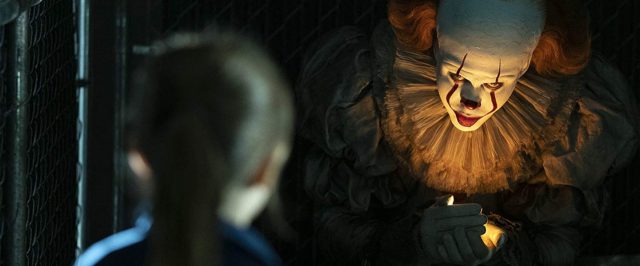
9) It Chapter 2

It_Chapter2-1280x533

It Chapter Two is an ambitious and sobering effort, weaving past and present with such beautiful elegance, that the film becomes the cinematic equivalent of group therapy. It never forgets the human element of the story and how fear can paint us in the worst possible way.

8) Joker 

making-of-joker

Joker is a genuinely startling experience. It’s the sort of film that’s been pitched and promised when most comic book movies are in development but never delivered. It doesn’t reinvent the mass popular sub-genre. Instead, it shows new colours the comic book movie can apply to its canvas.

7) Under The Silver Lake

usl

Under the Silver Lake takes the neo-noir to mesmerising heights by combining standard elements from a Hitchcockian thriller, Lynchian surrealism and ’90s slacker comedy. The result is a film that shines in its momentary weirdness than overarching narrative and theme.

6) Marriage Story 

marriage-story-movie-cast-character-guide-screen-rant

Marriage Story doesn’t just depict divorce with biting and painful realism. It also asks questions about how much you can lose a sense of self in a relationship and how finding your voice is crucial to your identity. The film’s best aspect comes from the blocking of key scenes where the characters use the full space to shout, vent and emotionally break down.

5) The Irishman

The-Irishman-first-look

The Irishman is a return to mob movies for Scorsese and is a sobering rumination of the genre, as opposed to an electrifying rebirth.

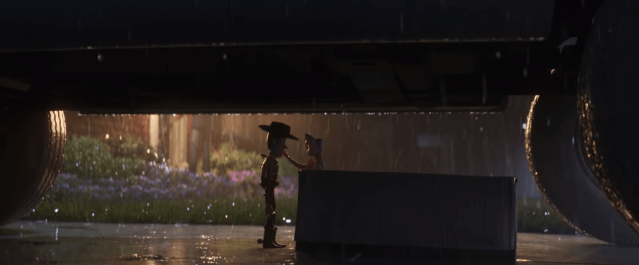
4) Toy Story 4

sub-buzz-27982-1556690047-1

Toy Story 4 necessitates its existence by opening up its narrative to the alluded aspects of the previous films. In this way, the film is like an old toy that you rediscover and find that it has more features than you initially thought.

3) Us

la-1551992339-f904ah5dhl-snap-image

With images that will remain etched in your mind and a premise that keeps unravelling into something rich and interesting: Us is a serious call to arms film for cementing Jordan Peele’s talent as a horror auteur of the highest degree.

2) If Beale Street Could Talk

Screen-Shot-2018-09-20-at-9.05.10-AM

If Beale Street Could Talk is about how injustice haunts every day living. It can cause us to become cynical, question long presumed truths and even want to emotionally outburst against the entire world.

1) Once Upon A Time…In Hollywood

1_K4dQp9owJTn9WZkRZ_pcEA

Once Upon a Time…in Hollywood is an astounding cinematic work; a singular mosaic, presenting genuine existential angst through the prism of a gleaming era, which was starting to lose its sheen. But like the magic of movies, for a brief moment, Tarantino makes us believe that the magic of 1969 never truly died.


Posted in 2019, 2019 Films, Lists, Top Tens | Tagged , , , , , , , , , , , | 8 Comments

Ranked: The Star Wars Films (1977-2019)

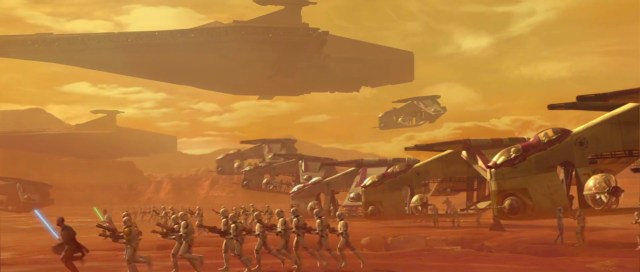
 11) Star Wars Episode II: Attack of the Clones

Star.Wars.full.2290753

Attack of the Clones is a shrug of a movie, often mixing belaboured action sequences with awkward dialogue exchanges. It also marks George Lucas’ digital aesthetic at its least charming and wondrous.

10) Rogue One: A Star Wars Story

hero_Rogue-One-2016

I’ve never been able to get on board with this fully. For being the first “experimental” Star Wars movie, it does rely heavily upon the saga films’ storytelling and cinematic tenants. The result is a film that feels like a virtual museum of nostalgia.

9) Solo: A Star Wars Story

solo-trailerbreakdown-shipyard-700x291

Despite boasting some great world-building and Bradford Young’s exquisite cinematography, Solo is a low stakes affair. Its central problem comes from the main character feeling less interesting than the world he inhabits and the supporting players he interacts with.

8) Star Wars Episode IX: The Rise of Skywalker

reactions-to-rey-kylo-kiss-in-rise-skywalker

The Rise of Skywalker is a good Star Wars film. It throws a lot at the wall. Not all of it sticks. But it does understand what’s made the franchise indelible for 40+ years. Rey’s arc of control and internal strife is the film’s highlight

7) Star Wars Episode VI: Return of the Jedi

E6S-KEY-43

Return of the Jedi is an embarrassment of riches in terms of creatures, effects and imagination. And it mostly delivers in being a dramatic conclusion to the Original Trilogy.

6) Star Wars Episode VII: The Force Awakens

star-wars-force-awakens-kylo-ren-rey-1200x520

Featuring distinctive new characters, great imagery and a rousing John Williams’ score: The Force Awakens is a persistently fun and fascinating mixtape of the Original Trilogy.

5) Star Wars Episode I: The Phantom Menace

50458fd2cb939de2df4ddd5afd11becb

To an entire generation, this film is a kidified and ruinous pariah. But to me, it’s Star Wars at its most innocent and optimistic, advocating the importance of symbiotic relationships to overcome the problems of the world. The impressive set pieces and creative world-building does not hurt either.

4) Star Wars Episode VIII: The Last Jedi

3fotr75twd901

The Last Jedi is an assuredly bold and subversive film. It digs beneath the surface of the space fantasy franchise, finds its mythological heart and puts it on a monumentally striking canvas. It’s also a parable of failure that’s held a great deal of personal significance for me.

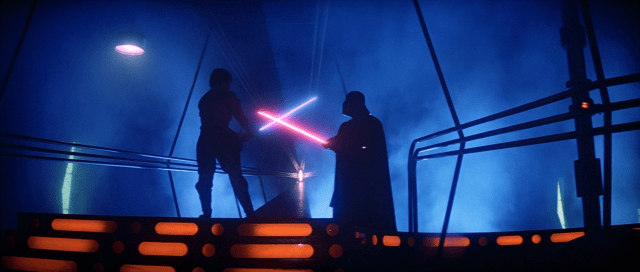
3) Star Wars Episode V: The Empire Strikes Back

Lukevaderesb

I always forget how great this film is. It’s impressive for sustaining a persistent level of tension with its characters constantly being in danger. Or having to face hard truths about themselves. The valuable gift it’s given this franchise is that the middle chapters can be introspective and personal.

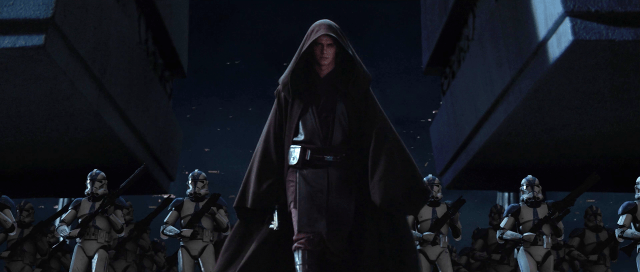
2) Star Wars Episode III: Revenge of the Sith

Knightfall2

Despite having a few deficiencies, Revenge of the Sith is a tragic and poetic final bow from George Lucas. It’s the one Star Wars film that illustrates why the franchise could be considered glorified silent movies, with some stunning imagery, fueled by John Williams’ powerfully haunting score.

1) Star Wars Episode IV: A New Hope

69297ab2f00e67cc5e061e0c4d029f40

It’s so easy to overlook this film. But its roaring success is more than being the right picture at the right time. Its fusion of Saturday Matinee Serials, Spiritually and World Cinema makes it a winner. It’s also charming, funny, exciting and always a joy to watch.

Posted in Lists | Tagged , , , , , , , , , , , | 4 Comments

Review: Star Wars: The Rise of Skywalker (2019)

Star-Wars-Rise

In A New Hope, when Han Solo describes the Millennium Falcon, he says “she’s got it where it counts.” The same could be said of The Rise of Skywalker- an occasionally frustrating and erratic film. However, in its best moments, the final instalment proves to be a soaring love letter to the franchise and its themes. The force is mostly with it.

Touted as a culmination of the Skywalker saga, (comprised of three trilogies worth of films), The Rise of Skywalker takes place a year after the events of The Last Jedi. When the saga’s overarching villain- Emperor Palpatine (Ian McDiarmid) is discovered to be alive and well, our heroes, Rey (Daisy Ridley), Finn (John Boyega) and Poe Dameron (Oscar Issac) attempt to find the Dark Lord of the Sith. They do this in planet-hopping style by finding various MacGuffins that hold the key to his whereabouts. This is punctuated with Kylo Ren’s (Adam Driver) persistent force encounters with Rey, who uses them to test the young heroine’s commitment to the Jedi cause.

For a film that’s supposed to wrap up nine films, The Rise of Skywalker is surprisingly light on its feet, often charming with its humour (mostly courtesy of C3P0) and frantic exploration. But, the film does have weight, with a permeating bleakness coming from the heroes’ impossible task of overcoming Palpatine’s final order. This gives the film a great amount of urgency. Characters often have to sacrifice their dreams in service to the larger cause of stopping the ultimate evil.

Although, at times, this aspect is deflated by the film’s persistently cavalier relationship with consequence. There are scenes that commit to an emotional weighty moment and are completely undermined later by a quick fix or explanation. The film’s breathless pacing and excessive amount of plot also mean that some of the new intriguing elements of the film are brushed under the carpet.

star-wars-rise-of-skywalker-palpatine-clip-top

But the film does succeed in creating rousing action sequences, whether it’s the opening space chase that’s fueled by snarky dialogue and amusing scenery changes as opposed to adrenaline. Or the central lightsaber battle that takes place on the ruins of the old Death Star. Aesthetically, it resembles the fiery Mustafar duel in Revenge of the Sith and best represents the cyclical nature of the film series.

In a trilogy that’s showcased, talented young actors: Adam Driver has impressed the most with a delicate balance of ferocious physicality and subdued facial expressions. In the Rise of Skywalker, the actor illustrates the internal strife between Kylo Ren and Ben Skywalker with touching subtlety.

Daisy Ridley adds more shades to Rey, namely, in the form of a shadow version. She takes the inviting aspects of the character and twists them into an animalistic presence. And Ian McDiarmid’s return as Palpatine retains the terrifying stillness that was a memorable aspect of the character in Return of the Jedi.

Above all, The Rise of Skywalker is most at home in its thematic echos of the franchise. Rey’s plight is similar to both Anakin’s and Luke’s final struggles, insofar as she feels likes she’s destined to a fate she can’t change. So, she shies away from it confronting it out of fear.

d1ldpgg2idk31

This internal strife feels in keeping with a series that’s always used its mythological hero’s journey as a metaphor for burgeoning adolescence. Rey’s journey is a powerful conflict of self-identity. Is she bound by her family blood? Or can she overcome it and achieve a sense of self-actualisation? The film’s persistent questioning and depiction of this struggle are engaging.

In fact, this conflict extends to some of the supporting players, who have to grapple with their place in the wider conflict and story. At one point, Poe asks Lando (Billy Dee Williams), how did you and a small group of people beat a huge Empire? Lando simply says we had each other.

Likewise, Finn through the prism of a new character- Jannah, realises he’s not the only renegade Stormtrooper. In a story that’s had the supremacy of bloodlines and a prophecy of a chosen one, The Rise of Skywalker emphasises the optimism of banding together, and the similarities that unite us.

The Rise of Skywalker is an experience that at times could die a death of thousand nitpicks and continuity questions. I’ve not even begun to process its complicated relationship with The Last Jedi. But it’s a film that has an emotional truth about its characters and themes.

Posted in 2019, 2019 Films, Review, Reviews, Star Wars | Tagged , , , , , , , , , , , | Leave a comment

Editorial: Why I Love Star Wars

841cbb45c00dec4bc39ed18e438ff2ee

Star Wars is a cinematic bedtime story that I’ve enjoyed since the age of seven. My introduction to the series was a 1995 trailer on the Power Rangers: The Movie VHS. The fast flurry of images that highlighted parts of each film in the Original Trilogy transfixed me like nothing before. At the same time, there was something different about this trailer. It introduced a legacy of films and a sense of something that had been made. This would be my slow realisation of movies as a medium with an extensive process and history.

In Christmas 1997, I had received the special edition of A New Hope. At that point, the film appealed to me because it was about a young man trying to become a pilot. I was amazed by the film’s various aerial sequences. They were made with great imagination and craftsmanship.

At the time, I had no Star Wars toys. However, I used to take vintage RAF planes and pretend they were X-Wings and Tie-Fighters, fighting for supremacy above the skies of my bedroom. A New Hope gave me a temporary dream of wanting to be a pilot and a new outlet to express my imagination.

The film also introduced me to violence. The scene with Ben Kenobi chopping off the arm of an alien in the Cantina, (complete with a lingering shot of the arm with blood smeared on the floor), startled me in a way that no other Disney animated film had before. It illustrated that people in this fairy tale could be hurt quite brutally. This aspect would continue to fascinate me with Empire Strikes Back and Return of the Jedi. They had tough sequences that cemented the threat of a Galaxy, Far, Far Away. In many ways, this led to my love of horror cinema, later in life.

f95c0adaf57bb0029bbd412f37ffdc2d

The summer of 1999 represented my Star Wars fandom at its peak. The Phantom Menace had sparked my imagination with its sense of innocence and impressive setpieces. I also related to Anakin. He felt like an unassuming kid who was plucked and put into a long and far-reaching adventure, beyond his wildest dreams.

The film also inspired me to write. At school, we had an assignment where we had to describe our summer holiday. I wrote about my experiences with The Phantom Menace and the mad capped adventures surrounding the hype of the film. Despite being far away from a film review, the experience was liberating. It provided me with a huge amount of confidence and enthusiasm about expressing myself through the written word.

As I got into my teen years, I started appreciating Star Wars as an embodiment of mythic storytelling and mirror of history. This came in the form of a homework assignment where we had to describe and analyse the Joseph Campbell elements of the story (via the characters and events of A New Hope). I was also studying the rise of Totalitarian regimes in the 20th century. The Prequels provided a fascinating prism to view these topics through.

Celebration-Muraljpg-1200x675

What’s struck me about the Disney era is how much I opened up to sharing my fandom of Star Wars with others. I had a friend who used to go with me to see each new instalment. Watching the continuing saga through her eyes was an enriching experience.

In 2018, I had the good fortune to appear on an episode of The Wampa’s Lair podcast. I had brought on the topic of what lessons should Rey learn from the past when forming a new Jedi order. The conversation was insightful and fun. And the hosts (Karl and Jason) were exceptionally kind and continue to amaze me with their approach to podcasting and Star Wars. If you’re curious, I appear on episode 296 of the podcast (Jedi Sliding).

Around the same time, Twitter was slowly becoming my primary outlet for expressing my passion for the franchise. Between snappy opinions about various elements of the saga and discussions with some great fans, I also began engaging with the hashtag #ShakespeareSunday. Inspired by a weekly theme, I attempt to pair up a William Shakespeare quote with a GIF or image from Star Wars. My aim is to always find a relevant quote that sheds light on a particular character or element from the films.

There are countless reasons why I love Star Wars. The films are a mixture of high and low art. George Lucas attempted to combine the Saturday Matinee Serials he loved as a kid and the World Cinema he admired as an adult. The famed space franchise also contains a social conscience and universal appeal. They attempt to meld mythology and religion into an accessible and idealistic space aesthetic. But above all, they filter lofty ideas of good and evil, through the prism of family drama, making for storytelling that’s grand and personal.

Like the best bedtime stories, Star Wars has been formative for me. It’s given me the courage to be creative, sooth some of the pains of life and introduce me to a larger world of cinema, writing and history.

As we build-up to the end of the Skywalker saga, what do you love about Star Wars? How did you get into the films? Let me know in the comments below. May the Force be with you, always.

Posted in Rare Post, Rare Posts, Star Wars | Tagged , , , , , , , , , , , | Leave a comment

Editorial: My Top Five Star Wars Scenes (The Skywalker Saga)

5) I think I just blasted it

original-trilogy-luke-skywalker-11 (1)

In a sequence that lovingly embraces George Lucas’ infamous “Faster, more intense” direction, Luke Skywalker and Princess Leia find themselves trapped in a section of the Death Star, with Stormtroopers shooting from above, and a slowly opening door of troops, behind them. With their only means of escape inaccessible, Luke tries to get Leia and himself safely across to the other side.

The short scene is an illustration of Star Wars at its purest, a thrilling Saturday Matinee adventure with a tense cliffhanger and soaring ending. The scene’s briskness and ending with Luke’s and Leia’s jump to the other side (via rope) demonstrates why Star Wars is appealing to the child in all of us. At the same time, the short section encapsulates the dichotomy of Luke’s character. At this stage, he’s someone who sometimes acts without thinking, but can be relied upon for quickly thinking of a way to get out of a situation.

4) Too Many Losses

Screenshot 2019-12-01 at 16.27.03

The Last Jedi miraculously walks a tight rope between showing Leia at her strongest and most vulnerable. This brief scene between the aged General and Vice Admiral Holdo is pivotal for allowing the character to briefly mourn for all the loved ones she’s seen passed. Leia has always been the guiding light, who’s chosen to stay strong for others and the Rebel cause. However, this scene chips away at that strength to reveal someone who’s lost so much, that it’s beginning to weigh on her soul.

The exchange is also humorous and touching, with the proverbial “May the force be with you”, being acknowledged as a phrase that Leia has said too many times, and resonating as Holdo’s last words. The scene ends with the pair holding each other’s hands. The moment speaks to the franchise’s knack for portraying a sense of history with impressive visual power.

3) Jedi Steps

main-qimg-d2837e03bcab4a71919ce1ca8252696e

George Lucas once said, “Star Wars films are basically silent movies.” While there’s been a lot of great sequences within the franchise to illustrate this aspect, few have been quite so stirring as the ending of The Force Awakens. With Luke’s lightsaber in tow, Rey makes her way across the mountainous terrains of Ahch-To, to persuade the wizened Jedi master to join the fight again. Watching the scene is akin to witnessing the start of a mythological journey, with Rey making the first of a thousand steps, to achieve a sense of belonging she’s always wanted.

The scene culminates in a series of closeups: Rey’s desperation (while holding out Skywalker’s lightsaber) and Luke’s haunted expression, looking at the lightsaber as though it’s a reminder of painful days gone by. In the film’s most postmodern moment, the characters are framed in a helicopter shot, overlooking a cliff. The moment is a literal cliffhanger and a reminder of the serials that have inspired the series.

2) A Sith Legend

maxresdefault (8)

Honestly, I could do a whole blog post on this scene. It’s an effective exercise in atmospheric and riveting storytelling. On the face of it, Palpatine is attempting to seduce Anakin by offering him a way to save his wife (Padme) from dying. However, the scene plays like a lesson in the ways of the Sith. Initially, Palpatine attempts to blur the line between the Sith and Jedi by equating them both as groups who are afraid of losing power. Anakin retorts that the Sith think about themselves whereas the Jedi are selfless.

The scene then transitions into Palpatine telling Anakin about a Sith legend involving an old master named Darth Plagueis. He found a way of cheating death and in an ironic twist of fate, he could not save himself from being killed by his apprentice. The story is a perfect distillation of the Sith’s “Rule of Two”, wherein the master embodies power and their apprentice craves it, resulting in a persistently combative relationship.

The scene is a blend of interesting choices that combine to create a sense of foreboding. John Williams’ score comprised of low male choral chants gives the sense that we’re in the domain of evil. The use of lighting is striking with shadow partly covering Anakin’s face, signalling his flirtation and eventual transformation into darkness. Whereas Palpaltine’s face is in the light, illustrating the Sith no longer hide in the shadows and instead embrace being out in the open.

Above all, the scene is metatextual with Star Wars using its own mythic conventions to expose its central evil to the light.

1) A Certain Point of View

C_KBKupUAAANb9E

Luke reflecting on Yoda’s death and his subsequent conversation with Ben Kenobi is Star Wars at its best. Featuring minimal Williams’ music and some arresting imagery, (especially the moment where Luke sees the light go out from Yoda’s hut), this scene always makes me feel the burden of Luke’s plight and his isolation in dealing with it.

Ben’s speech about “a certain point of view” is important for illustrating how the truths we come to are based upon our perception of events. Or in this instance, how Kenobi saw Anakin succumb to darkness. It’s crucial for knowing how he views his former apprentice, treating Vader and Anakin as distinct personalities that can never be reconciled.

This is in contrast to Luke who just sees conflict within Vader, believing he can play on this to bring him back to the light. This creates a fascinating generational conflict between the elders, who think evil can never be redeemed, and the younger sect, who think evil can be soothed through compassion. This is Star Wars at it’s most sublime, filtering lofty ideas of good and evil through the prism of family drama. In so doing, it presents the franchise’s archetypical storytelling at its most personal and emotional.

Posted in Lists, Star Wars, Top Fives | Tagged , , , , , , , , , , , , | Leave a comment

Editorial: My Top Ten Films of the Decade

10) Gone Girl

98c9671e10bdba5a5212d7d6a67f5c28

David Fincher’s adaptation of Gillian Flynn’s popular novel twists the knife with its observations of the public and private perceptions of relationships, whilst also probing about how well we truly know our respective other. Featuring subtle direction, a haunting score and a fiendishly noir-inspired performance from Rosamund Pike, Gone Girl is a thriller for our social media age.

9) Blade Runner 2049

571710-men-women-Ryan_Gosling-Bladerunner-Blade_Runner_2049-movies-748x313

On paper, this film should never have been made or worked. However, Denis Villeneuve’s visionary sequel proves to be as interesting as Ridley Scott’s original. Boasting expressionist imagery, Roger Deacons’ Oscar-winning cinematography and a melancholic turn from Harrison Ford: Blade Runner 2049 expands its thematic scope by asking whether a life with faux elements truly encapsulates the human experience?

8) Spider-Man: Into the Spider-Verse

image (1)

In a decade where the comic book movie has risen to the mainstream, Spider-Man: Into the Spider-Verse stands tall. The movie fully embraces the conventions of the four-coloured medium, while also being a playful postmodern riff on Spidey’s movie franchise. At the same time, it’s the best response to Marvel’s Avengers; spinning a thrilling team-based film that never diminishes its central character’s search for identity.

7) This Is Not a Film

this-is-not-a-film-04132012

This Is Not a Film is equal parts protest and manifesto on how the desire to tell stories can never be quashed. Stripped of the usual problems that plague a film production: filmmaker Jafar Panahi (via a series of video diaries) tells the story of his next script. He also reflects on his recent ban as director from the current Iranian regime. At the heart of the documentary is an act of courage and defiance that turns it from riveting to dizzyingly surreal.

6) Inside Llewyn Davis

hero_InsideLlewynDavis-2013-1

Much like the musical genre, it’s steeped in, Inside Llewyn Davis feels like a raw and occasionally offbeat folk song; depicting the persistent walls its titular character hits. Anchored by Oscar Issac’s prickly central performance and Bruno Delbonnel’s ghostly cinematography, the Coen Brothers’ film does not celebrate or denigrate folk music. Instead, it tells a story of someone who lives on the fringes of achieving fame within it.

5) Under the Skin

under-the-skin-2013-001-scarlett-johansson-car-seat

By itself, Scarlett Johanson playing a nameless galactic being, who preys on men, whilst driving through the streets of Scotland is an intriguing premise. But Johnathan Glazer’s mix of docudrama with sparse science fiction imagery and Mica Levi’s evocative score makes Under the Skin one of the decade’s most audacious films.

4) Suspiria

screen_shot_2018-08-23_at_11.34.08_am

How do you remake Dario Argento’s seminal technicolour horror film? You mostly washout its colour, cast Tilda Swinton in three parts and make dancing the essential hook of the narrative. On the surface, this sounds disastrous. However, the film proves to be a captivating experience that often feels like a psychoanalysis of the nightmarish Argento original.

3) Mad Max: Fury Road

1_WeDAkdESN7SbTxIIO7Tu8g

In a decade where action films have been vehicles to test the boundaries of an actor’s willingness to do stupefying stunt sequences, Mad Max: Fury Road stands out as an impressive pariah. George Miller’s return to the mad capped, post-apocalyptic series is a future of diminishing resources and stitched-together cults (based on Viking religion and car iconography).

Conceptually, this seems like a zanier version of Miller’s second film- The Road Warrior. The remarkable difference is the chaos is seen through the eyes of Furiosa. She overtakes Max’s archetypical protagonist in carrying the film’s weight of pain, desperation and sheer determination.

2) The Great Gatsby

image (2)

Baz Luhrmann’s adaptation of The Great Gatsby is a pure cinematic fairy tale that manages to retain the novel’s roaring twenties excess and poignant spirit of an eluded dream. It also features a career-defining performance from Leonardo DiCaprio. He imbues Gatsby with a cool edge and quiet desperation, which threatens to chip away at his larger than life persona.

1) Django Unchained

django-unchained-watching-recommendation-videoSixteenByNineJumbo1600

Django Unchained is Quentin Tarantino at his sharpest, funniest and most observant. He uses the Django Western film series as a jumping-off point to tell the story of a freed slave, who puts on a persona of a slaver to save his wife. At the same time, Unchained is subtly subversive. It takes a historical subject that is usually portrayed in earnest drama and dresses it in genre clothing to mine newfound depth and meaning.

Posted in Lists, Top Tens | Tagged , , , , , , , , , , , | 4 Comments

Review: The Irishman (2019)

2282-the-irishman

Aside from his independent films in the 70s and 80s, Martin Scorsese has become a celebrated director for his reinvention of the gangster picture; turning them from smoky backroom family dramas to seedy, fast-moving and ultra-violent thrill rides. The Irishman is a return to mob movies for Scorsese and is a sobering rumination of the genre, as opposed to an electrifying rebirth.

Taking place over the course of fifty years and initially told within the span of a long car journey: The Irishman is about a second world war veteran, Frank Sheeran (Robert De Niro). Initially, starting out as a delivery man for steaks, Sheeran finds himself involved with the Bufalino crime family, run by Russell Bufalino (Joe Pesci) and powerful union leader, Jimmy Hoffa (Al Pacino).

In the context of Scorsese’s other genre work, The Irishman is a staggering departure. Aesthetically, Scorsese employs the usual long travelling shots and zippy musically driven montages, but their use is interesting. The opening long shot (set to the doo-op song- “In the Still of the Night” by The Five Satins) travels the full length of an upmarket retirement home before revealing an aged Sheeran. It feels like a lavish and haunting riff of the famous Steadicam shot in Goodfellas; emphasising the empty long term effects of the gangster’s life, as opposed to its hypnotic and immediate short-term social benefits.

It’s also fun to see Scorsese’s usual acting collaborators dressed in different clothing. In Goodfellas and Casino, Pesci’s characters were foul-mouthed chihuahuas whose quick temper and fiery penchant for violence was terrifying. As Bufalino, Pesci is a warm and paternal figure, whose gracious gestures and warm smiles make him an unassuming crime family boss. Likewise, it’s great to see Harvey Keitel in a hilarious cameo that pokes at his tough-talking screen persona. Pacino takes the spotlight in a big, brash barnstorming performance. He walks a fine line between being a charismatic leader and fiery meta commentator who occasionally dissects the conventions of the genre (particularly one frequent gag that mocks how every tough guy is called Tony).

But De Niro casts the biggest impression with a subdued, quiet and mostly internal central performance. Sheeran is a character who finds verbal communication difficult. So, in moments when he’s emotional, De Niro impresses with his facial expressions that are like a pendulum swing between caution and genuine emotion trying to seep out.

This conflict of expression in De Niro’s character encapsulates what The Irishman is about. It depicts a man who becomes a gangster, floats through American history and at the end of it all, does not have much to say for himself. In contrast to Casino and especially Goodfellas, Sheeran’s reasons for the lifestyle feel hollow and delusional in his justification of protecting his family.

These moments provide the film and Scorsese’s final bow to the genre with a tragic tinge. Despite it’s juggling of different eras, extensive and convincing visual effects for De Niro, Pacino and Pesci ageing: The Irishman defines itself in the small moments where Sheeran loses the grasp of those he holds dear and the casual dismissal of the moral nature of his day job (particularly one montage where he talks about every gangster throwing all their guns in the same river).

The final scene shows us a medium shot that is a distant glimpse of a vulnerable Sheeran through the prism of a slightly ajar door. In spirit, it evokes the last shot of John Ford’s The Searchers, where Ethan Edwards stood on the threshold of his family home. Similarly to Edwards, Sheeran now stands as the last man of his kind, waiting for the door to close on his life, akin to Scorsese himself closing the book on the entire genre.

Posted in 2019, 2019 Films, Review, Reviews | Tagged , , , , , , , , , , , | Leave a comment

Review: Midsommar (2019)

190702112915-midsommar-film-trailer-grab-1

As far as cinematic debuts go, Hereditary was impressive; terrifying with the tensions of its familial angst and underhanded supernatural aspects. Ari Aster’s sophomore effort, Midsommar- is an ambitious and often engrossing experience. However, it’s marred by thematic confusion and the director’s ascetic intention often exceeding his reach. In this way, the film becomes the cinematic equivalent of the Icarus Myth, insofar as it flies too close to the sun of its cult plot and falls to the ground with a muddled sense of pathos.

Midsommar is about five students who travel to Sweden for a celebration in a remote commune. The five members are comprised of Psychology student- Dani (Florence Pugh), boyfriend- Christian (Jack Reynor), goofball- Mark (Will Poulter), studious- Mark (William Jackson Harper) and their guide/host- Pelle (Vilhelm Blomgren).

Conceptually, Midsommar is about a young woman who tragically loses her family and through her experiences within Pelle’s ancestral communion, she gains a family (in a spiritual sense), who collectively attempt to empathise with her feelings of loss and betrayal.

However, in execution, the film is actually about the continual breakdown of Dani and Christian’s romantic relationship. While this is a semi engaging plotline in its own right, the attempts to convince us that it’s the same thing is ludicrous. In a key scene, Pelle consoles Dani by telling her about the virtues of being raised in a community. He then goes on to ask her if Christian evokes the same feeling, with the pivotal question- “Does he feel like home to you?”

At best, this is emotionally disingenuous, creating a false equivalency between romantic and familial love. To compound the problem, the film forgets about its stark opening. Dani’s bipolar sister acts out by killing her Mum, Dad and herself (via the release of carbon monoxide into the family home).

Pugh’s emotionally raw performance never makes us forget this aspect. But it does not really factor into much of Dani’s transformation from emotionally fragile to ruthlessly detached (opting for her boyfriend to be sacrificed after discovering his semi-public case of infidelity). Dani’s transformation is the film’s biggest cross to bear, never feeling believable or justified.

Much like Hereditary, Aster ascetically excels at framing his characters like pawns in the larger scheme of life. In Midsommar, this quality is achieved with some quite stunning birds-eye view shots where the characters appear like ants within the confines of the community. Aster also creates some quite startling imagery. One such moment is when one of the elders bows before a stone tablet and smears it with their bloody hands.

At times, the film does sometimes dangerously flirt with being camp. The horror of a deflowering is somewhat reduced by a sudden breaking into a song from one of the surrounding cult members. And the aftermath of the event is like a Bennie Hill sketch that’s had a head-on-collision with the climax of a standard Friday the 13th movie.

Despite this, Midsommar is a commendably odd film that staggers in what its trying to evoke and say. This is particularly evident in the superior Director’s Cut, which pushes Christian’s general emotional distance, in favour of opportunism to the forefront. This comes at the expense of Dani’s transformation that felt sketchily developed in the original version and glaringly odd in the longer cut. One new scene involving an argument with her and Christian, over leaving, after nearly witnessing a child sacrifice, begs the question of her later abiding by the cult’s archaic practices.

Posted in 2019, 2019 Films, Review, Reviews | Tagged , , , , , , , , , , , | Leave a comment

Editorial: Interpreting Joker (2019)

joaquin-phoenix-joker-batman-fire-car-hd-wallpaper-preview

Whether you think Joker is a potent social parable for our times or a toxic slog, there’s no denying its power to linger and spark conversation (no matter what side of the debate you fall on). While the first viewing left me feeling quite stunned and impressed, I did also have some questions.

The political aspect was a contentious point for me, feeling rather empty, hollow and existing purely as an excuse for the Joker to reign supreme in chaos. On my second viewing, the political dimension was quite apparent to me. At times, it reminded me of Frank Miller’s handling of topical issues in The Dark Knight Returns (1986). In that story, the media is omnipresent, existing as a satirical Greek chorus that savagely takes down pop psychology and impotent politicians. In Joker, the media is equally prevalent, whether through headlines in newspapers, radio bulletins or television reports.

In fact, news reports spin Arthur’s initial murder of three young men as a sentiment of the impoverished denizens of Gotham striking back against the rich. Thomas Wayne’s comment about these sort of people being clowns only adds fuel to the fire. In this way, the news almost becomes like a stand-in for social media, a sometimes overblown and escalating exercise in hyperbolic sentiment.

There’s also a curious scene later in the film where a good number of Gotham’s elite (including Thomas and Martha Wayne) are gathered to watch a charity screening of Charlie Chaplin’s Modern Times. When Arthur sneaks in and catches a glimpse, they’re all laughing at Chaplin’s antics. In the brief scene we see, the tramp is blinding stumbling around on roller skates. This scene could be interpreted as the elite laughing at the poor, equating them with the Tramp insofar as like the character, they’re blind to the persistent circular nature of their plight.

On this viewing, the scene in which Arthur is told that the funding has been cut for the social service, including access to his medication, echoed the austerity cuts that the UK Conservative Government has been administrating since 2010. The ideological cuts that were pursued to keep the deficit down hit many public sectors and welfare payouts, including disability benefits and mental health trusts. When Arthur’s counsellor says “They don’t give a shit about people like you”, the line resonated with a chilling real-world truism.

The other fascinating aspect of the film is whether or not Arthur is the actual Joker or merely a man whose actions will one day inspire the Clown Prince of Crime to emerge. I think this is the real Joker. Crucially, the screenwriters opt to make Arthur a delusional man, something that’s in keeping with Joker’s character, particularly in The Killing Joke.

The way the film dances around the Batman mythos also lends credence to this point too. In the middle of the film, Arthur meets Bruce Wayne. Throughout their encounter, he attempts to make the young boy laugh and smile with various magic tricks. Wayne is suitably unimpressed. Arthur then resorts to making Bruce smile by shaping his cheeks and mouth into a grin. The scene is an interesting illustration of Joker’s persistent attempts to break Batman’s serious and sullen demeanour, filtered through a unique lens.

The ending of the film adds an interesting wrinkle to this theory too. While talking to his psychiatrist, Arthur says he’s just thought of a joke. The film then cuts to a scene of Bruce Wayne standing alone in the alley with his dead parents, who was gunned down by one of the clown protesters. When asked to deliver this joke, Arthur refuses because she won’t get it.

The whole film could be read as Joker imagining a situation in which he is indirectly responsible for creating Batman (hence why he says to his therapist that his joke is not funny). The joke is only funny to him because he knows who that little boy grows up to be.

The very last scene that depicts Arthur walking with bloody footprints across a room with Frank Sinatra’s “That’s Life” playing, seems like a Joker esque action, taking something innocent and twisting it to make it appear corrupt. In this instance, Sinatra’s cheery, life-affirming tune is used to cement to Joker’s full transformation. Even some of the lyrics fit Joker’s delusional state of mind- “I’ve been a puppet, a pauper, a pirate, a poet, a pawn and a king.”

The final moments can also be read as a cap to Arthur’s character arc insofar as changing his mindset from looking at his life as a comedy as opposed to a tragedy. This is a point that Arthur is subtly trying to get throughout the film. When his counsellor looks at his joke book for any written thoughts, she is struck by one line. She repeats it out loud- “I hope my death will make more sense than my life.” In the book, the word sense is omitted in favour of cents, speaking to Arthur attempting to frame his life and mindset as a joke.

Joker is a potent creation of societal indifference, upper-class apathy and mental anguish. The film is about someone who’s not seen, heard and discounted at every turn. From that brew, a man emerges to be seen as one of society’s most dangerous individuals. In the Joker’s mind, that’s the greatest joke of all, and in ours, it’s a gut-wrenching tragedy.

Posted in 2019, 2019 Films, Comic Book Movies, DC, Editorials | Tagged , , , , , , , , , , , | 1 Comment

Review: Joker (2019)

joker-2019-movie-joker-hd-wallpaper-preview

Joker is a genuinely startling experience. It’s the sort of film that’s been pitched and promised when most comic book movies are in development but never delivered. It doesn’t reinvent the mass popular sub-genre. Instead, it shows new colours the comic book movie can apply to its canvas.

Taking inspiration from two Martin Scorsese films (Taxi Driver and The King of Comedy) and graphic novel- The Killing Joke: Joker is about a down on his luck clown performer and aspiring comedian called Arthur Fleck (Joaquin Phoenix). Coping with chronic emotional incontinence (mostly taking the form of continual laughter) and violent attacks, the downtrodden Fleck tries to keep his sanity intact, when a series of personal revelations come to light.

Joker’s most remarkable feat is in filtering the usual aspects of the sub-genre through a unique lens. Rather than portraying numbing fantasy violence, its depiction of aggressive acts is delivered with the chilly suddenness of an ice pack to the head, never feeling sensualist or comical. In some moments, it feels even tougher then Christopher Nolan’s heightened reality interpretation. Likewise, the bleak portrait of its world and central character permeate the entire proceedings as opposed to being an act one set-up. Even Hildur Guðnadóttir’s score: comprised of slow haunting drums and whining cellos go against the usual bombast.

Joker is a true character study in the vein of Taxi Driver. Much like Robert De Niro’s blue-collar cabbie, Fleck is a man who is trying to find purpose, even if it comes through violent means. At the same time, they both share a sense that society has abandoned them, so they both decide to embrace their darker impulses to rattle their respective worlds.

Bickle was a disillusioned Vietnam veteran, whose violent acts could either be interpreted as targeting the political hypocrisy of his age or a knight in shining armour for conservative values. In contrast, Fleck’s motives are vainer. He seeks to fulfil a sense of satisfaction by letting people know he exists and that he no longer be mocked for being an outsider. In this way, Fleck is like a blood-soaked Rupert Pupkin from The King of Comedy. De Niro’s casting as an aged famous chat show host- Murray Franklin feels like a meta continuation of Pupkin finally gaining notoriety.

Phoenix is simply riveting as Fleck. While the actor’s trademark intensity is on full display (especially in his facial expressions that portray his excruciating attempts to contain his condition), Joker is a reminder of how much Phoenix is adept at portraying loss and woundedness. The character is like a child in a man’s body who does not quite know how to interact with the world. In fact, this childlike quality juxtaposed with his violent acts make for some of Joker’s most disturbing scenes, particularly in the last act.

Aesthetically, the film is thankfully not a Scorcese tribute act in clown makeup. Rather, director Todd Philips favours still and composed wide shots with lots of detail as opposed to fast-moving long takes. One particularly striking example is a scene where Fleck is frantically emptying his fridge, whilst his phone goes off in the background. Initially, starting out as a medium shot, Philips subtly widens the shot, giving the impression that we’re watching a piece of footage of an unhinged man, that’s just been captured.

The film’s central problem is in feeling politically empty. The beginning sets up a garbage strike via radio broadcast and some general impoverished versus rich rhetoric. Fleck’s first set of murders is in a clown suit, which results in the clown becoming a symbol. While this somewhat feels conceptually sound, the execution is maddening, almost as though the film becomes bored with presenting its views fully.

Crucially, Thomas Wayne (Brett Cullen) in his speech calls the citizens of Gotham- clowns. However, this moment is remarked upon in a media report then shown in its proper context. The garbage strike is just a world-building flourish that does not have narrative significance. And the impoverished versus rich political dimension tends to feel deficient with the execution of its connective tissue of going from A to B.

Consequently, some of the imagery in the last act lacks the social/political potency that it’s aiming for and becomes lesser for it. In fact, Fleck is politically apathetic and even says in his chat show declaration that his murders were not intended to make a political point. Instead, it feels as though this aspect exists to illustrate the Joker’s trademark desire for mass chaos, rather than make genuine political points, other than the hollow rich vs poor dynamic.

Joker does keep one foot in its comic book character’s portrayal insofar as retaining the Clown Prince of Crime’s vague origin. In Alan Moore and Brian Bolland’s The Killing Joke, Batman’s arch-nemesis says “If I were to have a past, I’d prefer it to be multiple choice.”

The film takes this mantra and uses it as a backbone in depicting Arthur Fleck as a delusional person, who makes up entire aspects of his story. This is particularly illustrated in his relationship with neighbour- Sophie Dumond (Zazie Beetz). The unreliable narrator aspect of the character mirrors the final moments of Taxi Driver insofar as Bickle’s violent actions lead to a positive sense of gratitude from society at large.

In Joker, this results in a tantalising ambiguity of whether the whole film is a fantasy of the character creating a chaotic society that leads to his arch nemesis’s creation, a flip on the usual theme of Batman’s presence resulting in the emergence of his rogue’s gallery.

But even stripped of this element, Joker is horrifying because it’s about a mentally broken and unstable person becoming the iconic DC Comics’ villain; turning the usual agent of chaos conception into something far more tragic and terrifying. This is not a Joker that warrants anti-hero adoration much like Heath Ledger’s portrait or Fight Club’s, Tyler Durden. Instead, it’s a cautionary tale to never leave behind the pitiable.

Posted in 2019, 2019 Films, DC, Review, Reviews | Tagged , , , , , , , , , , , | 2 Comments