Editorial: Intro to Miyazaki May

411200842c9b72b8dba9278b3de0fb9186ae0db1

May sees the continuation of themed months. From the small pockets of reactions, I’ve gotten in my personal life, admitting to not seeing a Hayao Miyazaki movie is akin to a cinematic sin. Well, your honour I now stand here ready to watch and review some of Miyazaki’s films for May. In my defence: despite my early love of animation, courtesy of the 90s Disney Renaissance and the studio’s classic hand drawn efforts, the genre has not held my interest in my adult years. I’m hoping this changes with Miyazaki’s films.

Last month, I only managed to watch and review three movies as opposed to the advertised four. This was because I was feeling a little burnout in the middle of the month, which caused me to fall behind. I did not think the quality of my fourth review would match the rest, so I decided to abandon it. Sorry for any disappointment caused. A review of Dario Argento’s Dracula will turn up in another themed month (down the road).

With this in mind, I will only be watching and reviewing three movies this month. I’m still fortunate enough to be working from home on a full time basis, but it does mean that my output is slightly reduced. In terms of selecting which Miyazaki’s movies to watch, I’ve gone for the films that I’ve most wanted to see (due to striking me in terms of subject matter or critical consensus etc). I’m also going to watch the original versions with Japanese dubbing and English subtitles. I think this is a no-brainer to respect Miyazaki’s vision.

Like last month, down below are the titles for the month along with a brief comment and where you can watch them.

Princess Mononoke (2001)

princess-mononoke-poster

This is not only my introduction to Miyazaki but also my first dip into the genre pool of Japanese high fantasy. Out of all the movies I’m covering, this is the one I’ve been most curious about. Princess Mononoke is available to stream on Netflix.

Spirited Away (2003)

5d06f896d2472_5d06f512dade2_830903735

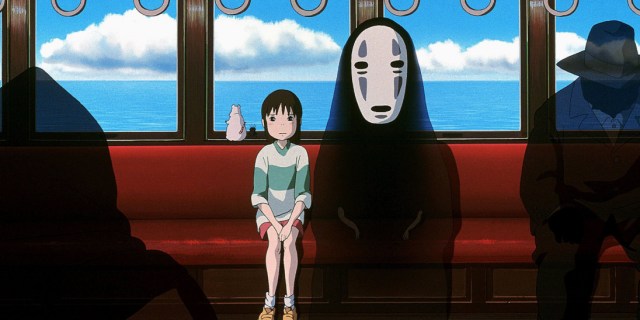
This is the one Miyazaki film that’s broken into the mainstream in terms of critical acclaim and his talent. I’m eager to see if it lives up to its celebrated status. Spirited Away is available to stream on Netflix.

The Wind Rises (2014) 

maxresdefault (10)

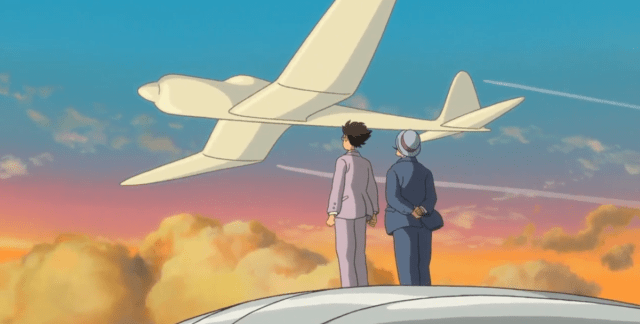
The Wind Rises was on my radar when it was originally released in 2014. What put me off was that it was touted as Miyazaki’s last film. I did not think I could speak to it meaningfully because I had no prior knowledge or relationship with the rest of his movies. Hopefully, that can change (slightly) when I cover it for Miyazaki May. Like the other two films, The Wind Rises is available to stream on Netflix.

In the meantime, what film out of the lineup intrigues you the most? Which Miyazaki films have you seen? Let me know in the comments below.

Posted in 2020, animation, Editorials, Miyazaki May | Tagged , , , , , , , , , , , | Leave a comment

My Favourite Track: The Force Awakens (2015)

s-l1600

Welcome to my favourite track, a new series of blog posts dedicated to a piece of film music that has moved me enough to get off the proverbial couch and madly type at the keyboard. From snappy songs to stupendous scores, the sky is the limit on the discussion. However, my knowledge of music theory is about as good as a cat’s knowledge of the innermost workings of the human psyche. So, I do hope you bear with me as I attempt to make my way through the exciting world of Film Music.

John Williams’s return to the Star Wars franchise in 2015 with The Force Awakens was equally as miraculous and exciting as the series itself. Williams’s score proved to be captivating with its exciting assortment of new themes and retooling of vintage ones.

There are many tracks that I could cite as my favourite. The mysteriousness and eventual budding of Rey’s theme (via the chimes of bells) make The Scavenger a blissful listening experience. The gentle use of strings in Jedi Steps illustrate the humbleness of Rey’s journey. And there’s just a tragic beauty in the track- The Starkiller Base.

However, my favourite track of The Force Awakens is Finn’s Confession. Though it’s shorter compared to a lot of the tracks on the soundtrack, it says so much in that time. At first listen, it has a striking resemblance to Anakin’s Theme from The Phantom Menace. That theme was a pure embodiment of innocence and a jubilant testament to Anakin’s boyhood dreams of adventure.

In Finn’s Confession, Williams takes that strand of innocence but injects it with a measured and melancholic tinge (via the use of strings at a slow tempo).  It greatly illustrates Finn’s strife in telling Rey about his Stormtrooper past. I think Williams chose to evoke Anakin’s theme because it’s his way of telling the audience that despite Finn’s angst, he’s innocent and his heart is in the right place. It’s musical judgement through the referencing of a pre-established theme.

The next important part of the track starts at 0.55 seconds. This stretch of music is played in the movie when the Millennium Falcon is making its approach to Takodana and Rey remarks while seeing the planet’s surface for the first time- “I didn’t know there was this much green in the galaxy.” The music is soaring and uplifting, conveying Rey’s awe at that moment.

In the context of the track, it seems like a response to Finn’s attempt to reach out to Rey. It’s akin to a reward for being honest and sincere. But with its use in the movie in mind, the track is much more applicable to Rey. For choosing to go on the adventure and helping BB8, she’s opened herself to a much larger world via stunning green pastures.

One excellent aspect of the the Force Awakens score is Williams’s choices in the track inclusions. He’s not only going for what sounds good for the audience insofar as a 70 minute soundtrack experience is concerned. But he’s also choosing music based on emotion and theme.

An instance of this comes from “That Girl with the Staff.” In that track, Williams musically depicts three instances of how Rey is viewed through the narrative. The first is warm and familiar with the use of a light statement of Rey’s theme as she introduces herself to Finn. The second is when Finn encounters Rey while she is running towards him with her staff (via a brisk tempo). The final employs the brass section in an ominous manner to evoke Kylo Ren’s first encounter with Rey.

In the same vein, Finn’s Confession feels as though Williams is paralleling Rey and Finn. They’re both attempting to open up in some way and are in a sense rewarded for their efforts, whether it’s through understanding (in the case of Williams’ homaging Anakin’s theme with Finn’s plight) or Rey seeing much more of the galaxy.

In contrast to the proceeding music, the last minute of the track feels quite playful and fun. The music is used to accompany Finn’s, Rey’s, BB8’s and Han Solo’s walk through the entrance of Maz Kanata’s castle. As the camera pans up, the audience is treated to many flags and a statue of Kanata. I love the swell of the string section as the characters pass these sights, particularly as it’s edited exactly in time when the audience see the statue for the first time.

It echos the moment in Lord of the Rings: The Fellowship of the Ring when the remaining members of the Fellowship look up at the giant Argonath statues. In that scene, there’s grandiosity to the music as the camera pans up and sweeps around to show the ancient monuments. Equally, Williams is illustrating ancient grandness as Han alludes to the age of Maz’s castle. The final moments have a calming reassurance to tell the audience that our characters are in safe hands.

Overall, Finn’s Confession is a track that for me encapsulates one of the major themes of the franchise. It’s about reaching out, whether that’s to another person or beyond the parameters of your every day existence. The track is like a warm embrace (in musical terms) for that mind set.

What do you think of Finn’s Confession? What’s your favourite track from The Force Awakens soundtrack? Let me know in the comments below. Happy Star Wars Day. May the 4th be with you.

Posted in My Favourite Track, Star Wars | Tagged , , , , , , , , , , , | Leave a comment

Argento April: The Stendhal Syndrome (1996)

stendhal6

In the context of what’s come before in Argento April: The Stendhal Syndrome miraculously seems like an answer to my chief criticism of Dario Argento’s output. He seems more fixated on the cinematic flourishes that pervade his films as opposed to doing anything interesting with some of his characters or aspects of his narratives.

The Stendhal Syndrome is about Detective Anna Manni (Asia Argento) who’s on the trail of a sadistic serial killer- Alfredo Grossi (Thomas Kretschmann). Manni is afflicted with a condition called Stendhal Syndrome. It causes someone to become dizzy and devastated when viewing stunning pieces of art. In their battle of wills, Grossi attempts to exploit this weakness while Manni attempts to heal herself via sessions with a therapist.

In contrast to Argento’s earlier efforts, The Stendhal Syndrome is a film that’s less firmly rooted within the horror genre. In fact, it fits squarely within the genre of twisty ’90s thrillers such as Seven (complete with a shocking end reveal). But the film that’s mostly on Argento’s mind is Vertigo. Like Alfred Hitchcock’s seminal classic, Syndrome concerns itself with a controlling character who attempts to remake a woman in his perfect image.

Conceptually, this seems like an interesting idea, particularly within the context of a  relationship between a serial killer and a committed detective. However, in execution, the movie only seems to play to this idea with its ending twist. In fact, it reframes the entire relationship as Grossi is seen a controlling person who had a masterplan for breaking down Manni. This seems like a far cry from Grossi’s modus operandi of torture and torment as opposed to ownership and control. The retcon goes into the realm of preposterous to evoke Hitchcock’s film.

Instead, The Stendhal Syndrome is much more interesting as an illustration of how a woman deals with rape. Manni primarily overcompensates by showing very masculine traits (most prevalent in her relationship with boyfriend- Marco). She also reviles sex as and any sense of weakness. During this stretch, the idea of Manni being like her tormentor is theorised and is much more interesting then where the film goes with the “control twist.”

As a portrait of someone whose being psychologically damaged by a traumatising event, it feels sensitive and resonating. Most of this comes from Asia Argento’s daring central performance that flickers between victim and aggressor with believable and captivating power.

Unfortunately, this level of care is not present in Argento’s direction. Throughout he tends to over egg the pudding, whether it’s the unnecessary use of CGI in mundane situations or distracting camera moves that unnecessarily point upwards. Argento’s signature style of a slow creeping dread (courtesy of camera moves that evoke a looming omnipresent predator) is gone and replaced with something far more average. Giuseppe Rotunno’s hazy cinematography and Ennio Morricone’s eerie dreamlike score pick up the slack in providing the film’s atmosphere.

The Stendhal Syndrome never rises above being an average curiosity. While it’s good to see Argento focusing more on character, his exploration in some areas lack shading and direction insofar as thematic focus is concerned. But there’s something special in Asia Argento’s performance that has an emotional truth even when the film does not quite lay the tracks down for her eventual path.

Posted in 2020, Argento April, Review, Reviews | Tagged , , , , , , , , , , , | Leave a comment

Argento April: Deep Red (1974)

deep-red-4

Deep Red or Profundo Russo (Italian title) is the cinematic equivalent of soaring. It’s a film that illustrates Dario Argento is not merely working within the horror genre, but understands it so profoundly that he can bend it to his will and in the process the audience too.

Much like his debut feature (The Bird with the Crystal Plumage), Deep Red is a Giallo set in Rome. However, this time the film is about a British pianist- Marcus Daly (David Hemmings) who finds himself thrust into a murder mystery, after witnessing his neighbour- Helga Ulmann (Macha Meril) being brutally killed through her apartment window.

Watching Deep Red is akin to waking from a long unwinding nightmare at 3.00 am in the morning. There’s a slow and haunting quality that pervades the film as the camera takes on a mysterious omnipresent quality, slowing panning around the surroundings with predatory precision.

In Crystal Plumage, Argento mixed opulence and terror. In Deep Red, the director is concerned with images of innocence that are corrupted and transformed into something nasty. The opening moments (via a low angle shot) depict a seemingly picturesque Christmas display. However, this is soon ruined by a murder (depicted via shadows) and a bloody knife, which falls close to where the grisly act is being witnessed.

Argento brings this quality of corrupting innocence throughout the picture. There are frequent shots that frame toys and strange looking objects as omens of the carnage that’s about to occur. A particularly freaky image is the black gloved murderer picking up a figurine of a baby.

Less impressive are some of the human elements of the story. The relationship between Daly and kooky reporter- Gianna Brezzi (Daria Nicolodi) is less Howard Hawkes in its charm and more a Punch and Judy show (involving casual male chauvinism and childish antics).

Despite the recurring theme of innocence being corrupted in the imagery, I wish Argento had explored this more in the characters. There’s a tantalising prospect of the theme playing out by the killer being Daly’s friend- Carlo (Gabriele Lavia). This aspect would have made sense, given who we find out is the boy who picks up the knife in the flashback scene. However, the film opts for a far less interesting reveal that feels like the ticking of a plot point then a genuine revelation.

There’s a scene when Daly is talking to Carlo early on. They’re both dwarfed by the scenery as Argento employs a wide angle shot. The moment embodies how the director feels about characterisation and how it’s secondary to the cinematic framing of the experience. Deep Red is flawed in this area along with occasional spots of plotting the mystery.

However, there’s something exciting about Argento finding his voice within the horror genre and melding it to his heightened sensibilities. This is even apparent with his first collaboration with Goblin, who create a chilling rock infused score. Deep Red is the sort of film that coasts on its cinematic verve and technique. For the devout and curious, it’s an enriching exercise in horror movie making. For everyone else, it may be an indulgent chore.

Posted in 2020, Argento April, Review, Reviews | Tagged , , , , , , , , , , , | Leave a comment

Argento April: The Bird with the Crystal Plumage (1971)

Crystal_2-1525122783-726x388

Loosely defined: Giallo is a popular 20th century genre that specialises in mysteries, thrillers and occasionally supernatural horror. The Italian word translates to yellow and the genre gets its name from the yellow coloured paperback novels that dominated bookshelves in post war Italy. While there were many Giallo movies before 1970, Dario Argento popularised the genre (with Crystal Plumage) and kick started its resurgence in post 70s Italian cinema.

The Bird with the Crystal Plumage is about an American writer, Sam Dalmas (Tony Mustane) whose been on a long holiday in Italy. Grappled with writer’s block as he’s about to leave the country: Sam’s world is turned upside down when he witnesses a woman in an art gallery being stabbed. Soon after, the writer finds himself in an investigation and race against time with a black gloved figure, whose been on a murderous rampage of local women.

Crystal Plumage’s greatest trick is its distortion. Much like Sam is convinced that he’s seeing the opening attack in one way, the audience is likewise led to believe that what we’re seeing is real. Part of this comes from genre expectation and who we typically see as the victim in similar stories. Argento also brings this aspect to some of the sequences.

One has Sam being chased by a gunman wearing a yellow jacket (an amusing reference to the genre’s roots). Sam eventually tracks the lone man to a sports convention where the majority of people are wearing yellow jackets.

In contrast to other Argento films I’ve seen, the direction is less bombastic and assaultive. Instead, the director in his first film favours opulence and dread. Many scenes have the characters slowly realising their impending doom in lavish surroundings. One scene that comes to mind is when a woman is walking back up to her apartment. As she climbs the staircase, the lights start to go out until she is met with complete darkness and has to resort to using a match.

Argento’s use of the top down shot that shows all the staircases aligned looks like a surreal panting. It evokes tension and the pervasive nature of the killer. Ennio Morricone’s eclectic score made up of gloomy bells, low male choral chants and a moaning woman provide the scene with its electrifying horror.

Despite this, the film’s central problem comes from the handling of Sam’s character. Conceptually, it’s fascinating to see someone who starts out as helpless in aiding a victim of the black gloved killer, becomes obsessed and end up helping to bring the notorious figure to justice. However, I don’t get any sense is grappling with anything (other then trying to remember details about the killer) and instead strung from one plot element to the next.

With Sam being a writer whose is in the midst of writer’s block, it would have been interesting to see him wanting to stay because it inspires him to write again. Or he has to solve the mystery, due to wanting to write a story about his experiences. Instead, it just feels like he stays because it’s convenient to the plot.

As it stands, The Bird with the Crystal Plumage is a scorching debut from Dario Argento. He plucks the strings of the Giallo genre with finesse, a black comedic streak (particularly with some of the secondary characters) and subversive wit. However, I can’t help but feel that the film could have soared and become something far more interesting, particularly with the exploration of Sam and his further entrenchment into the central mystery.

Posted in 2020, Argento April, Review, Reviews | Tagged , , , , , , , , , , , | Leave a comment

Editorial: Intro to Argento April

Dario-argento

April sees the start of themed months and I could not think of a better filmmaker then Dario Argento, to begin this series of blog posts. Despite being into Italian horror cinema, Argento has fallen of my radar compared to other directors in the genre. Mario Bava has always felt like the most talented and interesting: working within several sub-genres and beguiling audiences with his feverish paintbox aesthetic.

On the other end of the scale is Lucio Fulci. His work has been purely base, feeling like adaptations of provocative B movie posters with hyperbolic statements. While his movies don’t entirely hang together (narratively), they can be relied on for having moments that horrify, strike and linger.

While Argento’s contribution to cinema is invaluable: he was one of the screenwriters of Sergio Leone’s Once Upon a Time in the West (1968) and the producer of George Romero’s Dawn of the Dead (1978), I don’t have enough of a sense of him as a director. I’m curious to see how his ascetic compares to his peers in the genre.

From Argento’s extensive filmography, I’ve only seen Suspiria (1977) and Opera (1987).  So, in terms of films to watch, I’m spoilt for choice. Below are the movies for the month along with a brief comment and where you can watch them.

Movie 1: Bird with the Crystal Plumage (1971)

source (17)

What better place to start then Argento’s first film, I’ve always been interested about this one. Crystal Plumage is available to rent or buy from Google Play, Prime Video and iTunes.

Movie 2: Deep Red (1975)

DEEP-RED-Comes-to-Blu-ray-from-Arrow-Video

Other then Suspiria, this seems to be Argento’s most celebrated film. I’m intrigued to see if it lives up to the hype. Deep Red is available to rent or buy from Google Play, Prime Video and iTunes.

Movie 3: The Stendhal Syndrome (1996)

the-stendhal-syndrome-1996

I wanted to feature an obscure and lesser known film in the line up, cue: The Stendhal Syndrome. You can stream the title on Shudder.com.

Movie 4: Dracula (2014)

Dracula4

Dario Argento adapting Bram Stoker’s famous novel and ostensibly making a vampire movie, I’m all in. You can rent or buy the film from Google Play, Prime Video and iTunes.

In the meantime, what film intrigues you the most? Which Argento films have you seen? Let me know in the comments below.

Posted in 2020, Editorials | Tagged , , , , , , , , , , , | Leave a comment

Editorial: My Top Five Lockdown Films

5) Young Frankenstein 

young-frankenstein-1280x720

Doctor Frederick Frankenstein’s frequent attempts to keep a sense of cool and clinical detachment is the perfect embodiment of our pendulum swinging emotional state during this hard time. Come for Gene Wilder’s hilarious and touching performance. Stay for Mel Brooks’s loving homage to the Universal Monster Movies.

4) 28 Days Later

yUztTrOARxj1lgcPyrSCeGWigZO

While the early scenes of an empty and ghostly London are an eerie echo of our current times: Danny Boyle’s transcendent genre film is an even more pressing reminder of the fast acting nature of infection and the bleak places it can takes us as human beings.

3) Excalibur 

Excalibur3

Times like this call for a vintage epic to watch. While there are many from Gone with the Wind to The Ten Commandments, I’m recommending John Boorman’s cradle to the grave story of King Arthur. Boasting sumptuous cinematography, an otherworldly performance from Nicol Williamson and a rousing score: Excalibur is a fascinating precursor to Games of Thrones.

2) Before Sunrise

BS-571

In our post social distancing world, Before Sunrise seems like a godsend. Richard Linklater’s depiction of two young people falling in love while walking around the streets of Vienna is a timely reminder of the importance of human connection and its ability to easily form with the right person. While it’s a no-brainier to recommend the entire Before Trilogy, Sunrise has this quality of two people who have their entire lives ahead of them. This provides the film with an endearing optimism and a poignancy due to the people that Celine and Jessie will become.

1) Mulholland Drive

mulholland-drive-shots-3

Out of all the films to watch at the moment, I’m most drawn to the ones that have eluded me or caused me to ponder their meaning long after the credits have rolled. Mulholland Drive is one of those experiences. Originally starting life as a television pilot, it’s interesting to see how the episode has morphed into a cinematic effort. The movie greatly embodies David Lynch’s juxtaposition of the rosy portrait of 50s Americana and the darker impulses preserving that picture (made even more meaningful as the film is about Hollywood). Its mystery, memorable minor characters and Naomi Watts’s central performance will always keep me coming back and trying to figure it out.

Posted in 2020, Editorials, Top Fives | Tagged , , , , , , , , , , , | 5 Comments

Review: The Mandalorian Chapter 1 (2020)

The-Mandalorian

The first episode of the highly anticipated series- The Mandalorian had a quiet UK theatrical release a couple weeks ago (via Cineworld Cinemas) So, it seemed like fair game to cover it for the blog.

Television pilots are funny creations. In some ways they could represent a show attempting to find its identity as its oddities and kinks are slowly ironed out as a series goes on. Or they could be fascinating prisms to view a show’s tone, story and eventual appeal.

The Mandalorian falls squarely in the second category. The pilot is a fresh, exciting and engrossing new lens to view the Star Wars franchise. After making quick work of a several bounties, the title character- The Mandalorian (Pedro Pascal) is hired by Werner Herzog’s mysterious character- “The Client”, who tasks him with finding and protecting a 50 year old individual.

Part of the episode’s success is its world building that’s always been a staple of the franchise. There are many long takes of the Mandalorian walking through streets and going about his usual day to day business. These give us a tantalising glimpse of a post Return of the Jedi world, where few people give a second thought to some of the title character’s actions.

At the same time, the episode takes usual Star Wars elements and filters them through a unique lens. George Lucas’s infamous directing mantra “Faster, more intense” is used to illustrate the title character’s efficiency at his Bounty Hunting. In an extended sequence,  carbon freezing is unveiled like a shocking discovery in a Gothic horror movie as opposed to a heartbreaking moment of pathos. In the same vein, the Stormtrooper’s first appearance has a ghostly presence as though the title character has stumbled upon them in a dream.

But director Dave Filoni (who makes his live action directing debut with this episode) is also quite playful with the material. There’s one gag of the Mandalorian dismissing a new speeder with a droid in favour of a old, banged up vehicle to get him to his ship. The joke embodies the franchise’s constant battle between its hard worn and shiny space aesthetic. And the main character’s Mythrol bounty, whose seems like Nathan Lane doing a comedic skit in blue makeup is a wonderful reminder of the franchise’s riffing spirit.

Filoni’s best directional moment is a scene that has The Mandalorian reflecting on his past while a solid Imperial bar of silver is melted down into Beskar armor. The scene is particularly striking when Filoni superimposes moments from when he was a child (attempting to escape a war with his parents). Three blue flamed stripes reflect on his helmet and could represent his fury at his circumstances. The moment is a great visual echo to the scenes in the movies where masked characters appear all too human in their struggles.

Pedro Pascal is impressive in a near silent performance that relies on a precise stillness and efficiency in his physicality. Through the course of the episode, these qualities slowly fade to illustrate the character’s uncertainty (particularly when attempting to tame a Foal). However, Taika Waititi steals the episode with a fantastically deadpan turn as a droid bounty hunter (IG-11) who always seems eager to self destruct.

While it’s too early to call out themes, I will say that there’s some fascinating bread crumbs in the episode to guess at a few. There’s a sense that the title character is going to become a local myth as he attempts to clear a territory of mercenaries and other troublemakers (alluded to by Kuiil who grants passage to the title character’s mission area). In this way, the mythical staple of the series is retained.

However, this idea could become larger as Werner Herzog’s Client hints at the restoration to the natural order of things after the Empire’s tyranny. With what is glimpsed about the Mandorlarians, they seem like an underground tribe who are considered myths and legends.

Perhaps, with the central character’s actions and Kuiil’s prediction, the title character and his group go from fabled characters of folk lore to known figures that inspire a galaxy to hope again (albeit on a small scale). Either way, it will be interesting to see how showrunner, Jon Favreau, plays with internal myth and a sense of innocence (with Baby Yoda) in upcoming episodes.

Posted in 2020, Rare Posts, Review, Reviews | Tagged , , , , , , , , , , , | Leave a comment

Editorial: COVID-19 and My Future Blog Posts

guardians-of-the-galaxy-circle

This week has seen a complete closure of cinemas, gyms, pubs, coffee shops and many other public places. It hardly needs reminding that COVID-19 has changed the fabric of our lives and way we do things. With the closure of major cinemas chains, reviewing new releases is going to be a dicey proposition. However, I’m taking this as a golden opportunity to finally commit to blog posts that I’ve put on the back burner.

To that end, I will finally get to themed months. This will comprise of an introductory post that briefly outlines what films I will be reviewing. I will let you know what platforms you could watch each film on. At the moment, I’m aiming to watch and review four films with a post a week. I might do a ending post reflecting on the director or genre of movies that I’ve reviewed, but I’m undecided at this point on that post.

I have also been working on some posts that focus on Film Music. These have the toughest to write as it’s not something I have much experience in writing about. But I promise to post them soon.

Along the way, there will be the usual sprinkling of top fives and reviews of new releases (if they’re released digitally). And stay tuned, there’s an upcoming review that I’m excited about. I do hope you can join me for my upcoming themed months. We’re all going through a rocky patch but we can unite over our love of movies. In the meantime, I hope you all stay safe and keep well.

How has your blog been affected by COVID-19? What kind of posts are you doing now? Let me know in the comments below.

Posted in 2020, 2020 Films, Editorials | Tagged , , , , , , , , , , , | Leave a comment

250th Post: Why I Continue Blogging

screen-shot-2018-04-01-at-9-34-44-pm

Between you and me, the statement of why I continue blogging should be something of a affirmation to a blogging mid life crisis (500 posts and upwards). However, the COVID-19 pandemic has put everything into perspective. Not only are we questioning our everyday provisions but also our activities, safety and the health of our loved ones like never before. But on the lower rung of those essential concerns, this sentence has been nagging me like a beastly predator, circling its feeble prey with a maddening obsession.

The answer is seemingly easy, because I love it. If you want a longer response then strap yourselves in. Honestly, I don’t think I’ve quite got the hang of blogging. Sure, by definition, I’m putting out an opinion on a semi regular basis. But I’ve always had this perception that blogging is akin to someone who finishes a race, frantically types about their experiences and hits send before the sweat dissipates.

I’m not like that. I take my time. Part of this comes from wanting to preserve the experience. Whenever I see a movie, I’m not satisfied with leaving it on the sidewalk of life and mumbling a few words about it. Instead, I want to get to grips with it. Sometimes that can be a right pain in the proverbial ass. But at other times, it can be rewarding.

Okay. Big pretentious speech time. If you’d rather go wrestle for toilet rolls at your nearest Tesco, then I understand. But for those of you still awake in the back row, here goes nothing. To me, going to watch a film is akin to seeing a large projected dream for two hours. With this in mind, writing about a cinematic experience is similar to writing about a dream. While watching, certain things will hit your subconscious and it’s the writer’s job to untangle those elements and give voice to them. When you put it that way, film writing can sound like a chore.

But the experience has never ceased to fascinate and hook me. Even when you feel like pulling your hair out because you can’t quite come up with the right words for something. Or nothing is coming at all. There’s always an inherent trust that something will come and those momentary revelations are like unlocking an incredibly intricate puzzle.

I also love writing about film because it’s a precise form of writing. You have to pinpoint exactly what is or not working and then pull from the film to support your point. In this way, you’re like a lawyer who is putting together a case for the court room.

There’s also a constant striving in Film Writing. Cinema is still a relatively young medium with its own language. I’m always trying my best to watch and understand it (via discussion about the filmmaking and how it reinforces theme and aesthetic). But there are also the other elements: acting, film scoring and cinematography that always keeps you on your toes insofar as consideration of a film is concerned.

Above all, writing and by extension blogging is where I feel most comfortable. It’s my way of coming out on a stage and delivering a monologue for a certain amount of time. It’s personal, fun and always engaging. For those of you who’ve read, commented and liked my posts, over the years, I thank you. It’s sincerely appreciated. And for those who have fallen asleep, I hope you’ve had pleasant dreams.

In the coming days, I will get into how COVID-19 is effecting my future content. But for now, what keeps you blogging? Let me know in the comments below.

Posted in 2020, Rare Post, Rare Posts | Tagged , , , , , , , , , , , | 2 Comments