Review: Scream 4 (2011)

Preamble

I have to start this preamble with a bit of an apology. While I intended to cover all of the Scream movies as a lead-up to the sixth instalment, I’ve decided to hold off on my review of Scream (2022). The reason for this is that I’m seeing Scream 6 as part of a double bill with last year’s movie. I think this provides an invaluable experience to look at the film in the context of it being part of a newer (supposedly) trilogy of films. So, I apologize for that. So, with that said, have you seen Scream 4? Let me know in the comments below.

Review
I adore Scream 4. And that feeling has not changed in the intervening years. In fact, since becoming more familiar with the horror genre, my esteem for it has only grown. For a series that’s had inconsistent sequels, Scream 4 represents a perfect melding of fulfilling drama and meta-commentary.

Taking place 15 years after the events of Scream, the third sequel sees Sidney Prescott (Neve Campbell) return to Woodsboro on the last stop of her book tour. Her sentimental visit turns into a vicious bloodbath as Ghostface (voiced by Roger L. Jackson) prays upon a new generation of teenagers, including Sidney’s distant cousin, Jill Roberts (Emma Roberts).

Part of Scream 4’s appeal comes from what it does with the notion of the Final Girl. While previous movies provided shading and a credible emotional context for the concept, the 2011 movie subverts the troupe. This is done in part by posing the question of how the Final Girl leaves a mark on the people around them. In the case of Sidney, how have her traumatic Ghostface incidents affected her family insofar as her aunt and cousin are concerned?

In a way, it’s left a long and lingering shadow for the pair. In terms of Sidney’s aunt, Kate (Mary McDonnell), she believes she’s been scarred by Sidney’s attacks and, by extension Maureen’s murder. In a sense, she feels she’s been left out and quietly speaks from the sidelines of her experiences (via one line where she says, “I’ve had scars too.”).

For Jill, it’s been a burden to live in Sidney’s shadow as she’s often been cited as an omnipresent figure to idolize and be like. To this end, Jill chooses to become like Sidney by taking on the Ghostface persona to stage a series of murders where she appears to be the victim. To achieve fame, Jill believes that messed up things have to happen to an individual, illustrating the all-consuming power of social media fame. In 2011 when the film came out, shows like the X Factor were famed for their performative circus qualities, whereby a bad act was denigrated and mocked. And in a post, Tik Tok era, Scream 4’s social commentary feels even more chilling when fame is presumed to be achieved by jumping on harmful viral trends.

At the same time, the meta and personal combine to create the idea of the horror remake (embodied by Jill) directly attempting to replace the original (Sidney). Scream 4 has many of these instances, whether it’s Sidney’s final line to Jill, “You forgot the first rule of remakes. Don’t fuck with the originals,” or Kirby (Hayden Panettiere) desperately reeling every horror remake during a tense phone call with Ghostface (during the tail end of the movie).

In a film that boasts a lot of excellent performances from the young cast, Hayden Panettiere stands out as Kirby. On the page, the character is a lighthearted and playful horror geek who likes to keep some people on their toes. Panettiere illustrates these qualities with subtle gestures that go a long way to make the character quite appealing. Emma Roberts is equally impressive in a surprisingly physical performance that speaks to Jill’s unrelenting desire to be famous.

David Arquette brings an authentic sense of world-weariness to Dewey without losing his nebbish and hopeful qualities. And Neve Campbell has a quiet intensity that imbues Sidney with a lot of dramatic weight. The most meaningful scene that illustrates this is when she has a catch-up conversation with Dewey. It speaks volumes in what is not said between the characters, the subtle what-ifs and chances that have passed both of them by (throughout the years).

Scream 4 represents Wes Craven’s last directorial effort in the series, and it’s pretty effective. I’ve liked how in previous films, Craven has brought a dreamy European flair to the filmmaking. In Scream 4, there’s less of a dreamy quality, and instead, some sequences are directed as though they would not feel out of place in an Italian horror picture. The most notable is a sequence in a hospital car park. With its use of yellow (via naturally lit car park lighting), insert shots of Rebecca’s shoes and protracted medium shots, the scene plays like a scene from a Giallo movie, as opposed to a conventual American slasher movie.

Posted in 2023, 2023 Reviews, Review, Reviews, Uncategorized | Tagged , , , , , , , , , | Leave a comment

Review: The Last of Us Episode 8: When We Are in Need

Preamble

We’re here at last, the penultimate episode of The Last of Us. It’s felt like it has flown by in what has been a whirlwind series so far. With that said, have you seen Episode 8 of The Last of Us? Let me know in the comments below.

Review

In the PS4 and subsequent PS5 remake, the Winter section was a tough and brutal stretch of the story that cemented Ellie’s and Joel’s relationship insofar as the violence they would commit to protect one another. Despite being flawed, Episode 8 is still a difficult and sobering watch that ties Joel and Ellie’s bond in blood.

The penultimate episode of the series finds Ellie still watching over an injured Joel. However, this is disturbed when she finds two strangers from a nearby improvised community who are attempting to steal her food. After a tense standoff, the three agree that in exchange for some medicine, the pair can take half of her food. However, the leader of the community, David (Scott Shephard), may have other plans for the young girl.

In what has been a fantastically consistent and exceptional show so far felt like it took a step down this week. Part of this comes from the rushed approach to the story and elements where the active experience of the video game trumped the inherent passivity of the medium.

The choice of distilling several hours-long sections into less than an hour of television, the story loses something in translation. Part of this comes from the gameplay being quite impactful in what they were saying about the character. For example, the final confrontation between David and Ellie was a terrifying experience that aligns the player with Ellie’s fear. But in the show, it plays like a sped third-act sequence from a slasher movie.

The same could be said about the portrayal of David. While the character fits within the grand scheme of the show’s theme of how leaders within insurgent groups function, I think they overegged the pudding on him. Part of this does come from the mentioned rushed approach, which goes from 0-60 on the ultimate reveal. At the same time, there’s a lot revealed about David that feels like it muddies the water on what they’re trying to say about him.

He’s someone who starts as a Maths teacher, whose very logic-based, finds religion but has darker tendencies, is willing to do unspeakable things to keep his community alive, and ultimately fakes his belief to keep order. I suppose you could take all that and interpret him as someone who perpetuates a cycle of abuse and evil (within a religious context in a post-apocalyptic setting). But that feels like quite a stretch and quite a cliché in what has felt like a nuanced show so far. I think I prefer the simplicity of the character in the game whose more predatory predilections were confined to subtext rather than overt declaration.

But for what it’s worth, the performances of the episode provide some semblance of emotion that filled this section of the video game. In particular, Bella Ramsey was a force of nature in her completely dangerous edge as someone who could commit violence within a heartbeat. Pedro Pascal was incredible in conveying a subtle sense of quiet desperation. And it was great to see Troy Baker (the actor for Joel in the videogame) in a supporting turn that illustrated so much in the flickers of eye movements and still moments of contemplation.

Posted in 2023, Review, Reviews | Tagged , , , , , , , , , | Leave a comment

Review: Scream 3 (2000)

Preamble

Are there any good horror movie trilogies? That’s a genuine question that’s been crossing my mind since rewatching Scream 3. It’s hard to make a case for many because they tend to become series that expand beyond the scope of three movies. Anyways, I’ll leave you to ponder that question. Have you seen Scream 3? Let me know in the comments below.

And if you like my ramblings on horror, then you can find more at my second home, Horror Obsessive. In my second piece on Final Girls, I examine Sally Hardesty from The Texas Chainsaw Massacre (1974).

Review

Compared to my memory of the previous two Scream movies, I had no prior strong sentiments about my first viewing of Scream 3. However, out of the three so far, it may have been the most fascinating to revisit. While it does riff on the horror genre, Scream 3 engages more as a black comedy about the exploitation of the Hollywood machine.

After the murder of LA-bound talk show host Cotton Weary (Liev Schreiber), his girlfriend, Christine (Kelly Rutherford) and actress Sarah Darling (Jenna McCarthy), things become tense around the set of Stab 3 (the film within a film that’s based on the events of the Scream movies). As members of the movie are killed, Sidney (Neve Campbell) reluctantly finds herself drawn back into the fray when she begins experiencing quite vivid visions of her deceased mother, Maureen Prescott (Lynn McRee).

On the surface, Scream 3 has a lightness by going to Hollywood. Various scenes have cute cameos, whether it’s Jay and Silent Bob or Carrie Fisher. And there are also a handful of moments where the production of Stab is mirroring the murders in a comically absurd version of life imitating art. However, a lot of other threads feel like takedowns of Hollywood. Part of this, comes from the unravelling of Maureen’s past when she was in Tinseltown. The fact that her past as an abused Hollywood actress was covered up by producer John Milton (Lance Henriksen) to ensure that the Stab movies remain lucrative perpetuates a cycle of abuse that carries on with Sidney.

In the film’s most moving moment, Sidney stumbles upon the set of her old house, where she experienced the terrifying events of the first movie. In a sense, her traumatic experiences have now become a cheap commodity to be thrown around for the titillation of many people, just like Maureen was when she was an actress.

In moments such as this, I was reminded by the sobering power of Wes Craven’s New Nightmare insofar as carrying the indelible sense of a horror director earnestly reflecting on a genre that he had defined for an entire generation. There are also threads about how Scream 3 works as a post-Me Too commentary that I discuss in an upcoming piece for Filmhounds Magazine. I’ll link to it in an upcoming preamble.

Additionally there’s something darkly comic about the identity of the Ghostface killer who, on the one hand (in his civilian identity), bemoans his film career being cursed but is directly responsible for its downfall due to his murderous actions. The plot point and ironies feel like a satirical knife, which aims for the extremes that Hollywood deals in. Despite being saddled with a lot of exposition, I found the motivation for this Ghostface to be quite inspiring, particularly in their relationship with one of the killers in the first movie.

Scream 3 represents a series first insofar as Kevin Williamson is not responsible for the story or screenplay. The result is a mixed bag. While Scream 3 thematically feels the strongest and closest to what I loved about Craven’s New Nightmare, it falls as a meaningful showcase for Sidney.

Part of this comes from Neve Campbell only having 20 shooting days due to other commitments. Consequently, it often feels that Sidney is passive rather than active. It’s a credit to Campbell that in her limited screentime, she still illustrates the indelible fiery spirit and coy wit that partly makes Sidney a great character.

This aspect is compounded by quite inane and paper-thin supporting characters who often feel like they’re indulging in one of the cynical cliches of the slasher genre, namely rooting for the killer to dispatch the cast because they’re so unlikeable. Even some of the main players feel oddly placed in with the Hollywood antics, most notably Dewey (David Arquette), who feels too sweet and upstanding to keep the company he does in the movie. The sole character who escapes this is newly introduced, Detective Mark Kincade (Patrick Dempsey), who is a good match for Sidney in more ways than one. Dempsey effortlessly walks a razor edge between charming, haunted and suspicious.

Finally, Ghostface’s voice imitator device proves to be a double edge sword. On the one hand, it’s goofy and contrived beyond all measure. And on the other hand, its use does lead to some of the movie’s effective sequences. In particular, an early sequence involving the ghost of Sidney’s Mum is effective as a Gothic-inspired sequence that would feel at home in a surreal Mario Bava movie (via its framing and use of colour).

Posted in Review, Reviews | Tagged , , , , , , , , | Leave a comment

Review: The Last of Us Episode 7: Left Behind

Preamble

Much like Episode 3, this week’s episode of The Last of Us feels like it comes with some semblance of anticipation. While the episode (for the most part) does not strictly adhere to the game, it comes from something that’s become so ingrained with the original experience that’s become the equivalent of rewatching the Lord of the Rings (in their extended forms). With that in mind, have you seen Episode 7 of The Last of Us? Let me know in the comments below.

Review

Despite being downloadable content (DLC), Left Behind was a remarkably moving experience that juxtaposed the coming-of-age antics of its two female characters with the impending doom of the post-apocalyptic setting. It comes as something of a relief that Episode 7 is a weighty and poignant experience that captures the tragic nature of its DLC source material.

In the present day, Ellie is frantically trying to find some things around an abandoned house to stop the bleeding from Joel’s severe wound. However, most of the episode is dedicated to Ellie’s last night with her friend, Riley, who is due to leave the city to be with the insurgent group known as the Fireflies.

Left Behind expands the scope of the DLC by showing us some of Ellie’s school life. By making this choice, we’re shown how Ellie attaches herself to people as opposed to causes. This is shown by how a superior officer pitches to her the importance of his role and how it keeps a community from descending into chaos. This aspect is juxtaposed with Riley, who chooses to attach herself to a cause (aka the Fireflies) that she sees as a surrogate family.

With this in mind, the change from many zombies to a singular one that causes Riley’s death and Ellie’s awakening as someone immune is quite tragic. It’s pitched as something random akin to an act of nature that awakens the dead creature from his long-gestating sleep. In fact, this was my favourite moment of the episode, as it’s a horrifying reminder of the omnipresence of the disease and how it can linger even in the most innocent of places.

Bela Ramsey is remarkable in the moments where the character is silent, whether it’s the trusting physicality she displays towards Riley or the knowing glances of adoration as she’s riding a merry-go-round. Storm Reid provides a low-key cool performance that’s commanding and emotionally authentic in equal measures.

My issues with the episode are twofold. Firstly is the juxtaposition between Ellie showing frustration over her and Riley’s terminal predicament in the past and Joel’s worsening condition in the present. Rather than being an elegant parallel, I instead found it jarring due to its suddenness and lack of set-up. Finally, I wish we got more of Ellie’s backstory. While I appreciate, this episode being a sound emotional context to some of the declarations Ellie made last week, I think her backstory could have contrasted well with Riley’s notion of chosen family.

But those issues aside, Left Behind is still a powerful adaptation of its DLC source material, perhaps made even more tragic as a contrast to Episode 3. While love flourished and lingered with Bill and Frank, it was mealy a passing shadow with Ellie and Riley.

Posted in 2023, 2023 Reviews, Review, Reviews | Tagged , , , , , , , , , | Leave a comment

Review: Scream 2 (1998)

Preamble

I think it’s becoming quite something that I feel more nervous about writing the preambles then actual blog posts. But hey, ho, there’s only so much you can do to frame the discussion or warm up before the post. So, with that in mind, have you seen Scream 2? Let me know in the comments below. And if you like my ramblings on horror, then you can find more at my second home- Horror Obsessive.

In the first of two pieces that I wrote on Final Girls in the slasher genre, I discuss Jess Bradford from Black Christmas (1974). The article is also available in audio format (read by the sublime Anne Flowers).

Review

In many ways, I remembered Scream 2 as an indulgent exercise in meta-commentary on the nature of sequels. However, in returning to the 1998 film, I found it to be an odd misfire. It’s a movie where its set pieces are effective (for the most part), but its ideas lack any shading.

Picking up two years after the original film, Scream 2 sees Sidney Prescott (Neve Campbell) settled into college life with a new best friend, Hallie (Elise Neal) and boyfriend, Derek (Jerry O’Connell). However, this seemingly peaceful existence is interrupted when two college kids are murdered during a screening of Stab (a movie based on the events of the first film that’s adapted from Gale Weather’s book). With the return of an old friend, Dewey (David Arquette) and Gale Weathers (Courtney Cox), Sidney must navigate the trials and tribulations of college life whilst figuring out whether or not she can trust those closest to her.

Scream 2 has many thoughts occupying its mind. On a basic meta-level, it wants to explore the nature of sequels, the rules that come with surviving a horror movie sequel, and the effect horror movies have on actual violence. Many of these threads feel like sketches for great themes but are often confined to one scene. In particular, the effect of cinema on real-life violence feels particularly shallow. There’s a debate on it that regresses into a conversation about movie sequels. This is compounded by the reveal of the motives of the killers at the end, which sees a literal murder of this thread when one of the killers says (after shooting their partner in crime), “MY GOD, that old “Blame The Movies” motive. Did you buy that for one second?”

And the opening murder sequence hedges its bets on the issue, with one moment giving way to the erratic fervor of seeing cinematic violence to the horror of seeing it play out in real life. The opening sequence instead works as a meta-commentary on the nature of the first Scream, clearly showing how it bucked many of the slasher trends (including gratuitous nudity and instances of shallow writing) with clever set-up and genuine horror.

It’s ironic then that certain moments in Scream 2 feel like they’re from an inferior slasher movie wherein the characters make silly choices. One such scene comes near the end, where Sidney (after a harrowing escape from Ghostface) goes back to unmask him. It’s framed as an empowering moment due to Sidney choosing to no longer hide from the horror she’s experienced. But it comes across as silly particularly, as Hallie warns her about how smart people would not do what she’s about to do. And the ending to that choice left my eyes rolling.

Despite this problem, some scenes are exceptional. For example, a sequence depicting Sidney in a dress rehearsal for a staging of The Oresteia is effective in its metaphorical potency. In the play, Sidney plays the role of Cassandra, who is cursed by Apollo. Much like her character, she must embrace her burden of fighting Ghostface. This theme of the battle for the soul being played out on the stage, and by extension through art itself, is a fantastic embodiment of the plight of the Final Girl.

At the same time, some of these sequences contain the best instances of filmmaking. In particular, the scene where Sidney (as Cassandra) is running from various masked figures (including Ghostface) is nightmarish in its use of medium shots and flickering editing. The result is a scene that blurs the line between perceived reality and the possible paranoid delusions of the main protagonist.

Elsewhere, the performances fuel the lack of new interesting teenage characters (on the page). In particular, Timothy Olyphant casts an impression as Mickey, who walks a fine line between edgy and empathetic. But the performance that impressed me the most was Liev Schreiber as Cotton Weary. In a film that’s often pulling punches with its satire, Schreiber’s performance carries the weight of ambiguity that defined a collective fascination with figures such as OJ Simpson in the 90s. Schreiber is an amusing and tension-filled presence, from subtle knowing glances to nearby cameras to moments of personal space-breaking confrontation.

This aspect applies to the rest of the cast, who provide the film with a lot of drama and fun, whether it’s David Arquette’s assertive turn as Dewey or Neve Campbell’s slight cheeky edge as Sidney. These smaller character moments are charming, but can’t disguise the film’s lack of substance. Scream 2 often barks more than it bites (via its many tantalizing ideas) but often falls short in seeing them through.

Posted in Review, Reviews | Tagged , , , , , , , , , | Leave a comment

Review: The Last of Us Episode 6: Kin

Preamble

With the series being well over the half way point, The Last of Us has not slowed down in its interest to me. On the contrary, the latter stretches of the game (namely the section entitled Winter) enthralled me the most. With that in mind, have you seen this week’s episode of The Last of Us? Let me know in the comments below.

Review

On the surface, Kin has the grandiose and expansive qualities that have come to define the series. However, the episode plays like an intimate and therapeutic bottle episode that tests Joel and Ellie’s relationship.

After the harrowing events of last week’s episode, Joel and Ellie continue their search for Tommy (Joel’s brother). Eventually, they both find Tommy settled in a community that has a semblance of normalcy. However, things become complicated when Joel tasks his little brother with taking Ellie to the last stop of their journey.

Perhaps more than in any other episode, Kin truly attempts to get beneath the surface of Joel and Ellie. This is not only from the vantage point of their induvial fears but how those hang-ups manifest in how they behave with one another. Joel fears that his age and competency have caught up with him and will eventually get Ellie killed. This is compounded by the guilt of not being able to save his daughter who he is still haunted by.

Despite the tough front that Ellie puts up, she’s truly afraid of being abandoned because deep down, there’s still a semblance of a child who is looking for guidance and hope. Bella Ramsey steals the episode with a comedic and empathetic turn as a character who seeks assurance and comfort. Pedro Pascal is heartbreaking in the scenes where he’s discussing his frailties and failures. And Gabriel Luna brings a subdued sense of sympathy as Joel’s settled and frightful younger sibling.

It would not be a review of The Last of Us without a reference to the second game. And Kin had plenty for me to chew on for the eventual adaptation. Aside from featuring part of the setting of that game (Jackson), the episode featured several seeds that will eventually flourish in the second season. The most notable is a prolonged scene where Ellie and Joel are discussing their dreams. The former is expressing her admiration for a female astronaut and wanting to go up to space. Without spoiling it, this sets the stage for one of the most heartwarming scenes in the second game. I hope it’s adapted in the second season.

In the same scene, Joel expresses his dream of wanting to own a farm with a bunch of sheep. This is a potential foreshadowing for a plot point in the second game insofar as a place where Ellie finds herself. But above all, the episode alludes to Joel’s violent past. Aside from serving the episode and its theme of who you should put your trust in, it also alludes to a theme that’s explored in Part 2, which is the unravelling of treasured generational figures.

Posted in 2023, Review, Reviews | Tagged , , , , , , , , , | Leave a comment

Review: The Last of Us Episode 5: Endure and Survive

Preamble

I know. I know. I’m late to the party on this one. Thanks to the Super Bowl, Episode 5 of The Last of Us was streamed early. This had a ripple effect in jolly old England with the newest instalment hitting our streaming service in the early hours of Saturday. However, my weekend was quite busy, and I thought four blog posts in a week was tantamount to torture. Plus, I do like a routine. So, here we are. Have you seen Episode 5 of The Last of Us? Let me know in the comments below.

Review

For once, I was at a loss for words at the end of Episode 5 of The Last of Us. Instead, I was a tearful puddle who was trying to comprehend what I had just seen. But in the hours since being in that state, I can say this now. Perhaps more than any other episode, Endure and Survive made me think of the nature of video game adaptations insofar as how fidelity and change can walk hand in hand with one another.

Joel and Ellie’s temporary shelter is disturbed by the arrival of Henry and his little brother, Sam. After a tense standoff, Henry tries to persuade Joel to help him escape the city via a series of underground tunnels. However, things become harder as the sibling pair are being hunted by the leader of a local resistance group, Kathleen, who is hell-bent on killing them for their betrayal of the overarching cause.

Conceptually, Endure and Survive has the skeleton of the Henry and Sam section from the video game in terms of getting to the same emotional endpoint. But the deviations to get us there are fascinating and meaningful. Firstly is the difference in Sam. In the game, he was a talkative person who still had a sense of innocence. While this latter quality is retained in his television counterpart, the former is lost due to the character having contracted leukaemia. This subtle change results in a theme that gets to the heart of the game, which is the lengths you would go to for your loved ones.

To get medicine for his brother’s condition, Henry had to rat out one of the community’s best people, which resulted in his death. Lamar Johnson during the moment where he says he’s the bad guy provides an incredibly moving performance that carries the weight of ambiguity in this post apocalypse world. Equally as compelling is Melanie Lynskey as Kathleen, whose seemingly sweet and soft-spoken nature hides a dangerous side.

This juxtaposition between Sam and Kathleen not only plays like a parallel of that previously mentioned theme (with Kathleen being a dark mirror of Sam insofar as her relationship to her sibling is concerned). It also greatly informs Joel’s journey as someone who initially sees Ellie as cargo to be delivered but opens up to be a meaningful person that he grows an attachment to. This seeming change in attitude is the episode’s best moment of filmmaking. The camera captures Joel in a medium shot as he ruminates over a person’s grave. Ellie is faded in the background. Pedro Pascal captures an authentic sense of loss and wistfulness that seek to get the character to reflect on what’s been and very well could be lost.

But above all, the episode made me consider and reflect on the differences in how leadership between these insurgent groups. That’s an interesting shade of grey that the game never delved into but is great thematic material for the television adaptation.

Posted in 2023, Review, Reviews | Tagged , , , , , , , , , | Leave a comment

Review: Scream (1997)

Preamble

I’ve been meaning to write about the Scream series for a while. And now with the upcoming Scream VI less than a month away, there’s no better time to revisit the famed horror franchise. In covering the movies, I hope to cement my opinion on the slasher films, as I’ve never particularly had firm thoughts on them. Have you seen Scream? And in keeping with the movie’s antagonist, “What’s your favourite scary movie?” Let me know in the comments below.

And if you like my ramblings on the horror genre, then you can find more at my second home, Horror Obsessive. One of my recent pieces was about the film’s full trailer that promises a Ghostface unlike any other.

Review

Looking back, it’s almost too easy to remember Scream as the cinematic equivalent of an annoying audience member who bellows out every cliché, problem and general grumbling annoyance with the horror genre at large. In returning to the film several years later, Scream plays like a refined and upmarket slasher film, one in which the genre conventions are acknowledged and affectionally used to fuel its meta-commentary.

After a pair of gruesome murders, the quiet and small town of Woodsborough is shaken to the core. None of its residents is more affected than Sidney Prescott (Neve Campbell) whose mother was recently raped and murdered. As the number of murders grows and intense media scrutiny increases, Sidney must battle for survival and attempt to keep her relationships in check.

The appeal of Scream comes from two elements it takes from the slasher sub-genre of horror. The first is the notion of the Final Girl. Typically, these characters are defined by their innocence, singledom, and virginal status. The last quality, in particular, is something that’s become so ingrained, it’s become a subconscious association with the genre at large. It can be argued that Scream popularised this last quality.

While the movie demonstrably calls this aspect out as a cliché, Scream also gives the concept a credible emotional context. Aside from surviving various reprisals from the central killer, Ghostface (voiced by Roger L. Jackson). Sidney also has to contend with her relationship with her boyfriend. There’s an inherent fear of her being sexually intimate because she does not want to turn out like her mother, whose she’s still grief-stricken about. This contention and Sidney’s choice to express herself sexually is an excellent way of bucking the Final Girl trend insofar as unshackling from its partial virginal definition by showing a considerable amount of agency.

The second aspect that Scream takes from the slasher sub-genre of horror is the convention of the murder mystery. While a few slashers have flirted with the conventions of the long-standing genre, the execution has often left a lot to be desired. Scream not only plays with the standard aspects of the genre, but some of its characters are acutely aware of their place in the chopping order (namely Randy, played by Jamie Kennedy).

This sense of characters who know they’re in a horror movie or frequently referencing other ones in everyday conversation would prove to be a staple of 90s horror. This comes courtesy of screenwriter Kevin Williamson whose arguably the closest the genre would come to the screenwriter trumping the director insofar as auteurist vision is concerned.

On the whole, the screenplay is fun and loose with the referencing. It can also be a double-edged sword. Some of the dialogue in the tail end where characters talk about their place in the story and endings can be a little trite. This is compounded by a thread of the older generation denouncing the younger generation. As a theme, it feels shallow and reactionary. It also pales in comparison to Wes Craven’s much more personal and salient reflections on the genre and its effect on people in New Nightmare (1994).

From the hypnotic use of Dutch angles to a medium shot depicting Ghostface in someone’s eye, Wes Craven directs the film with a dreamy European flair that understands tension and uses it as savage punctuation marks.

There’s also an operatic quality to some of the performances in Scream. In particular, the largeness of Kennedy and Matthew Lillard stands out, not only from physicality but also from facial expressions and vocals too. Skeet Ulrich bears a striking resemblance to Andrew Robinson in the tail end of Hellraiser. Much like that character, Ulrich is effective in portraying a sense of contained rage that threatens to bubble to the surface. Neve Campbell strikes a chord with her vulnerability and fierce determinism (particularly evident in the third act). David Arquette is a sweet and endearing presence as hapless cop, Dewey. And Courteney Cox is formidable as the go getting television reporter Gale Weathers.

Posted in Review, Reviews | Tagged , , , , , , , , , , | 1 Comment

Review: The Whale (2023)

Preamble

The Whale has been on my radar for a while. Aside from being Darren Aronofsky’s latest effort, which in itself holds a huge sense of appeal, it has also been touted as Brendan Fraser’s comeback movie. With that in mind, I was eagerly awaiting its release in the UK. Have you seen The Whale? Let me know in the comments below.

Review

In contemporary American movie-making, there’s no one quite like Darren Aronofsky. He’s thematically ambitious in ways that are dizzying and crazy. This scope is often paired with a fascinating cinematic eye that often viscerally leaves an indelible mark on the psyche of moviegoers. Having said that, I found The Whale to be an empty and emotionally deficient experience.

Based on the play of the same name by Samuel D. Hunter, The Whale is about a morbidly obese man called Charlie (Brendan Fraser). Realizing he is close to death, he attempts to make amends with his teenage daughter, Ellie (Sadie Sink), to who he offers a substantive amount of money alongside helping her with her English essays.

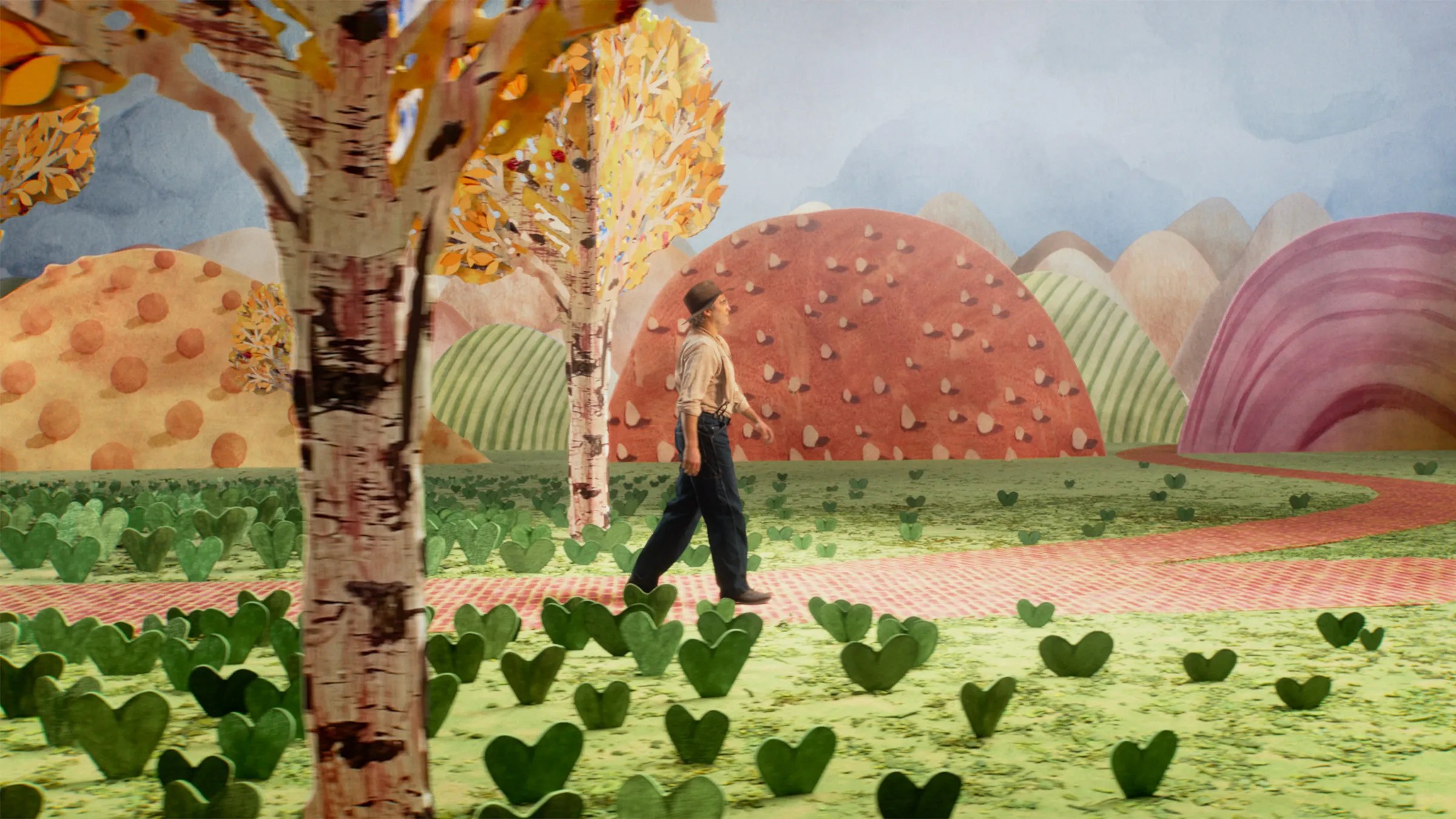
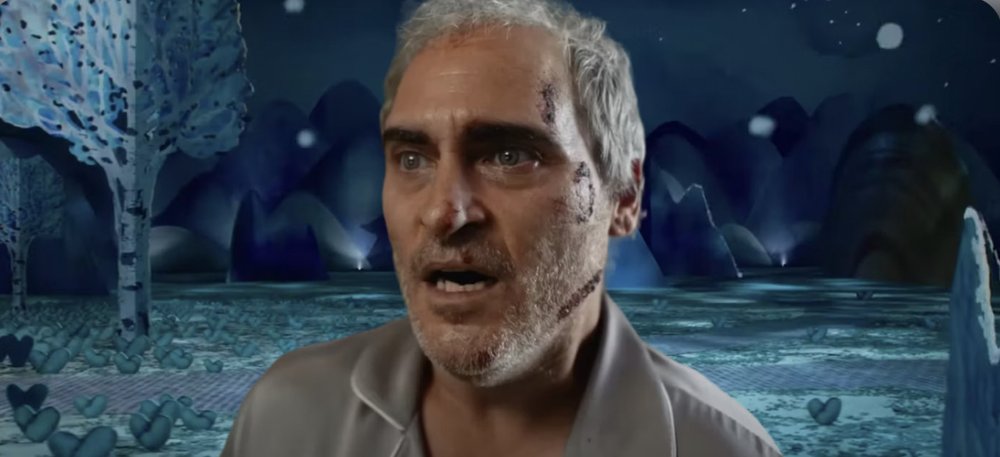
For much of The Whale, I felt it was engaged in a tug of war between being a life-affirming picture and a brash, darkly-pitched black comedy. Part of this comes from the approach to its central character. Shot using an aspect ratio of 4:3, the film attempts to make us empathize with Charlie by showing how cramped and boxed-in he feels as someone who never leaves his apartment. However, the cinematic choice instead is used to make the audience revel in Charlie’s condition akin to witnessing an old-school freak show (made worse by Ellie posting pics to social media that often paint her Dad’s condition in quite unpleasant terms).

There’s a detachment I felt to Aronofsky’s direction that plays like a scientist being fascinated by an ongoing experiment. However, I think the miscalculation comes from the director pairing this with a sense of overwrought drama. Aside from a few moments where I was charmed by Charlie’s delight (in the form of laughter) that’s often paired with heart-wrenching pain, I found Fraser’s acting to be too performative for its own good. In fact, I found Hong Chau gave the most emotionally true performance of the film. Between her sharp and caustic nature, there’s an acute sense of subtle resignation and loss that Chau brings to her role as Charlie’s nurse and only true friend.

By the same token, Aronofsky’s usual juggling of biblical and personal themes feels like an exercise in crass judgement, culminating in a scene where a missionary called Thomas (Ty Simpkins) is being confronted by Charlie, suggesting his lifestyle is disgusting etc. In the past, Aronofsky’s biblical preoccupations have delivered (for the most part) quite profound truths about the human condition. I felt here it was used as a metaphorical stick to beat the main character with.

Ultimately, there’s a nugget of a good movie in The Whale. But it’s buried under a rubble of elements that often clash quite drastically with one another. For every darkly comedic moment (particularly apparent in Chau and Samantha Morten’s scenes), there’s a crass moment of sentimentality. Charlie often calls for honesty throughout the movie. However, the truth is that between mother! and The Whale, Aronofsky’s trapped narratives have often felt muddled at worst and one note at best. I’m yearning for the Aronofsky of Black Swan and The Fountain, who was able to pair the intimate and profound with delicate beauty.

Posted in 2023, 2023 Film Reviews, 2023 Films, Review, Reviews | Tagged , , , , , , , , | 2 Comments

Review: The Last of Us Episode 4: Please Hold To My Hand

Preamble

In contrast to previous preambles, there’s nothing substantive to say other then it’s been a joy carrying on watching and reviewing this show. It has become appointment television in an era when that has faded in importance. Have you seen this week’s episode of The Last of Us? If so, what did you think? Let me know in the comments below.

Review

So far, I’ve appreciated The Last of Us for how it stands in contrast to its source material, whether it’s major changes like Frank and Bill’s relationship in the last episode or small changes that either juxtapose or paint fascinating portraits of its characters. With this in mind, Episode 4 engages as a fascinating singular experience that’s about the core human values and instances of culture we have left in the show’s post-apocalyptic world.

After exiting Frank and Bill’s privately closed town, Joel and Ellie go in search of the former’s brother, who should be near a Firefly base of operations.

Perhaps more than its source material, Episode 4 of The Last of Us tightens its focus to ask about what we have left in a post-apocalyptic world. In an early section, there’s almost a wistful quality as Ellie hands Joel a tape of Hank Williams’s “Alone and Forsaken” to play. The cheery campfire quality of the song excellently contrasts with long shots of ravaged and run-down industrial spaces filled with car traffic jams and abandoned military hardware. It reminded me of the following point: cultural things like music, art, film and theatre only carry meaning because they exist and have lived within the confines of a stable society.

Once that society breaks down, there are only a few of us who carry the memory and meaning of that piece of art. There was a slightly melancholic edge when Joel says to Ellie that Hank Williams was before his time. It truly made me think of the title of the show and video game insofar as there are very few of us who carry the memory of works of art. The same could be said of human laws. There’s a scene in the middle of the episode where a woman called Kathleen is interrogating a medical doctor. She lists basic human values from a relief group. Like the point with the Hank Williams song, it reminded of just how fragile the constructs of human law can be when society breaks downs. They’re not fixed and are only carried as maxims by a few of us.

Aside from this philosophical point, the rest of the episode is dedicated to the further bonding between Ellie and Joel. I appreciated how their bond gets them to change roles as the episode goes on. At first, Ellie is a persistently fun and curious person who seeks reassurance from Joel. The scene at the camp illustrates this quality as Joel is kept awake but wants to remain tight-lipped with Ellie.

And to get my obligatory reference to The Last of Us Part 2 out of the way, some of the sound design and tension that came from the ominous wood setting did remind me of how terrifying the Seraphites can be in the show’s second series.

By the end of the episode, Ellie is a somewhat closed person who wishes to keep some elements of her past a secret. And Joel is the curious one who wants to know about the other time that the young girl used a gun.

It was heartwarming to see Bella Ramsey cut loose as Ellie in the episode. Her lighthearted moments of jostling and almost whimsical curiosity were a treat to see from a character who has been caustic and fierce. Likewise, it was also great to see Pedro Pascal cut loose. The almost absent-minded qualities that came from Pascal’s performance during the Sarah scenes in the pilot return here. There’s something almost quite bittersweet about their resurgence as he tries to console Ellie after a traumatic incident.

Much like the philosophical qualities that defined the episode, the revolving door of traits that Ellie and Joel imprint upon one another is perhaps a good indication of any of the bonds of human connection. They still somewhat hold true, even when the world around us has gone to hell and so few of us remain.

Posted in 2023, Review, Reviews | Tagged , , , , , , , , , | Leave a comment