Personal Post: Threading a Few Needles: My Lookback at 2024

Personal Post

I often start my preambles with an off-beat quote from a film. The only one that springs to mind is from Batman Forever when Two-Face says- “No more riddles, no more curtains one and two- just plain curtains.” In the sprit of that line, no preamble this time, just a run of the mill post. This personal post has long been on my mind. It only seems fair to once in a while directly talk to you all, particularly this year, as the blog has been doing well in terms of views etc.

The best place to start is an admission. I have not seen many new films this year, so my reflection on the media I’ve consumed will include video games and perhaps a TV show or two. I know I have to do better, but since 2023, I’ve been trying to chase external gigs (pieces for magazines/websites) that exist outside of the blog. For a time, that made me happy. But I realised in the long run, it was unhealthy and ultimately unhelpful. For one, while I was pushing myself with ambitious pieces that got me out of my comfort zone, this was starting to become a sole metric for success to such a degree that when opportunities ceased or were not picked up, I got a major source of the blues and harshly judged my self-worth.

I’ve always been tough on myself when it comes to writing. I don’t post reviews or brief considerations unless I know I have something to say. I always want any reader of my work to feel as though that piece (however long or short) is considered. I can’t play the casual or concise Letterboxd game whereby the sum total of my consideration of a movie is a snappy one-liner or an arbitrary ranking. That’s a poker game that I leave for better people to indulge in. As a result, it’s been easier to talk myself out of seeing something because I feel a total lack of ignorance. Gladiator II is a good example of this. I’ve kept thinking I have to revisit Ridley Scott’s period pieces as though the new movie is a referendum on them. I know I will have a unique perspective on that film (solely based on my dislike of the original) but I still insist on dragging my feet on seeing it. Perhaps that will change some day soon before it exits UK cinemas.

With this in mind, I’m reminded of a famous quote from the Dune novel. It’s stated by Jamis (Babs Olusanmokun) in Dune: Part One (2021) “The mystery of life is not a problem to be solved, but a reality to be experienced.” In writing this post, I hope to formally unshackle myself from this doom and gloom cycle of trying to solve where my work went wrong. Sometimes doing something on a whim via indulging in a new experience or piece of media without all the blinders is one of the keys to enjoying life. I can attest to this as some of the times I’ve felt happiest this year are the experiences I have seemingly done on impulse. With that said, let’s get to some of the media that’s spoken to me. I apologize if any sound like I’m repeating myself from written reviews in the past year. Films such as Poor Things and Challengers are notable omissions, but have been covered in other blog posts, if you’re curious.

To no one’s surprise, Dune Part Two is my favourite film of the year. Aside from being an effective and excellently pitched tragedy that adapts Frank Herbert’s seminal novel in unique ways, it also spoke to me in the following way. In the first film, I felt the emotional truth in Paul (Timothée Chalamet) being pulled in so many directions. But once he crosses the Rubicon in Part Two (via consuming The Water of Life and travelling to the South), his perceptions of events become seemingly eternal. His new and different perspectives echoed my internal thoughts about how I feel about my writing. These thoughts have been akin to a constant buzzing of ideas and not quite seeing the forest for the trees for them. By the same token, this feeling of not quite seeing the path forward is given literal weight in Bloober Team’s remake of Silent Hill 2.

I have to preface that I’ve only completed over 60% of the game. Despite this, I’ve found James Sutherland’s persistent search for his wife through the murky and fog-filled town of Silent Hill to be a great metaphor for where I am in life. It’s the acknowledgement of a vague path forward and attempting to follow it despite all reasons to the contrary. Plus, the PS5 title has reinforced for me the power of motion capture/voice acting in video games. The scene with James (Luke Roberts) and Maria in the Paradise Club is powerful in all its subtle notes, particularly when Maria offers James a drink. The way he looks at the partially filled glass and the gauntlet of emotions that he portrays struck a cord with me. Plus the scene’s track- “Lament of Heaven’s Night” (composed by Akira Yamaoka) is notable for its mixture of eerie and erotic tones. So far, the Silent Hill 2 remake is a game that does not feel entrenched in a sub-genre or any horror tradition but instead is a wholly unique creation.

Despite this, horror cinema has been a formidable force in 2024. Two films that rise to the top of the pile are Late Night with the Devil and The Substance. The former is a rich and engrossing depiction of a television’s host descent into hell (via his ambition to keep pushing the envelope for career resurgence). The latter is a lingering body horror film that at once harkens back to the Brian Yuzna body horror of the 80s and David Cronenberg films such as The Fly and Videodrome. In fact, the 1986 film is referenced in a subtle moment where the main character- Elisabeth (Demi Moore) notices a fly buzzing around her boss- Harvey (Dennis Quaid). There’s a quiet intensity to the film that goes a long way in portraying how we see ourselves as we age. This quality is juxtaposed with intrusive fish-eye lensed shots that showcase the horror of objectification in vivid ways. But the filmmaking moments that have stuck with me illustrate beauty standards in almost puckish Terry Gilliam-esque ways. There’s something absurd and alarming at the lengths Sue (Margaret Qualley) goes to preserve herself that reminded me of Jim Broadbent’s plastic surgeon scenes in Gilliam’s 1985 Brazil.

My biggest two surprises of the year come from a pair of films that mirror each other in interesting ways. The first is Joker: Folie à Deux. This film perhaps shocked me the most due to how it compliments and speaks to the first film. In some ways, it’s more fascinating with a meta edge that’s appealing and musical sequences that remove the spectacle of vintage musicals to instead focus on the expressed heartfelt emotions. In revisiting moments from the film, I’m struck by how there’s an arc to Arthur’s delusion in both films. He goes from someone who fantasizes about being on the Murray Franklin Show to someone who is upstaged and killed on his fantasy show when he ultimately tries to take charge of it. It just goes to show that the Joker persona that society has imprinted on him is not a source of salvation. He was always just Arthur, someone who dreamed of being famous and seen. But was discarded at every turn (even by audiences at large based on the public backlash to the film etc). My only problem with the film is the ending. It’s one note in nature. I would prefer if Lee (Lady Gaga) killed Arthur and took on the Joker persona (as Harley Quinn). In turn, this would suggest a cycle, that it does not matter if you are rich or poor, social disenchantment can be like a virus that spreads and causes people to go insane and elevate themselves in heightened ways (albeit in this version of reality etc).

The other film that I allude to in the last paragraph is All of Us Strangers. It’s a ghostly romance film that speaks to the generational disconnect between societal standards (encapsulated as the British stiff upper lip) that results in a cathectic illustration of how writing can be a means for preserving the best version of our loved ones. Like Joker 2, it has an unreliable narrator (for most of the film) and its tragedy comes from how the main character may or may not have been able to find the love and acceptance he was trying to portray throughout the story. It’s also a good illustration of how the UK indie scene is alive and well.

Now onto some mixed bags. It’s funny how the films that I was sure were going to deliver ended up being quite comce com ca efforts. Despite having some excellent filmmaking and myth-making, Furiosa felt like a hodgepodge that went in too many directions and was too ambitious for its own good. This is one of those few times where I thought that it would have worked better as an animated series or anime that had separate episodes to flesh out its various ideas. Likewise, Alien Romulus (despite working a lot more for me on a second viewing) undermines itself by attempting to harmonize franchise elements that fundamentally remove any teeth out of the subtext it could have had. Beetlejuice Beetlejuice may have been a mess on first viewing, but I’m glad it mostly works due to actually having an emotional perspective and satirical eye.

The film that let me down this year was Rebel Moon- Part Two: The Scargiver. I liked the first film as a piece of science fiction world-building that had a compelling central performance from Sofia Boutella. But that goodwill was gone with the second film. It’s exhausting, impersonal and lacks the wonder I experienced with the first film.

Finally, I’ll briefly touch upon some of the TV I caught this year. I got into The Boys and was surprised by its satire and sense of play with the superhero dynamics. I also think there’s a compelling essay about the parallels between Billy Butcher (Karl Urban) and Homelander (Antony Starr) insofar as the abuse they suffer at the hands of society and parental figures. Rings of Power got better for me with a compelling update on its central premise via Annatar’s (Charlie Vickers) and Celebrimbor’s (Charles Edwards) relationship as well as the Adar material. I may comment on House of the Dragon Season 2 and Dune: Prophecy at a later date (due to not fully finishing them yet).

This was an unorthodox way to discuss some of my top films of the year, but I felt compelled to write more and be more reflexive on the themes in media that appealed to me in 2024. Thank you for reading. I wish you all a very happy festive period. I may post something before the New Year.

Posted in 2024, 2024 Films, Rare Post, Rare Posts | Tagged , , , , , , , , , , , , , , , , | Leave a comment

Brief Consideration: Challengers (2024)

Preamble

The path to returning this time around has been noticeably harder. Something perhaps has changed. But that’s a topic and indeed a preamble for another time. For now, my return to blogging could not have been better timed. Luca Guadagnino’s new film- Queer hits UK cinemas soon and casting for his remake of American Psycho has been announced. As a result, I thought it would be timely to catch up with the Italian director’s previous 2024 effort- Challengers. But rather then a One Great Shot, I wanted something a bit more on the bones in terms of covering the film. With that said, have you seen Challengers? Let me know in the comments below.

Brief Consideration

Luca Guadagnino makes sensual pictures, whether it’s the sumptuous European delights of A Bigger Splash or the underhanded sexual tension in his Suspiria remake. The same can be said of his romantic Tennis drama- Challengers, which depicts the brewing tension between two ranked Tennis players- Art Donaldson (Mike Faist) and Patrick Zweig (Josh O’Connor) over former player turned coach- Tashi (Zendaya). When they were younger, the pair were besotted with the upcoming Tennis star. Whilst Zweig initially dated the young woman, Donaldson went on to marry her. The backdrop of the film is a tense Tennis match between Donaldson and Zweig, who attempt to work out their differences on the court.

Aside from oozing a captivating portrait of sensuality from the trios’ initial twists, the film’s appeal comes from how the game of Tennis has come to define the identities of each of the players. In this way, the sport becomes an extension of each of the characters as opposed to a means to an end. In fact, Guadagnino uses the sport to excellent effect in the filmmaking.

Various strokes serve (pun intended) to illustrate the passage of time as they are used as transitions to the past or future. And handheld camera moves are used to immerse the viewer in the sheer sweat-inducing desperation of its combatants. But the moments in Challengers that moved me were off the court. The sobering reflection on life during the dead of night or coy gestures that only long-standing friendships can yield. These moments are punctuated by Trent Reznor and Atticus Ross’s propulsive and eclectic score that adds intriguing real-world sounds (such as a phone alarm) to its audible canvas.

Much like previous Tennis-based pictures (particularly Match Point), Challengers is less about the game itself than a representation of a state of mind and ambition that its central sport can foster.

Posted in 2024, 2024 Films, Brief Consideration, Brief Considerations | Tagged , , , , , , , , , , , , , , , | Leave a comment

Review: Joker: Folie à Deux (2024)

Preamble

For the curious, here’s a little peak behind the curtain. Typically, these days, I don’t write my preambles first. This is due to wanting to get to the review sharpish. But also, I do think the preambles should be off the cuff etc. So, what to say about Joker 2. Well, the first was one of the few films I’ve written about twice for the blog. And despite my great scepticism about a sequel, the casting of Lady Gaga as a reinterpreted Harley Quinn made me raise a curious eyebrow. So, with that said, have you seen Joker: Folie à Deux? If so, what did you think of it? Let me know in the comments below.

Review
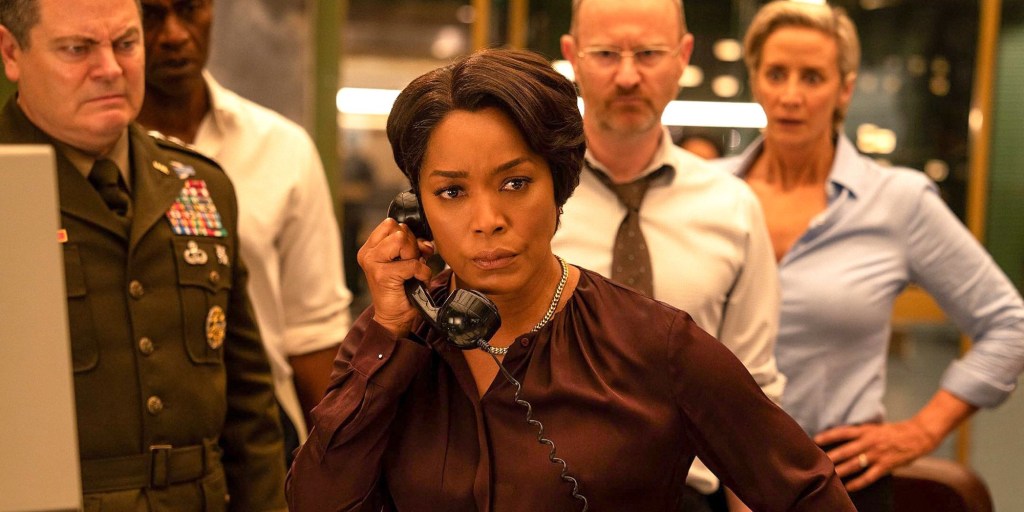
During my last viewing of Joker, it struck me as a have your cake and eat it too kind of picture. By this, I mean that it’s delicately able to explore potent topics such as mental anguish, upper-class apathy and societal indifference whilst still having a villainous perspective. It felt like a self-created origin story for the Joker and his greatest arch-nemesis by the character himself, who was framing his story in the form of a twisted joke that appears like a tragedy to audiences. It’s because of this tight-wire act that a sequel seemed unnecessary. However, much to my surprise, Folie à Deux is an engaging sequel that contends with the labels we’re given by people and society at large.

The sequel occurs two years after the original and depicts a downtrodden Arthur Fleck (Joaquin Phoenix) who lies rotting in Arkham Asylum. His demeanour changes when he meets a woman in musical therapy called Lee (Lady Gaga), who tries to convince Fleck of the virtues of the Joker persona. Their meetings are played amid the backdrop of a court case against Arthur for the crimes he committed in the first film.

If Joker was the dreamlike depiction of someone who finally becomes seen for the first time in their life, then Folie à Deux is the sobering prick of that fantastical balloon. By its very nature, the sequel destroys the ambiguity of the first film. But it’s not all for nought. Taking out the ending and flourishes that homage aspects of the Batman mythos, Arthur Fleck did not have much to say about his Joker persona in the first film. Instead, the omnipresent media attempts to paint the Joker persona in political terms. That fundamental conversation continues in Joker 2, whereby people and society at large project onto Arthur what he is versus the self-perception he has of himself.

In fact, the examination of the Joker persona turns into an amorphous social construct that people wield for their own ends. In a post-social media world, where some people stan celebrities and serious political discourse gets turned into a circus, the courtroom scenes being an inch away from farcical felt refreshing in their satire of something serious becoming entertainment.

At the same time, the fantasy aspect of the original gets retained uniquely. This comes in the form of the musical sequences that act as illustrations of how Arthur is dealing with his evolving relationship with Lee and the Joker persona. There’s something raw and palpable about these sequences that play like heartfelt karaoke on a grand stage. The highlight is “The Joker” in which Arthur vents his frustration and anger with the court proceedings in full Joker costume. It compares favourably with the trippy dance sequence at the tail end of the first film.

Todd Philips is also quite sly in his filmmaking in this sequence. The opening of the song that depicts the Joker in a spotlight evokes the famous live album cover for Johnny Cash’s “At San Quentin” (minus a guitar). This aspect coupled with the casting of Steve Coogan and Arthur Fleck literally saying “stop singing” in the third act makes Folie à Deux feel much more mischievously meta than the original.

The sequel is much more insular due to its central location of Arkham and use of a 16mm academy ratio that makes us feel boxed in with Arthur. But when it does open up, it subverts moments from the first film. The triumphant and meme-worthy Joker open stair dance is replaced by a suffocating use of close-ups as Arthur deals with the end of a relationship (at the same spot). And a chase scene in the middle of the city feels like a terrifying inversion of the opening scene from the original as tension mounts with the use of long shots.

Despite matching the physicality of his Oscar-winning performance in the first picture (via the dance choreography), Joaquin Phoenix’s stark stillness in the early parts of the film captivated me the most. But Lady Gaga steals the show in a grounded interpretation of Harley Quinn, whose vocal work is equal parts charming and dangerous. I would have liked more internal life from this new version of Quinn but her character has the same function as Arthur in the original, which is a conduit for the fantasy and delusion.

Overall, I was enthralled by Joker: Folie à Deux. Its themes and satire appealed to me. But also its musical sequences charmed me. I felt the desperation in Arthur’s last song and my heart beat like a drum before the climatic final event. It’s a bold sequel that asks us to step away from the fantasy and embrace the cold light of day of who we idolize and how we consume media.

Posted in 2024, 2024 Films, Review, Reviews | Tagged , , , , , , , , , , , , , , | Leave a comment

Review: Beetlejuice Beetlejuice (2024)

Preamble

Despite being in my top five comfort movies, the original Beetlejuice is actually quite a formative picture for me. Aside from being my introduction to Tim Burton, it also showed me how broad and satirical films can be (along with A Clockwork Orange and the original Dawn of the Dead). With that said, I’ve been equally hesitant and curious about a sequel. Have you seen Beetlejuice Beetlejuice? Let me know in the comments below.

Review

At this point, making a sequel to Beetlejuice would be as absurd as making a follow-up to Young Frankenstein. Sure, you could. But what would you have to say? Tim Burton’s sophomore effort left it on the field with a pointed satire that had the indifference of yuppie culture in its crosshairs. This quality came from moments that juxtaposed attempted hauntings with the complete lack of acknowledgement from its buffoonish rich characters. Instead, they’d react with a single-minded focus on a current trend or observation about decor. Despite being overindulgent and messy in places, Beetlejuice Beetlejuice plays like a fun carnival of surreal antics with occasional shots fired at new-age narcissism.

Burton’s 2024 sequel depicts the coming together of three generations of Deetz. There’s Delia (Catherine O’Hara), who recently lost her husband, her grown-up stepdaughter- Lydia (Winona Ryder) and her daughter- Astrid (Jenna Ortega). Through a recent tragedy, they attempt to navigate and heal their differences with occasional interjections from the undead and titular bio-exorcist- Beetlejuice (Michael Keaton).

Despite being years apart, Beetlejuice Beetlejuice has not lost its wild potency. This comes courtesy of Burton’s direction that’s composed and exciting. Long atmospheric tracking shots that depict an evocative and oppressive autumn combine with boom shots that effortlessly convey the blurred line between the living and the dead. At the same time, there’s also a commitment to the homemade practicality that made the original so charming in its almost Ed Wood esque quaintness (via looming tilting shots). These are punctuated by a claymation sequence and a black-and-white backstory scene that uniquely broadens the cinematic canvas of the first film.

The only bum note in newer elements is the depiction of the “Soul Train.” While it demonstrability wears its influence on its sleeve as much as the Gilliam and Dune fueled aspects of the afterlife in the original movie, it often comes across as too stereotypical and so obvious a choice that it becomes eye-rolling.

The screenplay by Alfred Gough and Miles Miller attempts to update the themes that permeated the original film by sending up contemporary trends and how they fuel male narcissism. This comes from Lydia’s love interest- Rory (Justin Theroux), who turns empathetic bonding into a form of control and narcissism (such as proposing to Lydia on the day of her father’s funeral). Likewise, an undead detective- Wolf Jackson (Willem Dafoe) makes his public service duty an extension of his living occupation as a stunt actor, complete with a catchphrase- “Make it real.” His character also feels the closest the film comes to being post-modern as his persistent line about being real is a recognition of Burton’s approach to the sequel. For better or worse, the screenplay does contain problems that plague certain Burton movies. Often plot points feel like they’re been chased around or clumsily laid down. Some elements are set up but never fully dealt with, and some sequences are indulgent in their weirdness (such as a second musical sequence that goes from being funny to annoying).

It’s also ironic that Beetlejuice Beetlejuice plays into the new age narcissism that it rakes over the coal via characters and scenes that have this look-at-me energy in attempting to appear meme-worthy. Some of the scenes featuring the titular character’s wife- Delores (Monica Bellucci) have this quality along with an end credit tribute to the character of Bob.

However, just like the strife between the three Deetz women, Beetlejuice Beetlejuice finds synergy and understanding in its satirical and emotional flourishes, which is ultimately why the picture worked for me.

Posted in 2024, 2024 Films | Tagged , , , , , , , , , , , , | Leave a comment

Review: Alien Romulus (2024)

Preamble

In stark contrast to my last post, which seemed like a never-ending preamble, this one is going to be short and sweet. Suffice it to say, despite the many problems with the industry, there’s something warm and reassuring about the latest Alien film being deemed worthy enough for a theatrical release. So, with that said, have you seen Alien Romulus? Let me know in the comments below.

Review

On the surface, the Alien franchise could be interpreted as an assortment of disparate styles and genres. However, this has always been the series’ greatest strength. Each film has felt like a unique auteurist vision without regard for franchise management. Even the flawed but occasionally impressive Ridley Scott helmed prequels seemed to be in conversation with the ideas that have fueled science fiction films such as 2001 and Blade Runner. With this in mind, it comes as something of a surprise that Alien Romulus flies in the face of this central virtue of the series. It’s the most self-conscious Alien film, but also one of its most thrilling, playing like a breathless horror rollercoaster that doesn’t let up in its intensity.

Set between the events of Alien and Aliens, Romulus is about a surrogate sibling pairing, Raine (Cailee Spaeny) and Android Andy (David Jonsson), who agree to help out on a mission to an abandoned spacecraft. Within it, they hope to find more fuel, so that they can put themselves into cryosleep to escape to the nearest planet (which is years away).

During many instances of Alien Romulus, I was reminded of the following quote from Gene Siskel about David Lynch’s direction for Blue Velvet- affirming that he is “playing the audience like a piano.” To his credit, director Fede Álvarez played me like a piano throughout the film’s two-hour run time. This is courtesy of some solid and tense set pieces. There’s a particularly taut sequence involving three characters who quietly make their way through a room of Facehuggers. Through minimal lighting and sound, I was enraptured and waiting with bated breath to see how the sequence would play out.

In this way, Álvarez draws upon the exact and patient filmmaking that defined his thriller- Don’t Breathe, which made the audience acutely aware of every minuscule sound and utterance. Likewise, Álvarez does the same in Romulus by playfully delivering common sound effects of the franchise as though they’re jump scares. But the filmmaking moments that stuck with me were the subtle and simple ones, whether it’s firmly held insert shots of two characters holding hands or a medium shot depicting a wordless face-to-face bonding moment in the third act. These intimate scenes are enhanced by Benjamin Wallfisch’s majestic score which captures an ethereal beauty in its use of strings that paint a picture of longing.

Cailee Spaney delivers a compelling central performance that walks a tight wire act between being tough and empathetic. But David Jonsson stole the show for me as Andy. In a franchise that’s been preoccupied with its android characters, Jonsson brings a touching sense of fragility and warmth to Andy, which juxtaposes with his cold and calculated demeanour in the film’s second half.

Despite these commendable aspects, Romulus does fall in considerable ways. It’s the sole film in the series that’s acutely aware that it’s an Alien film. Consequently, many lines and situations from previous films are quoted verbatim. It also feels the need to indulge in franchise management by appealing to the mythology laid down by Ridley Scott’s prequels. So, there’s this distracting tug-of-war between two aspects of the franchise that did not require reconciliation. But beyond this franchise homaging, I don’t feel the film adds much to the series. The original was transgressive in its psycho-sexual imagery and subversion of birth by depicting a perverse form of it in a male. In Romulus, the variation on this depicts a similar thing except it plays in front of a woman who is going to give birth.

There’s a twisted irony in this, but it’s not very potent or subtextually engaging. In fact, with instances like this, the film is playing catch up with recent body horror pictures such as The First Omen and Immaculate that played on the idea of perverse births and women’s bodily autonomy with much more meaning and inferred power.

For better or worse, Alien Romulus is in conversation with the franchise. In its direction and some aspects of its screenplay, it takes the pacing, casual dialogue and direction that made the 1979 film, so indelible. However, it’s marred by a persistent sense of reverence for its past. Even a go-for-broke third act and some stunning cinematography (via unique uses of lighting) can’t hope to contain the film’s fundamental issue. It’s the Alien film with the least to say.

Posted in 2024, 2024 Films, Review, Reviews | Tagged , , , , , , , , , , , | Leave a comment

One Great Shot: Alien Covenant (2017)

Preamble

Aside from Star Wars and Dune, the Alien franchise helps me shake off the motivational blues for blog writing. Ever since I saw the series in my teen years, it has captured my imagination with its Lovecraftian undertones and psychosexual imagery. Today marks the release of Alien Romulus. It’s the first Alien film in seven years. With this in mind, I was eager to revisit some, if not all of the movies in the franchise. However, as time passed, I wanted to lessen my scope in revisits. After all, the original Alien is a film that’s truly seeped into my bones. I’ve been through it frame by frame, seen an original 35mm print of it at my favourite cinema, and have genuinely lived with it for a long time.

Most of the rest of the films have not been far behind, with frequent marathons that involved the sequels. So, why did I decide to rewatch Covenant? It’s the one I wanted to revisit the most, and I don’t have a firm read on. While I appreciate its themes of creation and legacy, as well as its gothic spirit, it undermines itself by evoking the slasher sub-genre it transcended in 1979. Regardless, the latest viewing inspired me to write about the movie’s one great shot as the filmmaking impressed me the most. With that more than longish preamble aside, what’s your favourite shot from Alien Covenant? Let me know in the comments below.

One Great Shot

From pristine wide-angle shots to visceral found footage-esque camera moves, Alien Covenant shows that Ridley Scott’s knack for impressive filmmaking and beguiling imagery has not dwindled. The above shot is simple in conception. It’s essentially an insert shot to get the audience to focus on the mysterious figure that distracts the Neomorph from killing the ground team of the Covenant. The figure in question is David, who has not appeared in the film since the prologue.

This one great shot is deceptive. Narratively, it represents a ray of light akin to a beacon that’s picked up a crashed ship at a lighthouse. However, the small mercy from David may be all for nought as the crew find out about his sadistic and twisted experiments whilst he’s been on the planet for close to a decade. The bright light also proves to be a signal for the cinematic choices that permeate the rest of the film.

In particular, the lighting in the film’s second half is masterful. It has the haunting intimacy of a play or a Bergman film. Much of its use is lighting characters’ faces. In particular, it tends to obscure half of David’s face. It’s like the film is cinematically telling us about his duality. On the one hand, he’s a cold, merciless being, who is fascinated by experimenting. At the same time, he’s someone who can see the beauty and value in art, poetry and other human beings (such as Elizabeth Shaw). So, in essence, he at once celebrates and sees the value in humanity (via its art) but also sees us as mere guinea pigs for his twisted idea of creation.

Posted in One Great Shot | Tagged , , , , , , , , , | Leave a comment

One Great Shot: Dune: Part Two (2024)

Preamble

Truth be told, I’ve sat on this post for nearly a month. And it’s not for the most obvious reason. By and large, I’m happy with the post that you’re about to read. However, I’ve been reminded of a quote by the Tory Prime Minister, Harold MacMillan. When asked about the greatest challenge for a leader, he replied- “Events, dear boy, events!” From the death of Donald Sutherland to a historic Labour victory in the UK and the recent assassination attempt on Donald Trump, life has felt like a whirlwind to keep up with. Any one of these events could be an entire preamble to reflect on. But for now, it feels like the right time to slow down.

With that said, discussing an image from my favourite film of the year (in the aftermath of its release on home media) seems only fitting for the moment I am in. What’s your favourite shot from Denis Villeneuve’s smash hit science fiction sequel? Let me know in the comments below.

One Great Shot

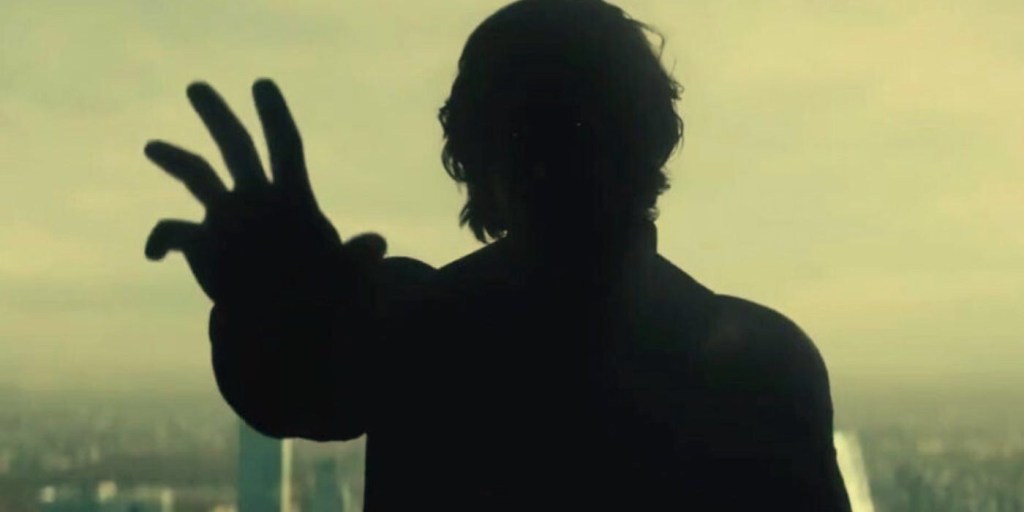
There’s something altogether haunting about the above image from Dune: Part Two. It’s akin to the flicker of a nightmare or perhaps someone who is in the throws of Charles Bonnet syndrome (an affliction not linked to mental illness whereby one can see illusions that are sometimes in black and white).

But this is not a dreamlike depiction of Paul Atreides. Instead, it’s a terrifying omen for his growing sway over the Fremen people. Having travelled to the South and drunk “The Water of Life”, Paul now seeks a hostile takeover of the Fremen war council. He’s going from someone who accepted and fought for Fremen’s culture (as a humble outsider) to wielding them as a tool for his vengeance.

The stark use of grey and black that gives off an almost monochromatic is also purposeful. It evokes the colour scheme of the Harkonnens, who have a black-and-white view of honour. In fact, the shot could also be interpreted as a mirror image of when Feyd enters the arena. There’s a mythic sweep to both shots that illustrates an underlying family resemblance and basking in the glory that comes from a gathered crowd. This point is amplified when Paul tells his mother, Jessica, in a few prior scenes, “So, this is how we survive by being Harkonnens.”

“The Water of Life” affords the young man a new perspective on his family lineage. Throughout the duology, director and co-screenwriter- Denis Villeneuve has shown the pull of various elements that have shaped Paul. Perhaps the real tragedy of Dune: Part Two is that the more impulsive and cruel aspects of Paul’s heritage are his downfall in becoming a monstrous tyrant that will be feared throughout the Imperium.

Posted in Uncategorized | Tagged , , , , , , , , , , , , , | Leave a comment

Review: Furiosa: A Mad Max Saga (2024)

Preamble

Much like the recent Obi-Wan Kenobi Disney Plus show, Furiosa is one of those things that I never thought I needed. However, as its release date has loomed, I’ve come to realize it may have a story to tell. But is it any good? Well, you can find out after the jump. Have you seen Furiosa? Let me know in the comments below.

Review

Looking back at Mad Max: Fury Road, it’s easy to forget just how unique it was as a piece of franchise revisionism. In an era where nostalgia is indulged and legacy sequels have to initially feel safe, Fury Road was like an adrenalized shot in the arm to a unique set of post-apocalyptic movies. However, it went one step forward with its female perspective (via the character of Furiosa). Her hard-edged femineity was a jumping-off point for director George Miller to distil and explore his most potent points about futuristic male cults and dehumanization (via people being used as resources for a cause and the will of a single person).

Despite relying on a sense of myth that permeated previous entries, Furiosa often feels at odds with itself. The film depicts 15-20 years in the life of Furiosa (Anya Taylor Joy) who is kidnapped as a child, witnesses the death of her mother, Mary Jabassa (Charlee Fraser), and finds herself at odds with warlord, Dementus (Chris Hemsworth) and cult leader, Immortan Joe (Lachy Hulme).

In contrast to other Mad Max films that often feel like continuous plots that are always in motion in real-time, Furiosa has an episodic approach. The movie is structured with a series of titles that make up about five sections. Given the large time span, it makes sense conceptually. However, in execution, it makes a lot of the film feel thin. Ostensibly, the movie is about Furiosa’s rise to prominence as an Imperator.

However, the film has many other pit stops along the way that lead to interesting avenues, but are not explored. For instance, Dementus becomes the source of satire as his shaggy-dog styled leadership is meant to be contrasted with Immortan Joe’s firm and powerful cult. However, despite initial encounters between the pair, this is not explored as we don’t see how the leader runs Gastown. We’re only told after a certain amount of time. This is a shame as Hemsworth’s performance matches the zany nature of villains in prior films, with his portrayal of a buffoonish strongman that has delusions of empathy.

As for some of the parts that involve Furiosa, they feel sketchily developed. There’s a middle section where the character teams up with a Max-esque character, but it is confined to a couple sections as their training together is mentioned and passed over quickly. Taylor Joy’s performance as a hardened and almost monosyllabic being who has to survive is impressive, particularly in the piercing nature of her eye movements and facial expressions. But a lot of the time, it does feel one note. Miller and Joy’s collaboration does soar in the tail end where Furiosa is at her most mythical and vengeful. This comes from low-angle shots that depict the character with a newfound furiosity and otherworldliness.

Elsewhere, the filmmaking is impressive in its sense of scale and various additional techniques. There’s a great subversion of a static shot from Fury Road as a character drives their motorbike up a sweeping desert dune. And there’s a wonderous instance of stop motion whereby we see a character’s hair grow and start to form shoots and leaves. This extends to a coda that tells of a supposed fairy tale-esque fate for one of the characters. In these instances, Furiosa attempts to match the mythic grandeur of The Road Warrior, which painted Max in heightened terms.

However, the film always feels like it’s wrestling between the personal, mythic and satire. The movie thinks it can coast on all three on some level, but ends up feeling like it partially services each element. In this way, Furiosa felt like a bit of a slog, with some arresting moments and images. But it never stirred the emotions like Fury Road or had the effortlessly euphoric action set pieces as some other entries.

Posted in 2024, 2024 Films | Tagged , , , , , , , , , , , , , | Leave a comment

One Great Shot: Mad Max: Fury Road (2015)

Preamble

At this point, writing about Mad Max: Fury Road has become quite a staple on the blog. Aside from the initial review, the 2015 film has also been featured in a rare second viewing post as well as a long piece about the film’s use of black and white. But as I sit here the night before finally seeing Furiosa, revisiting and writing about the film seemed as too good an opportunity to pass up. With that in mind, what’s your favourite shot from Fury Road? Let me know in the comments below.

One Great Shot

It’s no understatement to say that George Miller’s fourth entry in his Mad Max series has many striking shots. These vary from nightmarish images featured in the Bog section to the operatic shot of Charlize Theron’s Furiosa breaking down. But on this viewing, I was most struck by some of the shots involving Max.

Whilst demonstrably being the main and title character, the 2015 film’s most interesting and sly trick is giving the floor to Furiosa and her perspective etc. It’s what makes the picture soar above its predecessors. On the surface, this could make Max seem like the guest star in his own movie. However, he works as a good contrast to Furiosa as his haunted past is given visual and script lip service throughout the movie.

The first instance of this is in the above shot in the early moments of the picture. At first the shot is static as Max hears a lone girl call out for him. As the scene goes on, the camera tilts downwards to reveal a crawling mutated lizard that Max eventually crushes and eats. The patient and exacting framing of events is an excellent visual metaphor for Max’s fragmented mind as the voices of those he failed to protect “worm” their way to his sub-conscious.

It’s the first instance of many whereby the visual elements around Max start to blur between a dreamlike perception of the people he let down and real world environments. These moments that are ignited by this shot give a lot of credence and power to Max’s choice to help Furiosa in the third act. When he says to her, “At least that way, you know we might be able to together come across some kind of redemption”, he’s nursing his guilty conscience as much as Furiosa’s.

Posted in 2015 Films, One Great Shot | Tagged , , , , , , , , , , , | Leave a comment

Review: Star Wars Episode I- The Phantom Menace (1999)

Preamble

Well, this is just getting ridiculous. The amount of time between posts now is the equivalent of a yearly allowance of well timed holiday. Despite work becoming crazy busy, (especially in the last 2-3 months), my motivation for writing has been at an all time low. I think that’s due to how much importance I have put into external gigs that the blog suffers for it. But some semblance of passion is starting to return (even if it’s a lot more slowly then I would like).

However, Star Wars has always been a reassuring bridge for me get back onto the proverbial horse or think of something to shake the blog up. And it feels fitting to return to The Phantom Menace via a review of it. But I’ve almost buried to lead here with an extra waffle sized edition of the preamble. So, I would like to wish each and every one of you a Happy Star Wars day. May the 4th be with you and your celebration of a Galaxy Far Far Away. Are you planning to check out The Phantom Menace in cinemas again? Let me know in the comments below.

Review

Ever since its release in 1999, The Phantom Menace has been a pariah within the Star Wars franchise. It’s a film that launched the perpetual “ruined my childhood” complaint, a million Red Letter Media-styled takedowns, complete with similar if not outright exact copies of criticisms, and general disenchantment. However, it’s always been a childhood touchstone in my eyes (my first experience of Star Wars on the silver screen at 8 years old, a few years after watching the Special Editions of the Original Trilogy on VHS). And it was also the stepping stone for my love of movies, via a school assignment about summer holidays. The sugar-high retellings of Darth Maul’s face paint at Legoland, terrible 12-inch action figure accidents and general excitement about the film itself were no doubt as formative as annoying to everyone around me. But above all, it’s always been one of those rare films where I can regress and still feel the same emotions I had as a young kid. 

There have been permutations, of course. I’ve seen the original cinema release, a 3D re-release and most recently, a 25th Anniversary screening at my local cinema. And that’s not even to mention the countless home media viewings that have varied from a bootleg I saw in India to the official DVD and Blu-Ray releases. 

The biggest takeaway from my latest screening of the film is that even in the post-Disney era, The Phantom Menace represents Star Wars at its most broad and innocent. It’s a kid’s film that does not talk down to its target audience but instead respects their perspective, insight and way of looking at the world.

The Phantom Menace depicts the first fateful encounter that will pull Anakin Skywalker (Jake Lloyd) from his slave-like existence on Tatooine to a young promising Jedi who will eventually be trained by Obi-Wan Kenobi (Ewan McGregor). This meeting is played against the conflict between a small planet in the Galactic Republic, Naboo, who must contend with a new invading force- The Trade Federation who seek complete occupation of the planet.

The Phantom Menace is a curious melding of broad biblical motifs and thematic concerns that writer/director George Lucas is trying to impart throughout his screenplay. For one, there’s lip service to the idea of symbiosis whereby vastly different beings work together for mutual advantage. This theme is like a pinball in the sense of hitting many different characters who differ in their approaches to the world. The most notable is the relationship between Obi-Wan and his mentor- Qui-Gon Jinn (Liam Neeson). Jinn approaches the world through an open pragmaticism that manifests in being in tune with the present moment and all the possibilities that can arise out of it. This is in contrast to Obi-Wan who looks at the world in black and white terms that leads to a cynicism and sometimes sharp dismal of a current predicament or people within it. As he caustically says at the end of the second act- “Why do I sense, we’ve picked up another pathetic lifeform.” Along with the motif of mirror images and things coming in two (portrayed in visual terms as well as behaviour etc, this theme of symbiosis is at its best). 

It falls most where Lucas’s heartfelt idea of the thesis is most at play, namely the inherent distrust between the Gungans and the people of Naboo. It’s meant to play to the rafters in portraying how a primitive and regal culture comes together to defend their home. However, the reason why each faction is inherently suspicious of each other is sketchily developed. Along with the inherent tell versus-show ratio of the suffering of the denizens of Naboo (throughout the film) and biological/mystical implications of symbiosis- Lucas’s screenplay at times feels stretched to breaking point. 

This is contrasted with quite a light touch to the world-building and fleetness to information conveyed in the first act. Lucas’s trademark “faster more intense” mantra is welcome in quickly introducing the factions, the strength of the Jedi and the sheer threat that underpins the drama. This is combined with an impressive sense of scale to the world-building. From a dizzying sense of vertigo in the Senate scenes to the top-down shots of some of the Jedi Council moments that visually illustrate their current arrogant and aloof nature, Phantom Menace matches the Original Trilogy with its sheer imagination. 

At the same time, Lucas is quite playful with his world, which varies from a 3-stooges-inspired Pit Droid argument to Greg Proops’s vocal performance as an alien who provides motor-mouthed commentary to the pod race sequence. 

Act 2 aka the sequences on Tatooine represent the film at its most biblically broad with allusions to John the Baptist and the Virgin Birth. However, the emotional truth of these scenes results in how Lucas sees kids in his life (via Qui-Gon and Anakin’s mother, Shmi). There’s an inherent respect and care for Anakin’s perspective that’s afforded by the adult figures in the story. It’s welcome and refreshing. Also, by drawing upon Biblical myth (particularly the Virgin Birth, Lucas draws parallels with how parents see their kids as miraculous creations who can meaningfully imprint upon the world. Qui-Gon takes on Shmi’s reverence for Anakin by eventually coming to believe he is a mythical figure who can bring balance to the force. 

Showing how Shmi’s love and hopes for Anakin transform into Qui-Gon’s belief in the boy is a meaningful metaphor for parenting and changing one’s character. Through your love and caring for them, your perspective and worldview can change. And that emotional truth resonated with me most during this screening of the film. Aside from being a stand-alone aspect of this film, this idea would have ripple effects on the rest of the Prequel Trilogy. This is apparent with Obi-Wan being a reluctant father figure to Anakin in Episode 2 and an older brotherly figure in 3 by taking on Qui-Gon’s belief in Anakin as the Chosen One etc. 

The Prequel Trilogy being hinged on the hopes for a nine-year-old’s capacity for greatness feels fitting with the mythic structure that underpins the franchise. In a sense, the hopes and ideals of a parent that comes from a myth and how people try to imprint and shape that story (via parenting and mentorship) is a core aspect of the series. Just like Obi-Wan carefully tries to steer Luke (via a fabricated story of his father/Darth Vader), so does Qui-Gon try to impart wisdom to a young Anakin, who has unrealized power and potential. 

As for the rest of the proceedings, I appreciate how subtle the performances are in The Phantom Menace, namely Liam Neeson, who has grace notes of embarrassment and warmth in the film’s second act. But Pernilla August steals the show with a naturalistic depiction of maternal love that’s both warm and heartbreaking. And despite being the most infamous aspect of the film, I very much enjoy Ahmed Best’s physicality in his portrayal of Jar Jar Binks. It’s earnest, goofy and tailored made for the film’s primary demographic.

John Williams’s score is a welcome return in providing literal magic-esque sounding notes that feel at home with how a kid sees the world of Jedi and Star Wars. I could continue writing about Episode I. For one, the much-lauded “Duel of the Fates”, while being stylistically impressive lacks the emotional choreography that would come to define some of my favourite lightsaber sequences in subsequent instalments. It’s a film that despite being flawed still retains what made Star Wars so inspiring for an entire generation of young impressionable moviegoers. I sometimes bemoan the films that I wish I had grown up with. But I’m glad I grew up with The Phantom Menace. 

Posted in Retro Reviews, Review, Reviews | Tagged , , , , , , , , , , , , | Leave a comment