Review: Rachel Getting Married (2008)

RachelGettingMarried_2

In Rachel Getting Married, the late Jonathan Demme combines the form of Cinema Vérité with a candid fly on the wall style that has the awkwardness and intimacy of a pristinely preserved wedding video. In fact, in an interview with Post Magazine, Demme stated he wanted to make “The most beautiful home movie ever.” The result is a subtle use of the camera in illustrating the seclusion and underlying familial disenchantment as former drug addict Kym (Anne Hathaway) returns home on the eve of her sister’s wedding- Rachel (Rosemarie DeWitt)

Despite the loose and free roaming style requiring minimal setup, Demme’s framing proves to be essential and purposefully designed to evoke his characters’ strife. Kym’s persistent and palpable vying for attention is given fascinating life as the character is like a pervasive shadow that comes close to engulfing the narrative and shots. Demme commendably portrays the tug of war conflict between Kym and Rachel in a wonderfully engaging cinematic manner.

Rachel fears that her sister is attempting to ruin her wedding by upstaging her with her crippling psychological outbursts and Demme conveys this with careful placement of focus. In the aftermath of a particularly nasty argument, which has their father, Paul (played with indelibly heartening charm by Bill Irving) side with Kym; Rachel announces that she is pregnant. The news is greeted with boundless enthusiasm, and Demme orients the dynamics of the scene away from Kym as all the characters gather on one side of the kitchen while she remains stupefied in the corner.

In the tail end of the film, both characters appear united not only concerning their behaviour towards one another but also in the framing. Kym stands proudly looking on at her sister getting married to her betrothed, and there are many instances where they are positioned in perfect harmony with one another. In the film’s most touching moment Rachel washes and attends to her sister’s wounds while a Violin rendition of “Here Comes the Bride” is heard in the background. The moment signifies that Rachel has temporarily set aside her desire to be the centre of attention to help her sister and acknowledges the mental anguish she has experienced.

The power of Rachel Getting Married is in some of its ruinous family entanglements never being resolved. Much like life, there is no flawlessly wrapped bow on events; opportunities are missed, important words are never uttered, half-hearted painful truths cease the day, and soul bearing words never soothe the conscience. And in the picture’s most devastating scene, trauma can be induced by the most seemingly mundane and innocent household item as an amusing generational battle, fought over stacking the dishwasher, is soured by Paul stumbling upon a plate belonging to his long dead son.

Demme juxtaposes this with a unique portrait of marriage. Many of the scenes in the film are dedicated to showcasing the various members of both families bonding over memories of their time together. Screenwriter Jenny Lumet conceives of marriage as a union between two families as opposed to just being a state enacted commitment between man and woman. The choice of the bridesmaids to be dressed in sarees punctuates this idea because in Indian culture it’s a tradition that when a girl gets married, they leave their family to become part of the husband’s in-laws.

With this in mind, Kym’s alienation becomes all the more potent as her emotional seclusion is put on a bigger canvas. In many of the wedding sequences, the audience can barely see the live wire character as she gets lost amidst the various guests. In the moments we do see Kym, Hathaway’s intense facial expressions portray a convincing isolation and detachment.

Fundamentally, Demme uses the cinema to chronicle human beings, and in the best moments of Rachel Getting Married, he does out this ostensibly mundane endeavor with touching and vivid authenticity.

Posted in Retro Reviews | Tagged , , , , | Leave a comment

Review: Alien: Covenant (2017)

nuwst2efifia88gytcat

A covenant is an agreement that can be made between a nation or people. In the context of the new film from Ridley Scott, it’s the name of the colony ship bound for a distant planet to repopulate and start a new life for humankind in the cosmos. The original Alien film was many things. Crucially, it was a narrative of feeble human choices resulting in the unveiling of a creature that acidly twisted the knife into the very notions of morality and compassion and replaced it with a savage survival instinct. This was demonstrated by way of a terrifying life cycle, that felt in equal parts- biologically credible and sexually transgressive. The aptly named Covenant continues this tradition of the horrific entangled web of events being spun by problematic judgements.

A reluctantly stern captain of faith impulsively responds to a human distress call and brashly thinks the sourced planet to be much more habitable for the two thousand colonists than a rigorously simulated and scientifically mapped out planet further out in space. The central antagonist of the picture arrogantly proclaims he loved a woman who showed him compassion and sees fit to still experiment on her for the sole purpose of curiosity. If Alien Covenant is about anything, then it is about the delusional egotism in leadership and creation.

For a film that bestows the central creature of the accoladed horror franchise to title status again, the Xenomorphs prove to be the most problematic aspect of the picture. Essentially, there is no dimension added to the creature’s life cycle or a new manner in which we could perceive them.

In Aliens, the sheer multiplicity of their race come from an Alien Queen, and they function as a nightmarish subversion of a truism parents tell their children, encapsulated when Newt says to Ripley- “My mummy always said there were no monsters, no real ones, but there are.” In Alien 3, the lone Xenomorph has an animalistic fury as it takes on the attributes of its non-human host resulting in the tense and frenetic point of views shots in the tail end of the picture. At the same time, the creature is seen as the embodiment of divine punishment by the prisoners of Fury 161 who create a nihilistic and cruel religion to deal with their crimes. In Alien Resurrection, there is a human/Xenomorph hybrid as Ripley’s DNA is replicated and modified. Even the woeful Alien Vs Predator movies had some sense of creativity in melding both creatures into an amusingly hissing new creation complete with dreadlocks and a new set of jaws.

In Covenant, the Xenomorph have lost their majestic sense of terror that came from their ability to be simultaneously horrifying and striking in their design. Additionally, the subtext of their attacks playing on fears of rape and male pregnancy become clumsy overt text as David (Michael Fassbender) lures the unsuspecting Captain Oram (Billy Crudup) to his lair. When asked what his creations need to be successful, the android retorts in a matter of fact manner- “A Mother.”

The best sequence involving the creature is when it attacks a couple during a heightened moment of passion in a running shower cubicle. Ridley Scott’s framing is impeccable as the Alien is seen through a mirror as it violently lunges at the male partner. The aftermath is the Xenomorph looking as though it was kissing Upworth (Callie Hernandez) and a darkly comic moment as blood gushes over the female crew member in what seems like an ironic twist of climaxing. As good as the sequence is, it does represent a sobering moment for the series; as it seemingly sinks into the slasher movie genre waters that it once transcended so masterfully.

From the ashes of the Xenomorph’s mediocrity, the android David arises to become the malevolent heart of the series. In Prometheus Fassbender’s performance subverted the Pinocchio portrait of an artificially intelligent being with a seemingly aloof and obedient nature that hid ominous intentions which occasionally manifested themselves in his wry sense of humour. In Covenant, Fassbender takes David to new heights of passion and all-consuming arrogance.

However, the most striking quality that the Irish actor adds to the character is a protracted sense of wistful sadness. In many of David’s exchanges with Walter (the newer android model again played by Fassbender), he expresses his love for Dr Elizabeth Shaw (Noomi Rapace) and his misery of not having her around. Even though the sentiments can be read as a ruse because he experimented on Shaw for his creations; there is still a deep-seated sense of love that went unfulfilled. (A starker reading of David’s feelings of unrequited love could be read as physical and retain the sexual subtext that the series always has at its core)

The added quality presents David with a fascinating dichotomy. In the opening sequence, the character stands before Michelangelo’s David sculpture as he chooses his name in view of his creator- Peter Weyland (Guy Pierce) Through the course of his conversation, David reflects on his creator’s mortality and concludes that he will outlive his human master. In many ways, David believes he is a supremely perfect being who has far exceeded humanity yet still revels in the sentiments of man as embodied in his feelings for Shaw. This conflict of egotism and emotion has particular resonance when thinking of it in the context of the beings that David has created. The creation of Xenomorphs could represent a purging of this conflict in lieu of a pure instinct of survival.

As David, Fassbender channels Vincent Price’s pomposity and cleverly echoes Rutger Hauer’s seductively impassioned portrait of Roy Batty. Whereas, Fassbender imbues Walter with a sense of innocence and discovery that is manifested in many of the interactions he has with David. A particular noteworthy scene has Walter acknowledging the parameters of his programming after learning to play the flute. At this moment, Fassbender’s subtle facial expressions of awe, wonder and reflection are endearing to watch.

Equally as compelling is Katherine Waterston’s performance as Daniels who repurposes a particular facet of Sigourney Weaver’s performance from Alien to interesting effect. In the 1979 picture, Weaver played Ripley with an economical stillness: her physical movements had a purpose, conviction and ultimately conveyed an assuredness about her duties aboard the Nostromo.

Waterston takes this stillness to a much more empathic place. While her physicality is efficient, there is something also undeniably warm and embracing about it too. In a scene towards the end, Waterson wonderfully encapsulates all these qualities as her solemn reflection on the terrible events of the film turn into a moment of an outward affection as she hugs Tennessee; (Danny McBride) and in so doing they share the losses they have both experienced.

For all its apparent deficiencies, Ridley Scott’s sense of scale and grandiosity has not lost its cinematic potency. From the wide angled shots of the Covenant’s long corridors to the Pompeii esque scene of mass genocide: this a mainstream horror picture of utterly deprived beauty. The grislier imagery (which admirably retains a fidelity to the work of HR Giger) such as Shaw’s mangled form rival the repellent visual concoctions of Alien Resurrection; the only picture in the franchise that makes one feel as though they want to have a shower after watching.

In essence, Covenant represents a paradigm shift for the Alien series. The creature who travels through vents and hides in the darkest corner of the ship no longer scares us. Instead, the synthetic being and his freedom to experiment while we all sleep gets the heart beating just a little bit faster.

Posted in 2017 Films | Tagged , , , , , , , , , , , | Leave a comment

Review: Guardians of the Galaxy Vol. 2 (2017)

Guardians-of-the-Galaxy-Vol-2-Review

Writer/Director James Gunn makes films with the eternal optimism of a nine-year-old, who desperately attempts to get two identical magnetic poles to attract one another. Often his movies contain contrary elements that depending on the subject matter and genre sensibility; either beautifully harmonise or result in a woeful mess. Guardians of the Galaxy Vol. 2 represents a further division in this reading of the director’s work; namely the stark contrast between his low budget endeavours and blockbuster fare.

His indie pictures are like slyly crafted cinematic Jenga games, where one misstep results in a spectacular collapse of the entire construction. In particular, Gunn’s 2010 film Super fails due to a shrugging nihilistic subversion of superhero fiction; it takes the bestowing power motif to a bleakly delusional endpoint, and attempts to synthesise it with a romantic edge in an intrinsically whiplash-inducing ending.

As a result of the canvas being bigger Gunn’s sensibilities are let loose like an energetic and ravenous Tasmanian devil. The result can be an unusual blend that fuses contemporary tentpole moviemaking with old Hollywood craft. In remunerating on the original picture, it is incredible to conceive how much Gunn owed to Sergio Leone. (indeed, Gunn cited the Italian director as a source of inspiration in an interview with Elvis Mitchell in 2014) Much like Leone, Gunn’s close-ups were striking in their detail, immediacy and emotional heft. While Gunn did not use the widescreen format to depict a mythical shoot-out, he nevertheless employed it to interesting effect. In the jailbreaking sequence, Gunn juxtaposes Rocket’s (Bradley Cooper) oral plan of escape with Groot (Vin Diesel) enacting a separate action that undermines his partner’s intentions.

Most notable of all is Gunn’s incorporation of music in the Guardian’s films. In a recent social media post, the director said “Tyler {Bates} (the film’s composer) creates the score BEFORE we shoot the movie. He writes the music from the script, and we play the music on set while we shoot so the actors and camera crew know exactly the tone we’re setting, and so that the music is an organic aspect of the film.” The process of music being used during production harkens back to Ennio Morricone’s scores being used on the set of many Sergio Leone films.

These cinematic flourishes accompany a visual scheme that is not beholden to film. Instead, Gunn wholeheartedly embraces the digital revolution and the potential imaginative power of computer-generated imagery. Though, a lot of characters in the films are made with the same imaginative, practical spirit of the canteen scene in Star Wars. Gunn combines this with a postmodern snark, that is more likely to call out the absurdity of its extraordinary galactic sights, rather than longingly look upon them with awe and wonder.

With this in mind, the audience’s enjoyment of Vol. 2 will depend on how cool they find the idea of David Hasselhoff rapping in a seventies disco/eighties power ballad about the title characters. At it’s worst the film is a bloated, floundering and an occasionally adrift piece of work, that has all the terrible qualities of a sequel. In many ways, it is bigger, stupider and much flimsier.

Nevertheless, there is an undeniable richness to the picture that remarkably improves upon its predecessor. If the original presented striking looking characters who were empty vessels for coolness, then the sequel provides these characters with weight, meaning and most importantly a voice. For example, Nebula (played with commendable seething hatred by Karen Gillan) has the most heart-wrenching moment of the film; as she reveals the reason for her animosity towards Gamora. (Zoe Saldana) Every time her adopted sister would win a bounty or conquest, her adopted father, Thanos would change her into a more of a cybernetic being to compete with the green-skinned being.

In its more reflective moments, Gunn’s characters do grapple with their mangled forms and internal conflicts. Rocket finds a kinship with Yondu (played with fascinating stillness by Michael Rooker) because they both present an obnoxious facade that hides the emotional and fearful sides of themselves. Drax’s (Dave Bautista) finds a sense of innocence in the course of his conversations with the naive and sweet Mantis (played with touching sincerity by Pom Klementieff). Gamora comes to acknowledge the mistakes of her past by seeing Nebula as someone who has suffered and ultimately offering her familial shoulder as well as a new purpose.

The heart of the film lies in the relationship between Peter Quill (Chris Pratt) and his father Ego (Kurt Russell). In many ways, the handling of the narrative thread is the most problematic aspect of the picture. Just as it starts becoming absorbing and poignant, Gunn cuts to a frustratingly elongated comic interlude. In fact, the film seems engulfed with them. This problem is compounded with how repetitive they become; much like ceaseless clapping at a dog show. There are only so many times the name of the blustering Viking esque ravager (Taserface) is funny. Or the many wrong things Baby Groot brings back to Rocket and Yondu, while they are in a prison cell.

Crucially, the film never gives much time to Quill grappling with his future and his inherent Demigod nature. Moreover, there should have been much more of a parallel between Yondu and Ego. While one could argue this comes later in the film; they are handled in an obnoxious manner. Most of the dramatic moments in the tail end of the film are marred by occurring during intense action sequences, and the snarky humour ruining these sustained moments of importance.

Gunn is capable of elegant paralleling. In his first film, (Slither) the gossiping nature of a quiet American town is contrasted with the central creature; whose travels across the universe cause it to postulate in a human manner. Moreover, through the creature, the people of the small town still voice their opinions and feelings of Starla Grant (Elizabeth Banks) with reckless abandon. There is a darkly comic edge to the emotional climax; as Grant and her husband’s relationship is being worked out in front of the town with a frightening new dimension. The flurry of half-whispered rumours, lies and judgement become public discourse.

Most egregious of all is the timing of Ego revealing that Peter will lose his divine essence if he dies. The moment happens when the rigged bomb in Ego’s central system is close to blowing up. Because Quill has not reflected on his identity throughout the picture, the moment loses tension and instead becomes hollow as opposed to emotionally resonating.

At the same time, the central relationship does offset a problem that persisted with the original Guardians movie. There was a goofball charm and humour pervaded that film, and it became rather tiresome after a while. However, in Vol. 2 it is used as a pretence and source of subversion. With the character of Ego, we are presented with a being who is the complete antithesis of a God. He is fair, laid-back and seems to observe the value in humanity. As he says when we first meet him, “I am a God with a lower case g.” Kurt Russell’s understated and effortless blue-collar charm accentuates this portrait. In many ways, it is an atypical Russell performance, sans the sense of buffoonish superiority, and instead replacing it with worldly wisdom.

Later in the film, this brittle portrait is shattered as Ego reveals the extent of his bleak world view. In these sequences, Ego becomes a Zeus esque figure; whose petty and all too human isolated feelings cause him to reshape the universe in his image. This is contrasted with Quill, who subverts the traditional perfect heroic figure from Greek Mythology; with a childlike attitude. This is encapsulated in his delivery of the line- “You killed my Mum and broke my cassette player.” There is something endearing about seeing deities wax about the meaning of retro pop songs and their disagreements resulting in universe-spanning consequences.

The Marvel pictures of late have suffered from their asceticism: chiefly manifested in their colour palette, that has comprised of a murky grey wash and desaturated real-world look. Fundamentally, the sequel oozes with exuberance and vibrancy that is worthy of its four coloured source material. From the gold and blue coloured palace of the Sovereign race to the rich uses of green, yellow and orange on Ego’s planet and you have the most beautiful picture in the cinematic canon.

In many ways, Vol. 2 takes on certain aspects of the original movie with an interesting effect. The opening credits sequence depicts Baby Groot dancing while his teammates are fighting a hideous monster. The scene is amusing in its wry detachment more than any single moment of the previous picture. And Gunn’s heart seems to be in a lot of the Rocket sequences. In one particular scene, he is springing a trap for many Ravagers and does it to Glen Campbell’s “Southern Nights.” There is a distinct feeling that Rocket represents a cinematic avatar for Gunn. He functions as the mastermind: spearheading the ploys and finessing them with black comedic elements, much like Gunn in all his pictures. Moreover, the change of Rocket being the one who picks the source music in the film is an amusing touch.

The most sobering moment of Guardians of the Galaxy Vol. 2 comes in its fifth and final post-credit sequence. It shows Stan Lee with some of his creations. (The Watchers) He says to them “I have many more stories to tell”, as they are walking away from the comic book creator. The scene illustrates that the Ringmaster who once opened shows with “Excelsior” and “True Believers” has been replaced with James Gunn. Even with the more problematic aspects of the picture, the circus that is the Marvel Cosmic Universe is in good hands.

Posted in 2017 Films, Comic Book Movies, Marvel, Review, Reviews | Tagged , , , , , , , , , , , | Leave a comment

Review: Novecento (1976)

1900-Eureka-still-700x395

Bernardo Bertolucci’s historical epic 1900 (Novecento) is the final film in Kino Klassika’s “A World To Win: A Century of Revolution on Screen.” Inspired by Karl Marx and Friedrich Engels’ famous declaration in The Communist Manifesto, the season aims to educate and inform the public on the wave of Soviet Film that had swept Russia for a hundred years. The season ran from 17th February to April 15th at the prestigious Regent Street Cinema.

With 1900 (Novecento) Bertolucci has constructed a tight wire act of a film; combining interpersonal drama that has archetypal resonance, a generational struggle between rich landowners and impoverished farmhands as well as the political turmoil that had swept Italy across a forty-four year period. This is combined with a permeating bawdy operatic flair that comes dangerously close to derailing the ambitious endeavour. However, in its epic 317 minutes running length; Bertolucci deftly illustrates an interesting metaphorical rise of particular populist ideologies that were prevalent in the 20th century.

The early part of the film is dedicated to the childhoods of Alfredo Berlinghieri and Olmo Dalcò. They are both born at the same time in 1901 and are on opposite ends of the social/economic hierarchy. Alfredo is born into a wealthy land-owning family and is named after his grandfather. Whereas, Olmo is the son of a poor foreman and is named after a man who had recently passed away. One does get a sense that Bertolucci’s heart resides in this stretch of the film. Trackings shots reveal sumptuous feasts and familial traditions; natural sun-soaked radiance washes over the lush green, and straw covered environments and Giuseppe Pellizza da Volpedo’s painting “Il quarto stato” (The Fourth Estate) boldly accompanies the opening credits.

At the same time, Bertolucci presents pivotal moments that fundamentally shape deeply ingrained ideological beliefs. A particularly striking scene is when a young Olmo walks barefoot across crowded dinner table towards his father. (Leo) His paternal figure states that no matter what Olmo becomes he should never forget his poverty-stricken roots. The scene culminates in the nine-year-old boy saying his friend gave him a single gold coin and Leo simply retorts “whatever is yours belongs to us all.” The moment feels like a secular and humanist baptism as the sun shines on the boy in a particularly breathtaking manner that reminds one of the great Renaissance paintings of yore.

By his own admission, Bertolucci has amusingly said that “I don’t film messages. I let the post office take care of those.” However, at the core of 1900’s structure is the emergence of Fascism and Communism within the confines of a family and its agricultural business. With this in mind, one can read the film as a directorial grappling of both forms of ideology. In regards to Fascism, Bertolucci has paralleled the conditions for its emergence in the narrative to that of Europe. Crucially, Alfredo (At this point in the film, the character is played by Robert DeNiro) is ineffective in dealing with the escalating abhorrent acts of violence in his community.

In the final act, Olma (At this point in the film, the character is played by Gérard Depardieu) and the workers’ community he oversees put Alfredo on trial for his passive behaviour and profiting off the labour of the workers. Through the character of Alfredo, there is a clear historical brush being used to suggest that Fascism emerged in Europe because it went unchecked and was allowed to grow by weak leadership. Cinematically, Bertolucci also effectively illustrates the rise of Fascism in the narrative. One sequence makes the blackshirts feel like an unforeseen force in a horror movie as we get fleeting glimpses of the army that are cut like lightning as they emerge on constructed boats, land and the surrounding countryside. The mutated colour palette that is chiefly made up of grey and black also make the violent squad seem like a terrifying mythological entity that is an affront to nature.

In tandem is a Biblical idea of the sins of the father passing onto the son as Alfredo’s father hired Attila Mellanchini (Donald Sunderland) as a foreman and fanned the flames of his violently held beliefs. In lockstep with his father, Alfredo keeps Attila on as a foreman and is oblivious to his continued violent crimes and the fact that his new belief system is being incorporated into his dealings with the workers.

In the history of cinematic villainy, Sunderland’s performance is singularly unsung. His primary facial expression of sadistic glee and manic energy match Italian cinema and its fits of frantic, energetic emotion. And his quiet moments of contemplation, drunkenness and aloofness imbue the character with a humanity that has a steadfast commitment to an extreme authoritarianism.

Robert DeNiro is simply spellbinding as the affluent older Alfredo. There is a scene when the character is wearing a fur coat that is too big for him and the small moment perfectly encapsulates DeNiro’s performance. He plays Alfredo as though he is a ten-year-old child who is playing dressing up. He is easily bored, foolishly idealistic in his approach and quickly resorts to brash action. More noteworthy is the stark contrast between his paternal warmness and numbness in the tail end of the film. In the context of DeNiro’s entire acting oeuvre, 1900 represents his most fascinating performance. The common perception of the actor that comes from his crime films is subverted here in favour of a jovially foolish and ultimately nebbish portrait of a man.

In the aftermath of the trial, the workers’ community disappears into the fabric of the newly regulated government that was established in the final days of the Second World War. With this act, Bertolucci suggests that Communism was like a short-lived hurricane that swept Europe; it never truly caught on or got its vindication due to the pragmatism of many world leaders.

In a recent introduction to the film, Bertolucci said “I wanted to show the birth of Communism in the Po valley and the repression of the {blackshirts} of Mussolini” From this statement, one does get the impression that the director favours one ideology over the other. Consequently, the film’s point feels one-note in its exploration and thematic resonance. It is for this reason and the elusive nature of the central relationship (Bertolucci is indecisive on what to do with the underlying homoeroticism between Alfredo and Olmo) that the film never reaches the richness of the director’s last film- Last Tango In Paris.

Fundamentally, 1900 is a raggedy epic with the import of a boisterous elderly uncle at a wedding who feverishly recalls his youth with captivating enthusiasm and mesmerising detail.

Posted in Uncategorized | Leave a comment

My Brief Thoughts on The Last Jedi Panel, Poster and Trailer

NE48SViQZqTW8c_2_b

In what has seemed like a wonderfully generational celebration that has unified various disparate fans of the popular franchise; the headline Last Jedi panel felt like a humbling bow to the Galactic festivities in Orlando. Patience was rewarded with new details, funny anecdotes and an emphasised personable new vision of a Star Wars picture that has not been seen since the great bearded one himself. (George Lucas) Nevertheless, the piecemeal titbits did not compare to the sheer excitement for the first teaser trailer and poster for eighth film in the Skywalker saga.

The brand new poster for The Last Jedi simultaneously evokes the urgency of its premise and the galactic grandiosity of the Star Wars universe. It also harkens back to a time where the movies seemed like supreme event fare; even if it does echo the minimalism of the Tron (1982) poster a bit too much.

Finally, The Last Jedi Trailer is powerful, soul-stirring and lingering in its implications. The force is strong with Rian Johnson and his directing prowess; his widescreen canvas particularly stimulates the senses, and his close-ups are fiercely personal and meaningful. Quite simply, Star Wars has cinematic heft again.

Posted in Uncategorized | Leave a comment

Review: Prometheus (2012)

prometheus

In the warm and pleasant summer of 2012, I left Ridley Scott’s Prometheus with a sense of majestic confusion. The film had cast a spell of bewilderment that has been hard to untangle in the intervening years. This was in stark contrast to my fellow patrons whose vivid and graphic reactions were as acidic as the Xenomorph’s blood from the acclaimed horror franchise.

To say that Prometheus is a film that causes passions to run high (on both sides of the debate) is putting it lightly. On subsequent home viewings, the film has unravelled into a peculiar concoction that oozes with astonishing cinematic craftsmanship while simultaneously being confounding in its writing. Watching the film is akin to witnessing the last dying gasps of a conceptually ludicrous vaudeville production that is delivered with a considerable amount of gusto.

Conceived as a picture that retains the spirit as well as the DNA of 1979’s Alien: Prometheus chronicles a scientific expedition to the far-reaching moon of LV-223 for the purpose of finding the Engineers. They are beings who are considered the creators of humankind. In the writers’ audio commentary, co-writer Damon Lindelof states “For me, Prometheus was all about making an Alien-Blade Runner mash-up, using the best themes from both movies and dropping them all into the same world.”

With this in mind, one could read the film as a reversal of the hefty metaphysical strife of Blade Runner. Crucially, Lindelof articulates that Prometheus is about a human who goes to ask his creator for more life whereas, in Blade Runner, it was the replicant Roy Batty who desired the same goal from his maker (Eldon Tyrell).

While this is a conceptually sound idea, the execution is infuriating in its sheer amateurishness. At its worst, Prometheus indulges in fetishism for vagueness, a trait that emphatically espouses clarity as a troublesome menace to good writing, and it has plagued many films from The Force Awakens to Star Trek Into Darkness. Culturally, it is truly poisoning the movies; turning them from engaging pieces of art to novelty items that are supposedly orgasmic in their surprises. Instead, they are about as clever as a ten-year-old shouting boo.

Peter Weyland (Guy Pierce) is the man in Prometheus who seeks his creator’s wisdom to eternal life. However, his role in the film is regulated to a cameo as Lindelof considers his constant presence as detrimental to his vision of inane mysteries. There were scenes that had a young Weyland talking to his android creation David. (Michael Fassbender) However, they were exercised in favour of pointless intrigue. Worse yet, Weyland’s appeal for eternal life when meeting the lone engineer on the moon is on the cutting room floor. There is depth in a character expressing his desire, however, Lindelof didn’t get the memo. Blade Runner’s power came from Roy Batty’s violent and rhapsodic presence as well as a desire that blurred the line between human and android. Moreover, Batty truly learnt the value of mortality in his mournfully reflective final moments. By comparison, Weyland barely registers as a human being.

There are many instances of Prometheus decimating its depth in favour of a smooth two-hour running time. One of the picture’s sub-themes is how children view their elders. Elizabeth Shaw (Noomi Rapace) still clings to her father’s impactful words about choosing to believe as the lynchpin for her faith. David perceives Weyland as an obstacle to what he understands as freedom, slyly surmised when he says, “Doesn’t everyone want their parents dead.”

However, Meredith Vickers’ (Charlize Theron) relationship with her father, which is chiefly illustrated in a scene with Weyland in the third act feels superficial and sketchily developed. Theron’s best moment of acting is when she expresses her admiration for Weyland in the past along with her current source of disdain for the old man. The manner of her delivery and body language (in the moment she is kneeling down at her father’s side and placing her face on his hand) puts one in mind of the process of growing up; as it showcases a child’s shifting relationship with their parents; going from sweet and idealistic admiration to bitter resentment over major differences. Sadly, the moment is not present in the finished film, and consequently, the scene in its current incarnation feels like a race towards an eyebrow-raising revelation.

One does get the distinct impression that the third act of Prometheus collapses under the weight of its hide and seek antics. The most emblematic aspect of this quality comes from the portrait of the Engineers whose presence were scaled back as the production of the film wore on. In particular, a scene when an Engineer converses with David was cut because Lindloff found “it robbed him of any coolness or mystery.” The opening sequence originally had a number of the humanoid aliens and a striking moment in the initial filmed final confrontation had the lone Engineer observe a flickering colour projection of a young girl playing the violin. Contrary to the co-writers’ sentiment, the incomplete portrayal serves only to make the apparent divine beings seem like generic slasher movie fare as opposed to the fascinating creatures who were ascetically inspired by the works of Michelangelo.

In other regards, Prometheus is incredibly postmodern in its approach. The underhanded machinations of the corporate sleazes from the franchise are given overt life by Vickers. The basketball scene from Alien Resurrection is amusingly homaged here; proving that whether one is a Xenomorph/human hybrid or android that your physical prowess is proven by scoring a stupefyingly hard basket.

More noteworthy is the film retaining a quality that has permeated the series and imbuing it with striking immediacy. The Alien films have always had a subtle judgement of humanity.

In the first, our survival instincts are found wanting compared with the seemingly perfect Xenomorph, whose biology and design makes it the perfect embodiment of Darwin’s survival of the fittest. In Aliens, Ripley’s (Sigourney Weaver) maternal instincts are tragically found wanting when she discovers her daughter died while she was in cryosleep for 57 years. They are eventually tested as she must face the nightmarish Alien Queen, for the life of a little girl she has bonded with through the course of the movie.

In Alien 3, the judgement is religious in nature as the lone Xenomorph is viewed as the physical manifestation of God’s vengeance for all the prisoners on Fury 161. They believe that the creature is punishing them for their sins and their salvation might come from destroying it.

In Prometheus, David proves to be a constant source of judgement as his various responses towards the crew carry an underlying sense of delight at the fact that he is not a human being. A particularly amusing moment is when he says “Hopefully not too close” when responding to Charlie Holloway (Logan Marshall-Green) about simulated humanity.

In the context of the many androids that have pervaded cinema; David is less Pinocchio than a curious entity with negative intentions. Director Ridley Scott masterfully conveys this in David’s first appearance. The android walks into a darkened room; the pitch blackness off the cryo room represents his insidious impulses and the brightly illuminated background evoke his flourishing inquisitive nature. His morality is surmised in the scene when he is watching Lawrence of Arabia, and the titular character says “The trick William Potter is not minding that it hurts.” David repeats the line like a mantra. Fassbender’s performance is captivating because it submerges any aspect of the android in favour of a seemingly aloof disposition that hides a remarkably dangerous edge.

Even with its woefully executed premise, Prometheus strangely captures the spirit of Alien in a unique manner. In my revisit of the original picture, I was struck by how it felt like a terrifying evoking of Lovecraftian cosmic horror combined with a potently nasty sexual subtext. The primary strength derives from the sheer insignificance and helplessness of the human characters in the face of a motiveless creature of instinct. One notable scene melds both facets to disturbing effect: Lambert (Veronica Cartwright) is reduced to paralytic fear when she gets a glimpse of the creature. Her unseen and audible death sounds like rape is occurring rather than swift dispatching.

Prometheus’ sumptuous visuals and direction make humanity seem like an inconsequential species; the potent fear comes from the sheer unknown of meeting our makers. To this end, the picture achieves a certain amount of awe and terrifying wonder in its speculative musings. Humanity has never looked less worthy of consideration in any other Alien picture. The title ship looks like an insect while its travel through the galaxy as overarching clouds and looming landscapes diminishes its scientific and technological endeavour.

Scott’s cinematic artistry particularly shines in the opening sequence due to a series of aerial shots capturing earthly landscapes. The series of shots feel like a reinvention of the famed “phantom-ride” shot (in early cinema, director G.A. Smith, would put a camera on the front of fasting moving trains, which would provide a ghostly effect) and gives the audience the distinctive feeling that Earth is being viewed as a single-celled organism on a petri dish.

Despite this, the psychosexual subtext of Prometheus is lacking. Elizabeth Shaw cannot give birth and a plot point results in her removing an alien foetus from her belly. The sequence is undeniably great in its feverish intensity because of its uses of close-ups and graphic detail. Nevertheless, the permeating idea seems to be uninteresting and has the same amount import as someone shrugging their shoulders and saying in a detached manner, life is tough. Whereas, the subtext in Alien is riffing on instances of grotesque interspecies violations and genuine horror of gender-swapping birth.

The lingering existential question of Prometheus is what does the seemingly divine dimension add to the franchise? The answer may come in Alien Covenant or the various other planned instalments, and that potential vagueness might be most maddening of all.

Posted in 2012 Films, Reviews | Tagged , , , , , , , , , , , , | Leave a comment

Brief Musings on Movies (March 12th-March 19th)

Wild At Heart (1990)

wild-at-heart

I am fundamentally undecided about David Lynch’s Wild At Heart. A part of me wants to endorse the picture solely for the fiery, passionate and erotically charged love story between Sailor (Nicolas Cage) and Lula. (Laura Dern) However, the Wizard of Oz references, retrograde spirit and surrealism are elements that a second viewing might bring much more clarity.

Breathless (1960)

entete

Jean-Luc Godard’s debut picture Breathless (À bout de souffle) is less a cinematic experience than a dream of free-flowing, manic energy, which is both alive and vibrant in every frame. It is one of those rare films that transcends cultural context and contemporary cynicism. Instead, the film effortlessly makes one feel as though a veil as been lifted and an entire world has been opened up; fundamentally showing cinema in a sharp, subversive and sublime new light.


Snake Eyes (1998)

Snake-Eyes-2

One of those few films where one can wholly embrace the performances, camerawork and pure cinematic artistry even in the face of an increasingly preposterous narrative that becomes so absurd in the third act that one swears they are watching a surreal comedic sketch on a beginner’s guide to atrocious storytelling.


The Black Dahila (2006)

movie-the-black-dahlia-thumb4

While the rich colour scheme comprised of ashy browns, striking uses of yellow and a lavish desaturated wash make The Black Dahlia a visual marvel; it is inherently a turgid and soulless experience with none of the portent, darkness or emotional resonance that the film ought to have. Not even Brain DePalma’s virtuoso camerawork can redeem this incoherent, overstuffed and ultimately floundering spectacle.

The Curse of Frankenstein (1957)

4039-4218

Hammer Horror’s The Curse of Frankenstein is a slasher film of manners. Instead of an iconic masked individual who has a weapon and methodology of killing, the picture’s central antagonist who is responsible for the piling bodies is Baron Victor von Frankenstein. (Peter Cushing) Less a wolf in sheep’s clothing than a wolf with the veneer of respectability and comfort; Cushing imbues the character with a cold and harsh resolve that result in occasional moments of subtle paternal outpouring and comic moments of wit such as when he cocks his left eyebrow after brazenly dispatching of a distinguished Professor.

More interestingly is some of the cinematic choices and narrative decisions that enhance this vision. The end of one scene, when Frankenstein expresses a constant desire to acquire a brain of a genius is slyly cut with the next sequence, where he is laughing and expressing the admiration of his host’s intellect.

Quite crucially, the creature (Christopher Lee) Frankenstein creates is destroyed at the end. Consequently, in the film’s horrific final moments (Courtesy of a shot of a guillotine from a window sill vividly showing the Baron’s doomed fate.) Frankenstein is seen as the central monster of the picture; one who can be clearly seen and is not in the least part supernatural, in essence, a slasher movie villain with a human face.

Posted in Uncategorized | Leave a comment

Review: The Death of Superman Lives-What Happened? (2015)

the-death-of-superman-lives-what-happened

Some of the greatest stories are the ones lost to time. Consequently, the mind indulges in endless speculation into the reasoning for the failed endeavour and an acute sense of wistfulness at the absence of the narrative. One such tale in contemporary cinema is Superman Lives, a tragically forsaken effort from Tim Burton that is fascinating to consider in light of the current deluge of superhero films.

Jon Schnepp’s 2015 documentary, The Death of Superman Lives: What Happened? is a wondrous tapestry of boundless enthusiasm and imagination for the auteurist studio picture. As interpreted by Burton, Superman is the ultimate outsider who grapples with feelings of isolation and self-loathing of his plight and alien heritage. As one commentator remarks, he is a man who deep down wanted to die.

The only sense of narrative that is revealed about the film is that it was going to be based on the comic book story- “The Death of Superman.” With this in mind, the rest of the film is an informative discussion of various concepts that were being bandied about in pre-production. These are punctuated with the stunningly detailed concept art and the other primary thread of the evolution of Superman’s costume throughout the film. (Primarily shown in the behind the scenes footage of the costume tests with Nicolas Cage and Tim Burton between 1996-1998)

An assortment of these ideas include the central villain Brainiac being conceptualised as a technologically advanced Grim Reaper, his ship having the visage of a giant skull and the HR Gigar inspired Krypton that synthesises metallic and organic life. However, the most striking piece of concept art is James Carson’s cyber infused black and silver reborn costume. Not only is it striking in of itself but it is also is an updating of Burton original sketch of Superman, thus illustrating the director’s artistic sensibility being filtered in a unique manner.

The real heart of the documentary is the producer Jon Peters who looms over the making of the film like a large shadow. On the one hand; he is a buffoonish wild man whose demands varied from a giant spider to Superman not flying (apparently) interspersed between many headlocks and full-lipped kissing of the director. On the other hand, he was a tireless and passionate advocate of Burton’s vision for the picture and insightful in his recollection of the picture. A particularly candid moment is when he expresses his doubt over the box-office prospects of the film, however in the same breath expresses that the movie was worth rolling the dice over.

Peters may have finally had his dream of seeing a giant spider fully realised in the odious Wild Wild West. However, Burton’s vision of the Man of Steel is sorely missed in today’s studio driven rush of cinematic universes, and throughout its running time, The Death of Superman Live earnestly reminds the viewer why.

Posted in Uncategorized | Leave a comment

Recollections of a Screening: Beginning of an Unknown Century (1967)

Introduction

Shepitko-Resized-1080x600

Beginning of an Unknown Century is the fourth film in Kino Klassika’s “A World To Win: A Century of Revolution on Screen.” Inspired by Karl Marx and Fredrich Engles’ famous declaration in The Communist Manifesto, the season aims to educate and inform the public on the wave of Soviet Film that had swept Russia for a hundred years. The season runs from 17th February to April 15th at the prestigious Regent Street Cinema.

Unknown Century was initially intended as a collection of four short films whose sole purpose was to commemorate the 50th anniversary of the 1917 Revolutions that toppled the Tsarist aristocracy and culminated in the ensuing Soviet Union regime governing Russia. However, the authorities during the Leonid Brezhnev era of the Soviet rule upon examining the first two parts decided to ban the film because of its bleakly provocative presentation of the revolutions.

It was not until 1987 when the film was shown for the first time in the country, a saddening fact that was made all the more tragic by the death of director Larisa Shepitko. (Shepitko directed the second part of the film) The film screened on International Women’s Day, resulting in a timely and sombre reflection on the young director. Francine Stock in her introduction of the film-maker stated that Shepitko’s other three films varied from a “Timeless and tender portrait of middle-aged women” (Wings) to The Ascent, which possesses an “immediacy [in its] modernity.”

The context of the film’s release history and its subsequent rediscovery feels like a small revolution in demonstrating the transcendent power of cinema and how it can overcome censorship and garner empathy from a contemporary audience.

Angel

MV5BYjQ1MmIyN2UtZjZmZi00ZThiLTkwMWItZTViZTJiNGZlMjVmXkEyXkFqcGdeQXVyNDM4NzM3NjA@._V1_

Adapted from Andrei Smirnov’s novella, Angel depicts a disparate group of people and their tension-filled train ride through post-revolution Russia. The film’s opening in which the audience is shown an assortment of claustrophobic close-ups of improvised people on the slow moving locomotive encapsulate the film’s humanism. This central virtue admirably balances the horror of the situation and the seemingly jubilant moments of relief.

One scene has a buffoonish man revelling in the taste of milk as a lingering shot shows the man pouring the liquid all over himself in a state of pure ecstasy. Moments such as this are accentuated with the picture’s black and white photography. In particular, the white permeates the visual tone and makes one think they are watching the film through a perfectly preserved snow globe, which lends the picture with an innocent dreamlike atmosphere.

At the same time, the horror of the Revolution looms over the film like a haunting spectre. One subtlety harrowing scene has a little girl walking innocently through the woods with tense musical stings and confined close-ups accompanying her innocent steps. The moment suggests the inescapable nature of the Revolution and how it’s irrevocably tied to the youngest members of society. This inevitable quality also has a significant relation to the title character who is the presumably fabled Angel of Mercy, appearing in all white and having perpetual scowl of judgement.

In the end, he captures the large group of characters and violently punishes one of them for their past crimes while serving in the army. The dramatic scene illustrates the film’s conception of the Revolution as a character; it will cause even the most unassuming participant to be caught up in patriotic sentiment and punish those who abandon its painstakingly subscribed ideals.

Homeland of Electricity

Beginning of an Unknown Century

Larisa Shepitko’s segment of Beginning of an Unknown Century is a haunting spiritual experience that combines the visual allure of a Western with the Theological import of an Ingmar Bergman film.

An especially striking sequence depicts a young man (The man in question is a technician who is tasked with providing electricity for a poor farming community) conversing with an ancient looking woman who expounds upon the nature of her faith. She expresses the futility of prayers in the face of her entire family passing away- concluding that it has become a meaningless habit. While the strikingly dramatic speech is being delivered, Shepitko’s employs a medium paced 360-degree panning shot of the environment.

The juxtaposition of nature and humanity is conveyed in a captivating manner as the old woman’s words feel like a flame in the wind, flickering into ceaseless obscurity much like her prayers to the Almighty. In cinematic terms, the Supreme Being seems like he has a substantial presence in the film.

One small moment in the tail end of the picture has a static wide-angle shot of many farmers working in the fields. The impressive shot is contrasted with many lingering moments of the sky. The small scene gives the audience a sense of God directly watching his creation in a manner akin to a human being gazing at an ant farm.

While the Revolution has cursory mentions in the dialogue, the film feels like it embodies the spirit of 1917. The picture presents a steadfast portrait of a community. In fact, the last moments of the film encapsulate this idea in a particularly poignant manner. In what seems like an act of divine intervention, rain pours over the villagers’ famine infested lands. They all stand in awestruck solidarity awaiting a promising future much like the people of Russia in the aftermath of the revolution.

Posted in Uncategorized | Leave a comment

Review: Blue Velvet (1986)

maxresdefault

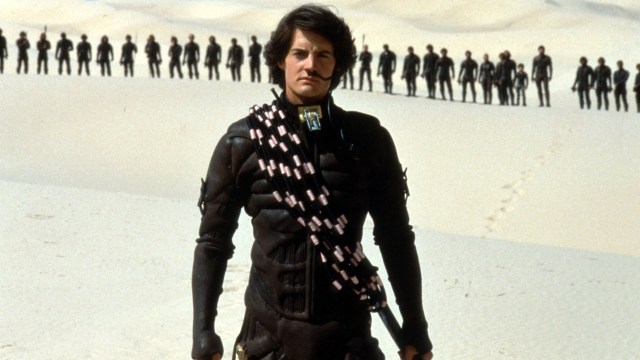
Watching David Lynch’s much-venerated film, Blue Velvet is akin to seeing an artist creating a solid outline for a painting and then proceeding to ruin it with sloppy brush strokes that are delivered in an infuriatingly lackadaisical manner. The narrative weaves the tale of a young college student called Jeffery Beaumont, (Kyle MacLachlan) who gets a glimpse of the seedy and macabre underworld that exists within the underbelly of a pristinely picturesque American suburban town.

The picture deftly illustrates the inherently voyeuristic nature of the cinema in a scene when Beaumont is watching singer Dorothy Vallens (played with sobering fragileness by Isabella Rossellini) undressing through the shutters of a closet in her apartment. A static wide angled shot depicts the apparent unravelling of the seductive singer as she takes off her wig and goes into the bathroom to have a long agonised look in the mirror. Lynch’s unflinching directorial choice makes the audience equally as complicit in the act of watching as Beaumont.

And the film’s central metaphor of darkness residing even within the most peaceful and seemingly innocuous small-town is wonderfully encapsulated in the opening sequence. Lynch’s lush imagery primarily encapsulated in the shot of blooming red flowers set against the backdrop of a white picket fence and clear blue sky is juxtaposed with interesting elements. These include a woman watching a black and white scene on television showing a shadowy figure sneaking around a house with a gun in his hand that pervades the frame.

Blue Velvet is at its most cinematic fulfilling in moments such as this. However, the film is woefully marred by a conceptual confusion and overt melodrama- resulting in awkward writing and Lynch’s least satisfying portrait of surrealism in his entire oeuvre.

If one is to take Lynch’s central metaphor at face value, then it can be inferred as wanting. Crucially, the underworld Beaumont discovers existing within his hometown feels about as threatening as a pack of hyenas snarling at a parade of elephants.

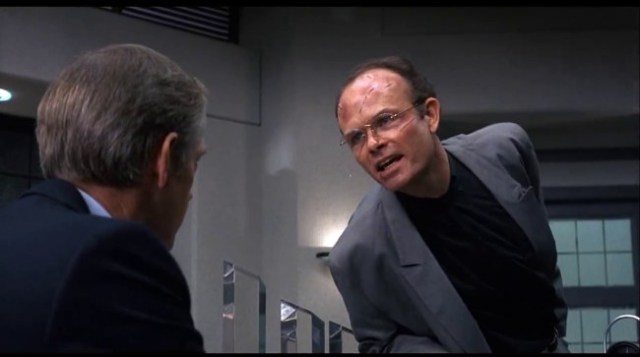
The problem is compounded by the picture’s villain, Frank Booth. (Dennis Hooper) Sure, his introductory scene is a disturbing portrayal of torture, made, even more, frightening by Rossini’s emotionally anguished performance and Angelo Badalamenti’s score that is the musical equivalent of a sting from a scorpion’s tail.

However, the scene introduces various elements that remarkably diminish his character. Most notably, the extended sequence reveals that Booth is impotent as he gains sexual satisfaction from non-penetrative straddling Dorothy in a low lit environment while repeatedly asking the singer not to look at him during the act. There is a sense with this last part in particular that if Frank cannot be seen, then he cannot be judged for his lack of sexual prowess.

With his previous actions in the sequence, particularly the small moment when he looks at a naked Valance while repeatedly uttering Mummy, one could read the situation as a possible recreation of a memory of childhood abuse at the hand of his maternal figure.

Elsewhere, Booth comes across as a pathetic man whose various attempts at being tough becomes laughable. His repeated uses of the expletive “Fuck!” , asking Beaumont to feel his muscles after beating him up and his general shouty manner all combine to create an oafish and outdated portrait of masculinity. The film is under the delusion that it is still the 1950s and greasers remain the toughest and scariest people on the block.

The choice feels whiplash-inducing particularly when our young characters start moralising about the nature of evil in the world. Booth is held up as a terrifying figure of malevolence and the so-called satanic figure of Lumberton, however, the conception of the character combined with Hooper’s performance feels like an incongruous misstep in Lynch’s vision for the picture.

On reflection, the flaw also chips away further at a much more problematic aspect of the film. In essence, Lynch has conceived of a black and white tale that has aspects of the grey at the edges of its foundations. While I applaud the renowned director for crafting a counter-intuitive picture that stands out from the rest of filmography, on closer examination, some of the thematic similarities have been expressed with far more wit, sophistication and cinematic potency in his other films.

Consider the sequence when Jeffrey Beaumont and Sandy Williams (Laura Dern) are sitting in a car reflecting on Frank Booth and the strangeness of the world. They park next to a Church where an organ serves as the primary source of music in the scene. In many ways, it is the centrepiece of the film as it expresses that love will always overcome the seemingly never-ending force of evil in the world. The theme is expressed in the form of a dream that Sandy has where thousands of Robins are unleashed upon a world of unending darkness.

The pervading humanity should make the scene engage the senses and mind. However, contrived dialogue, awkward line deliveries and the choice of the Church organ make the scene feel like an overwrought mess.

Compare the sequence with the multiple numbers of scenes in The Elephant Man when John Merrick (John Hurt) is expressing his gentle and joyous observation of humanity. Or even the awkward moments of humanity in Eraserhead, with particular reference to Henry Spencer having dinner with his girlfriend’s parents and the moments that involve Spencer and his mutant spawn. One can see from these examples that Lynch’s humanism is alive, authentic and wonderfully moving.

Finally, the film’s most surreal sequence that involves a lip-synch rendition of Roy Orbison’s In Dreams draws comparisons with the far superior scene involving Rebekah Del Rio’s Spanish version of Roy Orbison’s Crying from Mulholland Drive. In Blue Velvet, the scene is a quirky flourish that attempts to make Booth’s world much more interesting. In Mulholland Drive, the scene is a cinematic manifesto where Lynch illustrates the illusory nature of film-making and how the audience can still be moved by the evidently presented facade.

In essence, Blue Velvet proves that Lynch’s surrealism falters when his portrait of reality is seemingly ordinary and mundane.

Posted in Uncategorized | Leave a comment