Concise Review: The Usual Suspects (1995)

The-Usual-Suspects-Verbal-Kint-IS-Keyser-Soze

The Usual Suspects is more than the sum of its twist ending. It is, in fact, a commentary on the nature of acting and its importance in filmmaking. By extension, the picture is about different people casting illusions, playing contrasting roles, and making the world believe in the façade. The lineup scene is a comedic riff on this theme and the ending is the spelt out thesis. In between, Byrne’s Keaton and Postlethwaite’s Kobayashi both create convincing representations of the characters they are playing, especially the latter who emphasises the threat of Keyser Soze to the primary criminal group.

Posted in Uncategorized | Leave a comment

Concise Review: Legend (1985)

Legend

Ridley Scott’s 1985 picture, Legend, remains underrated as a pre-Lord of the Rings paradigm of great fantasy in cinema. Through its lush images, makeup effects, and acting, it stimulates the imagination and stirs the emotions. While many would argue that it is a portrait of the Adam and Eve story. I would argue that it is about the loss of innocence, and transitioning from childhood to early adolescence. Tim Curry’s performance as Darkness gives this latter concept vivid life as he plies young Princess Lily with the power of temptation with delicious malevolence and frightening intensity.

Posted in Uncategorized | Leave a comment

Concise Review: Chappie (2015)

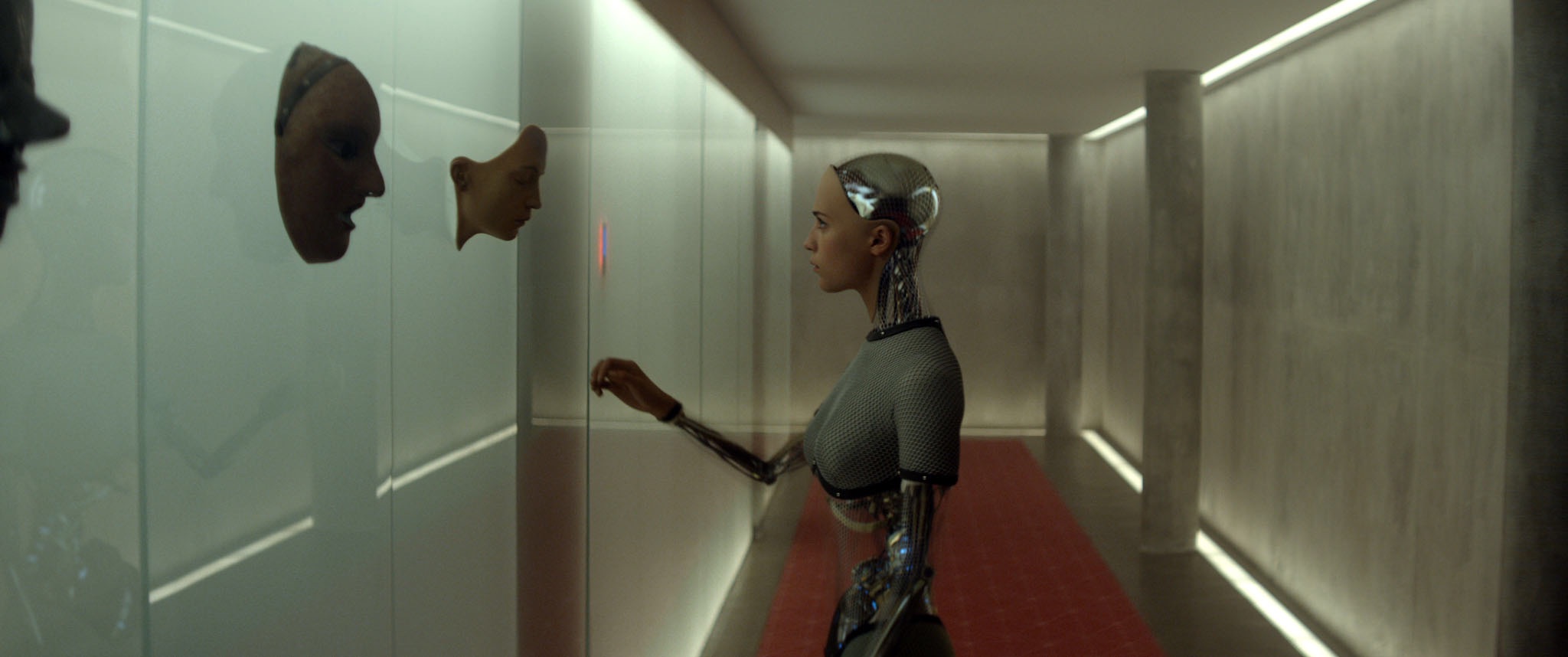
Chappie_trailer_shows_off_the_robotChappie, the new film from Neil Blomkamp will be a true litmus test for the director’s technologized corporate bureaucracy and urban street grit aesthetic. The interplay between both is, fortunately, fruitful due to the emotional resonance it garners from the journey of the title character. He is a product of the former and has loyalties to the latter because it is the environment he was raised in. Sharlto Copley’s performance as Chappie is a true revelation of the continued evolution of motion capture acting and its place in filmmaking and narrative.

Posted in Uncategorized | Leave a comment

Concise Review: Winter Light (1963)

nattvardsgasterna_guds_tystnad_dvd_grab

Winter Light is perhaps the most underrated film in Ingmar Bergman’s vast cavern of cinematic output. It is also perhaps his biggest call to arms film in regards to demonstrating the power of the human face. The Theological grappling in the film holds no personal interest. However, Bergman’s camera, and how it captures Gunnar Björnstrand’s face demands my attention and stakes in his crisis of faith. This central virtue speaks to the power of cinema and how it can transcend language, culture and religion in order to speak to us on a primal level.

Posted in Uncategorized | Leave a comment

Concise Review: They Live (1988)

primary_sleep1

They Live, the cult American science fiction film from John Carpenter is a fun, energetic, social film. It surprises in its central performance from Roddy Piper, who is emphatic and self knowingly goofy, and its overarching message still holds relevance in today’s recession-stricken world. Additionally, its central gimmick of a black and white construct where we see the aliens via sunglasses is a great way of having the spirit of vintage 1950s science fiction pictures embedded in the DNA of the film. Coupled with its mysterious saxophone jazzy score, and you have the epitome of 80s cult filmmaking.

Posted in Uncategorized | Leave a comment

Brief Examination: The Dark Knight Rises (2012)

485008_492467670793848_1045890290_n

I greatly admire the Dark Knight Rises, the third, and final part of writer/director Christopher Nolan’s trilogy on the Caped Crusader. It attempts to do what few films in the comic book movie genre have tried to do. This is to dream of being a comic book movie epic, and be in the same company as Superman The Movie, Superman II and Captain America: The First Avenger.

Unfortunately like Icarus it flies too close to the sun and ends up crashing and burning, albeit in a fascinating and emotional way. Its major problem is its screenplay; reports had surfaced before the film came out that the Nolan brothers, Jonathan, and Christopher, had penned a 400-page script and that it had to be cut in half. Watching the film, this certainly feels like this is the case. At its heart, the film wants to be about how the 1% have been lazy, apathetic and ultimately deceitful and how they get up their comeuppance and society breaks down because of this intrinsic fact. But it unites in the ashes of the death of a man and his dramatic example of how one man can make a difference.

However, the film loses track of this idea. It instead veers of in another direction in the form of a plot point that while poetic and the lynchpin of the title, just serves to undermine the film with one too many twist and installment ties. What would have improved these two seemingly disparate elements is if the pit, were centralised in Gotham, and it contained a good number of the city’s elite class. They bear witness to Bruce Wayne rising as Batman again and, as a result, their resolve and apathy are diametrically opposed to what it used to be. As a result of this, they are inspired and fight for Gotham once they are freed from the prison.

The biggest problem with The Dark Knight Rises and its portrait of its central theme is that there is no one to speak for the disillusioned. The people who do represent these positions are not enough to carry the plight of millions, and when Nolan does try to portray the people’s revolution. It is done in montage and never referred to again in the writing. It is a shame that this is so, as in the fabric of the narrative resides some great ideas that continue the implications of the ending of The Dark Knight. The picture is too ambitious for its own good and, as a result, it remains an interesting, massive and emotional mess, that does try.

Posted in Uncategorized | Leave a comment

Review: The Hobbit: The Battle of the Five Armies (2014)

3-the-hobbit-3-the-battle-of-the-5-armies-what-to-look-forward-to

There is a moment in the Battle of the Fives Armies where one realises that the seams are starting to stretch. The fabric of the Hobbit trilogy could break, and result in a colossal collapse of the entire enterprise. As an ardent Tolkien fan and particularly director Peter Jackson’s vision of Middle Earth, even the wrongly mocked and lashed Hobbit trilogy, I could start to see that the trilogy had almost hit its cinematic limit. However, despite being dangerously close to falling down, Battle of the Five Armies still has enough moments that make it redeem itself as a self- contained cinematic experience.

For example, the most memorable scene in the picture is a single silent shot of Thorin overseeing the carnage and ensuing battle in the face of his imminent death. The shot in composition looks like an Alan Lee painting and its a great melding of form and content, as Richard Armitage shows us the breaking of Thorin’s pride and arrogance in his last moments. It is a great moment that may be Jackson’s best single shot of the six picture saga.

Additionally, one has to admire a film with a massive budget of 250 million that can still deliver, great emotional moments that in some way speak to the truth of the human condition. In the third act, there is a debate between the Elf King, Thranduil and a young elf named Tauriel on the nature of love. The former views the latter’s feelings for a Dwarf as not real.

The debate returns later in the film and culminates in a tragic moment where Tauriel, who is mourning the loss of Kili, says, “If this is love, I do not want it. Take it away, please. Why does it hurt so much?” Thranduil responds simply “Because it was real.” The scene aside from carrying great emotional resonance of truth also serves as a reminder of Jackson’s contribution to the Tolkien legacy.

He has respectfully and diligently adapted Professor Tolkien’s work. Furthermore, he has ultimately added something meaningful that feels of a piece with the mythology that Tolkien created, and that is a refreshing fact to be reminded of in this last instalment.

However, most if not all the film is filled with tonal inconsistencies, lazy creature designs and plain, strange gonzo moments. One scene felt like a reel from David Lynch’s Dune had been accidentally placed into the picture. The title battle impresses at times but does not compare to the Honda esque opening sequence that showcased Smaug’s destruction and death in Lake Town, at the hands of Bard the Bowman.

The middle of the film is dedicated to setting up the mechanics and politics of the inevitable battle, and it is an interesting stretch that nicely adapts Tolkien’s final part of the Hobbit. However, some key scenes within this portion of the film do reveal some problematic narrative issues, especially when thinking of how both the trilogies connect.

Posted in Uncategorized | Leave a comment

A Personal Tribute: Leonard Nimoy

Leonard-Nimoy-Spock

Star Trek in the realm of visual science fiction has allowed many to dream of a better world. It has additionally enabled people to dream of growing as individuals in the finite time that we have on Earth. The latter idea particularly has resonance due to the amazing characters that were created for the show; none was more meaningful nor immediate in encapsulating the human experience than Spock.

Conceptually, the science officer of the Enterprise represents the continuous conflict that resides in all human beings, that of emotion and logic, made apparent because of Spock’s half-human and half-Vulcan heritage. For any actor, this character would seem like a daunting prospect to play.

However, it is a credit to Leonard Nimoy that he was able to find that delicate balance in his acting that allowed the audience to relate to him. Whether it was his dry wit, his bafflement and curiosity of human practices or even his famous eyebrow cocking. Mr Nimoy made many great choices as an actor in creating the iconic character. Despite this, Mr Nimoy’s mark on Star Trek was far greater than just turning up and putting on the ears. After the emotional, Star Trek II: The Wrath of Khan, the world had thought that Nimoy was done with playing Spock on screen.

But a change of heart and a larger role in the creative process made Nimoy come back to the fold. The result was Star Trek III: The Search for Spock, the first of Nimoy’s directed Trek pictures. Despite being a massive retcon of the death of Spock, the film still delivers in being an engaging cinematic experience. It added much to the canon including the death of Kirk’s son, David, which sets up his hatred of Klingons and reinforces one of the central themes of the picture.

The film was about the lengths that one goes to in order to pursue a meaningful, intrinsically good goal can be fraught with obstacles, but one’s resolve is enough in order to achieve them. Mr. Nimoy returned to the directing chair and delivered arguably the most popular installment in the Trek film series, with the 1986 picture, Star Trek IV: The Voyage Home.

It was easily the most accessible film, and its light touch was a welcome relief after two emotionally overwhelming films. Mr. Nimoy’s contrast of the intrepid crew of the Enterprise with contemporary 1980s San Francisco was a great idea. Along with the underlying theme of communication, it made this installment a fun, enjoyable ride for the original series crew.

Mr. Nimoy would go on to continue playing the character even beyond the films that featured the 1960s crew. He appeared in Star Trek: The Next Generation, and most recently the new rebooted series, in which his dignity and class were a much-needed relief for the contemporary ascetic of Star Trek.

Mr. Nimoy contribution to science fiction is incalculable and as the greatest ambassador of Star Trek, he will be missed. The legacy he leaves behind still inspires us to believe in a better humanity and world.

RIP Leonard Nimoy

Posted in Uncategorized | Leave a comment

Brief Examination: Whiplash (2015)

Whiplash-6613.cr2

Whiplash is an impressive piece of work that is raw, exciting and isolative in its depiction of ambition and the lengths to which it can be realised and practiced. The film also impresses in its editing and sound design. They both flawlessly meld into creating short bursts of tension, which also have a beauty too which comes from the sheer talent of the musicians on screen and the music they play.

Additionally the film features a gripping, sweat-inducing central performance from Miles Teller. His character, Andrew Neiman is a young, ambitious man who wants to be the greatest musician of the 20th century as he states quite firmly to his family halfway through the picture.

One of the biggest discuission points of the picture is J.K Simmon’s performance as Terance Fletcher, the provocative and stern music teacher who strongly believes in his teaching method of young Neiman. As of this moment, Simmons has been awarded the Academy Award for Best Supporting Actor. The Oscar is much deserved as the performance is very strong and a great example of the screenplay, direction and acting harmonising well.

From a screenwriting point of view, the writer shows us Fletcher’s behaviour to such extreme degrees throughout its running time. This is interesting as it’s essentially not asking us to rationalise his behaviour but merely see it. Towards the end of the film, we get a quiet, completive moment where Fletcher tells Neiman why he teaches the way he does. It is a great way for the audience to understand his method without being spoon-fed easy to digest pseudo-psychology that makes us sympathise with him.

In terms of direction, the early scenes almost depict Fletcher as a terrifying, monstrous omnipresent figure. Many of the shots of him are seen through peepholes, from the drummer’s point of view where we are looking up at him, and occasionally obscured shots where we just see his face and hands.

Finally, J.K. Simmons brings the character to life, very well, not being too showy, and using facial expressions to the fullest in showing his current state of mind. One always feel that something is grinding in Fletcher’s head even when he is not judging how the band are playing. Simmons brings this subtle nuance as well as many others to a well-rounded character, which make Whiplash an exhilarating success, even if one does not have an affinity for Jazz.

Posted in Uncategorized | Leave a comment

Review: The Imitation Game (2014)

theimitationgame-stockholm

Alan Turing, aside from being an unsung British hero has also been a spark for cinema. His “Turning Tests” formed the basis of the inspiration and Philosophical throughline of Blade Runner and nearly every film that has had Artificial Intelligence on its mind owes an enormous debt of gratitude to him. With that context, one would think that a film about the man’s life would pale in comparison with his ideas that have permeated film, this assessment it would seem to be half right.

The Imitation Game is a strong period piece that works best in its interactions. As well as the showcase of paranoia, melancholily and moral dimensions that emerged out of the work that Turing’s team engage with during the war. However, its Achilles heel is that when it tries to engage or present some of Turing’s ideas. It does them in quite an atypical screenwriting way that it insults them. For example, the screenplay is split between three periods.

The first is post-war Britain where Police Officers are investigating a Robbery of Turing’s house, which is suspicious. The second is when a young Turing is in prep school and a relationship he has with a boy named Christopher. Finally, the third period is when Turing is working with his team to crack the Enigma machine at Bletchley Park during the Second World War.

While the last one mentioned is fine, the first two are interconnected in the sense of finding out about Turing’s homosexuality and the reason he names his machine Christopher. The latter point proves to be rather oversimplistic. Particularly in how it was used in the last moments of the film, showing that the anti-social, no humored Turing just wanted to build the machine as a way of connecting with his dead friend.

It seems like a contrivance that is trying to explain psychological insight simply. It truly undercuts some of the ideas presented as well the tragic nature of the final scene, in which we see Turing at his lowest in the midst of his chemical castration sentence. Benedict Cumberbatch’s performance during these finals moments is heartbreaking, subtle and worthy of his Best Acting nomination that he received earlier this month.

However, this major problem does not affect the film too much, mostly because the other elements are quite strong. Director Morten Tyldum greatly makes this potential stagy premise tremendously cinematic with a great use of stock footage and montage. They help in making the story feel authentic to its period, tension-filled, as well as drive home the paradoxical nature of the project at Bletchley Park. Additionally the moral weight of some of the actions that occur later on in the picture.

Posted in Uncategorized | Leave a comment