Concise Review: Chinatown (1974)

026-chinatown-theredlist

At a recent 35mm screening of the film, Chinatown, the titular city’s sense of seediness, shattered hope and corruption became ever more evocative as an eternal place in the movies. What starts out as cursory mentions that serve as details of the main character J.J. “Jake” Gittes’s (Jack Nicolson) past takes on a mythological and eventually tragic heft, which is punctuated with the last line, “Forget it, Jake. It’s Chinatown.”

In my recent viewing of Chinatown, I was struck me most was how the film functions as a neo-noir. With its sepia-toned opening credits and Jerry Goldsmith’s romantic classical score, one would immediately think they are watching a traditional Noir picture. This aspect even extends to the first scene, where the first few shots are of black and white images of a sordid affair, which are punctuated by a character’s audible reaction to seeing them.

Throughout the remainder of its running time, Chinatown impressively does not wear its noir influences on its sleeve. German Expressionist imagery and black and white photography are replaced by dirty, murky and occasional luscious uses of brown and blue. Moreover, shadowy silhouettes and twisted architectural creations are done away with in favour of radiant mountain shots and eye-widening infrastructure.

Even the characters transcend their archetypical trappings. The most prominent example of this comes from Evelyn Cross Mulwray, (Faye Dunaway) who initially seems as though she is going to be the seductive siren who works in the mould of the Femme Fatale. However, this expectation is subverted by two things. The first is Faye Dunaway’s performance. She imbues Evelyn with a sense of hard determinism, careful thinking and a wistful demeanour. Secondly, the writing contributes to this genre subversion as Robert Towne’s screenplay paints Evelyn as the most considerate character in the story.

Nevertheless, Chinatown wholeheartedly embraces Film Noir by adhering to the meaning of the word, which translated from its native French origin means “dark film.” At the heart of the picture resides a savage secret that is masked in a universal desire and the movie’s final reel is the realisation that it will flourish, and our protagonist will be left scarred by the experience.

Posted in Uncategorized | Leave a comment

Review: Knight of Cups (2016)

film_03022106_ebiri_nightsofcups_broad_green_pictures

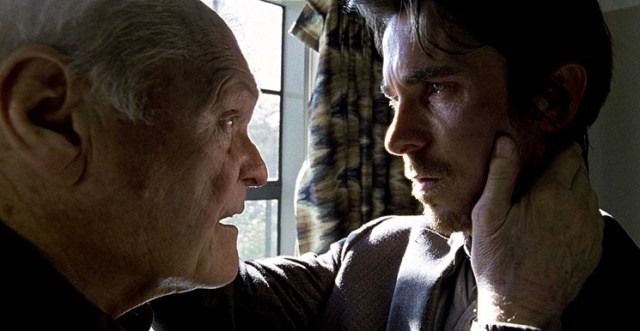
Terrence Malick’s recent film, Knight of Cups, is a wondrously reflective film that at once is about the soul’s attempt to ascend from its earthly bounds and at the same time, a meditation on the frustration of the creative process. In the picture, Malick conceives of the soul as an essence that is broken into many pieces as a result of the pleasures of the body. Consequently, the main character Rick (Christian Bale) experiences life as though he is walking through a vale of mist, ever apathetic, disengaged and asleep as moments of life pass him by in seemingly rapid succession.

The conception called to mind Socrates’s idea of the soul. He posited that the soul should be nourished and nursed because it represents a divine essence. With this in mind, the Ancient Philosopher goes on to say that when someone dies, their soul is less likely to pass through the Hades (The Greek underworld) because it is still attached to earthly pleasures.

In tandem with this is the structure of the film, which is fundamentally dual-edged. On the one hand, the picture is impressionist and reflexive, as though we are seeing Rick seamlessly probing his memories to find answers. One can compare these instances of interconnected moments and remembrance tapestries to Sergio Leone’s use of memory in Once Upon a Time in America. Leone made these sequences equally organic in their use, as the main character in his twilight years walks around certain parts of a familiar city, immediately struck by a place or object that causes him to reflect on moments from his past which in turn inherently illustrated the degrading nature of time.

The movie is also split into eight chapters that explore a particular aspect of the title that is on screen. Both of these structural facets services the second theme in an equally compelling manner as the first one. The fourth chapter, which is entitled ‘Judgement’ depicts the loving and souring relationship that he had with his first wife Nancy, (Cate Blanchett) which is contrasted with the reunion between the former couple in the present. The segment strongly shows the effect of Rick supposedly scattered soul as it gives rise to random angry moods and an apparent disengagement from his relationship with Nancy. As she expresses halfway through the segment, “You never wanted to be totally inside our marriage or outside it either.”

Blanchett’s performance is a compelling portrait of bitterness and vulnerability. At the same time, Blanchett contrasts this with an endearing and enduring love for Rick. The Australian actress brings these two aspects to the fore in a small moment, where Rick looks at Nancy then proceeds to touch her on the shoulder before promptly walks away. Blanchett’s facial expressions during this time convey the contradictory feelings of comfort, sadness and a simmering cruel judgement, which is accentuated with a small gesture of her putting her hand on her left cheek as if she is questioning whether or not she was just touched by the man she loves.

At the same time, some of Malick’s directorial choices efficiently show the developing distance between the two characters, whether it is small contrasts in physicality between Rick and Nancy when walking down the street together. Or the physical distance between the characters in the closing moments of the chapter. There is also a suggestion of fear that is within Rick’s soul that is expressed as an apprehension of life. Malick punctuates this shadow over the spirited part of Rick’s soul with some of the imagery. One particular shot shows a thick patch of fog engulfing the sky, which has the usually radiating sun covered in a grey, which results in it losing its warmth and light as it is shown in the far distance.

In his previous directorial efforts, Tree of Life and To the Wonder, Malick commendably presented relationships as though they were stirring and passionate flames that would eventually flicker out of existence without explanation. In this film, Malick shows relationships that are somewhat ineffable in nature, but their erosions are much clearer, and they still retain his distinctive intuitive realism.

Knight of Cups is at its best when Malick is employing juxtaposition through the narration and images. The most prominent example of this is featured in the opening of the film when a story is being told. The tale tells of a King of the East who sends his son to Egypt to find a Pearl from the depths of the sea. Upon reaching the country, the people give him a drink that makes him forget that he ever was a Prince. Eventually, he has no memory of his original purpose as he drifts into a long stupor.

While this story is being audibly outlined, Malick shows us images of Rick engaging in debaucherous and silly behaviour. They remind us of the primary idea at the heart of the picture, which is the effect of Rick’s soulless existence in LA. Some of the shots also marry up with various facets of the story. These include an amusing momentary close-up of Rick wearing a horse’s head when the narrator speaks of the King sent messengers to his son and a shot of Rick getting up slowly as the part of the Prince waking up from a deep sleep.

One can read the pearl in the tale as the creative spark, which is reinforced with Rick’s occupation of being a screenwriter. The Prince forgetting his purpose of finding the pearl could be inferred as Rick forgetting the original reason as to why he wanted to go to LA and become a screenwriter. With this in mind, Malick ultimately synthesises these two themes by having a Priest suggest that God sends suffering to show that he loves us. I read this as Malick’s acknowledgement that though the soul struggles in staying whole and the artist grapples with the lack of creativity. These moments of utter pain and frustration define us as human beings because they test our resolve and strength of the will.

Posted in Uncategorized | Leave a comment

Review: The Fly (1958)

di-the-fly-1958-2

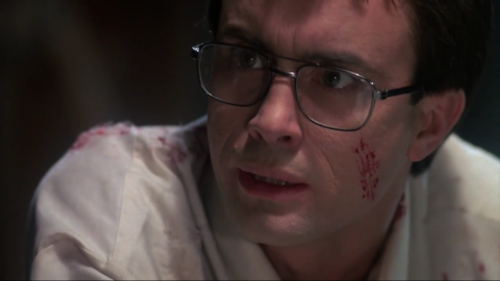
The original 1958 version of The Fly proved to be a fascinating experience, even from the perspective of having seen David Cronenberg’s 1986 remake. Firstly, the film has a mystery that resides in nearly every frame. In some ways, it evokes Robert Louis Stevenson’s novella, “The Strange Case of Dr Jekyll and Mr Hyde” which formulated a mystery around its central character and concept before being unveiled in the closing chapters. This aspect coupled with an acute sense of the idyllic makes the film interesting in how it compares with the Cronenberg picture. That movie had the savage intimacy of a play and conceptualised the transformation into the titular creature as though one is going through a terminal illness. The original feels like a cautionary tale of science as well as evoking the fear of human beings devolving. Two scenes mainly convey the latter theme with commendable precision.

The first is in the third act of the picture, which depicts the last moments of scientist Andre Delambre (David Hedison) as he struggles to write his last request on a chalkboard. Delambre has his face covered, and one of his arms has already transformed. Hedison’s silent performance is powerful as he thrashes about and fights for the final moments of his humanity, which is accentuated by two things. The first is his written declaration being purposefully shown in the background of the frame. The second is Hedison’s consistent violent gesture of beating his Fly arm as though it is an entity that is about to attack and consume him.

The second scene comes near the end, and it has the faint voice of Delambre as he begs for help when he is in human fly form as a spider closes in to eat him. The scene ends with Inspector Charas (Herbert Marshall) putting the title creature out of his misery, which is punctuated with a blood-curdling scream that haunts the seasoned man. Aside from putting the moral framework into perspective as in the aftermath, Charas and Andre’s brother Francois (Vincent Price) discuss the death of the malformed human being versus the death of the human fly.

Despite all this, one does feel that the film does not entirely escape its idyllic tone. Part of this comes from the picture’s visual scheme which gives rise to some picturesque and stunning shots, which were achieved by the film being shot in CinemaScope and Technicolor. Scenes like Andre and his wife, Helene (Patricia Owens) talking in the garden and their evening at the ballet make the picture transcends its B-movie nature, particularly with the vivid use of green and red in both scenes. The other part of persistent tone comes from the ending, which shakes off its moral murkiness in favour of an optimistic and saccharine ending.

Posted in Uncategorized | Tagged , , , , , , , , | Leave a comment

Review: Café Society (2016)

landscape-1461318426-cafe-society-wooody-allen

At the spectacularly prestigious and lavish parties that Café Society derives its name from; conversations drip with pomposity and weary wisdom, drinks flow with an unwavering freedom and the omnipresent narrator goes on amusing tangents about the star-studded guests. Despite the overt showiness of these occasions, the new film from writer/director Woody Allen is an intimate and tragic portrait of a young romance that has an inherent fatalism, which stems from the fact that the couple fundamentally can’t change their nature because of their respective environments.

Early in the film, Bobby Dorfman (Jesse Eisenberg) goes to work for his Uncle Phil (Steve Carell) who is a much admired and hardworking Hollywood talent agent. In between dealing with menial daily tasks, he is shown around the town by Veronica. (Kristen Stewart) The central romance between these two characters is sincere, idealistic and full of initial promise, which Allen accentuates in the filmmaking. One scene that is emblematic of these qualities is when an emotional Veronica goes to Bobby’s house after her boyfriend has broken up with her. The decorated and darkened room that the two characters are in is lit with two candles on a table, which gives the scene a dusty yellow and black visual scheme that at once represents the promise of romance with the former colours and a hint of the unknown with the use of the latter colours.

At the same time, both the actors make the central romance engaging and emotionally resonating. Initially, Jesse Eisenberg is an excellent stand-in for Woody Allen, with his neurotic and pesky manner. However, Eisenberg’s transcends this early impression and imbues Bobby with a sense of captivating innocence that manifests itself in a steadfast surety and sincerity. One the one hand, these qualities make for amusing ironies as the young man is a listening ear and advisor of his uncle’s love life. More crucially, these traits represent his earnest commitment to Veronica, which makes him endearing to the audience.

Like with his framing of Marion Cotillard in Midnight in Paris, Allen makes Kristen Stewart captivating and a real starlet of the silver screen. While in Paris, it seemed like an accidental transcendent quality that primarily came from the appealing nature of Cotillard. In Society, it seems like a purposeful construction as some scenes celebrate Hollywood actresses of yesteryear. In the tail end of the picture, there is a scene where Veronica confesses her lingering feelings for Bobby. One of the things she expresses is that she still dreams of him. After this confession, Stewart then closes her eyes and continues talking as though she is experiencing his presence in a lucid dream.

The scene conjured to mind, many candid and melodramatic scenes from cinema’s great past. It was almost as though Allen had convinced me that if I were watching this scene in fifty years time, then I would be looking at it with the same fondness and reverence that I would if I saw Kim Novak from Vertigo or Julie Christie in Dr Zhivago. Stewart impresses with her counter-intuitive choices and her subtle facial expressions that reveal insight and perceptual curiosity.

Eventually, the starry-eyed couple cannot stay together because of the influence of their environment on their natures. Veronica succumbs to the seduction of the Hollywood lifestyle, which includes living in big houses, going to extravagant parties and the reassurance of security, which contrasts with her contrary and unfavourable opinions on the subject in the midst of courting Bobby. On the other hand, Bobby goes to work at his brother’s corrupt and infamous club, in which he gains notoriety, partly due to the reputation of the place and the friends who he met and bonded with while living in Hollywood.

The last shot of the picture which is a dissolve of the two lovers melancholically reflecting upon their lives in the midst of New Year celebrations illustrates the primary theme extremely well. It reminds the viewer of how much their respective environments have externally shaped the characters. However,  internally they strive for something greater, simple and much more fulfilling, which is ultimately each other.


Posted in Uncategorized | Leave a comment

Review: Invasion of the Body Snatchers (1978)

invasionofthebody2

Philip Kaufman’s Invasion of the Body Snatchers is an outstanding reimagining of the original 1956 movie. The Don Siegel picture felt like a dizzying portrait of McCarthyism and the subsequent Second Red Scare, which occurred from 1950-1956. Moreover, it did not wear its surrealism on its sleeve. In turn, this allowed the sheer bleakness of the concept to be gradually revealed to the audience.

At the heart of 1978 film is a genuine fear that nature and trusted figures of authority, as well as expertise, seek to supplant the crucial aspects of the human experience. The former is expressed in a vivid opening sequence that shows some space spores landing on Planet Earth. Once down here, there is a small moment that illustrates how the pod species blend in amongst our plant life. In a series of shots that feels like a strange mix of documented realism and stop motion, the tiny translucent organisms that are on multiple rain-soaked leaves form into spidery creatures then sickly green pods and finally a budding pink flower springs forth from the shoot. The scene ends with the main character Elizabeth Driscoll (Brooke Adams) picking up and admiring the fully formed pink flower from one of the pods.

The latter is articulated in many scenes throughout the picture. The most pertinent one comes in the first act of the film. After some instances where Elizabeth has expressed a change in her husband’s behaviour, her friend, Matthew Bennell (Donald Sutherland) decides to take her to see his friend and famous psychiatrist Dr David Kibner (Leonard Nimoy) at a book launch. At best, she is sceptical about the prospect of meeting Kibner because of the implications of his profession. Once there, she witnesses another woman who expresses similar concerns over her spouse’s sudden shift in character and conduct.

In the midst of this conversation with this hysterical woman, Kibner pauses and ask her, “Will you trust me, will you please trust me.” The moment feels like a stunt and Nimoy’s weak and sickly reassuring performance makes the psychiatrist seem like a carefully precise televangelist. Moreover, Nimoy’s performance also had echoes of Richard Nixon’s 1973 presidential address in which he infamously declared that “I am not a crook”, which comes from Nimoy’s confident and emphasised cadence during the scene when he is actually addressing the room.

Kibner appears throughout the film as the central representative of authority who lambastes the stories of people who claim that their loved ones have fundamentally changed. At one point in the picture, he contends that what is going on is merely a mass illusion which is essentially responsible for the breakdown of the family unit as people are not accepting responsibilities for wanting to leave their partners. However, it is revealed that he is part of the pod people as he had been transformed at some point in the picture. In a scene where two of the main characters have been captured, Kibner reveals the origin of the alien species and the implications of their new life, which gives the inherent fear of authority throughout the film a great potency. Moreover, this fear is punctuated with many little moments where Matthew attempts to call the authorities, and the audience sees that they have done subtle things to make the group of survivors look irrational in their firmly held belief that they have seen evidence of the pod people’s activities.

Aside from its primary strength of wonderfully conveying its two thematic points, the 1978 remake also succeeds because of its excellent filmmaking and the small organic moments of humanity that strengthen the underlying premise of the picture. Director Kaufman injects the film with a frantic surrealism, which manifests itself with seemingly strange cross-cutting, ordinary shots having a sense of abstract absurdity and an uneasy sounding ambient score.

A superb example of the first few mentioned qualities comes in the previously stated scene when Matthew and Elizabeth visit Kibner at a full book launch. Before conversing with the famous psychiatrist, Matthew attempts to call the police to report an incident. While this is occurring, a friend of his named Jack Bellicec (Jeff Goldblum) is having an impassioned rant about how people do not understand his poetry or artistic voice. Many of the shots of these moments feature a huge mirror in the background, which morphs the character’s faces into ludicrous forms. These few scenes and shots feel bewildering and claustrophobic, however with the use of the tall mirrors, Kaufman transformers our seemingly banal fixations and delusions into an absurdist illustration of human problems.

Finally, every so often the picture surprises in its quiet and contemplative moments, which is particularly evident in the central relationship between Matthew and Elizabeth. The health inspector cares for Elizabeth however it does not play like a one-sided sense of longing Instead, they have a deeply embedded friendship, which manifests itself in amusing scenes that show their long-standing relationship. One such scene that springs to mind is when Matthew is telling Elizabeth a story and stops half way through asking if she has heard this one been told before? In the third act, their relationship becomes romantic, and they share a hesitant first kiss, which impresses because it does not feel like a sweeping moment but instead a subdued acknowledgement and culmination between the two people.

The other little moments that stand out in the picture are ones such as when Matthew says to Jack’s wife Nancy (Veronica Cartwright) that she can stay the night at his house. In addition to when Kibner says that he sincerely believes Matthew because he has known him a long time, which gives him reason to believe his stories about the pod people. In the third act, when Matthew says ‘You’re killing us’ to his former friend, the line has much more meaning and power because of these little moments showcasing the importance of the human emotions and the connections that can arise out of them.

Posted in Uncategorized | Leave a comment

Review: Last Tango in Paris (1972)

Last-Tango-Paris-11

In the Tango, the two participants have to dance as though they are in the midst of a passionate and loving embrace, which is the complete antithesis of a pivotal sequence in the tail end of Last Tango in Paris that involves the South American dance. Instead, the scene is a forlorn and pathetic unravelling of the recently widowed central character Paul, (Marlon Brando) who earnestly comments upon the nature of the dance in a ballroom that is brimming with couples partaking in a tango competition. Paul has attempted to deal with the death of wife through a potent sexual liaison that he has with a morose and young Persian woman called Jeanne. (Maria Schneider) Earlier in the film, he crucially declares that he opposes any sense of developing a familiarity and external picture of Jeanne outside of the encounters.

With this in mind, one gets the sense that the film is an exploration of the inherent fragility of relationships through the prism of two ideas. The first is an inherent paradox within the confines of a flourishing and stable long-term relationship, which comes from the plot point of Paul’s wife Rosa committing suicide. The act leads to a fundamental Epistemological pessimism for the main character as he questions his presupposed knowledge of his wife.

Did he truly know his wife in all the years he loved and cared for her? Or are these merely illusory pearls of wisdom designed to trick one into believing that they are truly happy with their spouse? The scene where this deep seeded sense of despair is expressed is when Paul is sitting beside the decorated body of his dead wife in a darkened room. He grimly states that “Even if a husband lives 200 fucking years, he’s never going to be able to discover his wife’s real nature.”

To say that Brando’s performance in Last Tango in Paris is powerful, soul bearing and emotionally real with particular reference to the as above mentioned scene is a mere understatement. Instead, one can argue that the most fascinating aspects of his performance are the scenes where he is in the rundown apartment with Jeanne. In these scenes, Brando imbues Paul with his most captivating and hideous qualities, with his sly vocal tones, dominant and beastly physicality as well as a subtle sense of snide cruelty, which is strangely comical.

The scene where all these qualities harmonise wonderfully together is a long sequence where Paul candidly talks about a supposed incident in his past. Brando combines these previously stated qualities with a sense of melancholic reflection, which is amusingly shattered by the end of the scene when he slyly suggests that these series of memories that he is reflecting upon may not be truthful at all.

Nevertheless, one can say that writer/director Bernardo Bertolucci gives Brando’s performance substantial weight. His employment of the camera is fixed and nonintrusive as though he is capturing authentic and significant moments of a person’s life. For example, in the previously mentioned scene, Bertolucci’s has a five-minute medium close up of Brando allowing for every facial expression and gesture to be conveyed as he is telling Jeanne about stories from his past.

Elsewhere in the picture, Bertolucci’s use of the camera allows for a compelling exploration of the second idea to do with the overarching theme of the inherent fragility of relationships. This comes in the form of Jeanne’s fiance Thomas (Jean-Pierre Leaud) who is a film director. Through the course of the picture, he attempts to make a film called “A Portrait of a Girl” which is a heightened visual portrait of Jeanne’s various moments in life. As he remarks when he first sees his fiance, “We are in a film, if I kiss you, it might be cinema.” With the Thomas character, there is an introduction to the motif of idealism that manifests itself in the relationships through the course of the movie.

Thomas sees every moment with Jeanne as an idealised cinematic moment that needs direction and reinforcement, resulting in him being blind to his fiancee’s torrid affair. Bertolucci’s direction of these scenes in motion are amusing and striking. One such moment depicts Thomas describing a shot to Jeanne, which includes the camera moves, her state of mind, and the accompanying music. In this moment, Bertolucci’s camera movement follows the film director with a high and slow descending shot, which eventually falls upon his subject. The framing subtly changes as the camera momentarily matches Thomas’s twirling, which is evocative of a gentle ballroom dance.

In essence, the scene illustrates two things. Firstly, it showcases Thomas’ intensive obsession with his visual endeavour, which ultimately results in an ignorance of his wife’s actions. In turn, we see Jeanne’s new found confidence from the sexual encounter as she firmly states that she wants to improvise the scene that he is describing with a gratifying smile on her face as they immediately start filming.

At the same time, Jeanne idealises Paul and by extension the strange nature of their relationship. As she says towards the end of the film, “Do you know why I’m in love with him? He knows how to make me fall in love with him.” Before saying that she cites some of Paul’s qualities such as his mysterious nature and the fact that he is unlike anyone that she has ever met. However, the most compelling articulation of idealism contributing to the breakdown of relationships comes in the film’s final moments as Paul confesses his devotion and love for Jeanne.

The young Parisian woman is appalled by this declaration of romantic feelings because of three reasons. Firstly, she acknowledged to herself and Paul that the relationship is over because she is about to get married. Secondly, the man she held in such high esteem has disappeared. In the ruins of that idealistic perception is a man devoid of mystery, as well as someone who is ageing, desperate and repulsive. Finally, Jeanne ultimately idealised the affair as something intrinsically passionate. As she remarks at one point, “It’s beautiful without knowing anything.”

On occasion, one does get the distinct impression that Bertolucci is embarrassed by Paul’s attempts to start again with Jeanne, which is evident in the filmmaking. The best example of this is when the aged man is describing his life in voiceover, which is played over him lighting up a cigarette and walking in the midst of a swarm of dancing couples.

As he walks over to Jeanne, Bertolucci’s framing of the scene becomes ever more expansive in scope as more of the bustling ballroom is revealed to the audience, which is conveyed in a series of elegant crane shots. Crucially, Paul gets lost in the crowd of people and as a result is not in the centre of the frame. Moreover, Bertolucci cuts back to the dance sequences in rapid succession as if provide the audience with a glamorous distraction to the awkward scene that is occurring in the corner of the room. Despite this, one can feel that Bertolucci the screenwriter does not feel contempt for the Paul character. Instead, he conceives of him as a wounded animal whose ultimate end seems fitting because he will no longer need to go on in a world feeling the raw pain and loss of his wife’s recent passing.

Two scenes give this reading validity. Firstly, in the aftermath of a love scene, Paul and Jeanne share an intimate period with one another, and they start making animal noises together. The amusing moment is initiated by the former saying quite firmly, “I don’t want a name, I’m better of with a grunt or a groan for a name.” Secondly, in the previously mentioned scene where Paul is sitting beside the body of his dead wife, he says inconsolably, “I’m sorry, I don’t know why you did it. I’d do it, too, if I knew how. I just don’t know how.”

In the end, the real power of Last Tango in Paris is that it reminds the viewer how tenuous relationships can be, both in the short and the long term. It also illustrates the destructive nature of idealisation. It can cast temporary happiness however it can equally shatter the human psyche, which the tantalising last minutes of the picture only begin to show.

Posted in Uncategorized | Leave a comment

Concise Review: Ghostbusters (2016)


ghostbusters

Ghostbusters is an affectionate remake of the original 1984 picture of the same name. It succeeds in crafting a unique interpretation of the same material while also allowing for subtle homaging and subdued franchise building. The primary virtue of the picture comes from its improvisation, which allows scenes to have an archaic energy and inherent longevity. From jokes involving a play on words to do with a classification of a pet to a tangential conversation about Patrick Swayze’s filmography; this new Ghostbusters film succeeds in its ad-libbing framework.

Kate McKinnon emerges as the most capable and strongest actress in this comedic setup. At times she mole like with her physicality, which is illustrated in moments where she randomly pops up in the middle of tense encounters. She also has an idiosyncratic manner of delivering her lines. These vary between a casual detachment and sounding like an excited teenager who is in the midst of expressing a perpetually awesome experience.

Moreover, the third act of the film has an excellent sense of wonder and awe as all the ghosts of America’s past are unleashed upon New York City. Director Paul Feig accentuates this feeling with his free moving camera moves that has many top down shots where we are witnessing the spirits like children who believe the world is gigantic and boundless. It was refreshing to experience a finale that is not marred by exhaustive action.

The only problem with the film is that it fundamentally does not reach the comedic and emotional heights of Feig’s 2011 picture Bridesmaid. Furthermore, it lacks the intrinsic universality that resided in that picture as it explored the changing nature of friendship amidst marriage and climbing the social ladder. Nevertheless, Ghostbusters still retains a unique sense of care, which is commendable in today’s oversaturated summer movie cycle.

Posted in Uncategorized | Leave a comment

Review: Born to Be Blue (2016)

Born-to-Be-Blue-trailer

In Born to Be Blue, the Canadian writer/director Robert Budreau valiantly attempts to reconcile the seemingly disparate qualities of the ineffaceable American Jazz musician- Chet Baker (Ethan Hawke). The result is a beautiful, idyllic and sobering affair that meditates on the complicated nature of the artistic life. In the first twenty minutes of the film, there is a black and white flashback that is somewhat romantic and dreamlike in nature. Within the sequence, the iconic Jazz artist Miles Davis (Kedar Brown) honestly critiques Baker’s performance and show. He sternly tells the young trumpeter that he should return to Jazz when he has “Lived a little.”

The criticism is a literal mantra for the film’s visual canvas, as the audience are treated to many scenic scenes that have Baker practising his trumpet in the midst of his recovery from a brutal attack. In fact, some of the film’s most striking moments are the ones that see Baker struggle in the aftermath of the physical assault. The most astounding one comes before the Davis’ flashback. Baker is sitting in a bathtub and attempting to play his instrument. The result is intense pain and bleeding from his mouth as the scene goes on. The scene is a powerful reminder of the savage nature of life and its unpredictable turns, which can ultimately fulfil the artist with a newfound optimistic striving that did not exist before.

Ethan Hawke is simply out outstanding as the titular musician. He effortlessly portrays the inherent contradictories of Baker. For example, sometimes Baker’s looked and sounded like an idealistic young boy, which contrasted sharply with his smooth flirtatious side. One scene where Hawke conveys these contrary attitudes is at the beginning of the picture. There is an extended sequence where Baker is getting to know a woman called Jane (Carmen Ejogo), who is his co-star in a film that he is making that is about his life. They both go bowling, and Jane asks him some very pointed questions about his life. Hawke’s soft-spoken vocal tones nicely contrast well with his childlike physicality, which combined with the discussed truthful subject matters make for an engaging scene.

However, Hawke’s finest moments in the picture are in the third act when he is starting to play professionally again. There is a sense of willful determinism and an obsessive sense of control in regards to his comeback that is fascinating to watch. The standout scene in the act is when Baker is performing ‘My Funny Valentine’ for a live studio album in front of an audience that is comprised of producers. At this moment Hawke shows a natural aptitude of the trumpet, which is evident by Budreau confidently framing one of his solos in a single take.

Moreover, Hawke imbues a sense of precision and emotional weight to the singing sections of the song, which fundamentally speak to the emotional experiences of life and how they can shape the artist into a confident and mature person, who can firmly channel their experiences into their work. The scene also illustrates the appeal of Chet Baker. Although he was not a technically polished singer, his voice had a distinctive rawness that always felt immediate and soul-baring.

Posted in Uncategorized | Leave a comment

Review: Suicide Squad (2016)


Suicide-Squad-trailer-2016-billboard-650

Suicide Squad is an entertainment free dead zone. In fact, one cannot even call it a film because it plays more like a series of awkward skits that have been edited together with short vignettes that feel like music videos. In essence, the film is like a child who has discovered swearing for the first time, relishing in its apparent boundary-pushing behaviour but ultimately looking absurd and juvenile. Worst of all, when the film does occasionally feel the need to take five, it’s dramatic moments are in service to its continuous and obnoxiously stated premise- we are the bad guys.

This is a shame as there potential moments that could have been emotionally resonating however they are undercut by the film’s humour that pervades the film like Tourette’s syndrome. For example, in the third act, there is a scene where all the principal characters are in a bar. In the aftermath of a harrowing confession that is made by Chato Santana (Jay Hernandez), the inexplicably popular, attention seeking and loud mouth that is Harley Quinn (Margot Robbie) makes an inappropriate comment. The moment serves as a vital reminder that the film is devoid of any real emotional depth as it lumbers from one supposedly funny joke to the next.

At the heart of Suicide Squad is a genuine sense that the director David Ayer has been sucked into the studio whirlpool. The film’s visual scheme is drab, muddy and incredibly lacking in any creativity. Even Ayer’s reported visual flair gets lost amidst the bland proceedings. For example, in a recent Empire article, Ayer revealed that the inspiration for the smashy human fodder in the picture came from a nightmare, which he briefly sketches with the following description “There was a black pool of oil with a human shape rising out of it.”

If one were being generous, the visually arresting moments of Suicide Squad are regulated to mere seconds. During the beginning Harley Quinn vignette, there are a few interesting shots that represent fascinating cinematic interpretations of Alex Ross’ photorealistic comic book artwork. And there is a striking scene that occurs in the middle of the film that involves the Joker (Jared Leto) and Harley. The former is asking his partner for utter devotion, and Harley reciprocates via a baptism through acid, which he partakes in later in the scene. In their embrace in the acid pool, the lovers look like two people cuddling on a canvas which is accentuated with a heavy use of muted green combined with little strokes of purple and blue that surround the characters.

The moment encapsulates the problem with this interpretation of the Clown Prince of Crime. At worst Leto’s Joker comes across as a psychotic Austin Powers. However, at best one can say that his role in the film is utterly insubstantial. On a conceptual level, he feels like a confused man that can’t decide whether or not he wants to be a flamboyant, crazy person or Tony Montana from Scarface. So, he synthesises the two, and the result is a queer interpretation with flashes of brilliance such as his laugh and a tattoo of a smile that he occasionally uses to cover the bottom half of his face.

Posted in Uncategorized | Leave a comment

Review: The Witch (2016)

witch5

The Witch is an extraordinary film that fundamentally illustrates two things. Firstly, it strongly shows that independent cinema still has a beating heart. Secondly, it showcases the virtues of the cinematic form, which is at a crucial time when the existence of the medium is being questioned amidst the equalitarian view of content and a so-called golden age of television. On a personal level, the film represented one of those rare nourishing cinematic experiences that were I to have every year then the sad state of affairs of the cinema would be tolerable.

Before the ending credits start, there is a message that appears on screen which says, “This film was inspired by many folktales, fairytales and written accounts of historical witchcraft, including journals, diaries and court records. Much of the dialogue comes directly from these period sources.” The written declaration is the primary virtue of the Witch. Writer/Director Robert Eggers nearly reaches Kubrickian levels of exactness, with his meticulous construction of 17th century New England. In fact, at worst one could accuse the film of merely being an exercise in slavish period recreation however this is countered by Eggers’ excellent direction.

Firstly, Eggers’ framing is disciplined and poised. It allows for detailed shots of many of the environments such as the vastly tall and sinister woods, the small farm that the family inhabit and their secluded darkly brown house. Eggers holds the camera still for many moments throughout the picture, which results in an acute sense of constant confinement in the situation that has befallen the characters. Moreover, it gives the infrequent scenes of the Witch a heightened sense of terror because we are witnessing the creature and its practices in a very procedural manner without any explanation by either the creature or the people in the story.

Furthermore, Eggers has constructed an intrinsically quiet and introspective film that when watching it strikes one as intruding upon an exceptionally powerful and private prayer. As a result of this quality, seemingly ordinary sounds such as the thrashing of torrential rain, the laughter of children and the neighing of a horse heightened the senses into a state of constant uneasiness and shuddering. As much as the atmosphere and imagery, Eggers has a firm understanding of the importance sound design in a horror film. It subtly reinforces and strengthens an underlying sense of fear.

All of this sure-handed direction is encapsulated in a five-minute scene in the midst of the third act. The downtrodden central family have been searching for their only son (Caleb) who was tempted by the Witch living in the woods, and he returns to them in a weakened state. As Caleb lies in the family barn, his family stand by his side debating about their future. The sequence is chilling and indelible in its simplicity and seamless tonal changes.

At first, it starts out as a grisly display as the awakened Caleb is describing the pain and breakdown of his body while convulsing and trying to spit out a giant object in his throat, which turns out to be an apple. At this moment, the apple represents an ironic twist of fate as he lied about looking for apples earlier in the film when actually he was in the woods with his father. At the same time, the horrific image is a powerful reminder of the omnipresence and omniscience of the title character.

Then the sequence becomes serene as the young boy describes his experiences of seeing Christ and achieving a sense of peace and transcendence in the last moments of his life. Finally, the scene takes a feverish and paranoid turn as most of the family decide to renounce their eldest daughter, Thomasin who is played with captivating innocence and enthralling mischief by Anya Taylor-Joy. They do this because they believe the young girl to be a Witch who has brought about all the misfortune that has struck the family in the recent past.

Aside from the film-making, which is effortless and potent in its insular scope, the scene is also effective in conveying the central theme of the picture. There is a sense of interplay between community and religious purity that pervades the entire film. The latter can only be achieved if it is within the confines of the former. At the beginning of the film, the family get excommunicated from their puritanical community due to an unspecified religious crime. For the rest of the film, they are left to make sense of their commitment to God in the face of this event, crippling poverty and escalating personal catastrophes.

As events unfold, there is a sense of distance that develops within the family, which contrasts with their attempts to accept God’s will individually. The previously discussed scene shows the family temporarily join in a communal prayer in order to free their son of the pain that he is experiencing. However, the overwhelming suspicion and isolation that has divided the family up until to this point fundamentally prove to be their downfall as events take a far more sinister turn in the tail end of the picture.

Posted in Uncategorized | Leave a comment