Recollections of a Festival: Russian Film Week (2016)

Introduction

In the midst of turbulent and unforeseen times comes the Russian Film Week, which is a festival that provided curious cinephiles and moviegoers with a glimpse into the rich cinematic heritage of the country. The festival showcased over twenty films from the last eighteen months including the debut of three brand new pictures. This was coupled with a varied assortment of workshops from the industry’s leading directors and producers as well as the Golden Unicorn Awards that celebrated Russia’s worldwide cinematic contribution in the recent past. The single day that I attended was dedicated to showing films from the long-standing and venerated Russian production company Lenfilm.

Lights in the Studio (2007)

maxresdefault

The first feature of the night was the short film “Lights in the Studio.” Over the course of its twenty-five minute running time, it seamlessly blends the past and present endeavours of the company as a character called “The Good Spirit of Lenfilm” walks around the backlot and various departments of the studio. The audience is shown many elements of the production process including an Audio Dialogue Replacement (ADR) session and crew shooting on a massive snowy fortress set. These elements are punctuated with small clips from many of the films that the studio has made throughout its history.

The most striking sequence combines these two aspects as the benevolent spectre walks into a projection room overlooking a screening room. When the ghost starts up the projector, the screening area transforms into a place with a bustling crowd that seems right out of the 1930s. The film that they are witnessing is an unnamed classic black and white picture.

The scene depicts an extended tracking shot of a stationary train as the passengers get off it to see and embrace their respective loved ones again. As this is happening, the audience is reacting with a palpable sense of excitement and fear. The moment mirrors the reaction of the audiences who saw The Great Train Robbery in 1903 as they reportedly recoiled during the scene where the train was racing towards its destination. The members of the crowd at the time thought that the speeding locomotive was going to come out of the screen and hit them.

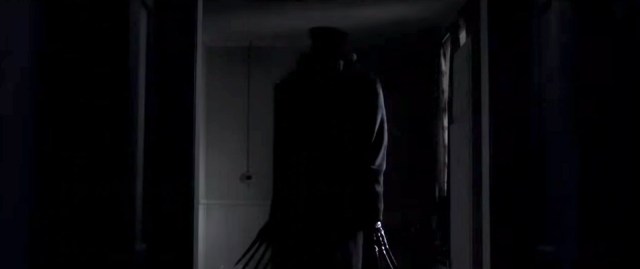
The central problem of the short comes in its opening scenes. The camera work and framing of the scenes powerfully evoke the feeling of tension and horror. For example, one moment shows the ghost in a statue pose and then the next moment it is gone, which is made all the more horrific by the haunting and ethereal score. Another moment shows a point of view shot of the ghost watching a woman coming into his domain. The framing of the series of shots makes the scene feel like it ought to be in slasher film as it looks like the spirit is stalking the woman like a hunter with its prey.

While one could argue that this is intentional because it leads to the old phantom revealing himself as an entity who should not be feared. The filmmaking choices clash with the established gentle antiquated charm that is evident in the first few minutes, and strongly permeates the entire film.

Ptitsa (2016)
ptica_still_7

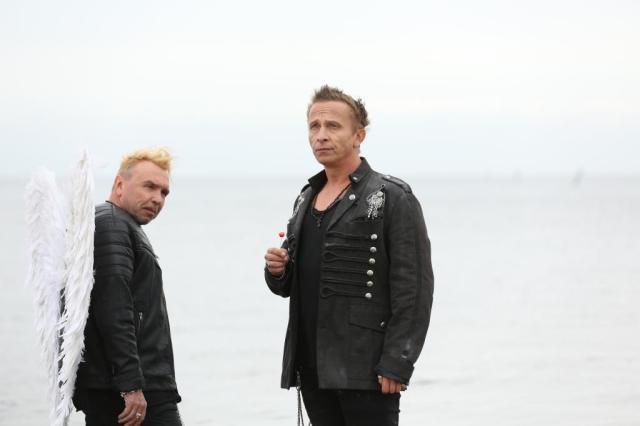
The next picture of the night was the full-length film “Ptitsa.” It tells the story of an incredible friendship that develops between an ageing rock star called Oleg (Ivan Okhlobystin) and a teenage girl named Katya who is played by Evdokiya Malevskaya in her first onscreen performance. They meet at a clinic where the former is being treated for alcoholism and the latter for tuberculosis.

The movie teeters on the edge of being tonally whiplash-inducing. However, in the Q&A that accompanied the film, first-time director Kseniya Baskakova elaborated on the tightrope dichotomy of tragedy and comedy. She stated that the film initially started out as much more bleaker affair however through the course of the production she tailored it more towards the comedic and ultimately views the story as a fairy tale.

Some aspects support this declaration. For example, Katya views her father as a shining redemptive figure that will save her from her current mundane life circumstances much akin to how a princess sees a prince. Moreover, the ending has a fairy tale quality as it depicts an amusing looking angel visiting Ola as he is close to death. The rock star’s fatal last moments on earth appear to vanish as the happiest of all endings come true with Katya becoming a fully fledged singer performing in a stadium of adoring fans with Ola looking on with pride at the young girl.

In the same Q&S session that took place after the film, one of the audience members in her complement of the picture compared it to a Sophia Coppola film. While one could make a case for this comparison, I would argue that Ptitsa feels in spirit closer to a Wes Anderson film.

Firstly, Anderson in his films always emphasises an acute sense of community, whether nuclear, distant or disparate animals as shown in Fantastic Mr Fox. Through the course of the movie, Ola loses his ties to his musical community with his bandmates joining his adulterous producer. By the end of the film, there is a feeling that Ola is now part of a tight-knit community with Katya and the woman he meets at the tail end of the picture.

Secondly, children in Wes Anderson films are usually written with an amusing and cutting adult edge that contrast with the grown ups who have to overcome their differences for the purpose of facing a specified obstacle. Malevskaya impressively carries this aspect in her performance with her sardonic line deliveries and composed facial expressions. The latter aspect is vividly illustrated in a scene in the first third of the picture when Katya is visited by her mother in the hospital.

Throughout the scene, her parental figure emotionally laments about her daughter’s behaviour. Towards the end of the scene, she reveals she is going on holiday and is leaving Katya some money. Malevskaya’s  performance at this moment portrays steely coldness and distance which manifest in her facial expressions. She speaks to her mother as though she is a complete stranger. This is particularly evident with her parting words, which are “have a good flight” which are delivered with a matter of fact coldness.

Finally, Baskakova in her camera work employs panning shots like Anderson. The famed director applies the shot to illustrate the details in a scene such as the activity of entire household of individuals. These can be comedic because of the timing of a cut with when a person is talking. So, for example, a character could ask for something and Anderson would cut to the other character’s reaction. In a similar vein, Baskakova’s comedic use of panning shots come from the actors’ precisely timed facial expressions reacting in wonderfully comedic harmony.

Kontributsiya (The Contribution- 2016)
contribution

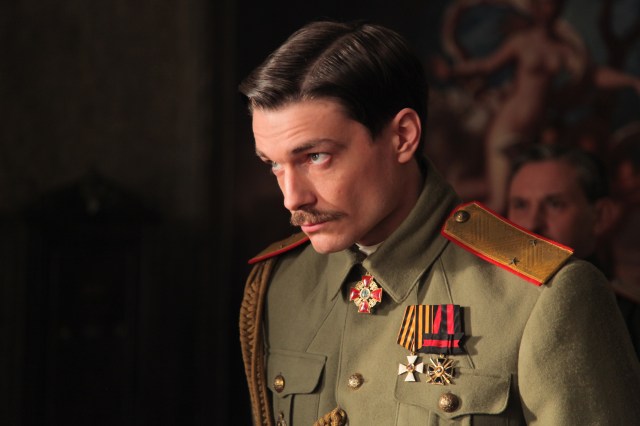
The final film shown was “Kontributsiya” (“The Contribution”) which is about a former Red Army detective who is given a chance to survive death via firing squad by investigating the whereabouts of a precious and rare diamond that was generously bequeathed to the White Army cause.

The picture is a meticulous and sumptuous period piece. The cinematography has this antiquated beauty, which is primarily illustrated in the drawing room where most of the film takes place. The shot composition and colour scheme of the central area are an ashy brown fused with sickly green that give the scenes a critical sense of history. Not only of what has happened in the past but also that what is presently occurring is paramount for the future of the country.

Moreover, the picture’s small moments crackle with intensity and stirring dramatic weight. The best scene that encapsulates these qualities comes in the final act of the film. The detective Murzan (Ilya Noskov) responds to a thinly veiled insult from General Pepeliaev (Maksim Matveyev) with the following sentiment. He nobly states that he will not take commands like a dog on a lease, especially for the chance to live. In response, Pepeliaev orders his men to execute his wife, Verochka (Nadezhda Tolubeeva) in the streets. The tension that emerges out of the situation is resoundingly perceptible.

Director Sergey Snezhkin sustains this sense of foreboding by having the sound of a grandfather clock’s pendulum function as the primary source of noise in the scene. Moreover, Snezhkin infrequently cuts to shots outside, which gives the feeling of an interminable wait for a heinous and cruel action to be enforced. Finally, Snezhkin in his framing allows the actors’ faces to take up the entirety of a shot, which allows their horror of the situation to be effectively communicated to the audience.

Matveyev’s performance as General Pepeliaev is compelling because of its introspective nature. There is always a sense that Pepeliaev is reflecting on the information that he hears. For example, at the beginning of the film, a woman mocks him by saying that they are now hiring boys as generals. Matveyev’s facial expressions at this moment evoke a state of inner thinking and regression as though those words have temporarily awaken his inner child, which he momentarily shows to the lady. It is a wonderfully layered and subtle performance that anchors the film.

The advertised Q&A session did not occur. Instead, Snezhkin introduced the film and talked about a rather notable and fascinating behind the scene fact. He stated that he had taken his name of the movie because the producers forced him to cut down his three hours version into a short and nimble hundred minute cut. The revelation still lingers in the mind because the film’s compact storyline feels complete and satisfying. One wonders what is left to say and show in the eighty minutes of missing footage.

The opening five minutes of the movie depicts a couple been woken up by an attack on the city. This moment suggests at some outdoor combat scenes that could have left on the cutting room floor. Notwithstanding, despite the temptation, of passionately shaking one’s fist at the producers for forcing a director to compromise his vision, this is one of those rare cases where their judgement was utterly correct.

Posted in Uncategorized | Leave a comment

Concise Review: Batman: Return of the Caped Crusaders (2016)

batman-return-of-the-caped-crusaders-will-premiere-at-new-york-comic-con

The sheer elation of Warner Bros latest animated feature- Batman: Return of the Caped Crusaders arises from the following aspect. The film takes Adam West’s Batman from the sixties television show and injects him with an arrogant and egomaniacal edge that results in a fascinating interplay between the absurdly virtuous portrayal of the hippie era and the grim, edgy and no-nonsense characterisation from the comics and movies.

At the same time, the picture impresses in taking the famed pop art ascetic of the original program and translating it to animation. The opening credits elevate the famous dynamic duo to comicdom immortality as they appear in many of the famous comic covers that have graced the Dark Knight’s long history as the audience are shown flicking comic books and the team travelling through them. They stop at one of their foes which result in the iconic cover being conceived. These are punctuated with the onomatopoeia speech bubbles that were a signature trademark of the show.

Elsewhere the film impresses with its scope and vision. There is death trap that has Batman and Robin as part of a large cooked dinner, which includes some amusing off the cuff remarks from the famous team. Moreover, the crime fighters face their dastardly foes in space, which the film commendably wrings enough ridiculousness and dry wit out of the situation.

The most striking visuals come from Gotham City being animated at night and Batman’s shadowy silhouette looming over his cowardly foes. They illustrate the picture’s tightrope nature of portraying The Caped Crusader with a goofy reverence and a sense of fidelity to the original conception of the character.

Posted in Uncategorized | Leave a comment

Concise Review: Arrival (2016)

arrival4

In the heartfelt final moments of Arrival, (the new film from French-Canadian director Denis Villeneuve) a Theoretical physicist called Ian Donnelly (Jeremy Renner) says to linguist expert Dr Louise Banks (Amy Adams) that his life has fundamentally changed because of meeting her as opposed to the encounter that he has had with extraterrestrial life. The moment is an encapsulation of the picture’s personal and intimate interpretation of humanity’s first encounter with beings beyond our world.

Villeneuve crafts many scenes in this vein. For example, when Banks first meet the aliens, the filmmaker combines scale with the gargantuan silver interior of the ship engulfing the frame and the experiential nature of the situation with close-ups of the character who portrays abject terror. The scene had echoes of the crew of the Nostromo exploring the vastness of LV-426 in Ridley Scott’s Alien. Another great moment is an elegantly constructed 360 degrees aerial shot that slowly pans across the shell alien craft amidst green pastures and visible clouds. The shot ends with a top down view of the military base of operations and signifies the potential threat that the visitors pose.

Both scenes embolden the central theme of the picture, which can be read as the inherent miscommunication and perception that resides within humanity. In the background of the central story, that showcases two teams communicating and ascertaining the alien’s purpose on Earth are news reports. They serve as a chorus of intense fear and escalating tension as people around the world perceive the shells as looming threats to be combated, which results in many countries aligned in their view to destroy the crafts. In the tail end of the main narrative thread, the creatures send a message to the two main characters that say “offer weapon.” Immediately, the military and bosses of the operation view the message as a threat as opposed to a possible miscommunication based on the difference between a weapon and a tool.

Nevertheless, the unfeigned potency of Arrival comes in its ending, which introduces a philosophically intriguing question that combines the terrifying implications of determinism juxtaposed with the touching dimension of parenthood. In essence, Arrival is a magnificently cerebral and emotionally moving triumphant.

Posted in Uncategorized | Leave a comment

Review: The Babadook (2014)

babadook-06The Babadook is a powerful and disturbing film that illustrates the way in which grief and pain can manifest themselves in our everyday life and become metaphysical forces of terror that embody destructive emotions. Aside from this central idea, the picture also impresses with its employment of archival horror movie footage that suggests at the underlying tensions within the narrative. The best example of this comes in the third act as single Mother, Amelia Vanek (Essie Davis) watches a small moment from the segment “The Drop of Water”, which comes from Mario Bava’s Black Sabbath. The scene depicts a dead old woman coming back to life as she starts to terrorise her young carer and nurse.

The small instance hints at Vanek’s boiling anger and fury as she becomes fully possessed by the Babadook. Director Jennifer Kent cleverly keeps the shot of the old woman from Black Sabbath in the background of the frame and Davis’ terrifying facial expression in the foreground, which elegantly communicates the relationship between the two elements.

Moreover, the titular creature is fascinating for the following reasons. In the narrative, the Babadook refers to a supernatural entity in a pop-up storybook who preys on people who become aware of his existence. He is a towering and lanky figure who wears a top hat and has long pointed fingers. There is a scene where the monster’s clothes appear in the background of the frame when Vanek is conversing with a group of police officers. The scene has echoes of the dream/reality melding hospital sequence in the original Nightmare on Elm Street.

The stop motion effects that are employed for the creature’s manifestations serve to remind the audience of its storybook roots as well as place it in the cannon of Ray Harryhausen’s immortal creature effects. However, the biggest inspiration for the Babadook seems to be early Hollywood. On the one hand, one could argue that the monster looks like a creation of Germen Expressionism with its long contorted hands. Most interestingly, Kent has cited that Lon Chaney’s “The Man in the Beaver Hat” from the lost 1927 silent film “London After Midnight” was an inspiration in the conception of the creature in its humanoid form.

Like many monsters that have existed throughout the history of cinema, the Babadook represents an inherent fear that genuinely resides within human beings. The title creature reminds us that our biggest psychological hang-ups can start when we are in childhood with its origin of living within the confines of a children’s pop-up book. With this in mind, the haunting last scene speaks to the importance of negative emotions. Vanek goes down to the basement of her house and leaves a bowl of maggots and dirt for the presumably deeply slumbering Babadook. The scene illustrates that one must always acknowledge the source of their mental anguish as it never truly dies and defines who we are.

Posted in Uncategorized | Tagged , , , , , , , | Leave a comment

Review: Doctor Strange (2016)

j8lej6jyhdze465psqjf

Marvel Studios’ recent cinematic endeavour, Doctor Strange feels like a beginner’s course in surrealism. It holds the audience’s hand so tightly that to let go would mean instantaneous disengagement. As a result, most of the psychedelic scenes lack potency and the sheer lingering nature that is associated with the style. Even the film’s arguably most trippy scene, which is an introduction to the Mystic world for the main character Doctor Stephen Strange (Benedict Cumberbatch) feels tame. He is shown remarkable sights as he is sped through space and time in a manner similar to the Stargate sequence in 2001: A Space Odyssey.

The sequence is engulfed with muted blues and purples, which intrinsically makes the scene feel bland and generic as that is the same visual scheme that was used for the infinity stone finale in Guardians of the Galaxy. Moreover, the queerest image in the sequence is when Strange looks down on his hand, and another set of hands start to grow. The moment is a microcosm for the film’s safe surrealism that on the one hand feels organic insofar as representing Strange’s overarching desire. However, it ultimately lacks an inherent atmospheric edge that makes the audiences process the perceived imagery. No frame or shot within the picture demands to be grappled with or solved as to what it is supposed to be.

Moreover, the movie has a pristine and sterile look, which while apropos for the myriad number of hospital sequences proves to be toxic for the surreal sequences, which is accentuated with the muted colour palette. One feels that they are watching the entire film through a transparent glass window of a penthouse, where the view is cloudy and grey. Visually, the film fundamentally is missing the richness, texture, colour and detail of Steve Ditko’s comic book artwork. Famed comic publisher, editor and designer, Dean Mullaney made the following observation of Ditko’s style. “In Dr Strange, he added the influence of Salvador Dali’s works and created something never previously seen in comics. He took the ethereal and made it tangible.”

Nevertheless, Doctor Strange has some fascinating virtues. One of them is whenever the picture is slyly subverting its comic book mythos. Many small moments illustrate this aspect. For example, when Strange first enters the domain of the Ancient One (Tilda Swinton) in Kathmandu, he greets a male master as though he is the venerated teacher. However, the real master of the mystic arts welcomes him, and in turn, she dismisses the mediating teacher. As the seemingly immortal Ancient One, Swinton plays the part as though she is a child who has been imbued with monumental power. Despite her advanced age, she never seems burdened by the responsibility and in many instances, there is still a sense of youthful relish in her actions which is coupled with a matter of fact optimism and commendable calm acceptance.

The most emblematic example of this quality comes in the aftermath of Strange’s first battle with three sorcerers. The conflict culminated in him having to kill one of the men who was attacking him. Strange bemoans this action by stating that he has taken an oath and consequently he will not kill anyone in the future. The moment represents a subversion of the character’s stance in the comics, which was a pledge to the Ancient One as opposed to his medical profession. Screenwriters, Scott Derrickson and C.Robert Cargill, have taken an aspect of Strange from the comics and have used it as a clever means to illustrate that the character is still in conflict as he refuses to let go of his past, which includes his status as a Doctor. Moreover, the moment illustrates the irrevocably morally grey nature of the role he will undergo should he choose to commit and become a fully fledged sorcerer.

Finally, Benedict Cumberbatch’s performance as the titular character is excellent. While conceptually, it could be argued that Cumberbatch is conveying the same qualities and emotions that he imbues Sherlock with, such as a cold, aloof and sardonic sense of humour. He does add some other shades to his usual manner of playing characters, which is in the form of a captivating weariness and vulnerability. Cumberbatch’s conveys this with his physical acting as he portrays the precise strain in his hands after an accident that renders them unusable. Additionally, Cumberbatch through his facial expressions conveys the sheer anguish and toil that Strange undergoes throughout the film. The performance is accentuated by director Scott Derrickson’s use of close-ups as we see Strange at various times through the course of the movie- bruised, damaged and broken.

The choice illustrates the picture’s fundamental dichotomy. It understands and encapsulates the appeal of its comic book sourced character and world through commendable writing, despite in the same breath not embracing the exuberant and imaginative artwork of its early source material.

Posted in 2016 Films, Reviews | Tagged , , , , , , | Leave a comment

Review: Beyond Re-Animator (2003)


beyond-re-animator-2

Beyond Re-Animator is an unadulteratedly witless and trashy film that has a transcendent gonzo quality that ultimately turns it from an awful picture into a midnight movie delight. It is the sort of film where people would be shouting out the lines and audibly reacting to its various bizarre sequences. The story such as it is sees the good Doctor Herbert West (Jeffrey Combs) resume his ghoulish experiments with the dead when a recently graduated medical student called Howard Phillips (Jason Barry) expresses an interest in working with him within the confines of a prison.  

The second sequel substantially improves upon its predecessor because of the following elements. The first is the direction from returning director Brian Yuzna. He crafts compelling scenes that are atmospheric and energetic in spirit. An excellent example of this comes in the opening pre-credits sequence. The scene depicts two boys telling each other a scary story inside of their tent, which culminates in one of the kids’ siblings dying at the hands of one of Herbert West’s mutated beings.

Yuzna’s sure-handed build-up provides the sequence with its spooky potency. He starts with a close up of one of the boys as he asks why he should be afraid. His friend responds by stating that they both live near a graveyard, which implies that if anything bad happens, no one will be able to hear them. Yuzna punctuates these small moments with a subtle use of background sounds. The first is the sound of thunder that provides the scene with a sense of foreboding terror. The second is the sound of police sirens that seems odd in the context of the moment, however, on subsequent viewings, one realises that it a deliberate suggestion of where the scene is eventually going to end.

These series of commendable moments concludes with the second boy talking about a creature who was let loose in the recent past. He goes onto to say that the person was brought back to life. As this is being told, Yuzna then shows us the boys’ tent with a point of view shot, which gives the audience the impression that someone is watching them. In turn, it also evokes the style of a slasher film, which along with a suggestively framed shot between two characters later in the opening shows Yuzna’s deft understanding of the sub-genre.

The second element that makes Beyond Re-Animator surpass Yuzna’s previous directorial effort is that it wonderfully extends the character of Herbert West and the concept of reanimation. In the previously discussed scene, West has become a proverbial figure of children’s stories. Moreover, later in the sequence, there is a shot of West sitting in a car. He has a meaningful glance with the young Howard Phillips. The moment feels like an acknowledgement of the enormity and weight of his character.  

Later on in the film, there is a small scene when West receives his green formula injection, which is punctuated by the reprisal of Richard Band’s theme for the original picture. The moment is incredibly postmodern as it feels like the film is aware of the iconic nature of West by framing it as significant a moment as Jason picking up a machete or Sweeney Todd’s barber blade. However, the best scene of West is the ending one where he walks into the foggy night. In spirit, it evokes H.P. Lovecraft’s story which spoke of the character as someone who would frequently disappear, much like a tornado that would wreak destruction and never be seen again. In his third turn as the character, Combs adds a sense of malice and subdued anger, which illustrates the changing nature of West in the time that has elapsed between this movie and the last one.   

Finally, the picture showcases West continued experimentation with reanimation as the audience is given many scenes, which shows the effect of the formula. The most noteworthy example is when a prisoner injects himself with an undiluted dose that results in him feeling as though he is high, which gives some of the third act a psychedelic feeling, which is accentuated with the gory effects on show that are the result of the Japanese special effects artist- Screaming Mad George.     

Posted in Uncategorized | Leave a comment

Review: Bride of Re-Animator (1990)

bride_of_re-animator_704_2

The opening credits to Bride of Re-Animator are a microcosm for the central problems that plague the sequel to the 1985 horror comedy. It announces a limping modesty with its title barely engulfing H.P. Lovecraft’s name as opposed to the original, which acknowledged its roots and with a bold surety presented itself as a fantastic new creation. Moreover, composer Richard Band took Bernard Herrman’s sharp and stirring Psycho theme and transformed it into an amusing dance piece, illustrating that the film was aware of its cinematic heritage and was steadfast in subverting it. Band’s theme in the sequel lacks ferocious energy, and in the middle of its duration, it has a lush and passionate interlude that hints at a romantic tone in the film.

Barely any of Bride of Re-Animator has this newly established quality. Instead, the picture feels like an exercise in dull and procedural setup, which it does in the most conventional manner possible in its first two acts. The film has an utter lack of vitality,  due to the loss of Stuart Gordon, who injected the proceedings with a sly sense of humour through the framing, lighting and cutting, which gave the original its sublime comedic edge. Brian Yuzna who was the producer of the original pictures takes over the director duties for the sequel. The result is a shoddy and amateurish patchwork, which comes from strange choices, a lack of atmosphere and the camera not being employed in a particularly interesting manner.

Nevertheless, the film does occasionally have some great small moments that hint at a better film, which is hidden beneath the average depths. There is a scene in the third act where Herbert West (Jeffrey Combs) expounds upon his latest creation to Dan Cain. (Bruce Abbot) Using a semi-erotic and soothing tone, Combs’ performance at this moment make the horrifying creation seem appealing and seductive. Combs also injects this with a matter of fact rationality as he casually disregards the lives of the people whom he is stolen body parts of.

Abbot’s performance in Bride of Re-Animator marginally improves as he accentuates the scene as mentioned above with precise and focused facial expressions as though West’s words have utterly enraptured him. He brings this similar quality at the tail end of the film when he looks upon the titular Bride for the first time. In these moments, the film hints at the Gothic kookiness of Kenneth Branagh’s adaptation of Frankenstein, but ultimately lacks the melodramatic flair that permeated that picture. The tragic romantic quality of the film also manifests in these series of scenes. The most striking example is when The Bride rips out her heart, which once belonged to Dan’s late fiance- Megan. She faces the awe-struck Cain and shouts out while holding the heart, “Is this what you want?”

The moment has one of the great iconic images of the horror cinema, filled with fever-laden intensity and devastating implication. It’s a shame that the rest of Bride of Re-Animator does not match the sheer majesty and terror of that shot.

Posted in Retro Reviews | Tagged , , , , , , , | Leave a comment

Review: Re-Animator (1985)

tumblr_n6a3cyxeh11srcivjo1_500

Re-Animator is an admirable horror comedy that succeeds because of its subtle construction in illustrating the tightrope dichotomy of its dual genres. An excellent example of this comes in the pre-credit sequence which shows an assortment of medical staff and police officers bearing witness to a much-admired faculty member screaming out in pain. As the scene goes on, director Stuart Gordon shows us the graphic nature of the Professor’s anguish with a combination of medium shots and close-ups, as his eyes start gushing blood, which lands in the face of his female assistance.

After collapsing and seemingly dying upon impact, the lone man who was with the esteemed member of the University is accused of being responsible for his death. The man’s name is Herbert West (Jeffrey Combs), and he responds in a clinical matter of fact manner that he is the one who gave him life. Re-Animator is a film that is filled to the brim with these absurdist ironies that not only evident in the screenplay but also in the filmmaking.

There are two moments in the picture that encapsulate this quality. The first is a minor instance in the hospital morgue as the main character Dan Cain (Bruce Abbot) wheels in a recently deceased patient and puts it in the corner of the room. As he does so, there is a dead body with burned arm that is blocking his way, and Cain puts it to one side as he continues with his job. However, the arm returns to his original state as if it is still alive.

Gordon’s framing provides the scene with it’s amusing and sly quality as there are a few still bodies that are prominent in the background of the shot. As a result of this, the audience has an anticipation of a scene where all the deceased people start waking up. However, it only proves to be one in the silliest way possible. It is as though the body is purposefully playing a practical joke on Cain. In turn, Gordon is playing with audience expectation as the framing of the shots suggests the sheer horror of the concept, but ultimately result in a gentle acknowledgement of what is to come later in the picture.

The second moment is when Cain greets his fiancee Megan Halsey (Barbara Crampton) with a passionate embrace and kiss in the hustle and bustle of their campus. She protests the gesture out of embarrassment with a half-hearted declaration of no three times. The scene then suddenly cuts to the couple making love with Halsey now saying yes three times. The moment is humorous because the quick cut is akin to the timing of a joke, which is underlined with the juxtaposition of both scenes.

Nevertheless, the film’s pure comedic heart resides in an excellent central performance from Jeffery Combs as Herbert West. It is commendable how Combs takes the minute details of West from H.P. Lovecraft’s short story and injects a sense of dimension that results in the character feeling amusing and engaging. For example, in a passage from the first section of the short story, which is entitled “From the Dark” the narrator describes the character as someone who does not falter in the context of watching him waiting for a serum to display some effects in a experimented body.

In the course of one scene, which depicts Cain coming face to face with the first of West’s experiments, Combs subverts this still and calm image of the character from Lovecraft’s story. Upon breaking into West’s basement, Cain witnesses West attempting to get a berserk cat of his back. In this moment, Combs effortlessly makes the potentially terrifying situation look funny with his physical comedy as he stumbles around the dimly lit environment. At the same time, Combs’s vocals are commanding and forthright in their purpose which shows his somewhat clear-headed state.

Later in the scene, Combs balances slight empathy, an inner sense of malice intent and an unleashed madness as West places his hand on Cain’s shoulder and has a cautious and worrisome expression on his face. Soon after Cain throws the demonically animated cat against the wall and the camera lingers on West’s face as he conveys an expression of sly devilish glee as looks upon Cain’s action and his plans involving the young student.

West’s blood stained clothes and defensive gesture of holding a mallet are accentuated by the lighting as the small ceiling lamp swings back and forth, which results in West being engulfed in shadow for mere seconds at a time. With this in mind, there is one shot where the character looks like a monstrous serial killer who is about spring upon his prey. Finally, West tells Cain to look out after the cat is dead, and the latter immediately turns around to fear to the amusement of former as he breaks into hysterics, in part a reaction to the situation and the madness within.

Finally, in the context of the minuscule sub-genre of the horror comedy, Re-Animator bears the closest relation to James Whale’s 1935 eternally classic film- Bride of Frankenstein in the sense that it revels in the absurdity of its concept with many amusing extended scenes dedicated to its surreal premise. Like that film, it also shares a tragic quality. Herbert West’s experiments have caused the breakdown of a promising new relationship and have ultimately made Dan Cain just like him.

Unfortunately, while this quality is conceptually apparent insofar as the sketch of the arc is evident to the viewer, the performance by the lead actor is terrible and in turn does not shade in the portrait of the character’s transformations. Bruce Abbot’s performance as Dan is a one-note exercise in blandness, as he has the same vacant expression throughout the entire picture. There is no sense of inner turmoil, temptation or excitement at what West is offering. It is a performance that would not even cut the mustard in a weekly episode of the Power Rangers.

Posted in Uncategorized | Leave a comment

Reviews on the Road Volume 1: The Edinburgh Edition

Introduction

Amidst the fusion of historical beauty and natural greenery, Edinburgh contained some characteristic cinemas that keep the flame of independence films alive and the continued sustenance of tent pole fare. And like the city itself which has deeply rooted ironies in its history, one of the films that I saw in my travels is itself ironic. Throne of Blood is a Japanese adaptation of Macbeth, which is strongly tied to Scotland. How amusing that in certain moments, the film captures the essence of the country. And the cinema that it was being screened at is a microcosm of the capital, which is a fascinating melding of the ancient and contemporary into something that is initially counter-intuitive but on reflection is pleasing to the senses for its majestic alluring nature.

The Magnificent Seven (2016)

magnificent-seven

The Magnificent Seven is a frustratingly empty and hollow experience. On the one hand, it has ideas that are conceptually fascinating and signify an all-encompassing nihilism that differentiates itself from the charm and melancholia that defined the original 1960s film. However, this ultimately proves to be fruitless in the face of the movie basking itself in a blanket of moral certitude. Moreover, the film never quite recovers from its first ten minutes.

The picture’s opening pre-title sequence is outstanding as a piece of beautiful, tense and striking cinema as it depicts the brutal and savage consolidation of power by the nefarious Bartholomew Bogue (played with cold-blooded steeliness by Peter Sarsgaard). He and his men burn down a church and murder some of the townsfolk who stand up to him. The most visually impressive shots come in the aftermath of this massacre as each shot is filled with a natural radiance which gives the violence a potent edge and emotional resonance.

These moments are punctuated with the score, which is like striking hissing cobra with its tense musical stings that come from its use of flutes and minimalist acoustic work. The score marks the final work by the late James Horner with significant contributions from Simon Franglen who finished the film’s music.

Crucially, the opening sets up a potentially tantalising primary theme of the villagers permanently losing their religiously preached morality and consequently, they lose something of themselves in the ensuing efforts to save their village. However, this never explored and is only given cursory lip service by characters without any weight or significance.

Worse yet is the film’s loathsome’s inconsistency with its use of violence. Sometimes, it is gut-wrenching and lingering. Nevertheless, most of the time, violence is used as a means to deliver sadistic punchlines and crowd-pleasing moments. This discrepancy is particularly bothersome in the film’s action-filled climax.

There are entire scenes where the violence stirs the emotions and others where it becomes absurd and juvenile. An example of this would be a scene where Jack Horne (Vincent D’Onofrio) is tragically killed by a banished Comanche warrior called Denali who pierces Horne with three arrows as he desperately tries to reach his foe in combat. This moment is juxtaposed with the death of Joshua Faraday. (Chris Pratt) His demise is a preposterously drawn-out affair of impossible and laughable proportions. The injured Faraday is shot countless times while on horseback. He eventually falls to the ground, only to get up again. When up, Faraday struggles to light up a cigar, which the surrounding horsemen help him with before he proceeds to fall once more. Then he gets up again and throws a small piece of dynamite that takes out the remaining men.

The film’s most problematic qualities work harmony in final moments of the picture which showcases Sam Chisolm (Denzel Washington) confronting Bartholomew Bogue in the ash heaped Church about the things he did to his family in the past. The latter is close to killing the former with a small gun, however, is shot by Emma Cullen (Haley Bennet) who miraculously comes in at the last minute to save Chisolm. The moment marks an important moment for the young Cullen as she shot the man who killed her husband earlier the film. However, the film nor Bennett in her performance shows any sense of being affected by the incident.

This is a shame as the picture seemed to be placing Cullen as the microcosm of the town and in essence the exploration of the primary theme. However, the film final moments which shows the graves of the members of the titular seven serve only to venerate the group as opposed to reflecting on the ensuing effects on the town and the moral ruin it may have wrought.

Hell or High Water (2016)

hell-or-high-water

Hell or High Water is a layered and textured film that harmonies deft cinematic craft, a fascinating primary thematic exploration and small incidental moments that result in the movie feeling authentic, humorous and sharp. The picture charts the course of two bank robbers who systemically steal from select banks to preserve their family farm and the resultant investigation and attempts to capture the pair by two Texas Rangers.

The ascetic strength of the picture manifests itself in naturally raw and patient shots that capture the Texas set environment in all its overly boiling, rusty and mountainous detail. The most notable example of this comes in the final’s act as there is a race against time for the two rangers to catch up with the banking robbing brothers before they reach a particular bank.

Through clever use of quick cuts, director David Mackenzie creates a frantic sense of a car chase without the two vehicles being close to one another. Moreover, one shot along a high road overlooks a picturesque landscape that has large patches of green bushes that stretch on for miles. The moment is a microcosm of Mackenzie’s direction, which combines a blend of the intimate and epic, with a sense of the background of a frame being paramount in visually conveying place and meaning.

At the heart of Hell or High Water is the idea of an eternal cycle of violence for the purpose of gaining land. In the second half of the picture, Alberto Parker (Gil Birmingham) while lying in wait with his partner Marcus Hamilton (Jeff Bridges) talks about his heritage and how their land was savagely taken. He equates the banking system as the modern day equivalent to what his ancestors went through in losing their land.

The theme takes on far greater significance in the last five minutes of the film when Hamilton expresses the following to Toby Howard (who is one of the bank robbers who got away scot free.) Despite his noble intentions of wanting to preserve his home for his sons, there will burden that they will have to carry knowing the violent means that were used to perform this act of paternal love and class mobility.

Throne of Blood (1957)

vlcsnap-2010-03-30-10h28m19s210

Despite the absence of William Shakespeare’s expressively poetic language and gut-wrenching soliloquies, Akira Kurosawa’s Throne of Blood is still a compelling and haunting interpretation of the bard’s famous tragedy. This is primarily because of the mesmerising visuals. From its thick patches of fog to rain-drenched and windy forest terrains, Kurosawa use of weather provides the picture with an all-encompassing dreamlike atmosphere. These scenes are accentuated by the stark black and white photography, the extensive use of medium and long shots as well as excellent framing.

Moreover, these atmospheric moments provide the film with a unique prism that the story is being told through. When conversing with his wife part way through the film, Taketoki Washizu (Macbeth and played by Toshiro Mifune) speaks of his experience with the evil spirit as though it was a dream in which he has finally awaken from. One could read Washizu’s experience as a vivid nightmare that was caused by him being lost in an endlessly wet, windy and wild woods.

However, a more literal reading of the film reveals that the Washizu’s rise to power is a result of paranoia in the face of survival in troubled times. His wife, Lady Asaji Washizu (Lady Macbeth) who is played with precise and terrifying stillness by Isuzu Yamada tells her husband that his best friend, Yoshiaki Miki (Banquo and played by Minoru Chiaki) will betray him by telling what transpired in the forest, which will cause the King to kill him. Additionally, in an interesting new wrinkle, she also reveals that Lord Kuniharu Tsuzuki (King Duncan and played Takamaru Sasaki) murdered the former Lord. Washizu defends the act by saying that he did it out of survival.

In this way, the film feels very Hobbesian in its depiction of a savage state of nature where any man can be killed on a whim in the name of survival. The screenwriters also lessen Washizu’s ambitions; he becomes a Lord of a garrison as opposed to a ruler of a nation, which ultimately gives credence to the Hobbesian reading as the societal structure hints at Civil strife, the conditions of which the English Political Philosopher wrote his treatise, Leviathan under in the 17th century.

Finally, the film is punctuated by a powerful and lingering central performance from Toshiro Mifune. Mifune balances, manic energy and fury with a captivating inner turmoil. The scene that encapsulates these strings of different emotions is when he kills a messenger who tells him that failed to kill Miki’s son. At first, Washizu lunges at him with frightening anger as he stabs the messenger. Then he slowly turns away from the flinching body and is keeping his eyes on it in a manner akin to a predator watching on its prey. Through the course of the scene as the messenger slowly succumbs to death’s cold embrace, Mifune’s facial expressions change from satisfaction to guilt over his actions to outright fear.

The Revenant (2016)

revenant2015

The Revenant is a perplexingly peculiar film. On the one hand, it fundamentally adheres to the essential axioms of the cinema, which is visually conveying the story, themes and emotions of its characters. While also delivering on the experiential nature of the medium in two ways. The first is in an impressively constructed battle sequence. Director Alejandro González Iñárritu conveys the sheer brutality and chaotic nature of war with his free roaming camera as it pans across the various terrains that are engulfed in the conflict. The second is the sheer agony and subsequent attempts to survive by the main character Hugh Glass in the aftermath of a vicious attack that he has undergone at the hands of a grizzly bear.

One does get a distinct feeling that Glass feels less like a character than a vessel for suffering. One could argue and indeed admire this aspect insofar as it being a representation of realism, in regards to Glass’s life-threatening injuries lasting the near entirety of the running length. Moreover, this could give credence to the primary theme, which could be inferred as empathy within nature, proving that the distinctively human quality can even emerge under the most extreme conditions where survival is crucial.

Nevertheless, even outside of these moments of protracted anguish, Leonardo DiCaprio’s performance proves to be a one-note exercise in toughness. It is not captivating or nuanced, and it is a shame that DiCaprio won the Academy Award for Best Actor for his work in this film when there are a plethora of excellent performances that have been overlooked. Such is the nature of this picture, an astoundingly well crafted and ascetic delight with a problematic central performance that feels inauthentically bold.

Posted in Uncategorized | Leave a comment

Concise Review: The Magnificent Seven (1960)

98303b05b48f0bac58fefd894e8be1543e7552c16b01f3276b217cca40118d0a

The Magnificent Seven in many ways is the most charming Western to come out of the Hollywood Studio system. Its 125-minute running length is filled to the brim with amusing gestures, comradery, mythical awe and a simultaneous childlike excitement and rawness to its action sequences. Despite possessing these qualities, the film does not descend into becoming a mere lark and spectacle. Instead, the picture truly comes alive in its quiet and contemplative moments where members of the titular seven bandit group reflect on their moral plight.

Many of these sequences feature Chris Adams who is played with captivating subtly by Yul Brynner. Brynner single handily provides the film with its moral centre, emphasising sensitivity and duty-bound nature with his precise facial expressions. At the same time, Brynner effortlessly portrays the sense of loss that has befallen his brothers in his arms. The most striking single moment that articulates this comes at the end of the picture when he states in a matter of fact manner that “The farmers won, we lost, we always lose.” The line is an acknowledgement of the futility of his line of work and can be interpreted as the start of the Western genre becoming self-reflexive about its characters and inherent nature.

Finally, director John Sturges matches the intimacy of the film with a commendable grandeur. Part of this comes from the movie being shot in Panavision, which allows for these sweeping scenic shots that are breathtaking to behold. Moreover, the downtrodden central village that requires assistance from the titular group was built on location. The result is a creation that feels authentic and intrinsically possesses character. From its central bell tower to its straw and robust stone archways, the village in the Magnificent Seven is a wonder onto itself that demands survival for its beauty and depiction of the simpler life.

Posted in Uncategorized | Leave a comment