I’ve made no bones about the fact that Revenge of the Sith is my second favourite Star Wars film. Even with its flaws, the film is a beautifully tragic and enthralling end to George Lucas’s original six-picture saga. In fact, the 2005 effort has grown in my esteem over the years. But there’s one thing that I’ve wanted to discuss about it, and that’s what this blog post is about. Did you get a chance to see the re-release this weekend? Let me know in the comments below.
One Great Shot
In the twenty years since the release of Revenge of the Sith, there’s one aspect that I’ve come to appreciate about it. This comes in its use of emotional choreography. Simply put, it’s the acting beats between the lightsaber swings. In the Original Trilogy, it felt as though the laser sword bashing punctuated long-stated sentiments. However, in the Prequels (particularly ROTS), this is confined to silent acting moments. Lucas’ camera is surprisingly intimate whether it’s dueling close-ups between Obi-Wan and General Grievous or Mace Windu’s disgruntled expression when bearing down on Palpatine.
However, the concept really has lift off in the Obi-Wan and Anakin confrontation. There’s a stretch of the struggle where the pair are attacking each other without lightsabers. And Anakin’s anger and hatred are really expressed well when he strangles his former master before laying him down on the table (the one great shot in question).
The surprisingly intimate moment gives rise to Revenge of the Sith feeling the most like a silent movie where music and acting combine to create a purely visual experience. Even the words that Anakin seemingly utters under his breath as he attacks Obi feel like it is oddly missing a reel with an intertitle.
Although quite incidental in the grand scheme of things, Revenge of the Sith’s one great shot unlocks the saga’s cinematic potential. In so doing, it illustrates what appeals to me about some of the saga’s best lightsaber battles. They can be grandiose with galactic stakes but also intimate and humble in their filmmaking.
This is one of those few preambles where I have no words. The review and discussion it hopefully garners should speak for itself. But for the sake of saying something, I feel we are now getting to the riveting part of the HBO adaptation of The Last of Us Part II. The shocking pivot is challenging but it’s only the start of what makes the game such an exemplary piece of art. With that said, have you seen the second episode of Season 2 of The Last of Us? Let me know in the comments below.
Review
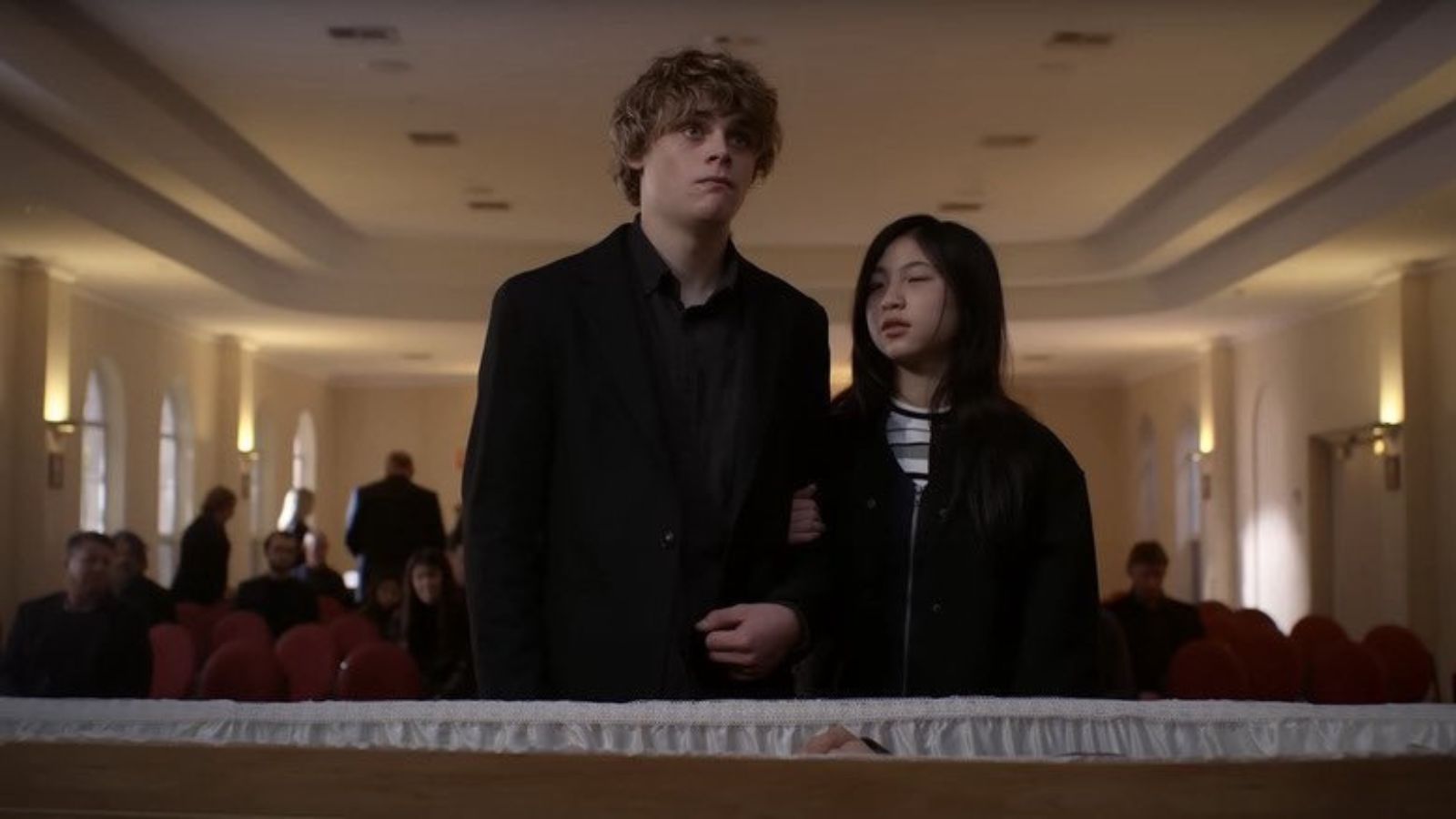
Through the Valley is a powerful and poignant episode that in its deviations creates a fascinating reinterpretation of The Last of Us Part II’s most tragic moment. After the events of the New Year’s dance at Jackson, Ellie finds herself readjusting to her new reality, whilst Joel and Dina are on patrol. Things become complicated when a large army of infected march on mass to the community. Meanwhile, Abby scouts Jackson out to get a sense of how secure the place is.
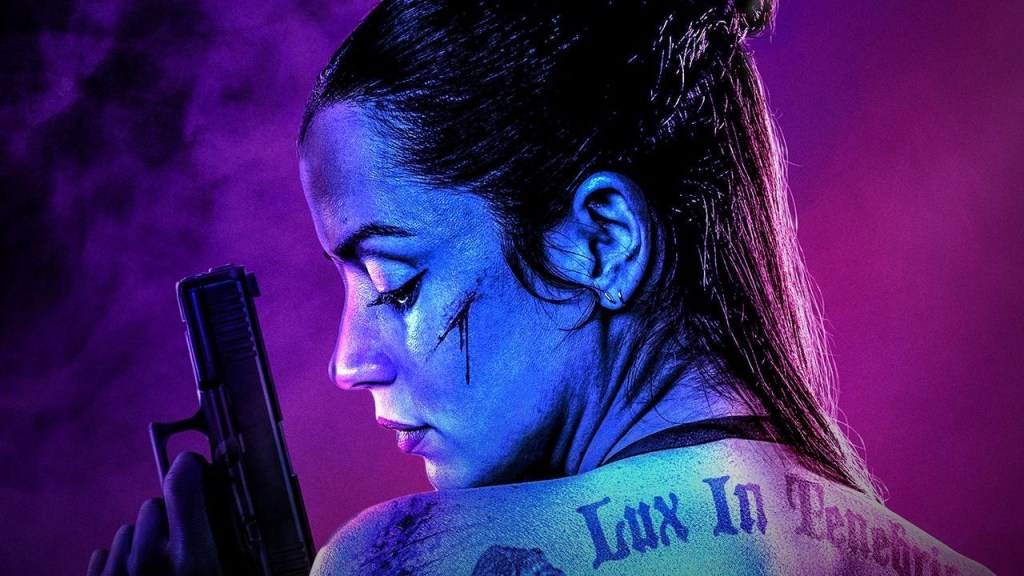
In the game, the death of Joel is shocking with its suddenness and the seemingly lack of motive from Abby. However, in the show, the so called “speech” that Joel alludes to in the game is given vivid life by the young woman. It runs the gamut from condescendingly flirtatious to emotional and savage. Kaitlyn Dever easily balances these range of states with considerable authenticity. But her best moments are the ones where she shows vulnerability, whether it’s the physical reactions to being too cold or the instance where she asks her friends to help Joel and Dina. It makes her moments when she turns on a dime even more terrifying and deadly.
In this way, Abby’s humanity and empathy are front loaded within her worst moments as opposed to something that’s discovered as the player progresses through her story. As someone who prefers Abby’s arc in the game more then Ellie’s, I appreciate this change as there’s already a planted seed for change and warmth.
As for the other changes to the moment, I really appreciated Dina being there as opposed to Tommy. It could imbue her subsequent interactions with Ellie with a much more profound sense of shared grief and loss. And in perhaps the most interesting change, Ellie crawling to Joel’s dead body and lying with him feels quite primal and animalistic. It’s akin to a baby cub returning to a state where it last felt truly loved, protected and sheltered.
The events surrounding the “big event” trades in fan favourite intimate moments for something that feels far more expansive and interesting insofar as the stakes for the rest of the series is concerned. This comes in the form of the infected attack on Jackson. It ensures that there’s a possible debate to Ellie wanting to seek revenge on Abby and her friends. Does she turn her back on a community that took her in, gave her stability and a chance to grow up? Or does she abandon all that for the sake of justice for a man whose the closest that she’s had to a surrogate father? I look forward to the conflict that this elicits in the rest of the series.
Less impressive are some directly adapted moments from the game that lack punch and weight due to the passive nature of the television medium. Chief among them is the opening sequence where Abby has a nightmare. In the game, it’s a recurring situation that illustrates the character’s deep seated fears that are buried within a traumatic memory. However, as adapted it feels quite clunky and oddly obvious in its use of two versions of the character. The same goes for the scene where Ellie is exploring the mansion before discovering an injured Joel. The horror comes less from the tension of the character’s discovery (via various unsettling sounds) then oddly placed camera moves that highlight incidental creepy details of the big house. This is most apparent with the use of a fixed medium shot of a roughed up teddy bear.
Mark Mylod is the director of the episode. He’s no stranger to shocking HBO fare, having been the director of the pivotal episode that changed everything in the final season of Succession. Whilst there’s some clumsy camera moves as previously alluded to, I do like his filmmaking choices during the “big event.” This comes in the form of the darting back and forth close-up reactions to the death. What felt quite static in the game is now given even more emotional texture as Abby’s friends are given more presence with their silent expressions. It also hints at the possible theme that could underpin the season, namely the strife between singular interest and the loyalty to a community or a band of brothers (united in a cause).
Is it weird that I’m having writer’s block over this particular preamble? All there really is to say is that this is my first post about a film in yonks and that I’ve been relishing the prospect of a blank page again. With that said, have you seen Sinners? Let me know in the comments below.
Brief Consideration
Ryan Coogler’s Sinners is full of life. It bursts at the seams with community spirit, kinship and a rare reckless abandon, that’s usually reserved for vampiric antagonists in other genre pictures.
On the surface, it’s story of twin brothers, Smoke and Stack (Michael B. Jordan) returning to rural Mississippi to open a juke bar has echos of From Dusk Till Dawn.
However, unlike that film, it’s screenplay enlivens its supernatural tropes with a cultural and racial dimension. For one, the vampires absorb music and culture as a form of preservation. But because they’ve not had a lived experience of it, they can be seen as appropriating it as a form of seduction to entice future victims. As the leader of supernatural clan says to a young blues singer in the third act- “We want your music and stories.”
Even the typical convention of vampires requiring invitation to enter an establishment has racial tension. This is evident in a prolonged scene where the white vampire clan demand entry into the brothers’ bar. Along with an insert shot of KKK garb and the clan having a subtle presence, results in the racial disenchantment simmer with wily power.
Coogler’s camera work in the Black Panther movies often made my eyes roll with its quality of drawing too much attention to itself. But in Sinners, it’s ambitious and engrossing. In particular, his long takes depict such a lived in quality that I could not help but feel like a passer-by. And in the sharp cross cutting, Coogler and editor Michael P. Shawver achieve a raw passion that’s animalistic in its carnal power.
In this way, Sinners makes us feel what the central creatures can’t, the lingering of the sights and senses of our youth that we carry with us to the grave.
To quote Gandalf- “We come to it at last.” Despite being mostly satisfied with Season 1 of The Last of Us, I was always like a little eager beaver about how the show runners would adapt the second game.
In my mind, The Last of Us Part II is the most challenging piece of art since Twin Peaks: The Return. Its dual story line creates meaningful parallels about the singular pursuit of revenge and how we may become like our enemies in subtle and meaningful ways.
So, with that in mind, I’m eager to get stuck into Season 2. These episodes reviews will be a little slower to publish then my ones for the first season. Rather then a mad dash to the finish line of Monday evening, these will going up on Tuesday/Wednesday. This is to ensure a fresh perspective that marinates in the episode a little more. So, with that said, have you seen the Season 2 opener? Let me know in the comments below.
Review
Much like the series pilot, Future Days is an ambitious and efficient episode that lays the table interestingly for its adaptation of The Last of Us Part II. Season 2’s opening episode takes place 5 years after the ending of the first series. During that time, Ellie (Bella Ramsey) craves independence from Joel’s overbearing protection. Meanwhile, the older parental figure has entrenched himself in the community as one of the members of its council. At the same time, Joel is trying to seek therapy for his frosty relationship with Ellie. The pair will be tested as an ex-Firefly called Abby (Kaitlyn Dever) seeks vengeance against Joel (Pedro Pascal).
To its credit, Future Days effortlessly sets up its new characters and status quo with dramatic weight and a surprising amount of lightness. My favourite instance of the former comes in the pre-title scene that introduces Abby. The scene opens with a picturesque wide-angle shot of nature, where the viewer is treated to seeing several Giraffes. You could be fooled into thinking that we’re seeing a similar scene from Season 1, when Joel shows Ellie a similar sight. However, it’s a subtle subversion of expectation as the view soon has a melancholic tinge as we come to see it through Abby’s eyes, who has experienced a profound sense of loss.
It’s the first instance of how Abby and Ellie might see similar if not outright the same things, but experience them in different ways. Even the way that Abby is blocked insofar as being solitary and away from her group of friends tells us so much about her character. She’s singular in her rage and feeling of revenge towards Joel. And Dever commendably portrays the bubbling sense of anger whilst never forgetting about the freshness of her loss.
Writer/Director Craig Mazan juxtaposes these instances of tragedy and intent with a lightness that goes a long way to putting the story of Part II on an appealing footing. These come courtesy of some of the newer characters. The first is Joel’s therapist- Gail (Catherine O Hara) whose looseness speaks to one of the themes of the game (namely the deconstruction of Joel) and how emotional self-care is dealt with in a post-apocalyptic community. O Hara’s almost fidgety sense of candidness results in some of the episode’s starker humour along with its more emotional moments. In particular, Pascal’s delivery of “I saved her” line from the game is as understated as authentic to Joel’s emotional state towards Ellie.
The second character who injects a sense of lightness into the episode is Dina (Isabella Merced), a surrogate daughter figure for Joel and Ellie’s best friend. Aside from injecting the biting charm that made the character so indelible in the PS4 title, Merced’s silent comedic moments go a long way to portraying a sense of authenticity and trust between Ellie and Dina. In particular, her gestures in dealing with a Clicker in the middle of the episode are amusing and sweet in their play-acting quality.
From point-of-view shots that are framed via sniper scopes to tracking shots that reveal the breadth of the Jackson community, Future Days certainly expands the cinematic ambitions of the show. But much like the episode’s humour, the best filmmaking moments are the ones where Mezan is playing with the audience. This comes to the fore in the scene where Ellie comes face to face with a Stalker variant of the infected. Like a well-orchestrated tense horror sequence, Mezan knows when to be subtle with the frame and uses large open spaces to make the audience squirm. Much like the source material, it’s challenging the audience with not only the expanded scope but with what’s possible to do with said scope. In this instance, the simple becomes the sublime.
Much like Dune: Part Two from last year, I’ve been anticipating doing a one great shot for Nosferatu, since leaving my second viewing of the film. And much like the film itself, the shot in question was not quite immediate to me and altogether surprising. With that said, what’s your favourite shot from Robert Eggers’ remake? Let me know in the comments below.
One Great Shot
Although simple in conception, Robert Eggers’ close-up of the titular creature is the key to unlocking his vision of the film. For one, it’s a sleight of hand to show the audience a brief glimpse of the character. Up until this point, we’ve not had a good look at the vampire (aside from a subliminal flash in the opening scene). And in his home, Count Orlok is captured in a medium shot that’s illuminated via candlelight. The result is a dreamlike delirium that gives rise to a slow realization of the supernatural for Thomas Hutter.
In this way, Eggers matches the conviction of the original 1922 silent film, which was so convinced of the existence of vampires that you could feel it in every frame. At the same time, it has an air of homage insofar as it’s a claustrophobic version of Max Shreck’s vampire looking at deed papers with a fervent intensity. While that shot was captured in a medium shot, Eggers opts for something far more primal and unnerving. By getting the audience to see into the eyes of Nosferatu, the director subverts the typical sympathy notion that comes from looking at the eyes of a creature.
Instead, it’s an excellent visual showcasing of a line that the creature says later to Ellen- “I am an appetite. Nothing more.” The choice allows us to understand this urge by seeing how it stirs the creature and perhaps how it equally seduces Ellen. If the eyes are a window to the soul, then this close-up of Nosferatu reveals how he’s animalistic and black of heart. There’s no joy or spark, only a hunger to consume.
Nirvana’s “Something in the Way” has been on my mind a lot recently. This is not only because its lyrics have unique sense of applicability to me but also because of its haunting vocals. The same could be said of Smile 2 that’s lingered with me since seeing it earlier this year. In a year that’s had a strong sense of female identity within the horror genre, Smile 2 has stood out. And I hope my brief discussion of my favourite shot from the film does it justice. Have you seen Smile 2? What was your standout cinematic still from the 2024 sequel? Let me know in the comments below.
One Great Shot
The fixed medium shot of the audience at the end of Smile 2 really gives the viewer a lot to think about. On the one hand, it’s meta insofar as it’s referencing the audience quite directly, making us a part of the concert. It also mirrors and complements the introduction to Skye (Naomi Scott) via a fixed shot of a television where we see the pop star’s interview with Drew Barrymore. In fact, one could argue that the shot critiques reaction culture by emphasizing how it’s less about the event in question than our emotions during it.
At the same time, it caps off a theme of how Skye feels watched as an icon/recovering addict but rarely heard or genuinely seen. At pivotal moments throughout the film, Skye points out that if only people could see what her mind is like. With this in mind, the shot in question illustrates the disconnect between Skye’s reality (aka seeing the parasite) and the audience, who view the pop star in her most idealized state, whom they adore from afar.
Therefore, the ultimate meaning of the shot is a criticism of how we consume media. We view and appreciate it from a distance (be it as a television viewer or a fan at a pop concert). But we don’t stop to think about the artist or our part in their ceaseless striving for perfection. Thus, the disconnect between the artist and the audience is jarring and haunting.
Believe it or not but this early screening of The Monkey has made me quite nostalgic. Despite aspiring for Film Critic status, I don’t get the opportunity to see many movies early. But on a Sunday evening in October 2010, I stumbled into an early screening of The Social Network. And from that point on, I had caught the film reviewing bug. At the time, I aspired to write for the University newspaper and my review of the 2010 film was my way to achieve that goal. Suffice to say, I had succeeded and the rest is history (as they say).
With the indulgent story out of the way, it’s incredible just how omnipresent The Monkey has felt. At the time of Longleg’s release, the teaser trailer played in front of many of my screenings. It’s incredible how much of a counter programming it has felt to Oz Perkins’s serial killer movie. With that said, do you plan to see The Monkey when it hits cinemas this Friday? Let me know in the comments below.
Brief Consideration
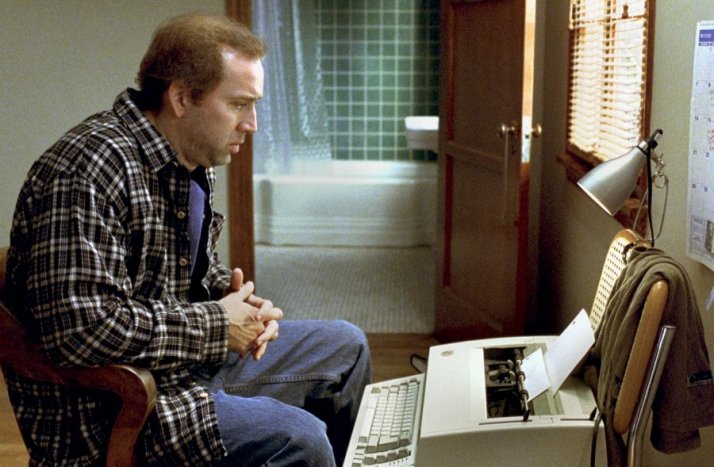
Last year, Oz Perkins catapulted to the mainstream with Longlegs. It was a chilly and tense serial killer thriller with supernatural undertones and a creepily manic Nicolas Cage performance. The power of understatement and exacting filmmaking was also effective in immersing and ultimately unnerving me.
Less than a year later, Perkins returns with an adaptation of Stephen King’s short story- The Monkey. The 2025 film is about twin brothers Hal and Bill (Theo James), who have to contend with the reemergence of an antique toy monkey that causes death whenever it bangs its drum.
On the page, King’s narrative is melancholic. It uses its Monkey Paw-inspired premise as a jumping-off point to explore fatherhood, loss of innocence in childhood and generational trauma. Intuitively, it seems like an adaptation that would be ripe for a Steven Spielberg or Frank Darabont. However, Perkins uses the novella to explore how parents try to connect with their kids and cope with tragedy. The former aspect manifests in the film’s sense of humour that comes from its savage and darkly comic candid remarks.
In The Monkey, parents rarely sugarcoat the harsh reality of the world to their kids. Instead, they dryly and sometimes quite bluntly state the truth about sobering topics. The best example comes after the funeral of a babysitter, where Hal and Bill’s Mum, Lois (Tatiana Maslany) expounds upon the nature of death and the many ways it can happen to an individual. Along with a quality of awkward riffing where certain characters trip over on their sentiments, results in humour that feels distinct and fun. This sense of candidness is juxtaposed with Hal’s choice of wanting to keep away from his son and hide the truth of his family from him.
Perkins also emphasizes the sibling relationship between Hal and Bill, whereby the latter becomes so fixated with the title object that he uses it as an obsessive means to kill his brother, who he blames for their mother’s death. This stretch of the film has the best drama, tension and filmmaking. In particular, Bill’s makeshift lair raises the cursed toy to almost deity level and the set design goes a long way to conveying this quality. The same goes for a medium shot of trees that are lit by police sirens that visually embodies the movie in one image, whereby the ordinary can be slightly slanted to become uncanny.
Two posts in two days! You poor unfortunate souls! In all seriousness, I was actually on the fence about seeing this film. The MCU has become so interconnected that even if you miss one aspect (namely Falcon and Winter Soldier), you feel as though you might be missing out. Fortunately, something compelled me to throw caution to the wind and give the movie a whirl. With that said, have you seen Captain America: Brave New World? Let me know in the comments below.
Review
Out of all the MCU solo film franchises, Captain America is the most diverse. The initial trilogy boasted a period-authentic war epic, a 70s-inspired spy thriller and an Avengers 1.5 effort that pitted its various heroes against one another. This strength somewhat remains with the fourth entry- Brave New World. It attempts to harmonize comic book elements from The Incredible Hulk with the grounded paranoia storytelling that pervaded The Winter Soldier. The result is a fun and swift romp that never rises to the thematic depth of its predecessors.
Brave New World is about the newly elected president- Thaddeus Ross (Harrison Ford), who attempts to negotiate a treaty of equal trade of a freshly discovered element called adamantium. However, after facing an assassination attempt by veteran super soldier- Isaiah Bradley (Carl Lumbly), Ross imprisons Bradley. This puts him in conflict with the new Captain America- Sam Wilson (Anthony Mackie), who believes that his friend is innocent and is being set up. The pair soon discover a larger conspiracy at work that has implications for the harmony of the global order.
Like many other MCU entries, Brave New World is light on its feet with a quippy sense of humour and a persistently fast pace that fills out its fleet two-hour runtime. However, this fundamentally hurts the film as it favours moment-to-moment gratification as opposed to something that’s inherently impactful or thought-provoking. I’ll admit I enjoyed some of these moments such as an extended scene where Sam and his friends humorously reflect on being invited to the White House in a limo. The same goes for a reveal of a character that’s not been seen since The Incredible Hulk. The shadowy film-noir build-up of the character along with Tim Blake Nelson’s chilling look and vocal performance combine to create an exciting new version of The Leader.
But for much of the running time, I felt the film was not interested in its central protagonist. Sure, there’s lip service given to the fact that Sam has not taken the super-solider serum. However, outside of one action sequence and a quip in the third act, it never feels as though it’s something that he grapples with. The same could be said for the film’s true north star- Ross. There’s a sense that the film wants us to question if he can truly change (given his past and new role as president). But it all feels signposted as opposed to organically seeded through the film. This is a shame as Ford’s performance is excellent, particularly in the touching moments he shares with his daughter, where his gruff exterior gives way to a flawed human being.
Julius Onah’s direction yields mixed results. There’s an inspired action sequence that in its lack of cuts builds organic tension when Sam is attacked in broad daylight without his costume and weapons. However, this is the exception rather than the rule, as many of the set pieces are edited within an inch of their life, which fundamentally disengaged me. Fortunately, Onah makes up for this in his framing whether it’s firmly held close-ups that have the majesty of a comic book splash page or a moment in the tail end, where Red Hulk slowly rises into frame as the presidential podium is captured in a medium shot. It’s a moment that hints at satire, but much like the rest of the movie, it never ceases to feel surface-level.
Well, this is one for the books. Not only do I think I’ve beaten my record of time between posts (nearly 6 weeks), but I have returned with a top-five piece. Will wonders never cease! But in all seriousness, 2025 has come in waves for me, whether it’s personal issues or things I have seemingly lost. The one-two punch of the possible closure of my favourite cinema and the loss of David Lynch has devasted me beyond belief. But in solidarity with the Prince Charles Cinema, I want to share some of my favourite memories from visiting over the years. It’s a place that’s meant a lot to me. And from filmmakers Quentin Tarantino to Robert Eggers, it’s a much-venerated venue for film buffs across the world. If you’re interested, I’ve linked the petition to save the cinema below. Please sign if you have time.
Compared to other memories on this list, this one seems quite humble. Perhaps it was the lack of people at my screening or the fact that the found footage horror effort seemed grander on the cinema’s second screen, but I remember feeling a great amount of comfort in watching this on a lazy Sunday morning. It just goes to show how much time and place can morph or even elevate a seemingly mundane movie-going experience.
4) A packed screening of The Irishman
Netflix films that have a limited-week theatrical release feel like a new form of event cinema. And The Irishman was no exception. Playing to a near sold-out crowd on their downstairs screen, The Irishman was the closest I’ve felt to a moviegoing pantomime experience. There was almost a collective union of gasps and guffaws at any instance of violence or swearing. But it never felt like the crowd was laughing at the film. Instead, their reaction was akin to the same enjoyment that you would expect from a midnight tentpole movie. And that’s frankly quite special.
3) A 35mm screening of Alien
The most quirky detail I can remember from this screening is a notice on the concession stand that warned of the slight damage to the print of Alien. As a result, the first 10 minutes had a slight pink hue that crept into the film’s lighting. But that did not dissuade me. If anything, this screening of Alien reinforced just how much a movie can be special on the big screen. At that point, the film had seeped into my soul based on how much I had watched and studied it. But for those 2 hours in the heart of London’s West End, I felt as though I was seeing the film for the very first time again (pink hue and all).
2) A 70mm screening of 2001: A Space Odyssey
At this point, it feels as though seeing 2001 on the big screen is a rite of passage for any budding film enthusiast. But to see it on 70mm was even more special. For context, this version was the unrestored version before Christopher Nolan supervised a restoration in 2018. Aside from being bawled over by Kubrick’s imagery, my prevailing memory of this screening was a person I had befriended at the screening. They had not seen it and when it came to asking their thoughts at the interval, they seemed dazed and amazed by what they had seen. The only words they could muster in this seemingly spellbound state were “so much to process.” In almost real-time, the screening was a testament to how much 2001 can beguile an entirely new set of audience, which speaks to its power as a showcase for the medium.
1) A screening of Piccadilly
I’ll try not to repeat myself since this movie has been discussed in my top five moviegoing experiences. But suffice to say, Piccadilly had opened my eyes to the sheer power of silent cinema. At that point, I had engaged with that period of film history through German Expressionist pictures. But seeing Piccadilly made me feel as though I had been viewing that period of cinema through a small keyhole. It was alive, vibrant and full of pathos. In reflecting on the screening, I think there was something also heartening in seeing a depiction of a place down the road (Piccadilly) during an earlier point in time.
In that sense, it reminds me of a quote from Babylon when the writer Elinor St. John says to fading actor, Jack Conrad- “A child born in 50 years will stumble across your image flickering on a screen and feel he knows, like…like a friend.” That speech reminds me of the immorality of film and how it can be used as a means to view a certain place in a new light, even if it was from several generations ago.
Happy New Year one and all. I hope all of you fine folks have an excellent 2025. The year has gotten of to a flying start with the release of Robert Eggers’s long awaited remake of F.W. Murnau’s 1922 silent movie classic- Nosferatu. I’ve been looking forward to seeing this since murmurs of it surrounded Egger’s first movie- The Witch. With that said, have you seen the late 2024/early 2025 horror film? Let me know in the comments below.
Review
There’s something altogether uncanny and chilling about the original Nosferatu (1922). Despite being over a hundred years old, it remains steadfast in its conviction of the existence of its central creature and mythology. The Werner Herzog remake remains a formative picture for me, taking the anguish of the source novel and filtering it through the central creature. It’s as much a humanist response to the silent film’s feral and animalistic portrait of the titular character as much as a poetic depiction of the cursed nature of the vampire. Robert Eggers’s long-gestating remake is an engrossing, rich and at times disturbing film that in its themes harkens back to Bram Stoker’s Dracula novel in fascinating ways.
The 2025 film depicts newly minted estate agent, Thomas Hutter (Nicolas Hoult) travelling to Transylvania to sell a house to longstanding and reclusive, Count Orlok (Bill Skarsgård). Despite going with good intentions to provide for his recently wedded wife, Ellen (Lily-Rose Depp), Hutter does not realize that his journey sparks a chain of events that will test his sanity, marriage and grip on reality.
To his credit, Robert Eggers has excelled with a commitment to period accuracy within the films that he makes. In the case of Nosferatu, it proves to be a boon as it allows the Victorian era’s portrait of repression and gender portrayals to bubble to the surface. In the case of the first, this manifests in Ellen. In her younger years, she reached out for a companion to soothe her loneliness. What she found was that Orlok had latched himself onto her soul as he desired a singular union that allowed him to feed on her misery. With her marriage to Hutter, Ellen thought she could keep this shadow relationship at bay.
However, Hutter’s journey to the Count is a planned ritual that will sever Ellen’s and Thomas’s union and marriage. The metaphor of Orlok being a manifestation of Ellen’s repressed sexual desires and source of depression feels in keeping with Dracula in Bram Stoker’s novel due to the creature being a representation of our animalistic desire that we try to counter with science, rationality and Victorian respectability.
Ellen’s vivid outbursts and depression also fuel the gender drama that typifies the film’s soul. Whether its Thomas’s initial rejection of Ellen’s protests about his journey or the female lead’s confrontation with Thomas’s rich friend- Friedrich Harding (Aaron Taylor Johnson), Nosferatu’s true horror comes from how some of the seemingly socially respected men can be monstrous in their dismissal of the women in their lives. In this way, Egger’s period accuracy really soared for me in a way that’s had mixed results in his previous films due to how it comes from an emotionally true place. There were moments during the film where I was moved to tears by Ellen’s accounts of her torment, which resulted in the people who were meant to keep her safe would cast her out instead.
Aside from displaying impressive physicality in her various contortions and facial expressions, Lily-Rose Depp’s authentic portrait of shame, desire and anguish was riveting to watch. Bill Skarsgård is terrifyingly transformative in a portrayal of Orlok that is at once noble and deeply evil. In particular, his voice for the Count is impressive in its sense of sounding like an ancient king. And Willem Dafoe is surprisingly heartfelt and compassionate in his performance as a socially cast out professor who proves to be Ellen’s greatest ally.
Eggers pairs his astute screenplay and themes with a haunting direction that still lingers with me now- whether it’s operatic close-ups where characters express forbidden truths or a dreamlike sequence involving a shadow of Orlok’s hand engulfing the entire central village. Eggers understands the cadence of nightmares in ways few modern directors do. He does this by depicting the sense of randomness from stumbling upon ordinary objects/places and how they can be prophetic in speaking truths to our fears and concerns. Take an early scene where Thomas comes across a coach in the snow. At once, it’s a source of relief as it relives the tail end of his journey. But it also represents how he’s being led down the garden path to torment and pain.
These moments are complimented by Robin Caroline’s serpentine-esque score that gives sub-consciousness voice to its central elements, such as the use of a music box to portray Ellen’s story with fairy tale-esque innocence or brass to grandly proclaim its central antagonist with hypnotic precision.
As it stands, Robert Eggers’ version of Nosferatu really engaged me. While it lacks some of the qualities that makes Herzog’s version so indelible (such as a beguiling portrait of nature and deadpan sense of humour), it’s the most dramatic version of the story. It plays to its period setting with commendable weight as opposed to using it as an ironic and anachronistic means to remake one of horror cinema’s most sublime creations.