Review: Snoopy and Charlie Brown- The Peanuts Movie (2015)

pnts-062_600

Snoopy and Charlie Brown: The Peanuts Movie is a marvellous reminder of the enduring appeal of the Charles M. Schulz’s comic strip. It’s commendable how well the film elegantly showcases the Peanuts universe without ever feeling the need to compromise its unique spirit. In fact, some of the film’s best sequences are the ones in which the original comic strip is evoked amidst the three-dimensional animated sequences.

One such example comes at the beginning of the picture when Charlie Brown is reflecting on the fact that his new neighbour (the iconic Little Red Headed Girl) will not know who he is at all. He ultimately views this as a blessing because she will not have any knowledge of his past embarrassing moments. While he is articulating this sentiment, the audience is treated to some of these awkward situations via animated comic strip panels that appear in a thought balloon that is hovering above Charlie Brown’s head.

Additionally, the humour of the Peanuts is substantially articulated and preserved throughout the film. Whether it is Charlie Brown hyperbolically expressing pessimism about his prospects over the little Red Headed Girl being his book report partner or the scenes that are dedicated to Lucy’s amusing attempt at being a psychiatrist. The writers firmly understand that the kids in Peanuts are absurdist and poignant illustrations of adulthood. Moreover, the screenplay fundamentally makes Charlie Brown a character who does not revel in his misfortune. There is potent positively to this version of the loveable blockhead that makes him endearing.

However, despite these seemingly good points, there is a central problem at the heart of the picture, which is surmised in the title. The character of Snoopy is not employed effectively in the film. Through the course of the film, there are sections dedicated to Snoopy writing chapters about an idealised version of himself called “The Flying Ace” and his subsequent attempts to rescue a girl that he had a chance encounter with, who is named Fifi.

The first sequence comes after Charlie Brown’s recent attempt to impress the girl of his dreams, which expresses an interesting parallel of idealisation and failure in both characters’ romances. However, as the picture goes on these sequences feel much more scattered and less connected with the narrative. One could argue that Snoopy’s antics in previous iterations has always been random vignettes. However, in this film, it felt particularly glaring and problematic because the punchline of the chapters leads to a repeated joke that has occurred many times.

Nevertheless, the sequences in of themselves do represent some of the best cinematic images of the entire film. One particular chapter abandons the vibrant and warm embracing colour scheme of the everyday sequences and instead dazzles with a blue twilight bathed skyscape where Snoopy takes on the fearsome Red Baron plane in the film’s most exciting sequence.

Posted in Uncategorized | Leave a comment

Concise Reviews: The Planet of the Apes Series (1968-1973)

Planet of the Apes 

quzydzt

The 1968 classic is an earnest science fiction film that is as concerned with its debates as much as the unravelling of its culture and society. The film is held together by a weighty central performance from Charlton Heston. His silent work is as compelling as his arrogant grumblings on the ills of man. These elements combined with some of the strangest fusions of image and sound, and you have some compelling imagery that startles the senses and sits alongside the ideas. It is a film that emphatically transcends the genre in a year where it unquestionably took a paradigm shift.

Beneath the Planet of the Apes 

beneath-the-planet-of-the-apes-mutants

The 1970 follow-up is interesting in the layers that it adds to the original picture. This is evident with the addition of a third race. They are telepathic humans who reside in the Forbidden Zone and ultimately believe that they are peaceful, despite what they do with the power of suggestion. Their insertion creates an interesting conflict for the Apes, and the majesty of their kin is illustrated with great, elaborate production design. Furthermore, the film retains some of the exploration, horror and social commentary of the original 68 film. However, all these ideas ultimately lack cohesion in a movie that is frustrating with its maddening mix of inadequate film-making, rushed storytelling and engaging imagery and scope.

Escape from the Planet of the Apes

escape-from-the-planet-of-the-apes-5

Conceptually, Escape feels like an interesting precursor to Star Trek IV: The Voyage Home as well as a comedic take on alien invader pictures of the 1950s. But the film is much more than that, showcasing great science fiction ideas in its screenplay. These vary from the implications of the Metaphysics of time, animal rights to ethical questions about the preservation of the human race. Combined with great performances from McDowell and Hunter, Jerry Goldsmith’s amusing variation on his original score and sure-handed direction, this third instalment establishes Apes as a firm film series.

Conquest of the Planet of the Apes

conquest-of-the-planet-of-the-apes00074-660x280

With a passion in its heart and revolution on its mind, Conquest rips the science fiction shackles that had previously held it. In its wake, we are left with a picture that is steadfast in its vision of cruelty and suppression. While the choice to shoot the film at the back lot of Fox seems cheap in conception. It provides the movie with a great claustrophobic feeling; that is paid off with the dizzying close-ups of Ceaser in the gripping finale. Coupled with gritty greys and blacks in the cinematography and excellent use of shadow and you have an Apes film that has entered the 70s, not only topically, but also in its film-making.

Battle for the Planet of the Apes

conquest-of-the-planet-of-the-apes00175-660x280

The Planet of the Apes franchise comes to a grinding halt with the last chapter that ends with a whimper. This is due in part to a lousy screenplay that has unforgivable contrivances, terrible dialogue and an unclear narrative thread. The direction feels uninspired, with bad set design, makeup and effects. Most disappointingly, the film lacks any intriguing ideas that permeated the prior pictures, which resonated even when they were occasionally going off the rails. The only saving graces prove to be Roddy McDowall as Ceaser and some of the restored footage. The most notable of which is the penultimate scene where we see the origin of the nuclear worshipping cult that was in “Beneath The Planet of the Apes.”


Posted in Rare Posts, Rare Reviews | Tagged , , , , , , , | Leave a comment

Concise Review: La Belle et la Bête (1946)

MP_PH_16_TE_XXX_XXX_BD

Jean Cocteau’s La Belle et la Bête is a dance engulfed in shadow. The more faithful 1946 film injects the proverbially touted “Tale as old as time” with the riveting tension of an Argentine Tango. While the titular character Beauty spends time in an enchanted castle, she is approached by the Beast at the same time every evening. Their meetings become passionate and suspense filled dances in which one can be either ravished or mauled.

Part of this anticipation can be attributed to Jean Marais’ compelling performance as the Beast. Marais portrays the creature with a prideful nobility and heartbreaking vulnerability. The haughty aspect is expressed whenever the Beast is speaking as well as the small gestures provided. Some notable actions include the occasional subtle elevation of his head or whenever he is playing with some of the individual pieces of his jewel-encrusted necklace. Whereas the sheer exposed nature of the character is manifested in Marais’ eyes that create a deep-seated sense of wounded shame as the conflict of his animalistic and human side rages.

Despite the film cinematically adhering to the era of German Expressionism, particularly with the use of shadows created by the naturally lit candles throughout the duration, visually, the picture feels more in line with the Universal Monster Movies of the 1930s and 1940s. For example, the seemingly depth filled frame (particularly evident in the scenes that take place on the castle grounds) recalls the atmospheric woods scenes in George Waggner’s 1941 The Wolf Man. And the imaginative castle interiors called to mind the extensive laboratory of the James Whales’ Frankenstein pictures.

Finally, in a somewhat elusive new wrinkle to the original story Beauty has a cantankerous suitor called Avenant (Jean Marais) who ends up attempting to steal treasure held within a stronghold of the Beast’s castle. He is eventually killed by an animated statue of the Roman goddess Diana. As this happens, the Beast is transformed back into the Prince. There is a suggestion that the Prince has assumed the form of Beauty’s rejected admirer. However, this merely feels like a disinterested shrug. The choice has no psychological or narrative interest and in the end seems like an odd addition.

Despite this aspect, much like the Rose represents a pledge in the film, the picture promises cinematic immortality for the much-cherished love story.

Posted in Uncategorized | Leave a comment

Concise Review: John Wick (2014)

4560_john_wick

John Wick is an excellent action film. It takes conventions of the genre such as the revenge and coming out of retirement staples and injects them with emotional weight, gravitas and a commendable sense of history. The titular character (played with a startling earnestness by Keanu Reeves) wants to get revenge on Iosef Tarasov (Alfie Allen) because he stole his car and killed his dog. The latter represented a sense of hope as the canine was the last gift from wife before she passed away.

As Wick returns to his former occupation, the film provides the character with a legendary reputation. Many times throughout the picture, the central antagonist Viggo Tarasov (Michael Nyqvist) refers to his former colleague as the Baba Yaga (bogeyman). And nearly every person that Wick encounters has a passing familiarity with his occupation and status. In fact, most of the film’s humor derives from some of these meetings.

For example, in the instances when the hotel manager or cleaning crew converse with Wick, they talk to him with a poker-faced, dry digression. The result is the violent acts in the background having a blackly comic edge as they are juxtaposed with the detachment of the professionals that Wick meets. The choreography impresses with its sharpness and brutality. And one action sequence that takes place in a club feels inspired by the silhouette fight in Skyfall and the Tech Noir of James Cameron’s The Terminator.

Posted in Uncategorized | Leave a comment

Review: T2 Trainspotting (2017)

t2-trainspotting-trailer-5

T2 Trainspotting is a compellingly sobering follow-up to the much revered 1996 film. If its predecessor was the equivalent of a potently furious punk anthem than the 2017 release is akin to a melancholic and reflective Jazz Blues song with improvisational moments that feature an energetic, youthful zeal. The grim spectre of the past permeates the picture as moments from the original are mesmerizingly recalled in a visually dynamic manner. For example, early in the film when Mark Renton (Ewan McGregor) is conversing with his father and asking about his mother; there is a subtle silhouette of his long dead maternal figure in the empty spot at the kitchen table- where she would have been sitting.

The most vivid instances of the bygone days being visually conveyed come in the third act. There is a scene when Daniel “Spud” Murphy (Ewen Bremner) recalls the opening scene from Trainspotting as he looks upon an empty street. The small moment illustrates the significant meaning that people attach to seemingly familiar and mundane places.

Moreover, in the third act, Spud recalls an emotional memory involving Francis “Franco” Begbie (Robert Carlyle) that provides the title of both films with meaning and perspective. As the former is expounding upon the event, the memory is visually shown on the wall and is engulfed with a darkly blue tint that makes the moment feel like an immediate and surreal dream while simultaneously looking like a twisted Norman Rockwell painting.

And in the last scene, director Danny Boyle seamlessly blends past and present as the moment when young Renton is getting high in his room is juxtaposed with the present day character dancing to Iggy Pop’s Lust for Life. Soon after, the space between Renton and his bedroom seems to stretch to infinity. The effect is Boyle’s visceral surrealism taking on a new-found maturation.

The prevailing sombre sensibility of the film imbues its characters with a compelling weight. Instead of being exotic asides that punctuated Renton’s drug-laden odyssey in the original; the supporting players of T2 are interestingly drawn human beings who are weighed down by the decaying nature of time. Simon “Sick Boy” Williamson (Johnny Lee Miller) has become disenchanted and bitter since the last time he has seen his best friend. Begbie’s volatile disposition has increased because of his twenty-year incarceration. And in the most engaging side plot of the picture, Spud channels his rock-bottom existence by embracing the past through the written word.

While McGregor dominated the last film like a sweeping hurricane, Carlyle is the acting tidal wave of T2, delivering a wonderfully moving and nuanced performance. Carlyle retains Begbie’s violent live wire nature, but it is his more quiet and reflective moments that cast an impression. Two scenes particularly impress.

The first is a scene when the hardened criminal returns to his family home to say goodbye. At this moment, Carlyle imbues Begbie with an astute and calm demeanour with his vocals and facial expressions. There is also a sense of profound regret that comes from Carlyle shaky delivery mainly evident when talking to Frank Jnr. (Scot Greenan) The scene is a harrowing and touching confession as the character acknowledges his shortcomings and lack of opportunity which will be redeemed by his son; who he states will be a better man than could ever hope to be.

The second is a moment in the tail end of the picture. At the height of Begbie’s hostile and murderous state, Renton calmly reminds his close friend about the first time they met in school. He recalls how Begbie was an older protective figure who would always make him feel safe. Carlye’s facial expressions in the midst of Renton’s plea for mercy is tear-inducing as the audience get a glimpse of the boy who once watched over Renton. At the same time, Carlye contrasts this with his desire for revenge, which is conveyed in the actors’ intensely animalistic eyes. The moment is a microcosm for the sequel in general; it refuses to get rid of its ingrained attributes despite possessing a self-awareness of the effect of two decades on its black comic heart.

Posted in Uncategorized | Leave a comment

Review: Trainspotting (1996)

trainspotting-scotland

Every director has a call to arms film, a picture that is made with the passion of a thousand suns and wholly represents the filmmaker’s most personal and striking work; even if it is not necessarily their most accomplished or is an objectively sound cinematic endeavour. Danny Boyle’s Trainspotting is demonstrably indicative of this auteurist paradigm. It is a film in which every frame is filled with an energetic verve and an all-encompassing youthful apathy that is sadistically funny in its reach and commendably accessible in its emotional resonance.

The mid-nineties picture is about four young friends who must overcome heroin addiction and mundanity in the midst of being economically downtrodden in Scotland’s capital city- Edinburgh. On an initial viewing, the film is seemingly an unflinching and ghastly anti-drugs advocation. However, on subsequent re-watchings, the film feels like a universal story in which central character Mark Renton (Ewan McGregor) is attempting to escape his hapless working class existence.

McGregor’s performance is a staggering masterclass in subtlety and restraint. Some of his most compelling moments are ones in which he is somewhat physically static and evidently subdued in his reactions to other characters. For example, there is a scene in the second act when a friend of his expresses a curiosity in heroin. McGregor simultaneously illustrates the out of body experience of being high on the drug while also providing a quiet sense of judgement in his friend’s sudden interest of the substance. At the same time, there are small moments when McGregor imbues Renton with an animalistic fervency such as when he is at the regular drug den and asks “What is on the menu tonight.” While the young actor is delivering this line, he is in a physical stance that matches an unnervingly hungry frog awaiting a sizable portion of insects.

The picture marks the flourishing of Danny Boyle’s trademark directorial flourish which is a visceral surrealism. The stretch of film that embodies this quality is an extended sequence depicting Renton’s maddening breakdown in the midst of an earnest attempt to detox. The scene has various people in Renton’s life coming back to haunt him as he lies in bed. Boyle’s manipulation of the space- (chiefly manifested in the sheer long distance between the bed and the front of the room) combined with the use of Underworld’s Dark and Long in the background make for a harrowing scene that vividly illustrates the immense hardship of giving up illegal drugs.

Moments such as this inherently damage the film and result in it merely being perceived as an abhorrent illustration of the ill effects of drugs. This cardinal problem makes the proceedings one note, sadly to the detriment of the universality that comes from a strange third act excursion. While the last fifteen minutes feel like a purposeful evocation of Boyle’s consistently better film Shallow Grave, they do not harmonise with the rest of the film. The result makes one realise that the social and economic trappings of the four main characters do not factor into the narrative and only have cursory significance in the grand scheme of the picture.

Posted in Uncategorized | Leave a comment

Concise Review: Hunt for the Wilderpeople (2016)

wilderpeoplehecricky-0

Taika Waititi’s Hunt for the Wilderpeople is a heartening film that captures life in all its wondrous, macabre and awkwardly humorous turns. The picture is a marvellous marvel comprised of small moments that capture a rare sense of authenticity. Moreover, like Waititi’s previous directorial effort- What We Do in the Shadows, the picture has a notable affection for its characters, while also showing them at their most expressive, raw and downtrodden.

Shadows employed a documentary style that relied on natural lighting, lavish set design and stock footage in reinforcing its vampire’s domestic plight. Waititi comfortably widens the scope of his filmmaking canvas for the tale of a pop culture savvy teenager and cantankerous old man’s escape from child services across the New Zealand countryside.

Despite the picture primarily being filmed with the long-standing technique of a single-camera setup, cinematographer Lachlan Milne still manages to craft shots filled with detail and a sense of place. Most of these come from the film being shot on location in the New Zealand bush. As captured on film, the long and unwinding forest is dangerous, magical and picturesque. There is one particular scene where our two central characters look engulfed by the woods, which reinforces Waititi’s wise choice not to utilise soft focus in a lot of the shots in the film.

Finally, Hunt for the Wilderpeople is engaging because its cinematic references imbue the proceedings with a humorous edge and grand weight. For example, there is an exchange at the tail end of the picture when the head child welfare worker Paula (Rachel House) and Ricky (Julian Dennison) equates herself to the Terminator and her target to Sarah Conner from the first James Cameron picture. The moment accentuates her resolve and the stakes of conflict in a wry, amusing manner.

However, the most crucial scene that is indicative of this quality is when Ricky says to Hec (played with great subtlety by Sam Neil) that he wants to be a gangster in the vein of Tony Montana from Scarface. The aged man retorts angrily about the dangerous of the forest, and how the young man could not even survive against the wild elements lest being a gangster. The moment is a beautiful microcosm of the film’s natural ability to make moments feel life-affirming, comical and genuinely touching. Hunt for the Wilderpeople is retroactively my favourite film of 2016, a truly bold film that proves Cinema is still very much alive.

Posted in Uncategorized | Leave a comment

Concise Examination: The Last Jedi- Title and Teaser Poster

ne2iciw0xu0i49_1_b

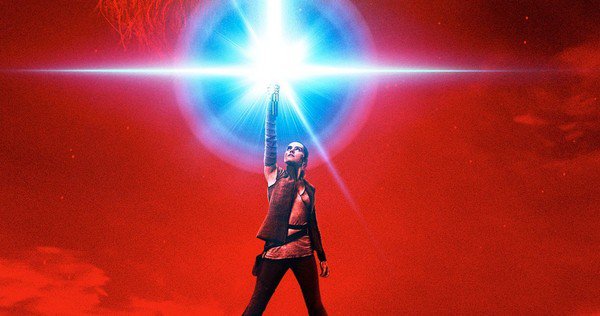
The Last Jedi, which is the title for the upcoming eighth instalment in the Star Wars saga signifies a bold jolt in audience expectation for the December 2017 release. Firstly, it breaks the tradition of the title for second movies in the trilogies referring to military actions- Empire Strikes Back and Attack of the Clones. Instead, the three-word title sharpens its focus on the nearly extinct light side of the force. Grammatically, the word Jedi has been simultaneously used as plural and singular as a quote from Episode II attests “You must realise there aren’t enough Jedi to protect the Republic. We’re keepers of the peace, not soldiers.”

The opening crawl for The Force Awakens and the following dialogue from Yoda in Return of the Jedi (“Luke, when gone am I… the last of the Jedi will you be.”) clearly alludes to The Last Jedi being Luke Skywalker. The notion is a tantalising because the events proceeding Episode VII scared Luke and it will be fascinating to see the burden he carries knowing he is indeed the last of an ancient order. Or perhaps, it could allude to Rey being the Last Jedi that will be under Luke’s tutelage. Finally, the choice of red for the outline of the Star Wars wording accentuates the urgency of the title and represents an homage to the title poster for the Revenge of the Jedi (The original name for the Episode VI before it was changed to Return of the Jedi)

Posted in Uncategorized | Leave a comment

Concise Review: Don’t Breathe (2016)

stephen-lang-in-dont-breathe1

Director Fede Alvarez’s quasi-balletic free roaming camera and forensic tracking shots effortlessly make Don’t Breathe a finely crafted exercise in pulse-pounding tension. However, the real horror of the picture are the revelations of the film that cast retributive justice in a frightening new light. This aspect is particularly accentuated by Stephen Lang’s impressive central performance. He portrays the character with a great feebleness and vulnerability while also imbuing the blind man with a matter of fact rationality and a terrifying, unpredictable nature. The result is a grim and original portrait of female violation that had echoes of the slasher films of yore and the Josef Fritzl case in 2008.

Posted in Uncategorized | Leave a comment

Review: La La Land (2017)

LLL d 12 _2353.NEF

La La Land is a charming and exemplary film that reminds the viewer of the romanticism of Hollywood’s better days as well as the virtues of the cinematic experience. The former is illustrated in a quiet moment when aspiring actress Mia Dolan (Emma Stone) is walking down a street. As she is making her way down a darkened avenue, an elegantly constructed tracking shot reveals an elaborate painting of many actors from the movies’ great past. The latter is encapsulated in a wonderful sequence in which Mia and Sebastian’s (Ryan Gosling) romance blossoms during a revival screening of Rebel Without a Cause.

These series of scenes are wonderfully directed by Damon Chazelle who juxtaposes the magic of the big screen experience with the transformative moments it can establish. He conveys this by showing the flickering light of the projector shine on the characters’ faces and having their hands meet, which culminates in a newfound intimacy.

The picture was shot in CinemaScope- resulting in an exuberant portrait of Los Angeles. The sequence that strengthens this depiction is the opening musical number called “Another Day of Sun.” It showcases an ambitious dance scene in the midst of a frustrating morning traffic jam.

However, the most astounding aspect of La La Land is in its excellent representation of Jazz. If Chazelle’s last film- Whiplash showed the blood, sweat and physical anguish in the pursuit being a Jazz drummer then La La Land is a genial advocation for the virtues of the musical genre. At the same time, the picture also typifies the inherent conflict in the improvisational staple of the iconic style.

The fundamental problem with the film comes from the imbalance of interest in the central characters’ dreams. While Chazelle provides many reasons for Mia wanting to become an actress, I never felt that they were compelling or stirring. The problem is compounded by the elusive nature of Mia’s one-woman play. The audience never gets a sense of its story, purpose or Mia’s reasoning for deciding to do it in the first place.

On the other hand, Sebastian’s dream of opening a Jazz club resonated because it comes from a deep-seated desire of artistic expression. In some early scenes, Sebastian plays a Jazz piece on the piano much to the chagrin of his boss who wants the young musician to play Christmas music. The small section of music that the character plays feels like the last dying breaths of the musical genre as it struggles to find relevance and resonance in modern times.

Interestingly, this thread is explored as Sebastian becomes a keyboardist for a Jazz band called The Messengers who are fronted by his former high school friend Keith (John Legend). Legend’s character represents the contemporary sceptic of Jazz who believes it must change to survive, as opposed to being a pristinely preserved antique attraction. Sebastian’s time in the band also introduces the question of how the practical concerns of life can be at odds with achieving one’s inmost desires.

Finally, Ryan Gosling’s performance as the pianist and Jazz aficionado is remarkable and represents his best one to date. Gosling combines his compelling silent work- exemplified in movies such as Drive and Only God Forgives along with his penchant for physical comedy- combined with an endearing, passionate and driven nature that provides Sebastian with remarkable depth. Moreover, his performance during the solo piano sections (Incidentally, Gosling plays all the piano pieces himself) called to mind the great soul bearing efforts of Ethan Hawke and Oscar Issac in Born to Be Blue and Inside Llewyn Davis respectively.

The final moments of the picture when Mia and Sebastian lock eyes across a crowded room represent the actor’s singularly striking moment in the film. He gives Mia a faint smile before sitting down and playing another song. The expression carries a touching universality because it conveys a tough exterior attempting to bury feelings of regret and sadness even in the face of achieving success. With this in mind, the film’s title and iconic idiom become a bittersweet irony- reinforcing the necessities of life taking precedence over the romanticism of dreaming.


Posted in Uncategorized | 1 Comment