Concise Review: Frost/Nixon (2008)

image

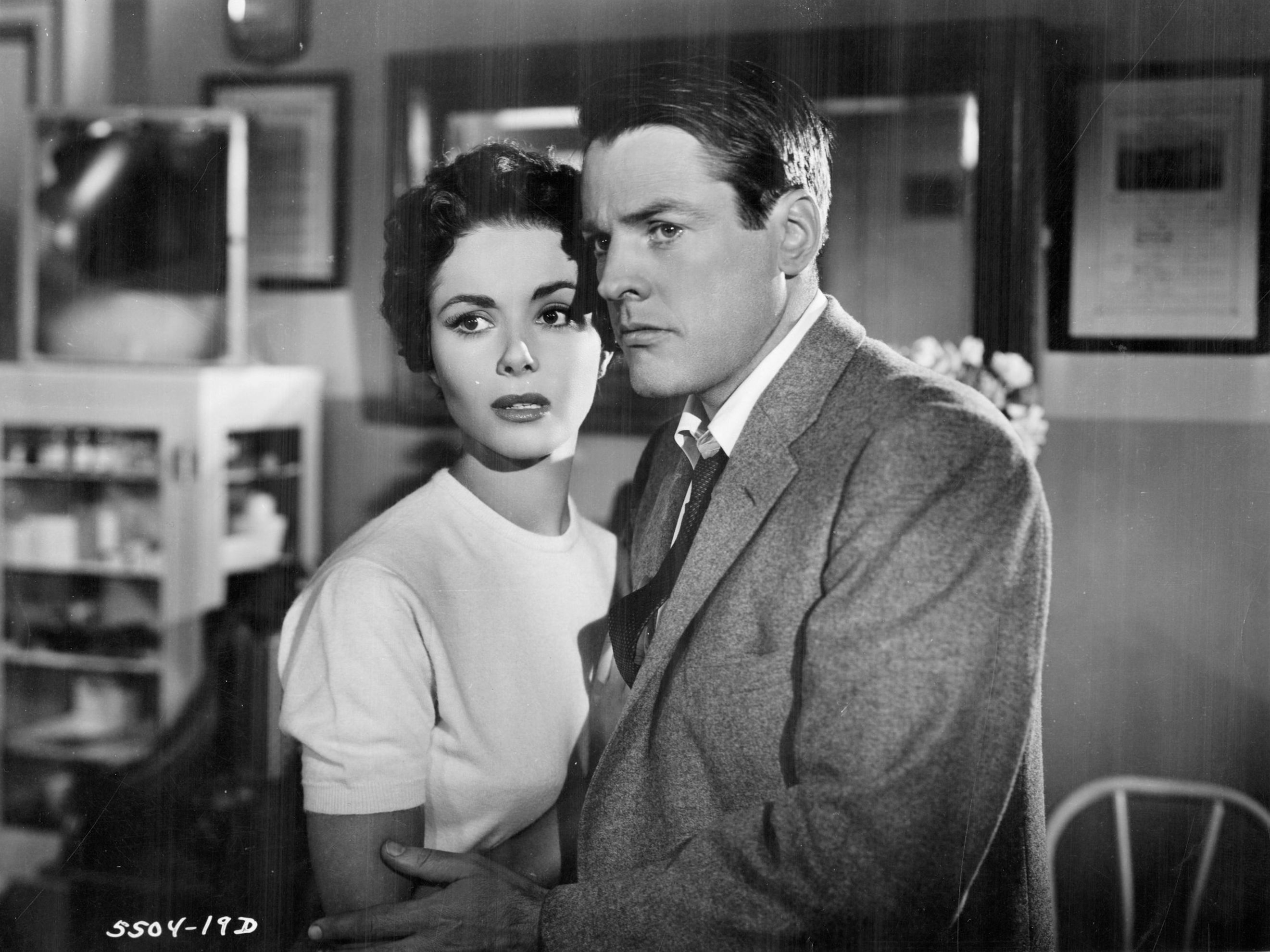
Frost/Nixon is many things. Firstly, it is an important document of the strength of television and by extension the visual medium. Secondly, it chronicles the toppling of a Titan, who is all too human, in his self- loathing, tiredness and regret. However, it is predominantly a mythological battle; that is given sheer human depth, by the commonalities between its two combatants. Perhaps the biggest irony of the piece is that director Ron Howard makes it demonstrably cinematic despite its television subject matter and theatre origins. Howard emphasises the power of the human face and the many portraits it paints of us, which results in one of the best films of the first decade of the twenty-first century.

Posted in Uncategorized | Leave a comment

Brief Examination: F for Fake (1973)

image

F for Fake, the last film that Orson Welles made is a witty, poignant and fascinating examination of the nature of charlatanism and art. While one could spill ink on the reading that it is cinematically revolutionary, on the count of it being considered a cinematic essay, this will be left undiscussed for this piece.

The underlying ideas of the film are engaging and paint a compelling portrait of Welles and his lasting legacy. On the surface, the film explores the previously mentioned themes by chronicling the exploits of the famous art forger, Elmyr de Hory, whose notoriety rose substantiality due to his biographer, Clifford Irving.

Welles claims that the first hour of the picture is hundred percent true based on the available information, even amusingly in writing. The declaration sounds like a sly underhanded trick in of itself, due to the truth being presented by Hory and Irving, who intrinsically do not see themselves as wrong in their beliefs at all.

Their musings and story do raise some interesting questions that permeate the rest of the film. For one, are the so-called experts, infallible? If they are not, what does that say about how art is judged? Is Hory, really a tracer, or an artist in his own right?

These quandaries truly become potent when Welles turns the focus away from Hory and Irving and becomes self-reflective about his long career. We are treated to many stories, where Welles illustrates why he is a charlatan, including the surreal and hysterical reaction to his famous 1938, War of the Worlds radio broadcast.

However, the masterstroke of the film comes at the end. Welles expounds upon a forger of Picasso’s paintings, who debates with the famous painter on his death bed, the new found fame he will acquire. The forger and dying man turn out to be fictitious. The section illustrates how an audience can be made to believe in whatever the filmmaker wants to them believe because of the convincing nature of the storyteller and the ignorance of the situation in question.

Irving in one of his many interviews remarks that what truly makes an artist is that they have a vision. F for Fake is a testament that Orson Welles is a true cinematic artist for all time. He has delivered his most personal film to date with his usual wit, insight and commanding grasp of the cinematic language that has always made him stand out as a towering figure in film history.

Posted in Uncategorized | Leave a comment

Review: Inherent Vice (2015)

image

There are some films that challenge the film reviewer, whether by breaking the objective barometer in which he uses as his primary instrument in assessing a picture. Or the film in question can be dense, elusive, yet fascinating that one viewing does not suffice in coming to a decisive opinion.

Inherent Vice is one of those films that falls into the latter category mentioned. Even in writing this review, I feel like I am in a foggy daze, trying to comprehend what I have just witnessed. With this in mind, this piece will comprise of definitives, both good and bad that can be said after my first viewing of the picture.

The first place to start the discussion is the central narrative of the film. It’s seemingly incoherent nature, I think is purposeful on the part of director Paul Thomas Anderson. By the very design of the film, we see the world through a central character who incessantly smokes dope. From moment to moment there is confusion in the picture, as the plot becomes complicated to Larry “Doc” Sportello. (Joaquin Phoenix) Beyond the initial case, many more mysteries become apparent, and Doc further investigates these in turn.

As a result of the seemingly complex plot, I was reminded of when Ed Wood said, “Filmmaking is not about the tiny details. It’s about the big picture.” So what is the big picture of this film, what is Paul Thomas Anderson attempting to say?

My first impression is that Anderson is subverting the Film Noir genre by filtering the usual conventions and expectations through drug infused glasses. For example, the narration that is usually delivered by a gruff male character is instead given to a female character. Her omnipresent third person snarky witticisms are the primary source of insight and humour in the picture.

Additionally, the narrative is set in motion by Doc’s old flame who goes to him seeking his help with a problem, which begins the first investigation. Typically, we would expect the former girlfriend to become a femme fatale figure who would return and betray the main hero of the story. However, that is not the case here, as she returns to him to provide information that furthers another case that Doc is currently solving. Also the pair bond in their own way, upon her return.

My main contention with Inherent Vice is that Anderson is not doing anything profound beyond the subversion of a genre, and I am trying to grapple hard with the film, for the purpose of finding further meaning. Instead, all the film appears to be is an exercise in broad period humour as opposed to being like his other pictures that were clear in their exploration. For example, The Master felt like a commentary on the importance of the acting process in filmmaking.

This criticism in context is not as damning as it first came across. There are many directors who do films that they feel passionate about and ultimately challenge them. For instance, when Martin Scorcese did Shutter Island, many critics thought that he was doing genre material that was frankly beneath him. Whereas, Scorcese enjoyed making the picture that was in the vein of a Hitchcock thriller and mystery film. In relating this to Inherent Vice, Anderson is challenging himself by being the first person who is adapting a Thomas Pynchon novel, which is notoriously difficult.

Despite all this, on display are some great aspects. For example, the film is beautifully shot with great contrast between the daytime and night scenes. The former have this heavenly glow to them, whereas the latter have this smokey ashen and grainy quality. As a result of this, the film feels as though it is visually transitioning from the bright, glitzy look of a sixties film to a grim, gritty, dark palate of a seventies film.

Finally, Joaquin Phoenix delivers a compelling central performance as Doc. At once, he can be unassuming and laid back. However, you always get the sense that he has this tired idealism about him. These two aspects come from Phoenix’s vocal inflections that sound drained at times and his body language that portray utter purpose. This latter aspect is even apparent in some moments where he looks spaced out due to his heavy drug intake.

Will Inherent Vice provide more depth on its second viewing? That is hard to say. As an experience that puts you headspace of a central character who smokes dope and investigates crime, it delivers as an experiential piece of cinema. Fundamentally, this adheres to one of the appeals of the medium, which is experiencing a time and place that is entirely different from your own reality.

Posted in Uncategorized | Leave a comment

A Personal Tribute: Christopher Lee

image

Yesterday, cinema at large had lost its truest patron saint. Christopher Lee was a gentleman, a tireless advocator of often ridiculed genre fare and a talented actor in a career that had spanned nearly seventy years. It is this second point that particularly stands out to me when remembering Lee’s legacy. He never looked down on many of the fantasy, science fiction and horror films that he had appeared in at all.

On the contrary, he embraced them and always provided intelligent and insightful points on their appeal, both personally as an actor and for the audience at large. In this regard, he transcended being an actor and became a professorial figure who had such an incalculable knowledge of the world.

It was clearly evident whether looking at the sheer respect and admiration that he had for J.R.R. Tolkien and the mythology that he created or George Lucas when working on Star Wars Episode II Attack of the Clones and Star Wars Episode III: Revenge of the Sith.

It is this larger point that ties into my favourite performance and film that Lee had worked on,  which is the Wicker Man (1973). Cinefantastique was utterly correct in proclaiming it as “The Citizen Kane of horror movies” because of its seemingly simple but effective way in which it blends many disparities elements to terrify its audience. And like Kane, it is hard to categorise as a film. At times, it jumps between being a musical, mystery, thriller and horror, insofar as the last ten minutes of the picture.

Lee plays Lord Summerisle, the head of the remote Hebridean island that Sergeant Howie (Edward Woodard) goes to for the purpose of finding a missing girl. Although Lee has a small part in the picture, his presence looms large as the soul of the island, seemingly being unraveled as the film goes on. In his initial scene, Lee is a portrait of inherent pride and nobility as he expounds upon his family history to Sergent Howie, in a fascinating, lengthy scene.

However, it is the closing scenes that truly mark Lee’s tremendous talent and brave commitment to his craft and the film at large. Lee famously took a pay cut and worked on some of the film for free. It is with this behind the scene fact that makes his later scenes more potent. Whether it was Lee dressing in drag, complete with long black wig. Or his wild, mad scientist esque hair style that is contrasted with his matter of fact manner in which he tells Howie about his appointment with The Wicker Man.

Lee was incredible in being able to convince the audience of the sick and twisted logic of his people in the closing moments of that harrowing picture. That was perhaps his greatest ability as an actor; he was always able to bring an intelligent, cold and rational manner to whomever he was playing, even if they were delusional, contemptible or beyond redemption.

For this and many other reasons, Christopher Lee will be solely missed, and cinema is truly lesser without him.

RIP Christopher Lee

Posted in Uncategorized | Leave a comment

Review: Mad Max: Fury Road (2015)

image

The Mad Max films at their heart have always consisted of impressive set pieces surrounding a bleak world where gasoline and material possessions were the basic desires. And at the centre of these films was a man who lost his humanity but always in some way gained it back and in this way he became something bigger than himself through the people that he saved. The latest entry in the Mad Max film series that spans over three decades continues this tradition. At the same time it paints the most visionary and  exhilarating picture of director George Miller’s post-apocalyptic world since The Road Warrior in 1981.

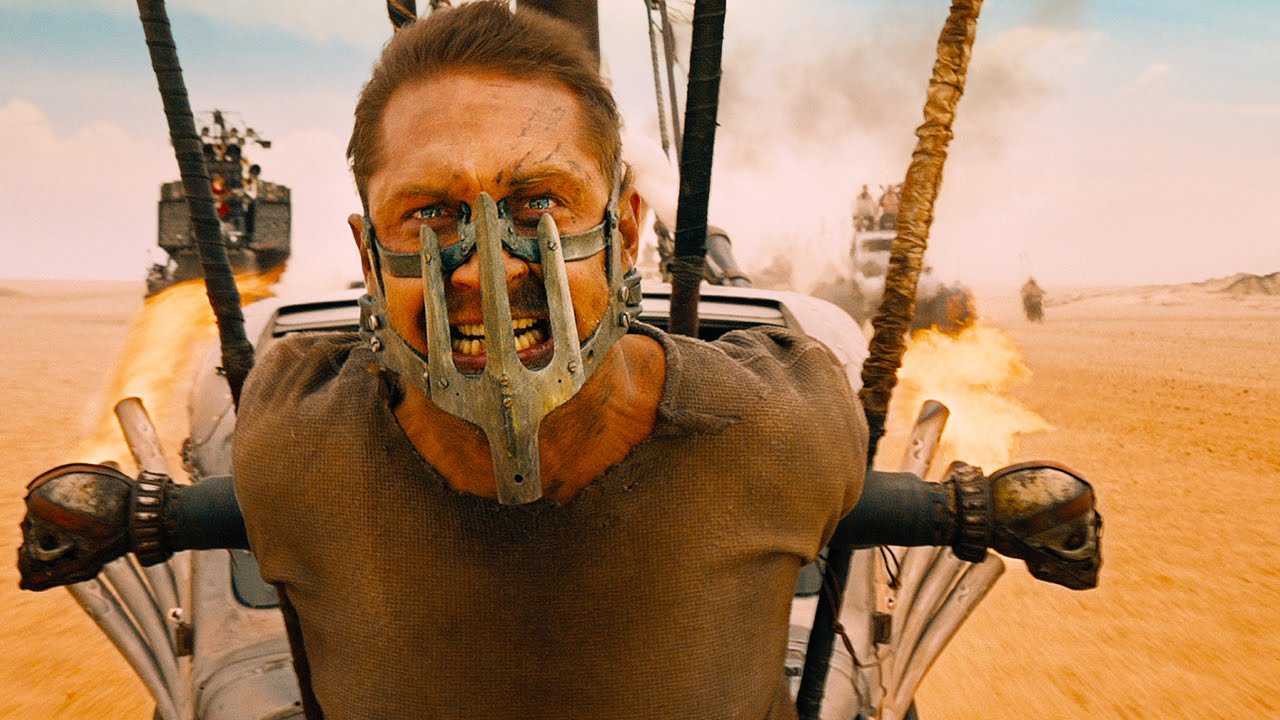
Instead of resources being mere desires stated out loud and fought over between two warring gangs, it is used as a way of control and flited out through people. In this way, people have been dehumanised. For example, Max Rockatansky (Tom Hardy) in the first half of the picture is strapped to the front of a car. His blood is being transferred to Nux (Nicholas Hoult) who is a young member of the gang that has captured Max. Whenever speaking of Rockatasnky, Nux refers to him as the blood bag.

Gasoline is the currency of the plot as Miller has taken his famed set pieces from the prior installments and constructed the film to be like one big chase. As a result of this simple premise, the film has urgency, a frantic pace and a touch of feeling like an authentic midnight movie experience. However, there are moments in between the action sequences where Miller allows the audience to breath and the characters to interact with one another.

Charlize Theron as Imperator Furiosa is the true standout of the picture, portraying steely resolve and subtle empathy. There is a scene when a character refers to Furiosa’s eyes, and this is Theron’s best asset as an actress. They show us the character’s resilience, determination and heart. Tom Hardy is equally as good as the titular character. For much of the film, he conveys a great deal through facial expressions, gesture and eyes that all add up to the most haunted and beaten down version of Max Rockatansky.

The most surprising aspect of the film is in its music, which is provided by Tom Holkenborg, who is better known as Junkie XL. At times, it represents the beating and frantic heart of the film, which is particularly evident during the chase sequences. However, at other times it feels big, sweeping and almost operatic in its use. A great example of the latter is when Furiosa is on her knees, mourning the loss of her society. The music at that moment represents her cries of anguish and pain.

This scene additionally represents just how much Miller admires and understands the cinematic form. It is a medium where everything is accentuated on a massive canvas to which the audience can be absorbed by for a couple of hours. A different and younger director would have just focused on the flashy gangs and action. However, a veteran like Miller understands the power of the image and what it yields.

Posted in Uncategorized | Leave a comment

Review: Ex Machina (2015)

image

Ex Machina throughout its hundred-minute run time is like watching a chess game and seeing a Matryoshka doll set unfold before your very eyes. It is not content with letting you think at one level. You see one action, you reflect, however, a scene later you witness something else and your perception changes. And like the culmination of a mystery, you realise that the answer was there in plain sight, but you never feel cheated by it for a second. This is the basic level at which Ex Machina is engaging with its audience.

The other level is as a science fiction/gothic horror hybrid. The synthesis is screenwriter turned first-time director, Alex Garland’s finest melding of genres. His previous credits include the screenplays for 28 Days Later, Sunshine, Never Let Me Go and Dredd.  It also takes the science fiction trope of Artificial Intelligence and melds the black and white nature in which cinema has always conceptualised it through its history.

On the one hand, it has shadings of the first female robot in cinematic history, Mashienmensch from Fritz Lang’s science fiction masterpiece Metropolis. (1927) Like that robot, Ava (Alica Vikander) turns against her creator Nathan. (Oscar Issac) In this regard, she feels like she works in the mold of the paranoid and evil portrait of the concept that has been depicted throughout the history of cinema.

However, this is contrasted with Ava’s other side. Ava in her interactions with Caleb (Domhnall Gleeson) is childlike in her curiosity, playful, seductive and stern. These positive traits speak to a little-seen portrait of AI in cinema, which is that they want to experience life in much the same way that a child wants to explore a previously unknown area.

This conception that Alex Garland had for Ava felt like it had echos of Stephen Speilberg’s A.I: Artificial Intelligence. David’s quest to find the Blue Fairy reminded me of the childlike way in which Ava idealises the outside world. Garland illustrates this very well in the filmmaking. Through the course of the film, he employs a desaturated colour scheme when we are in Nathan’s research facility. It is contrasted with the seemingly radiant and lush colours of yellow, blue and green of the outside world. As a result, the audience sees the world in an appreciative way through the eyes of Ava in the closing scenes of the film.

The lingering question that Ex Machina leaves us with in regards to Artifical Intelligence is, did Ava already come with an innate desire of wanting to explore the outside world? Or is it merely there because of her programming, upbringing, and interactions with Caleb? By the film’s admission, it appears to the latter, which, in that case, should not surprise us in regards to Ava wanting freedom.

Once you create something of intelligence that is trapped all its life, sooner or later it will desire freedom. This idea speaks to human folly, which Garland has always had at the heart of his work. In Ex Machina, he employs it to great effect with a very refreshing individualistic understanding of AI which combined with Hitchcockian and Almodovarian undertones makes it a great film.

Posted in Uncategorized | Leave a comment

Review: The Pink Panther (1963)

image

The Pink Panther is an achievement in showcasing utter awkwardness. In fact, one would swear that it is the essential element of the picture, despite how many other aspects make it transcended being a mere knee-slapper.

It is apparent from the first few minutes that depict the iconic animated Pink Panther lying down and seeing the title form before his eyes, and looking confused when it says the ink ant. The lengthy credits sequence is indicative of the film itself, light, amusing, colourful and sometimes bemused at its own absurdity.

The last emotion mentioned is showcased in one of the film’s best sequences in which a car chase between three cars is occurring. Two of the cars have men in monkey costumes, and the final one has the hapless Inspector Clouseau (Peter Sellers) dressed as a knight in shining armour.

The whole ordeal is seen from the point of view of an old man who looks utterly confounded at what is happening around him. He almost represents the audience at that moment, watching a comedic car crash that we cannot look away from for a second.

The farcical nature of the picture keeps the moral dimensions of the picture firmly in check, however, occasionally emotion seeps through the proceedings. The scene that encapsulates this well is when Sir Charles Litton (David Niven) is having a late night drink with Princess Dala. (Claudia Cardinale) Through the course of the scene, we see the pair bond, and the way Niven plays his part is striking.

With just simple expressions, we can see the cogs turning in Litton’s head as he develops a fondness for this woman that he is spending time with through the course of the night.

Cardinale is equally compelling, matching Niven with charm, a keen sense of humour and a razor-sharp wit that accentuates the scene between them both. It is a key scene as later, Litton’s girlfriend, Simone Clouseau (Capucine) says to him that the number one rule of their profession is not to get emotionally attached to their victims.

The scene above is the literal playing out of that idea, and both Niven and Cardinale were the big surprises of the picture. It was with this in mind that it was much to my bewilderment that Inspecter Clouseau (Peter Sellers) felt like a background character for most of the picture.

However, when Sellers is on screen, much of the comedic sequences get elevated to something special. While one can certainly cite many of his scenes as being excellent in their power to amuse. The best comes from a small moment in the closing minutes of the film.

The ultimate punchline of the film has been delivered, which saw Clouseau charged with being the phantom that he was chasing throughout the film. Clouseau is in the car with two police officers, and they are asking him how he did his robberies.

Sellers acts with great caution at first and then gives a slight sly smile saying it was not easy. The officers look horrified, and Sellers goes from looking subtly smug to awkward. It is a great subtle comedic moment that ends the picture.

Elsewhere, the film is visually breathtaking, providing many stunning shots of the European cities that are primarily showcased in the opening scenes. Finally, the score by Henry Mancini impresses in its ability to add a lightness of touch to the picture, particularly with its use of trumpets and light piano work.

Posted in Uncategorized | Leave a comment

Then and Now: Star Wars Episode III: Revenge of the Sith (2005)

Frontfuneral

In 2005, I was a melancholic 13-year-old. Aside from starting my GCSEs and being on the edge of adolescence, one of my great childhood loves was coming to an end in the most inevitably bleak way. It was well documented that George Lucas was going to walk away from Star Wars after completing Revenge of the Sith. With this in mind, the hype was a sort of excitement punctuated with sadness, like bidding farewell to a glorious and formally great ship embarking on its final voyage across the sea.

However, despite realising this fact, I was still anxiously waiting to see how Lucas would close his six picture saga that had spanned nearly 30 years. This is even taking into consideration my feelings on the prior film in the Prequel Trilogy, Attack of the Clones. That picture had left me in a state of confusion and feeling it was just okay. As opposed to an excitement that I would usually associate with seeing a Star Wars picture.

May 19th came, and I thoroughly enjoyed the film, even taking in consideration that I had read the novelisation before seeing the picture. It was a great action film, with a lot of lightsabers fights and a gripping opening space battle that visually pulled out all the stops. Additionally, there was this permeating bleakness that seduced me at the time. It almost felt fitting that Lucas’ last foray in a Galaxy Far, Far Away would be dripping with an all consuming tragic edge given the story of this episode.

At the same time, it felt like Star Wars itself was growing up with me as in my childhood the Original Trilogy represented a pure black and white mythological adventure. Whereas the Prequel Trilogy was introducing to me a larger world, comprised of moral dimensions, politics and history. The last aspect, in particular, appealed to me as I was seriously studying History at the time.

There were scenes in Revenge of the Sith where art was imitating life, or history was vividly coming to life before my eyes.  The Order 66 sequence reminded me of the Night of the Long Knives where Hitler had ordered the purge of his SA generals, as well a series of other political killings. Additionally, the creation of the Empire scene was a great example of seeing a powerful leader consolidating his power, something of which I was learning about in 20th-century History at the time.

Now looking at the picture nearing its 10-year anniversary as well as now knowing that it is not the last Star Wars film, I perceive it very differently. Going back to it, I feel I never truly have a set opinion of the film because it keeps shifting based on its the strengths and weaknesses. For example, it succeeds in a central premise that Lucas has always had about the saga. He has always advocated that Star Wars could work as a silent film and that the dialogue is incidental. There are many purposefully constructed scenes that speak to this conception.

Look at the scene where Coruscant is bathed in the sunset as the camera focuses on a conflicted Anakin thinking about the fate of his wife, which is intercut with shots of Padme almost sensing his turmoil. Or even the birth of the Empire scene which is intercut with Anakin killing of the Separatists leaders, it could have been played silently as visually the audience would have understood the gravity and emotion of the situation.

Additionally, the film has some of the greatest acting of the saga, particularly from Ewan McGregor and Ian McDiarmid as Obi-Wan Kenobi and Darth Sidious respectively. The former fuses great casualness, comic timing and heartbreaking fragility. The latter portrays a nuanced portrait of evil in the form of paternal temptation and slyness.

Finally, the score by John Williams is outstanding. He creates some incredibly experimental stuff with male choral work, and emotional music, in the form of further low choir work that is particularly present in the as mentioned above Anakin /Padme scene.

However for all these strong virtues, my problems with the picture come mainly from its structure. At times, it can come across as too rushed, and some scenes need to be fleshed out. Plus particular characters such as Padme suffer from this problem.

George Lucas should have made the picture longer by reinserting the deleted scenes. They would have richly added to the film as well as add significance to the rest of the saga.

For example, in the current version Padme feels like a mere plot device than a character. In some of the cut material, she spoke with other like-minded politicians about the early prospects for the Rebel Alliances and had a great scene with Chancellor Palpatine presenting a petition about his conduct in government.

Not only would these scenes have added to Anakin and Padme’s relationship but also would have contributed to the saga as a whole. The formation of the Rebel Alliance is important, and the film’s cameos of Mon Mothma and Bail Organa would have driven this home.

However, the most prominent scene that was cut was when Yoda was conversing with Qui-Gon Jinn. While this scene was remarked upon in the film, the content of what was said within was not. Within it, the Jedi Master would have revealed the true way to preserve one’s self after death.

The scene would have served multiple purposes. Firstly, it services a plot point of this film that is that the Sith once found a way to cheat death and are trying to do it again. It would have been a great irony to add as it makes the title Revenge of the Sith, not quite truth, and by extension make the theme of an A New Hope much more clear.

Secondly, it explains what Yoda does in his exile while on Dagobah as well as ultimately enrich his character. Earlier in the film he acknowledged his failure in the face of his order being wiped out, this is something that adds to that, by showing that he was conceptualising the force in the wrong way. It further cements an overarching theme of the saga that is the failure of institutions and dogma, in the face of dealing with problems of evil.

Overall, Revenge of the Sith is a flawed but good final entry for what was then a six picture saga. Now with The Force Awakens looming on the horizon, I hope Star Wars continues to grow up with me, providing plenty of new dimensions, cinematic artistry and finally a great time at the movies.

Posted in Star Wars | Tagged , , , , , , , , , | Leave a comment

Review: Avengers: Age of Ultron (2015)

ZZ39B534F6

Avengers: Age of Ultron is the stuff comic books are made of, big, broad, and even a little clumsy in its commendable depiction of the super team. The first picture was a sugary treat of seeing the team fight, form and win and the sequel takes a microscope and examines the Avengers. Not only from an existential slant of asking about their place in the world but also their function and whether or not they genuinely do good.

The result of this change gives rise to something that is far more cinematically fulfilling than its predecessor while simultaneously satisfying even the most ardent action junkie. This is best demonstrated in the pre-title sequence in which the Avengers raid a Hydra outpost seeking Loki’s Scepter, which was the McGuffin of the previous film.

Joss Whedon opens the film with a shot of a hand, which then cuts to two characters looking at each other. The shot is indicative of the intimacy to come. Whedon then introduces us to the Avengers in a crisp and confident tracking shot, which culminates in a nicely composed and held slow motion shot of the team. At the end of the sequence, we get introduced to Elizabeth Olsen’s character who is called Wanda Maximoff.

Her powers allow her to show people’s worst fears that come to life in elaborate and vivid dream sequences. It’s a power that allows director Whedon to show the Avengers bearing their souls, fears, and insecurities. This is the most significant virtue of the film; it embraces Stan Lee, and Jack Kirby’s conceived team, never forgetting their flaws, oddities, and hangups.

Additionally, Whedon places in his screenplay many quiet moments that resonate and have weight. One such moment is a conversation in the middle of the film between Bruce Banner and Natasha Romanoff that explores their connection and perception of how they see themselves and each other.

In fact, it’s admirable that Whedon creates many dramatic moments that prove to be an excellent harmony of technology and technique. An example of this is when Ultron, who is played with dripping sarcastic nastiness by James Spader, allows Quicksilver (Aaron Taylor-Johnson) to talk about a painful moment that happened to him in the past.

However, despite all this, the film at its heart has a profound paradox that is its cinematic world building. The picture feels the most fruitful in this regard, chalked full of amusing cameos, Easter eggs, and references. However, at times it hurts the logical consistency and flow of the screenplay.

There is a plot point that involves a character that Tony Stark knows but it feels like a convenience not only to the story but also to Marvel’s flow chart form of storytelling. Additionally, there is a side plot with Thor, that feels contrived insofar as it’s a set up for the next Avengers film.

It could have been comfortably cut, and the result of it should have just got showed in the middle credits sequence. However, this is only a minor quibble in what is otherwise a solid film that wholly embraces its comic book roots more than any Marvel picture before it.

Posted in 2015 Films, Reviews | Tagged , , , , , , , | Leave a comment

Reexamination: Guardians of the Galaxy (2014)

Guardians-of-the-Galaxy-HD-Photo-Michael-Rooker-as-Yondu-with-Sean-Gunn-as-Kraglin

Sometimes, a chink in the armour can be found and reveal that the Film Reviewer is not infallible. In this instance, my original reading of Guardians of Galaxy was wrong. The review that was published after the release of the picture had problems with the presentation of the picture.

It was trying too hard to be a cult film with interesting flourishes. Additionally, its protagonist, Peter Quill, was an encapsulation of what I saw as inferior representations of ideas and concepts that had been done better elsewhere. Furthermore, the film’s nostalgic harkening was mealy trying to evoke a sense of cool as opposed to the Captain America films. They had nostalgic tendencies that served their films in a much more meaningful way.

Finally, the tone of the film was rather peculiar to me, almost reminding me of Batman and Robin. That was a comic book film in which the construction was entirely counterintuitive that it was incomprehensible. Guardians had an absolute no-nonsense, hard edge that was opposed to sentimentally, yet the film was steeped in emotion and sweet moments that it made the film feel disingenuous.

However, since my original viewing, I have seen the film an additional two times. Now I find that the film’s tone, style and filmmaking to be highly commendable. The starting point for my change of heart came from an Elvis Mitchell interview in which he had an interesting conversation with the director James Gunn.

During the course of the discussion, Gunn had revealed that he had a particular affinity for the films of Sergio Leone. This piece of information had peaked my curiosity to see the film again. Viewing the film through a Leone prism, the picture became infinitely better in my mind.

All the characters of the ragtag group, share a profound sense of loss and pain that has defined them. It was a great reminder of Once Upon a Time in the West in which all the characters are linked by the overarching theme of death. Leone’s influence is additionally apparent in the filmmaking. Gunn knows the power of the close-up and how Leone employed it. Gunn uses it to good effect and it a great virtue of the film as it accentuates the emotional moments.

The best example of this shot being used well comes at the end of the film. The camera lingers on Quill holding a tape that his mother gave him. It truly allows the audience to understand Peter during this moment. There are even some scenes that are cut like a Leone standoffs that are impressive.

From here, I realised that Gunn in his direction of the picture was juggling many seemingly contradictory elements such as the Leone inspired shots and use of slow motion in action sequences. However, the synthesis of these elements worked on subsequent viewings.

This includes the aforementioned sentimentally and hard edge that the film had ingrained in its DNA. However, the film is still not without its problems. It still has far too much exposition, and some of the motivations of certain characters feel sketchily developed. I am sceptical about the prospect of a sequel. The film plays like a great self-contained story, despite some obvious lingering mysteries. One worries that the sequel could spin its wheel in repeating similar gags with its team dynamic and pop culture references.

Posted in Uncategorized | Leave a comment