Concise Review: Tangerine (2015)

tangerine.0.0.png

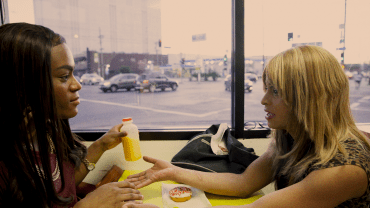
Tangerine is a vibrant picture that in its every frame imbues creativity, and sheer humanism. Additionally, it is a striking example of new form giving rise to the one of the appeals of cinema, which is experiencing a unique time and place, which is fundamentally different from our own. The film was shot with the use of many IPhone 5s devices. Despite this fact, Tinsel Town comes to radiant and stunning life with breathtaking tracking shots, which makes one feel like that they are bystanders watching the characters. Finally, the film has a natural state of being about its trans-gendered individuals, which adds to the authenticity of the picture. It does not feel the need to rationalise nor moralise their gender preferences.

Posted in Uncategorized | Leave a comment

Review: Inglorious Bastards (2009)

shoshanna

In my mind, Inglorious Bastards has always been Quentin Tarantino’s most polarising film. At best one can say it is a fascinating, controversial and wholly original portrait of a crucial period during the Second World War. At worst one can characterise it as an excessive, misleading, and ultimately pointless, adolescent effort. However, on this recent viewing of the picture, the film opened itself up to me and presented me with a much more interesting reading of its thematic explorations.

Primarily, the film is about a propaganda war with cinema being used as a tool to give countries and people a mythical grandeur. For example, the titular Bastards are seen by Hitler as spectral figures who have evaded capture. Additionally, he sees one of the soldiers in the infamous group who is called “The Bear Jew” as an actual Golem from Jewish folklore. The rumours and soldiers testimonies of their actions deeply disturb him and his cult of personality that he later decides that his attendance at a lavish German Film Night at a cinema in Paris is crucial.

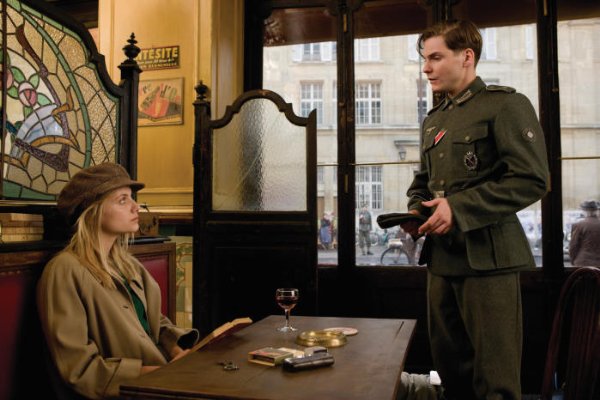
The picture that is being shown at said event is entitled “Nation’s Pride.” It chronicles the three days survival of a lone German sniper called Fredrick Zoller and his subsequent killing of 250 enemy soldiers. One gets the distinct impression that the film represents a morale boost for the German High Command. More crucially, the picture is used as a tool to mythologise and immortalise a recent victory, which is characteristic of the primary goals of the Third Reich. Daniel Bruhl, who plays Zoller, is the film’s most fascinating performance as Bruhl imbues the character with contrary traits of arrogance and bashfulness, which results in the most interesting aspect of the film. In fact, one of the picture’s smallest moments casts the most considerable impression.

In the aftermath of the death of Zoller at the hands of Shosanna Dreyfus (Melanie Laurent), the young Jewish woman and projectionist of “Nation’s Pride.” observes the young decorated war hero in the film. She sees his vulnerability and abject fear of the situation and then she looks back at his dead body and casts this sad expression. For the first time, she can look beyond the mythic façade as well as the Nazi uniform and be reminded that she killed a human being.

The moment is also indicative of a recurring theme in the film, in which the actual truth shatters perceived truth. This theme is magnificently surmised by Col. Hans Landa (Christoph Waltz) at the beginning of the film when he says, “I love rumours! Facts can be so misleading, where rumours, true or false, are often revealing.” Tarantino employs this on a personal level when characters confront one another on their reputations. For example, near the end of the picture, Landa defensively recoils at his title of “The Jew Hunter.” and remarks upon the nature of one of the captured Bastards’ nicknames, “The Little Man.”

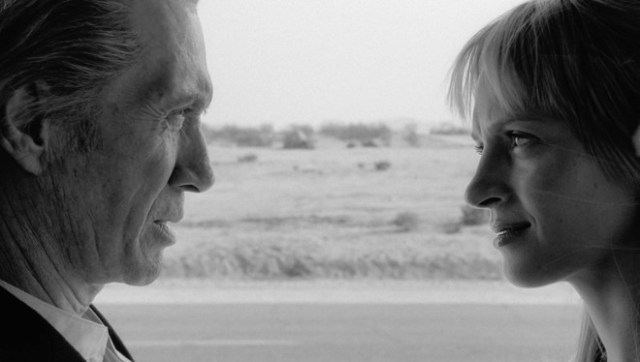
Lt Aldo Raine smugly says at the end of the picture, “I think this might be my masterpiece.” Inglorious Basterds is not Quentin Tarantino’s masterpiece but it is his most sophisticated film in expounding upon the power and virtue of the cinematic medium.

Posted in Uncategorized | Leave a comment

Review: The Hateful Eight (2016)

NE0mrSlMuPzV43_1_b

Quentin Tarantino’s 8th film, The Hateful Eight is a fascinating revisitation of his central thematic fixation, which fundamentally grows into a budding new form of expression for the black-humoured and highly cineliterate auteurist.

Tarantino’s exploration and presentation of the self-appointed persona are very much ingrained in the fabric of the film. Many of the title characters are taking on personas when staying at “Minnie’s Haberdashery.” In fact, one could infer that each of their roles is Tarantino’s illustrations of different approaches to performance. Oswaldo Mobray (Tim Roth) feels like an exercise in over the top scenery chewing. He perhaps tries too hard in attempting to convince people of the illusion. Meanwhile, Joe Gage (Micheal Madsen) feels like a purposeful side character, as he keeps to himself and does not comment on the boiling political tension in the cabin. Finally, Bob (Demián Bichir) feels like someone who is attempting to play a part, but you can see through the act and persona straight away as he is extremely one-note and reactionary.

This idea of the self-constructed persona takes on richer thematic resonance with a twist near the end of the film. It’s established that the audience has been witnessing a constructed representation of “Minnie’s Haberdashery” as the day before the current events of the film- Jody Domergue (Channing Tatum) and his gang kill everybody in the secluded place and lie in waiting to rescue Dasiy Domergue. (Jennifer Jason Leigh) In this stretch of ten-fifteen minutes, the audience witnesses the expensively bountied bandits attempt to construct a conniving scene. Jody even makes a case for letting General Sanford “Sandy” Smithers live due to how it will make the scene feel more authentic as opposed pity for the old man’s life. These moments represent an evolution for Tarantino.

While his pictures have always been novelistic in structure, which is most evident by the chapter headings and the use of time feeling like paragraphs. In The Hateful Eight, Tarantino has made a film that is inherently stagey, which fundamentally feels of a piece with the themes and structure of his films. For example, the previously mentioned scene seems like Tarantino creating a new theme of the self-constructed scene, which greatly synthesis with his typical narrative set up of the aftermath of a significant event, such as a robbery, massacre or death.

Despite the staginess of the film, Tarantino inherently adheres to some of the axioms of the cinematic medium. In his use of Ultra Panavision 70, Tarantino reminds the viewer that cinema can be incredibly potent and powerful because of its focus on faces and the effect they have on us. The use also punctuates his newly minted theme of the self-constructed scene as it adds detail and texture to the scene in question. It is also a firm reminder of the experiential and voyeuristic nature of cinema. Rather, then witness an abstract scenery change like one would get on stage, we observe the real-time making of a scene, which in some way makes us complicit as viewers.

Posted in Uncategorized | Leave a comment

Concise Review: The Deep Blue Sea (2011)

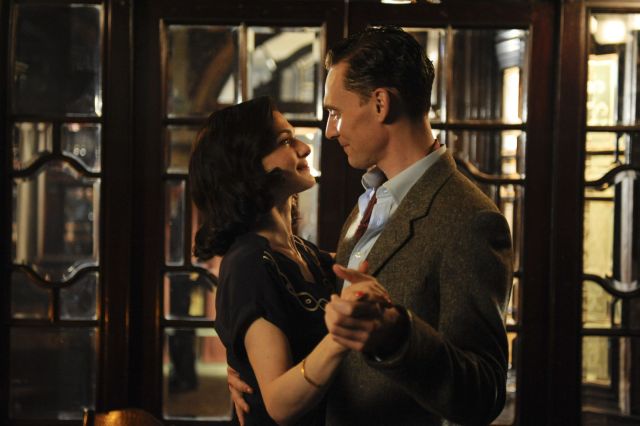
Tom-Hiddleston-The-Deep-Blue-Sea-Movie-Stills-tom-hiddleston-26445563-1400-932

The Deep Blue Sea is the cinematic equivalent of seeing an intense flame flicker and eventually extinguish in a mournful manner. The film charts the passionate affair that Hester Collyer (Rachel Weisz) has with a former Second World War RAF pilot- Freddie Page. (Tom Hiddleston) Rather than being a societal condemnation of the central plot point; Blue Sea is instead a powerful and potent exploration of Collyer’s conscience and mindset in the midst of this forlorn period of her life.

Some of the film’s early scenes effectively illustrate this central idea as the audience is shown impressionistic flashbacks of Collyer’s time with Page. In the first five minutes of the picture, director Terrance Davies effortlessly makes the film purposefully fleeting, which gives the film this acute sense of unreality. Nearly every shot within this brief time span last a mere second, and it truly conveys the transient nature of love and time.

However, Davies is not a slave to this surreal structure as the social values of 1950s Britain is very much ingrained in the fabric of the picture and work in showcasing the thematic exploration of love in the film. For example, in perhaps the most crucial scene of the picture, Hester’s mother in law expounds upon the destructive nature of passion by simply stating that “It always leads to something ugly.”

The scene is important in setting up the conflict between passion and devotion. These are two essential elements of love that the film explores and ultimately it shows a balance between both is required if a relationship is to flourish. This conclusion called to mind the Aristotelian principle of the Golden Mean, which states that if one wants to live a virtuous life, then their actions must always be between two extremes. The Deep Blue Sea also functions as a vivid illustration of this Aristotelian doctrine.

Posted in Rare Reviews | Leave a comment

Year in Review: The Top Ten Films of 2015

1) Mad Max Fury Road

charlizetheronmadm_3320058b

A veteran like Miller understands the power of the image and what it yields, which is on full display in this visionary post-apocalyptic film.

2) Whiplash

Whiplash

An exhilarating and lingering depiction of ambition.

3) Bridge of Spies

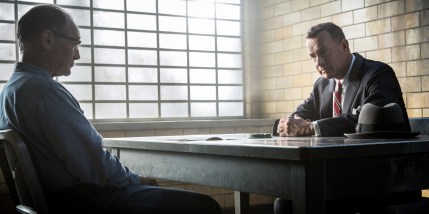
ST. JAMES PLACE

A perfectly crafted period picture that captures the Cold War in all its murky and paranoid detail.

4) It Follows

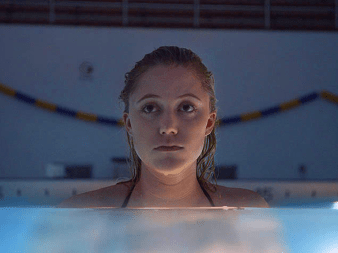
ItFollows3-1024x768

A fascinating and loving embrace of the slasher genre that conceptualises death in a frightening new way.

5) Ex Machina

Ex Machina film still

The cinematic equivalent of seeing a Chess Game unfold.

6) Star Wars Episode VII: The Force Awakens

2015-12-21-1450662393-4622950-11875118_1007880092596925_2204135516599208531_o

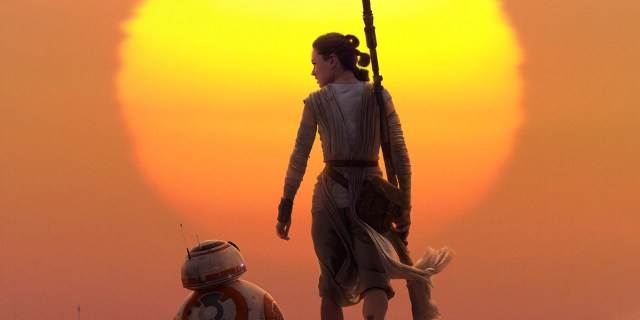
The Force Awakens greatly articulates and expounds upon the appeal of the enduring Star Wars saga.

7) Slow West

lead_960

A fundamentally tragic Western that chronicles the changing perspectives of two men’s outlook on life.

8) Inherent Vice

inherent-vice-feature

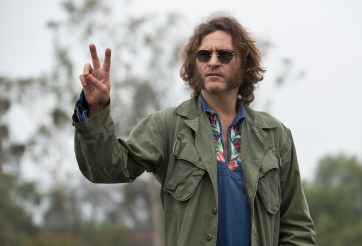
A superb piece of experiential cinema and admirable adaptation of Thomas Pynchon’s dense and psychedelic novel.

9) Macbeth 

macbeth-2015-movie-poster-wallpapers-800x500

Nature and War are at the heart of this commendably artful retelling of William Shakespeare’s powerful tragedy.

10) Crimson Peak

crimson-peak-14-2-1500x844

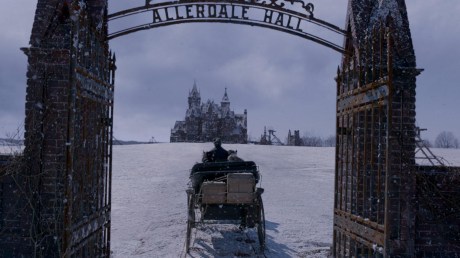
A fantastic harmony between Gothic horror and the exuberant, surreal style of Italian horror cinema.

Posted in Uncategorized | Leave a comment

Concise Review: Slow West (2015)

SlowWest

In Slow West, the West bursts with bountiful colour, heightened optimistic starry skies and entertaining, quirky strangers. At least, this is the West seen through the eyes of a young man called Jay Cavendish (Kodi Smit-McPhee) whose immediate goal is to search for his long-lost sweetheart- Rose. (Caren Pistorius)

Slow West primarily works because of this intrinsic optimistic world-view and its interplay with the traditional conception of the West. The harshness and immorality of this latter idea of the West are represented by Silas Selleck (Micheal Fassbender) He believes that there nothing else to living other than survival. And part of the film’s fascination is how his world view is shaped and changed by Jay, who he initially deems as too positive for his sake.

As Selleck, Fassbender delivers his most subtle performance to date as the changes in his character are expectedly conveyed through body language, vocal tones and demeanour. All these three elements are wonderfully encapsulated in the closing scene as Selleck sees Jay lying dead in the corner of the house in which he enters. His reaction upon seeing his fallen partner is one of utter admiration and sadness as opposed to annoyance and contempt as portrayed earlier in the film.

Finally, Slow West marks the directorial debut of John Maclean and is commendable what Maclean achieves in his first picture. From these surreal and almost Andersonian remembrance scenes to these bleak and tense action sequences that have small, poignant character moments. Maclean has fundamentally made a tragic Western, which chronicles the changing perspectives of two men’s life within it.

Posted in Uncategorized | Leave a comment

Concise Review: True Romance (1993)

2918

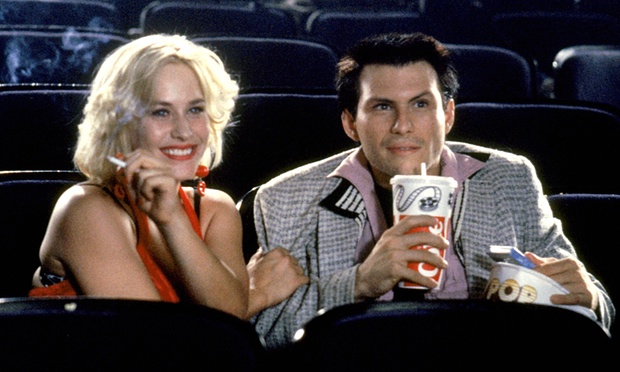
True Romance is a love story that is worthy of the movies. At times, it is idealised and sincere. However, on other occasions, it is tough and dangerous. The biggest strength of the film is that it expertly balances these two disparate elements without ever feeling inauthentic or whiplash-inducing. The result is a soft gooey affair with an inherent hard edge. In fact, some of its strange moments such as Clarence (Christian Slater) having conversations with a ghost of Elvis Presley mark the film at its most fascinating. Both the lovers are not perfect, whether, by their background or traits, they are shown as real and authentic human beings.

And their overriding goal of running away and making a life for themselves feels instantly universal. This simple conceit makes the outlandish and terrifying encounters that they come across feel ever more compelling. But it also makes the film feel effortless and memorable, whether talking about Gary Oldman’s strange and frightening performance as a dread locked pimp or Tony Scott’s visceral roller coaster scene that cleverly evokes the feeling of excitement and dizziness. True Romance is also a film full of scary and charming small moments, which is one of the reasons why it has endured for over twenty years.

Posted in Brief Consideration, Brief Considerations, Initial Impression | Tagged , , , , , , , , , , , | Leave a comment

Concise Review: The Man From Uncle (2015)

man-uncle-movie-review

The Man from Uncle is a pure stylish exercise and embrace of the sixties spy picture that one has to admire Guy Ritchie’s directorial prowess in evoking this period. From ingenious uses of split screen to a rich colour palate, Ritchie has commendably captured the inherent exotic travelogue quality that characterised many of the spy pictures of that era. However, despite this substantial primary virtue, at the heart of the film resides a deep seeded problem. The picture is too smirky for its own good.

This aspect is most evident in the performances. Henry Cavil plays Napoleon Solo like an American, who has ingested the collective works of Roger Moore, which results in an amusing, brash and temperate performance. This fundamental problem that is centrally evident in Solo’s character nullifies any sincere attempts at drama, moments of sustained tension and Cold War intrigue. The tone is so perversive that it even seems that the historical conflict can be solved over cold glasses of beers as opposed to moments of profound trust with other nations.

Posted in Uncategorized | Leave a comment

Review: The Force Awakens (2015)

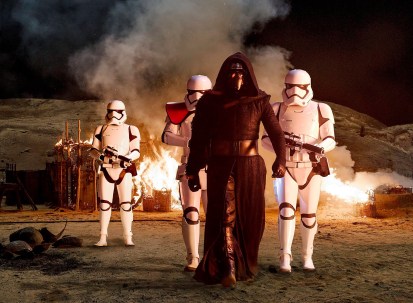
star-wars-imax-2400x1200-758998644677

The Force Awakens greatly articulates and expounds upon the appeal of the enduring Star Wars saga. In fact, at times, it almost seems inconceivable how well the picture reconciles the various aspects of the film series. From its goofy absurdity, comedic edge and the inherent mythical portrait of good and evil.

The former of which is lovingly realised in a castle bar sequence that bursts with authentic organic life via its various creature effects. The latter manifests itself in amusing sequences where Finn (John Boyega) pretends to be a member of the Resistance to Rey (Daisy Ridley) Boyega is commendably heartfelt and eager, almost representing an excited avatar for the Star Wars fans in the audience. On the other hand, Ridley in her first on-screen performances shines with a commanding screen presence that makes Rey – an engaging and resilient character. Some of her best moments are with the film’s central villain, Kylo Ren (Adam Driver) Driver is the true revelation of the film with his sweat-inducing intensity coupled with a fascinatingly purposeful physicality.

Inspired by directors such as John Ford, Akira Kurosawa and Terrance Malick, director JJ Abrams has made a visually breathtaking picture, which has some great painterly shot compositions. The most striking example is the 360-degree panning shot that shows two characters on a mountaintop. The moment is a great cinematic example of the mythological heft of the saga. But the sound design proves to be The Force Awakens’s secret weapon as it punctuates moments with great clarity and weight. For example, Kylo’s lightsaber crackles with a terrifying unstable edge that fills scenes with a newfound dread and tension.

However, The Force Awakens primarily succeeds because of its dramatic illustration of good and evil. This is most effectively showcased in a scene over a long bridge where one character tries to comfort and reconcile with his son. The potency of the choice between the two concepts is amazingly realised in this tension-filled scene as a father is willing to forgive his son’s actions and how the son reacts to this given his personal conflict with what side of the Force he is choosing to align with. It truly is one of the saga’s best dramatic moments.

Nevertheless, the picture is not without its problems. Despite the emotional and sweeping final act, the film fails to deliver an exciting and kinetic space battle in the vein of its predecessors, which is a shame given the set up for the dogfight in question. As well as the sheer rich cinematic moments that these scenes have yielded in the past. From the masterful editing of the Battle of Yavin in A New Hope to the ingenious opening tracking shot of Revenge of the Sith. Additionally, the film has some glaring plot contrivances that become obvious with even a passing thought. Moreover, the design and effects of Supreme Leader Snoke were underwhelming to say the least. To date, the character represents Andy Serkis’s least engaging and dynamic performance and a far cry from his magnificent CGI performances in the past.


Posted in 2015 Films | Tagged , , , , , , , , , , , | Leave a comment

Concise Review: Kill Bill Volume 2 (2004)

575_killbill2-e1480781253621-660x374

If Kill Bill Volume 1 was an excessive, dramatically deficient and ultimately pointless exercise in directorial flexing. Then Volume 2 is the complete antithesis, emotional, inherently dramatic and once again indicative of Quentin Tarantino’s primary strength, which is providing fascinating interpretations of schlocky and often overlooked genre fare. For example, in the last picture, Tarantino paid tribute to Sergio Leone through an Eastern filter with the climactic sword fight with The Bride and O-Ren Ishii. However, he uses Leone here to fuel his dramatic scenes, which give them an extra potency and emotional resonance.

The best example of this is when The Bride confronts Elle Driver before their showdown. Tarantino cuts the sequence like Leone would with intense buildup as well dramatic and lingering closeups. From a narrative point of view, the sequence reveals that Ellie killed The Bride’s master. Despite Daryl Hannah’s cartoony line reading of this revelation, the scene represents Tarantino’s finest melding of Eastern and Western genre material. It effortlessly synthesises dramatic eastern narrative heft and western cinematic form.

Volume 2’s shining virtue is that its characters feel more real and rounded as opposed to one note figures trying to embody a sense of cool. For example, the showdown of words with Bill and The Bride at the end of the picture is remarkable in its presentation of two broken human beings who have an utter admiration and equal contempt of one another.

Their interaction carries extra weight when it is at the service of Tarantino’s primary theme of characters taking on personas and roles. In the opening scene, The Bride introduces Bill as her father to her future husband. These moments crackle with a bitter feeling as the audience knows the outcome as well a slight dark comedic edge that comes from David Carradine’s smeary, judgemental line readings.

However, the most remarkable moment in Kill Bill Volume 2 is a scene at near the end of the picture where The Bride is lying on her bathroom floor, crying and laughing in equal measures. It is an enduring image that illustrates that vengeance is a double-edged sword. It can be both upsetting and soul-crushing, but also satisfying and wholly cathartic.

Posted in Reviews | Tagged , , , , , , , , , | Leave a comment