Review: Steve Jobs (2015)

steve-jobs-scene2

Steve Jobs is a fascinating and magnetic character study of the renowned American inventor and technological entrepreneur. It succeeds in crafting a structure that feels immediate and inherently dramatic. Screenwriter Aaron Sorkin conceives of each act as a build up to a launch of a new product, which results in a fourteen-year focus of Jobs’ life. The outcome is seemingly small moments that feel like momentary ripples but in actuality have repercussions in the final act. The best example of this is a little moment where Steve Jobs (Michael Fassbender) is complaining about his coverage in Time magazine in the first act.

At first, it feels like a trivial moment. However, in the third act, the moment comes back to haunt him as the marketing executive for Apple and Jobs’ most trusted friend, Joanna Hoffman (Kate Winslet) explains to him the actual implications of that magazine coverage for Jobs and the product he was promoting at the time. This moment also speaks to a recurring point that happens throughout the film, which is Jobs’ delusions that are unraveled one by one throughout the course of the final act.

As the co-founder of Apple, Micheal Fassbender delivers his best performance to date. In the early scenes, he plays the egomaniacal Jobs with a sense of animalistic savagery, which ultimately makes him unsettling and unpredictable in his behaviour. Sorkin writes Jobs as a dangerous person whose terrifying tendencies are contained within the framework of innovation and marketing. Some of the close-ups in the first act of Jobs, Fassbender looks frighteningly demonic and unhinged.

However, Fassbender casts the most substantial impression in the third act when Jobs is unveiling the iMac G3. In this act, Fassbender’s previous viciousness is now replaced with a deep seeded regret and sense of potent woundedness. These moments are best showcased in a scene when Jobs is trying to calm himself down by going through a speech for his product launch. However, he keeps seeing momentary flashes of his daughter when she was five years old. Here Fassbender plays Jobs like someone who is burdened by his actions, despite the success he has achieved.

Additionally, Fassbender in this acts has a great calm casualness which was an enduring characteristic of Steve Jobs when presenting Apple’s new products. The previously mentioned isolated scene brings to light an interesting criticism that had been leveled at the picture, which film critic Josh Larsen articulated in his review when he stated that the film is “A screenplay in a movie’s clothing, Steve Jobs is undeniably an Aaron Sorkin film.”

Undoubtedly, Steve Jobs could have contained more sequences that are indicative of Danny Boyle’s directorial style. However, the film has enough cinematic flourishes that prevent it from being stagey. Boyle showcases sweeping audience shots that at once feel realistic in showing the enthusiasm of the waiting crowd and, on the other hand, they feel like lucid visual representations of Jobs’ mindset. In fact, the strongest cinematic moments of Steve Jobs is when it is working in this latter framework, which is illustrating ideas within Jobs’ mindscape.

For example, in an intimate confrontation scene between Jobs and Hoffman, he goes at length about Skylab, which was an unmanned data gathering satellite for NASA. While Jobs discuss what this means for his current strategy, Boyle shows us some real life footage of that incident which plays out on the wall that Jobs has he back to in the shot. The harmony between words and images in this moment is sublime.

The scene ends with Hoffman and Jobs in the midst of a relieved embrace. The moment showcases that the film contains some of Boyle’s trademark raw dramatic heft and his surreal, dreamlike images that blend effortlessly with Sorkin’s screenplay.

Posted in Uncategorized | Leave a comment

Review: Pirates of the Caribbean- Dead Man’s Chest (2006)

maxresdefault

The Dead Man’s Chest is a movie that can barely hold itself together. One slight cough and the film would come crashing down quite spectacularly. However, what makes it tolerable is in its surprising central virtue, which is a patently and wholly ceaseless absurdity.

The best example of this is an utterly earnest exposition scene that explains what is in the titular Dead Man’s Chest. It turns out to be the heart of the primary antagonist, Davy Jones. (played with chilling cruelness by Bill Nighy) Before this revelation is revealed all of the pirate characters try to guess what is inside the chest in question.

Pintel (Lee Arenberg) who was formally part of the cursed Black Pearl crew in the first picture says “He couldn’t literally put his heart in a chest, could he? This question is amusing to consider in the context of the last film where Pintel was an immortally cursed figure, and now he questions another miraculous event. Dead Man’s Chest is full of these amusing moments.

Another such moment is in the final sword battle between Will Turner (Orlando Bloom), James Norrington (Jack Davenport) and Jack Sparrow (Johnny Depp) The moment takes place after Turner and Norrington’s fight on a spinning wheel. One attempts to get up and then immediately falls into the water. Whereas the other heroically stride across the sea before tripping over. Even more entertaining is the commencement of the fight where Pintel and Ragetti explain the motivations of the characters in the three-way land-based duel.

This primary strength of Dead Man’s Chest makes it a better film than its predecessor because of how it fixes a major problem with the first picture. In Curse of the Black Pearl, Jack Sparrow was the overwhelming source of comedic relief, which ultimately made the film a chore to sit through.

In Dead Man’s Chest, the absurdity permeates the entire movie; resulting in the character of Jack Sparrow much more palatable because he blends in with the rest of the proceedings as opposed to sticking out as an overt source of irritation. Additionally, director Gore Verbinski crafts scenes that directly remind the audience of Johnny Depp’s prowess as a physical comedian.

For example, in a segment, that feels perfunctory, and pointless in the context of the picture; Sparrow ends up on an island where he is embraced as a God, who will be sacrificed by the indigenous population. While fleeing, he ends up tied up to a giant stick and ends up having pieces of fruit stuck to him until he looks like a human fruit cocktail stick. This long sequence culminates in Sparrow being on the edge of a cliff.

He loses his balance as the fruit from one side stacks up, and as a result, he falls off the cliff from a great height. The stick then bobs from side to side in a dangerous and comical way until finally, he lands on the ground. The remaining fruit fall around him and the sharp stick narrowly misses him.

There are also great small moments where Verbinski constructs great short scenes that are striking in their visual storytelling and evocation of cinema’s rich past. The opening scene is an atmospheric rain-drenched scene that visually showcases a wedding that has been left in ruins, which was ultimately a great subtle start to a truly bombastic movie.

There is also a scene where Davy Jones plays the pipe organ. It called to mind Lon Chaney’s Phantom in the 1925 silent Phantom of the Opera film where his anger masked a deep seeded sadness as he played the piano violently. The contrast between the CGI creation of Davy Jones and what the film was evoking was sublime and illustrates the picture’s rare moment of great film-making along with a powerful illustration of a character’s inner state.

At this point, it seems that equating any summer franchise movie to a rollercoaster seems to be an exercise in damning a picture with faint praise. Nevertheless, with Pirates of the Caribbean: Dead Man’s Chest, the comparison seems apt. The movie series is based on a Disney ride and in some ways, one can see the construction of these pictures in that vein.

Dead Man’s Chest shakes its audience around with its jarring tonal states. However, by the end of it, one does not feel shocked, fed up and frustrated. The audience still cares about the fate of the characters. Unfortunately, this quality does not reside in the subsequent instalments of the popular film franchise.

Posted in Uncategorized | 1 Comment

Review: Spectre (2015)

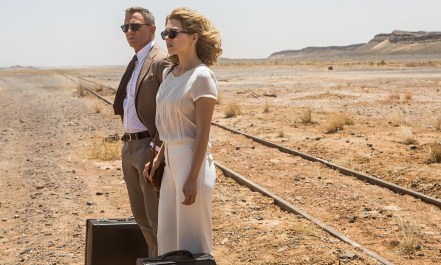
Daniel Craig and Léa Seydoux in Sam Mendes's 007 adventure Spectre.

By its title alone, the twenty-fourth James Bond picture in the long-running film series announces its ambition. Primarily, Spectre is the name of the nefarious organisation that 007 encounters in many of his cinematic adventures. However, in the context of this film, the title takes on a double meaning as it alludes to the thematic exploration of the picture.

Death is a constant presence in the film. The first thing we see on screen is a message that says, “The dead are alive.” The statement could be interpreted as applying to the opening scene, which depicts Bond (Danial Craig) hunting down a man in the midst of the Day of the Dead festival in Mexico City. However, it applies to individual characters who have recently passed away or have used death as a ruse to live out their life as an entirely different person.

In the first case, the recently deceased M (Judi Dench) gets the plot in motion by asking Bond to track down a man in Mexico City, kill him and then go to his funeral. Early on in the picture, Bond quips to Moneypenny about his former boss by stating that “She would never let death get in the way of the job.”

The second and perhaps most prominent advocation for the opening statement has to do with the character of Franz Oberhauser. In the film, it is stated that he died in an accident along with his father. However, this turns out to be false as Oberhauser faked his death and then rose up to become Ernst Stavro Blofeld, who is the head of the criminal group Spectre.

Even death pervades the film in visual terms as Hoyte van Hoytema’s shots for the movie looks ghostly with its harsh black and browns fusing together to create an all-encompassing unearthly feeling. This strong thematic exploration is fascinating territory for a James Bond picture.

Nevertheless, the rest of the film fails to be as interesting. Despite the abundance of action sequences, ideas and interactions, Spectre ultimately feels deficient. A big part of this comes from a lack of dramatic weight, which has been an indispensable cornerstone of the Daniel Craig era.

While the screenplay presents some intriguing points such as James Bond meeting a kindred spirit in Madeline and confronting an aspect of his past. None of these fundamental ideas feels satisfactory at all. Part of this problem stems from the execution of these established elements in the screenplay.

For example, we find out in the final act of the picture that Ernst Stavro Blofeld is Bond’s step brother who killed his stepfather because of jealousy due to the attention being paid to the young James. Christoph Waltz’s performance lacks any danger or venom; it feels like a casual shrug at best. Waltz’s usual polite demeanour does not work for this character. As a result, the revelation seems like a pointless addition.

Additionally, while Madeline conceptually feels like a good match for Bond, their chemistry never illustrates why Bond would walk away from his life as a 00 agent. Moreover, their love story feels incredibly rushed and takes an awkward, melodramatic turn when she declares her love for Bond in the midst of witnessing him being tortured. In the context of Casino Royale and On Her Majesty Secret Service, the love story feels like an unnecessary element that is used as a device for the audience to believe that Spectre represents Daniel Craig’s swansong.

Posted in Uncategorized | Leave a comment

Review: Django Unchained (2013)

splash_780

Django Unchained is Quentin Tarantino’s most persistently fascinating film. His examination of the self-appointed persona in this picture is particularly potent and powerful because of the implications of the characters and the commentary it has on the portrayal of slavery in cinema.

Partway through the film, Dr. King Schultz (Christoph Waltz) expounds to a slave that he has freed called Django (Jamie Fox) about the nature of taking on a persona, which includes the cardinal rule of never breaking character during the act. The film in part is an examination of this primary theme within the context of that crucial declaration which Schultz makes.

The central persona that Django has to take on through the course of the film is that of a former slave owner who is well versed in the subject of Mandingo fighting, (a practice in which slaves are forced to fight to the death for their owners’ amusement). The interplay here between the external and internal is fascinating as Django’s overriding goal is to save his wife; however, he takes on a persona which entails compulsory cruelty to his people.

Some of the film’s most dramatic moments are Jamie Fox’s performance in the midst of this act. One particular horrifying instance is when the central antagonist- Calvin Candie (Leonardo DiCaprio) asks Django if he consents to feed his partially blind runaway slave to the dogs. Django approves, and the camera focuses on Candie observing Django’s reaction to this heinous act.

During this moment, Fox conveys subtle sadness with his eyes and then commanding and stern vocal tones when he justifies Schultz’s response to the event and articulates his disappointment with Candie’s stock of fighting men. The implication of this persona that Django takes on has fulfilling echoes in the last act of the film as he tells his captors that he entered Candyland on a horse and is not a slave. The group of black men that Django showed disdain for earlier in the picture validate his story because they believed in his persona, which marks the theme at its most focused.

This scene is also indicative of a subtle facet that pervades the film. While one can certainly make the case that the film is merely genre comeuppance regarding Django being freed and committing violence against the people who held him in contempt. The picture, I would argue is more than mere revenge thrills. When Dr. King Schultz frees Django from bondage, he educates him on not only the nature of the bounty hunter business but also hat etiquette, shooting, mythology, counting and taking on a persona.

When Django tries to persuade his captors of money that they will gain from killing the Smitty Becall Gang, the scene not only feels like a direct parallel to the first scene where Schultz frees Django. But it also seems like a culmination of everything that Schultz has taught Django throughout the picture, which speaks to Schultz relationship to the former slave. He now believes that Django can become the best version of himself, which is indicative of his positive view that all people should be free.

However, in the context of the primary theme of the self-appointed persona, Schultz is less than benevolent in his intentions. While he espouses the principal, he does not follow entirely in the second half of the film. Firstly, King chastises Django for his behaviour with the black slaves that are travelling with them to Candyland. However, most crucially he decides to break his calm and polite demeanour at the very last second when Django is close to walking away from Candyland with Broomhilda (Kerry Washington).

The reason for Schultz’s change in behaviour and the breaking of his persona is that he can no longer abide the vile acts of cruelty and dehumanisation that he has witnessed at Candyland. Tarantino also adds another interesting facet to this shift in character. Calvin Candie finds out about King and Django’s masquerade of not committing to buying a black fighting man but instead planning to get Django’s wife.

As a result, Candie deals on his terms and mostly outwits King in some sense. King sees Candie as an evil man with presumptions of being sophisticated and cultured, but because his pride he cannot deal with losing to Candie, so he decides to break his persona and shoot the southern plantation owner without a second thought of the consequences.

Christoph Waltz’s performance as King is compelling whether one reflects on the warm paternal love he shows towards Django, his self-deprecating sense of humour, or his amusing little gestures such as stroking his beard when he is about to make a point. However, Waltz is at his most fascinating when he reflects on the grisly acts of the past, conveying a great deal with his physicality and facial expressions. The result is a performance that is far more interesting than his work in Inglorious Bastards, which had the benefit of a multi-lingual charm in the character he was playing.

Nevertheless, Tarantino’s most compelling examination of the self-appointed persona comes from the character of Stephen (Samuel L Jackson) On the surface; Stephen comes across as a crudgy and frail old man who emphatically supports his master, Calvin Candie. In these public scenes, particularly the dinner sequence Jackson plays Stephen like a parrot. He repeats his master’s words, underlying their importance and meaning.

However, in private with emphasis on the scene where he tells Candy about Django and King’s real intentions. Jackson plays Stephen like a nefarious mastermind, dropping his previously held shaken speech, deaf and confused manner. During this moment, he is confidently sitting while taking measured sips from his glass of wine and acting as a subtle ventriloquist by suggesting that his point will be embraced by Candie.

Stephen is Tarantino’s most compelling exploration of the self-appointed persona because it illustrates that the abhorrent person in this odyssey of slavery in the pre-civil war south is a black man. He has facilitated the suffering and punishment of his kind. In reality, he runs Candyland, Tarantino’s introduction to Stephen is through a quick shot of him signing a checking using Calvin Candie’s Signature, which is emblematic of the status of this character in the hierarchy of that plantation.

Additionally, the switching of his persona is extremely understated and incredibly satisfying when contrasting it with Django. One uses slavery as a ruse to achieve an intrinsically noble goal whereas the other utilises slavery for the purpose of maintaining power and status. In the end, Django shoots Stephen in the knee caps which would entail him requiring the use of a walking stick and thusly he becomes his public persona. Ironies such as this make Django Unchained Tarantino’s most fulfilling screenplay. Finally, it can be said with considerable confidence that Samuel L. Jackson’s performance as Stephen is his most nuanced because of how striking it is in subtlety and simple transformation.

Notwithstanding, Django Unchained is more than the sum of its successful thematic exploration. Tarantino’s directing is at its finest in this picture. In other films, his flashback scenes would feel like one is observing a paragraph change in a story, where the time and setting would be vastly different. This technique ultimately spoke to his novelistic tendencies.

However, in Unchained, his flashback sequences feel like poetic interludes that are striking in their immediacy and how well they connect with the current narrative thread. For example, Django early in the story observes the man who whipped his wife after their attempt to escape together. The scene cuts to a desaturated sequence where Django is pleading for his wife’s safety while also showing their escape from captivity. The sequence of painful remembrance ends with the merciless southern man saying to Django, “I like the way you beg boy.” When Django catches up with this man in the present, he says to him “I like the way you die boy” which is an amusing, vengeful and cutting one-liner.

The colours of green and blue engulf this memory scene in a haunting and vivid way, which makes the sequence feel surreal and nightmarish. Tarantino has cited Mario Bava’s Black Sabbath as one of the films that have mainly influenced his style and sensibility. With this sequence, one can certainly see that this is evident with the use of blues and greens, which were some of the primary colours that Bava employed in his shot compositions. However, Tarantino’s dark wash of the scene makes the scene feel like it ought to belong in a grindhouse classic such as Texas Chainsaw Massacre, with its passing shots of butchered chickens.

Tarantino also employs some captivating sequences that have not appeared in his previous films. He punctuates some of the seemingly ordinary scenes with elements of magical realism that come in the form momentary dream sequences where Django sees his wife, Bromhilda.

The most striking one is when Django rides into Candyland and observes as he travels by a woman working in the cornfields. She is wearing a yellow dress and is smiling at our hero. The audience along with Django instantly think that they see Hildy. However, this immediate presupposition proves not to be fruitful. Tarantino’s trick of the eye and the temporary illusion of thinking we see Django’s wife is sublime and showcases the maturity in his direction.

Aside from these two aspects, Tarantino also commits some exuberant shots that feel limitless in their scope and painterly in their composition. The best example of which is when we see Django and Schultz riding on the horses which are set against the backdrop of rolling snowy mountains. Tarantino’s camera captures the exotic and counterintuitive sunrise colours such as purple and ashy brown in breathtaking detail. The sequence is a reminder of how far the director has come from his early films which depicted isolated and secluded locations.

The final aspect of Django Unchained that makes it Quentin Tarantino’s best film is its inherent mythological dimension. The second act commences with Dr. King Schultz telling the story of Siegfried and how he rescues Bromhilda from her father’s punishment of the surrounding fire of a dragon. Schultz believes that Django is a real-life, Siegfried. Alongside this, we have Schultz, who believes that Django is the fastest gunslinger in the west, which he states in a flashback scene at the end of the picture.

On the other hand, Calvin Candie introduces the other myth of the picture, which of the exceptional black man. He contends that every black man can aspire to be that individual who is, one in ten thousand. On the surface, all these myths seem terribly disparate. However, Tarantino cleverly ties them completely. Firstly, he considers Django’s journey to be mythological in scope. However, it is viewed through the prism of the current time, which encompasses slavery in the Deep South two years before the Civil War.

Through the course of the picture, we do come to believe that Django is the exceptional black man that Candie spoke about. Even Django thinks this is the case when he says at the tail end of the film, “Every word that came out of Calvin Candie’s mouth was horseshit, but he was right about one thing. I am that one nigger in ten thousand.” Tarantino takes this idea of the exceptional black man and synthesises it with the western archetype of the gunslinger, and they reconcile in a satisfying manner.

In fact, Django refers to a western character who appears in over thirty films. Franco Nero was the original actor who played this character in Sergio Corbucci’s Django. (1966) Nero has a cameo in the movie in which he amusingly asks how Django how he spells his name. Django with pride sounds out his name and says that the D is silent, and Nero’s character says “I know before he walks off-screen, I know. One can read the cameo as an amusing suggestion that Nero is playing an older Django, who acknowledges the existence of another man with the same name.

However, I read the scene as Tarantino’s reconciliation of the exceptional black man and the gunslinger. He is clearly showing that he is taking the western character of Django from Italian cinema and combining it with the idea of the exceptional black man, thus creating a mythical transcendental figure. However, Tarantino also suggests that Django is the ancestral figure for the seventies sub-genre- Blacksploitation, which makes the previous mythological harmony take on a far more fascinating life.

In the same breath, Tarantino also subverts our cultural perceptions of particular aspects of slavery. He does this in the best scene of the film, which involves the Ku Klux Klan. During the period in which the film was set, they were at the height of their power in their first incarnation in southern America. The scene starts out with a large assortment of the group riding towards a destination with their masks and burning torches in hand.

Tarantino scores the Klan’s dramatic horse riding entrance with the ‘Requiem and Prologue’ from Battle Royale, which makes the Klan’s presence seem operatic and terrifying. However, when they all stop at Django’s camp, where they intend to kill the free slave and his partner Schultz, this initial impression of the group is shattered instantly.

They all start to argue about their masks, which was made by the wife of one of the members who ride off after being offended by their attitude. Additionally, they show confusion about the nature of their current task, and whether the masks will be required in their current raid. The scene paints the Klan as disorganised and ultimately bumbling oafs whose threat one can be extinguished swiftly. As a result, it makes them far less terrifying.

The scene does present a pertinent question about the nature of slavery in cinema. Is it right to portray a historical event that has such a magnitude of suffering and dehumanisation in the clothing of genre cinema? While many would argue that conceptually, the idea is abhorrent and historically inaccurate, I would claim that it is a great thing.

If one takes the premise that film is a valid art form that can project our dreams, fears and struggles than why can’t we apply this to a painful moment in our history? Django Unchained fundamentally reinvents the way one can portray slavery. I think that by steeping it in genre cinema, it allows the audience to feel uplifted by a form of emancipation that takes place throughout the picture.

Django is allowed to become the best version of himself with respect, patience and education, illustrating that those are the actual qualities that one needs to be truly liberated and free. However, Tarantino also fundamentally demolishes the idea that the gunslinger archetype has to be white by using the character of ‘Django’ from Italian cinema as a jumping-off point to conceive of an entirely new creation with strong mythical resonance.

Finally, through his primary thematic exploration of the self-appointed persona, Tarantino asks the audience to confront some challenging ideas. There is an inherent irony that the evilest person in the film is a black man who uses slavery as a ruse to maintain power and status. The malevolent group of racists who are historically feared are portrayed as bickering fools, and the leading white villain has an admiration for our titular hero.

The Unchained in the title seems to allude to more than Django being freed from bondage; it also describes how slavery on film has been unshackled and has taken on greater depths of exploration and meaning with its newfound freedom.

Posted in 2013 Films, Indie Cinema, Reviews | Tagged , , , , , , , , , , , | Leave a comment

Concise Review: Death Proof (2007)

202_deathproof

Death Proof is an interesting lesser effort from Quentin Tarantino. Its noble intentions exist within a cluttered picture, which fundamentally has an identity crisis while also possessing a patronising excessiveness. It wants to embrace the sleaziness and style of a slasher film. However, one can’t help but feel that its reach is all conceptual.

For example, the title Death Proof refers to the car that the antagonist- Stuntman Mike (Kurt Russell) fashions for his primary gimmick and weapon to kill, much like Jason Voorhees and his hockey mask and machete. It’s a great contemporary conceptualisation of a slasher villain. However, he’s not very frightening, and Tarantino’s attempt at the voyeuristic axioms of the genre do not yield any genuine tension.

One gets the feeling that Tarantino’s usual effortless build-up of tension is missing in this picture. Instead, the film feels like the director is excitingly attempting to explain how his film evokes slasher films, without realising what makes them work in the first place. They are fundamentally engaging because they represent the generational revenge of parents in the sixties who were punishing their adolescent’s new-found loose morals. Or in the case of the original, A Nightmare on Elm Street, the teenage characters were getting killed because of their parents’ original sin.

None of this vigorous sub-textual depth exists within a frame of Death Proof. In fact, one can say that it’s Tarantino’s least engaging film regarding individual themes and the continued exploration of the self-appointed persona. Tarantino also tries to evoke the sudden, surprising and jarring character and plot machinations of Alfred Hitchcock’s Psycho. However, without the subtext, and the tension this falls apart.

Some of the best aspects of Death Proof come from its second half. Here the characters are better drawn; the conversations crackle with wit and the acting is memorable and lingering. Zoe Bell is a real revelation as a first-time actor with a natural presence and charm. Her stunt work is astonishing and sublime, as she straps herself to the front of a car. The moment provides the best acting moment in the picture. Abernathy Ross (Rosario Dawson) observes Bell’s stunt and the camera focus on Dawson’s face and in those ten seconds, she runs a gambit of emotions from utter fear, admiration and finally unconstrained excitement.

The second half of the picture is also commendable because it embraces the strong female character’s mantra and turns it into a satisfying genre set piece of thrilling stunt work and comeuppance. The sequence in question depicts an exciting chasing between Stuntman Mike and a group of girls in a classic film car. With perfect framing, great point of view of shots and excellent close-ups, the sequence represents one of Tarantino’s most consistently thrilling scenes.

Posted in Retro Reviews | Tagged , , , , , , , , , | Leave a comment

Concise Review: Planet Terror (2007)

Planet_Terror_5

Planet Terror is an effortlessly nasty, sleazy and ultimately well-made exploitation film. However, what makes it transcend its source material is Robert Rodriguez’s excellent direction along with a screenplay, which is more than mere gruesome and shocking antics for midnight movie fans. For example, the film has human moments where characters react to their terrible ailments at the hands of the horrific situation that has befallen them.

The most noteworthy of which is Cherry Darling (Rose McGowan) who represents the film’s main attraction as the one-legged amputee who replaces her lost leg with a machine gun. Before this crucial moment, the film has moments where Cherry reflects on her life, ambitions, and past relationship.

In fact, if anything the film is about Cherry embracing her true nature, which is, at first, a legendary machine gun wielding woman and then a protector as well as the messianic figure of the future. Rose McGowan’s performance is sincere, and heartful, which results in her journey throughout the film feel authentic and emotionally compelling.

There is also this other interesting subtle thematic exploration that pervades the picture. These are the showcases of dual relationships in the midst of the unfolding zombie invasion which is encapsulated by Cherry’s ex-boyfriend- Wray when he says “Two against the world.” There are many of these relationships through the course of the film, and they speak to Rodriguez’s familial tendency, which resides in all his movies.

Planet Terror is also sublime because Rodriguez uses the format of the film to make the visual language of the film feel evocative of the genre. For example, the grainy nature of the picture makes some of the night scenes look like small time America of Halloween-infused with the gothic imagery of Mario Bava’s sixties horror films, particularly with the use of green.

At the same time, Rodriguez never forgets about injecting the film with tension and buildup. For example, the zombies are built up over a slow period of time, with piecemeal hints at their pulsating and soft exterior, which in turn makes the audience anticipate their appearance through the course of the picture. These elements coupled with a darkly comedic edge, rock inspired Carpenter score, and Planet Terror represents exploitation cinema at its finest.

Posted in Uncategorized | Leave a comment

Review: 2001- A Space Odyssey (1968)

3698170594_6fd35b9cce_b

Pretentious visual showcase or a powerful illustration of the cinematic medium? These are just some of the disparate and contrasting opinions, which have been expressed about Stanley Kubrick’s 1968 film- 2001: A Space Odyssey.

However, the most pertinent question, which will be the central focus of this piece is why does 2001: A Space Odyssey still appeal to people in 2016? This line of enquiry has been inspired by a 70mm screening of the picture, which I attended last night. Surprisingly, the film was sold out, which resulted in an unprecedented large queue around the cinema and surrounding area. Moreover, at the end of the film, most of the audience burst into sudden applause, which was encouraging, to say the least.

From the reaction of the audience, one could gauge that the picture still resonates and engages beyond the mere curiosity factor of seeing the film in 70mm. The primary reason for this is because Kubrick has crafted a film that transcends the cinematic medium. In fact, one can liken it to a symphony that is about humanity and its place in the universe at large.

Like a symphony, the film has four distinctive parts and movements, which achieve two things. Firstly, they show humanity at crucial points in their development. Secondly, the movements chart the course of the Monolith, which is a tall black rectangular object that appears throughout the film.

The Monolith and its connection to humanity are one of the picture’s most fascinating facets to consider as it calls into question how this potential extraterrestrial or possible celestial object perceives humanity. It sees us in our infancy and oversees our transformation into a new life form. But what does it gain by aligning itself with our species, this is one of the film’s tantalising ambiguities and horrifying notions to consider.

With this last idea in mind, my recent viewing surprised me because it made me realise that 2001 can be seen as a horror film in many ways. Kubrick presents some quite subtle moments of terror. The most memorable of which is laboured sequence which is powerful in its simplicity. The second act of the film depicts the American spacecraft, Discovery One and its voyage towards Jupiter. On board are two mission pilots and three other scientists who are in hibernation until they reach the planet. Moreover, a sentient computer called Hal 9000 is on board. His primary responsibility is controlling the systems of the previously mentioned spacecraft.

After a series of cover-ups and mistakes, Hal 9000 takes to murdering the hibernated scientists. Kubrick shows their death through a close-up of their vital signs on their life-support systems. The scene is harrowing as the progression of their death is depicted in real-time and is punctuated with eerie silence as the audience is left to wonder about their feelings of the ordeal.

Hal 9000 is 2001’s lingering aspect because he is a compelling character who represents Kubrick’s primary thematic exploration, which is that technology has dwarfed humanity. Kubrick not only conveys this in visual terms by making the audience marvel at spaceships with these balletic shots that see them in rotation and motion. But one gets the impression that Kubrick is being ironic with Hal 9000 by making him more human than any other character on screen.

Perhaps the answer as to why does 2001: A Space Odyssey still appeal to people in 2016 is simple. It conceptualises humanity on a grand and cosmic scale while also being a film that has to be experienced. In this regard, Kubrick has created a film with monumental ambition that is only matched by the cinema.

Posted in Uncategorized | Leave a comment

Concise Review: Tangerine (2015)

tangerine.0.0.png

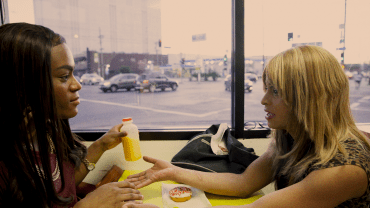
Tangerine is a vibrant picture that in its every frame imbues creativity, and sheer humanism. Additionally, it is a striking example of new form giving rise to the one of the appeals of cinema, which is experiencing a unique time and place, which is fundamentally different from our own. The film was shot with the use of many IPhone 5s devices. Despite this fact, Tinsel Town comes to radiant and stunning life with breathtaking tracking shots, which makes one feel like that they are bystanders watching the characters. Finally, the film has a natural state of being about its trans-gendered individuals, which adds to the authenticity of the picture. It does not feel the need to rationalise nor moralise their gender preferences.

Posted in Uncategorized | Leave a comment

Review: Inglorious Bastards (2009)

shoshanna

In my mind, Inglorious Bastards has always been Quentin Tarantino’s most polarising film. At best one can say it is a fascinating, controversial and wholly original portrait of a crucial period during the Second World War. At worst one can characterise it as an excessive, misleading, and ultimately pointless, adolescent effort. However, on this recent viewing of the picture, the film opened itself up to me and presented me with a much more interesting reading of its thematic explorations.

Primarily, the film is about a propaganda war with cinema being used as a tool to give countries and people a mythical grandeur. For example, the titular Bastards are seen by Hitler as spectral figures who have evaded capture. Additionally, he sees one of the soldiers in the infamous group who is called “The Bear Jew” as an actual Golem from Jewish folklore. The rumours and soldiers testimonies of their actions deeply disturb him and his cult of personality that he later decides that his attendance at a lavish German Film Night at a cinema in Paris is crucial.

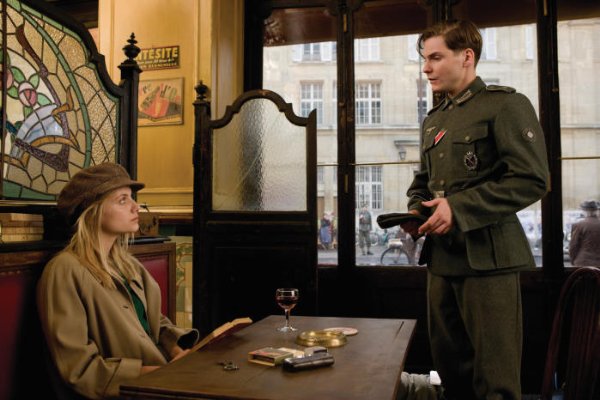
The picture that is being shown at said event is entitled “Nation’s Pride.” It chronicles the three days survival of a lone German sniper called Fredrick Zoller and his subsequent killing of 250 enemy soldiers. One gets the distinct impression that the film represents a morale boost for the German High Command. More crucially, the picture is used as a tool to mythologise and immortalise a recent victory, which is characteristic of the primary goals of the Third Reich. Daniel Bruhl, who plays Zoller, is the film’s most fascinating performance as Bruhl imbues the character with contrary traits of arrogance and bashfulness, which results in the most interesting aspect of the film. In fact, one of the picture’s smallest moments casts the most considerable impression.

In the aftermath of the death of Zoller at the hands of Shosanna Dreyfus (Melanie Laurent), the young Jewish woman and projectionist of “Nation’s Pride.” observes the young decorated war hero in the film. She sees his vulnerability and abject fear of the situation and then she looks back at his dead body and casts this sad expression. For the first time, she can look beyond the mythic façade as well as the Nazi uniform and be reminded that she killed a human being.

The moment is also indicative of a recurring theme in the film, in which the actual truth shatters perceived truth. This theme is magnificently surmised by Col. Hans Landa (Christoph Waltz) at the beginning of the film when he says, “I love rumours! Facts can be so misleading, where rumours, true or false, are often revealing.” Tarantino employs this on a personal level when characters confront one another on their reputations. For example, near the end of the picture, Landa defensively recoils at his title of “The Jew Hunter.” and remarks upon the nature of one of the captured Bastards’ nicknames, “The Little Man.”

Lt Aldo Raine smugly says at the end of the picture, “I think this might be my masterpiece.” Inglorious Basterds is not Quentin Tarantino’s masterpiece but it is his most sophisticated film in expounding upon the power and virtue of the cinematic medium.

Posted in Uncategorized | Leave a comment

Review: The Hateful Eight (2016)

NE0mrSlMuPzV43_1_b

Quentin Tarantino’s 8th film, The Hateful Eight is a fascinating revisitation of his central thematic fixation, which fundamentally grows into a budding new form of expression for the black-humoured and highly cineliterate auteurist.

Tarantino’s exploration and presentation of the self-appointed persona are very much ingrained in the fabric of the film. Many of the title characters are taking on personas when staying at “Minnie’s Haberdashery.” In fact, one could infer that each of their roles is Tarantino’s illustrations of different approaches to performance. Oswaldo Mobray (Tim Roth) feels like an exercise in over the top scenery chewing. He perhaps tries too hard in attempting to convince people of the illusion. Meanwhile, Joe Gage (Micheal Madsen) feels like a purposeful side character, as he keeps to himself and does not comment on the boiling political tension in the cabin. Finally, Bob (Demián Bichir) feels like someone who is attempting to play a part, but you can see through the act and persona straight away as he is extremely one-note and reactionary.

This idea of the self-constructed persona takes on richer thematic resonance with a twist near the end of the film. It’s established that the audience has been witnessing a constructed representation of “Minnie’s Haberdashery” as the day before the current events of the film- Jody Domergue (Channing Tatum) and his gang kill everybody in the secluded place and lie in waiting to rescue Dasiy Domergue. (Jennifer Jason Leigh) In this stretch of ten-fifteen minutes, the audience witnesses the expensively bountied bandits attempt to construct a conniving scene. Jody even makes a case for letting General Sanford “Sandy” Smithers live due to how it will make the scene feel more authentic as opposed pity for the old man’s life. These moments represent an evolution for Tarantino.

While his pictures have always been novelistic in structure, which is most evident by the chapter headings and the use of time feeling like paragraphs. In The Hateful Eight, Tarantino has made a film that is inherently stagey, which fundamentally feels of a piece with the themes and structure of his films. For example, the previously mentioned scene seems like Tarantino creating a new theme of the self-constructed scene, which greatly synthesis with his typical narrative set up of the aftermath of a significant event, such as a robbery, massacre or death.

Despite the staginess of the film, Tarantino inherently adheres to some of the axioms of the cinematic medium. In his use of Ultra Panavision 70, Tarantino reminds the viewer that cinema can be incredibly potent and powerful because of its focus on faces and the effect they have on us. The use also punctuates his newly minted theme of the self-constructed scene as it adds detail and texture to the scene in question. It is also a firm reminder of the experiential and voyeuristic nature of cinema. Rather, then witness an abstract scenery change like one would get on stage, we observe the real-time making of a scene, which in some way makes us complicit as viewers.

Posted in Uncategorized | Leave a comment