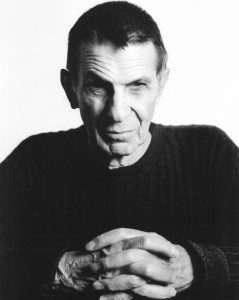
A Personal Tribute: Leonard Nimoy

Leonard-Nimoy-Spock

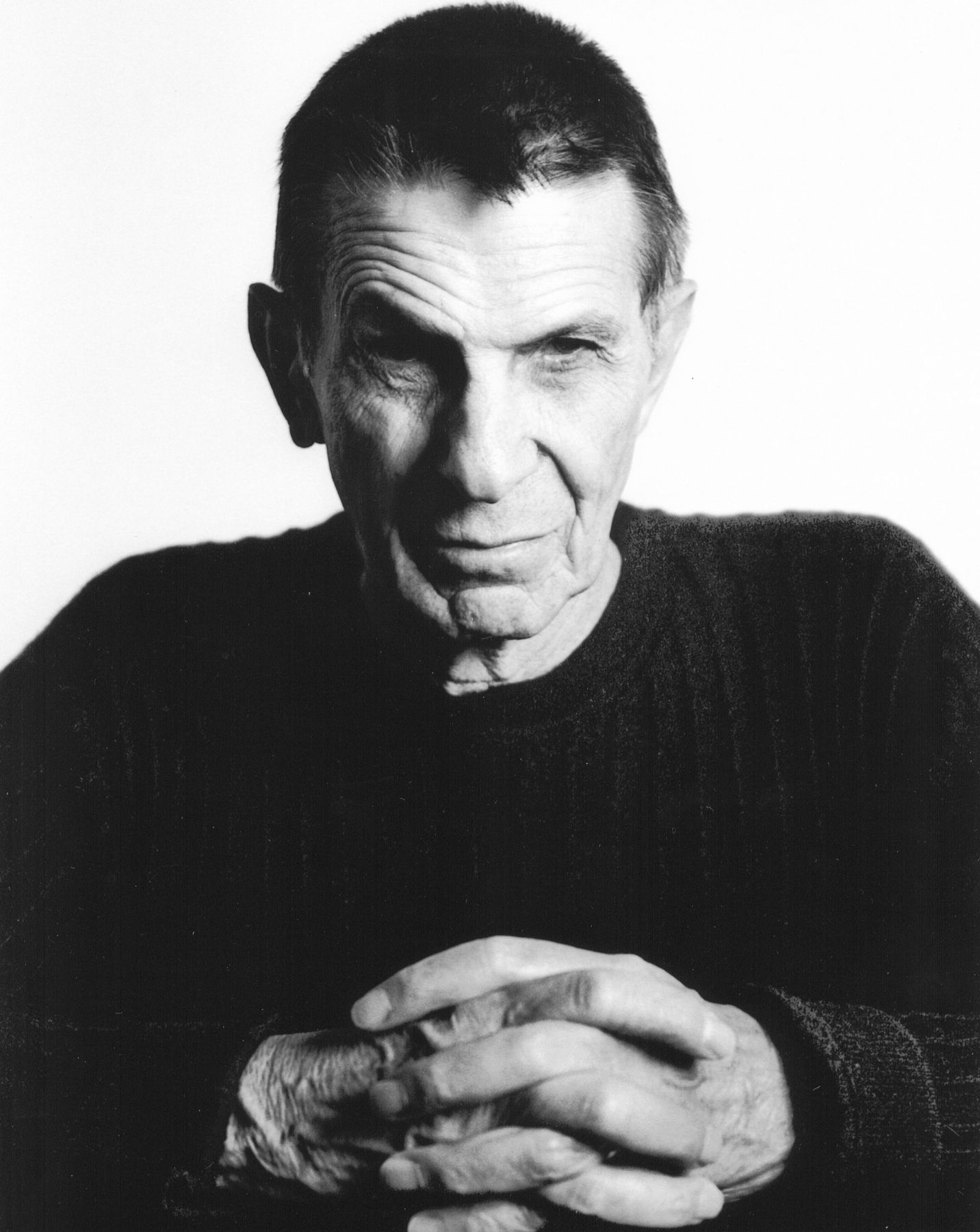
Star Trek in the realm of visual science fiction has allowed many to dream of a better world. It has additionally enabled people to dream of growing as individuals in the finite time that we have on Earth. The latter idea particularly has resonance due to the amazing characters that were created for the show; none was more meaningful nor immediate in encapsulating the human experience than Spock.

Conceptually, the science officer of the Enterprise represents the continuous conflict that resides in all human beings, that of emotion and logic, made apparent because of Spock’s half-human and half-Vulcan heritage. For any actor, this character would seem like a daunting prospect to play.

However, it is a credit to Leonard Nimoy that he was able to find that delicate balance in his acting that allowed the audience to relate to him. Whether it was his dry wit, his bafflement and curiosity of human practices or even his famous eyebrow cocking. Mr Nimoy made many great choices as an actor in creating the iconic character. Despite this, Mr Nimoy’s mark on Star Trek was far greater than just turning up and putting on the ears. After the emotional, Star Trek II: The Wrath of Khan, the world had thought that Nimoy was done with playing Spock on screen.

But a change of heart and a larger role in the creative process made Nimoy come back to the fold. The result was Star Trek III: The Search for Spock, the first of Nimoy’s directed Trek pictures. Despite being a massive retcon of the death of Spock, the film still delivers in being an engaging cinematic experience. It added much to the canon including the death of Kirk’s son, David, which sets up his hatred of Klingons and reinforces one of the central themes of the picture.

The film was about the lengths that one goes to in order to pursue a meaningful, intrinsically good goal can be fraught with obstacles, but one’s resolve is enough in order to achieve them. Mr. Nimoy returned to the directing chair and delivered arguably the most popular installment in the Trek film series, with the 1986 picture, Star Trek IV: The Voyage Home.

It was easily the most accessible film, and its light touch was a welcome relief after two emotionally overwhelming films. Mr. Nimoy’s contrast of the intrepid crew of the Enterprise with contemporary 1980s San Francisco was a great idea. Along with the underlying theme of communication, it made this installment a fun, enjoyable ride for the original series crew.

Mr. Nimoy would go on to continue playing the character even beyond the films that featured the 1960s crew. He appeared in Star Trek: The Next Generation, and most recently the new rebooted series, in which his dignity and class were a much-needed relief for the contemporary ascetic of Star Trek.

Mr. Nimoy contribution to science fiction is incalculable and as the greatest ambassador of Star Trek, he will be missed. The legacy he leaves behind still inspires us to believe in a better humanity and world.

RIP Leonard Nimoy

Posted in Uncategorized | Leave a comment

Brief Examination: Whiplash (2015)

Whiplash-6613.cr2

Whiplash is an impressive piece of work that is raw, exciting and isolative in its depiction of ambition and the lengths to which it can be realised and practiced. The film also impresses in its editing and sound design. They both flawlessly meld into creating short bursts of tension, which also have a beauty too which comes from the sheer talent of the musicians on screen and the music they play.

Additionally the film features a gripping, sweat-inducing central performance from Miles Teller. His character, Andrew Neiman is a young, ambitious man who wants to be the greatest musician of the 20th century as he states quite firmly to his family halfway through the picture.

One of the biggest discuission points of the picture is J.K Simmon’s performance as Terance Fletcher, the provocative and stern music teacher who strongly believes in his teaching method of young Neiman. As of this moment, Simmons has been awarded the Academy Award for Best Supporting Actor. The Oscar is much deserved as the performance is very strong and a great example of the screenplay, direction and acting harmonising well.

From a screenwriting point of view, the writer shows us Fletcher’s behaviour to such extreme degrees throughout its running time. This is interesting as it’s essentially not asking us to rationalise his behaviour but merely see it. Towards the end of the film, we get a quiet, completive moment where Fletcher tells Neiman why he teaches the way he does. It is a great way for the audience to understand his method without being spoon-fed easy to digest pseudo-psychology that makes us sympathise with him.

In terms of direction, the early scenes almost depict Fletcher as a terrifying, monstrous omnipresent figure. Many of the shots of him are seen through peepholes, from the drummer’s point of view where we are looking up at him, and occasionally obscured shots where we just see his face and hands.

Finally, J.K. Simmons brings the character to life, very well, not being too showy, and using facial expressions to the fullest in showing his current state of mind. One always feel that something is grinding in Fletcher’s head even when he is not judging how the band are playing. Simmons brings this subtle nuance as well as many others to a well-rounded character, which make Whiplash an exhilarating success, even if one does not have an affinity for Jazz.

Posted in Uncategorized | Leave a comment

Review: The Imitation Game (2014)

theimitationgame-stockholm

Alan Turing, aside from being an unsung British hero has also been a spark for cinema. His “Turning Tests” formed the basis of the inspiration and Philosophical throughline of Blade Runner and nearly every film that has had Artificial Intelligence on its mind owes an enormous debt of gratitude to him. With that context, one would think that a film about the man’s life would pale in comparison with his ideas that have permeated film, this assessment it would seem to be half right.

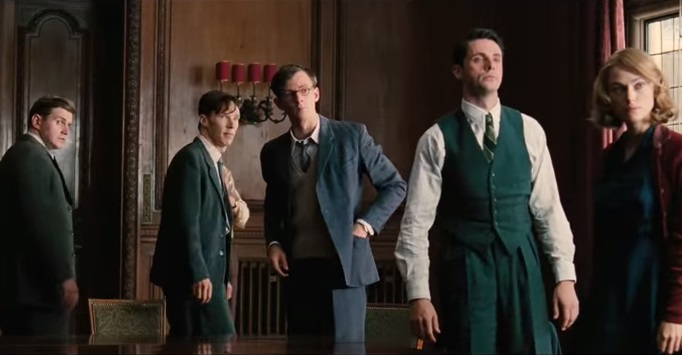
The Imitation Game is a strong period piece that works best in its interactions. As well as the showcase of paranoia, melancholily and moral dimensions that emerged out of the work that Turing’s team engage with during the war. However, its Achilles heel is that when it tries to engage or present some of Turing’s ideas. It does them in quite an atypical screenwriting way that it insults them. For example, the screenplay is split between three periods.

The first is post-war Britain where Police Officers are investigating a Robbery of Turing’s house, which is suspicious. The second is when a young Turing is in prep school and a relationship he has with a boy named Christopher. Finally, the third period is when Turing is working with his team to crack the Enigma machine at Bletchley Park during the Second World War.

While the last one mentioned is fine, the first two are interconnected in the sense of finding out about Turing’s homosexuality and the reason he names his machine Christopher. The latter point proves to be rather oversimplistic. Particularly in how it was used in the last moments of the film, showing that the anti-social, no humored Turing just wanted to build the machine as a way of connecting with his dead friend.

It seems like a contrivance that is trying to explain psychological insight simply. It truly undercuts some of the ideas presented as well the tragic nature of the final scene, in which we see Turing at his lowest in the midst of his chemical castration sentence. Benedict Cumberbatch’s performance during these finals moments is heartbreaking, subtle and worthy of his Best Acting nomination that he received earlier this month.

However, this major problem does not affect the film too much, mostly because the other elements are quite strong. Director Morten Tyldum greatly makes this potential stagy premise tremendously cinematic with a great use of stock footage and montage. They help in making the story feel authentic to its period, tension-filled, as well as drive home the paradoxical nature of the project at Bletchley Park. Additionally the moral weight of some of the actions that occur later on in the picture.

Posted in Uncategorized | Leave a comment

Brief Examination: Suspiria (1977)

PrimoPiano2_3m54s

At worst, Suspiria, the late seventies horror movie could be accused of assaulting its audience, from a visceral point of view, with its use of imagery and music. However, this reading merely feels like a crossed arm, eye-rolling reaction to a film that stabs convention in the heart and then proceeds to throw it out of the window for an utterly unsafe and nasty landing.

Rewatching the picture proved to be a fascinating experience. One could almost spend a lifetime thinking about its many seemingly disparate elements. For example, the famous Goblin score this time sounded like a nightmare inducing and powerfully ominous, Witch ceremony. The purpose of which is to gain strength, hence it’s overwhelming, inaudible nature when playing over certain scenes.

In fact, if one were to watch it through the prism of examining Witches, a creature that has tormented generations of movie-goers, then this one form of engagement with the picture would be meaningful. The supernatural beings in the film are less Margaret Hamilton and Anjelica Huston. Instead, they are more an interesting concoction of Hansel and Gretel and the work of primordial evil, mainly speaking to the fear of the monster one cannot see.

Near the end of the second act, a character declares “A coven without its leader is like a headless Cobra, harmless!” The line encapsulates the success of the picture in keeping its audience in the dark in regards to the causes of the depicted grisly acts While additionally providing a short brief explanation that is terrifying in implication for the protagonist and narrative.

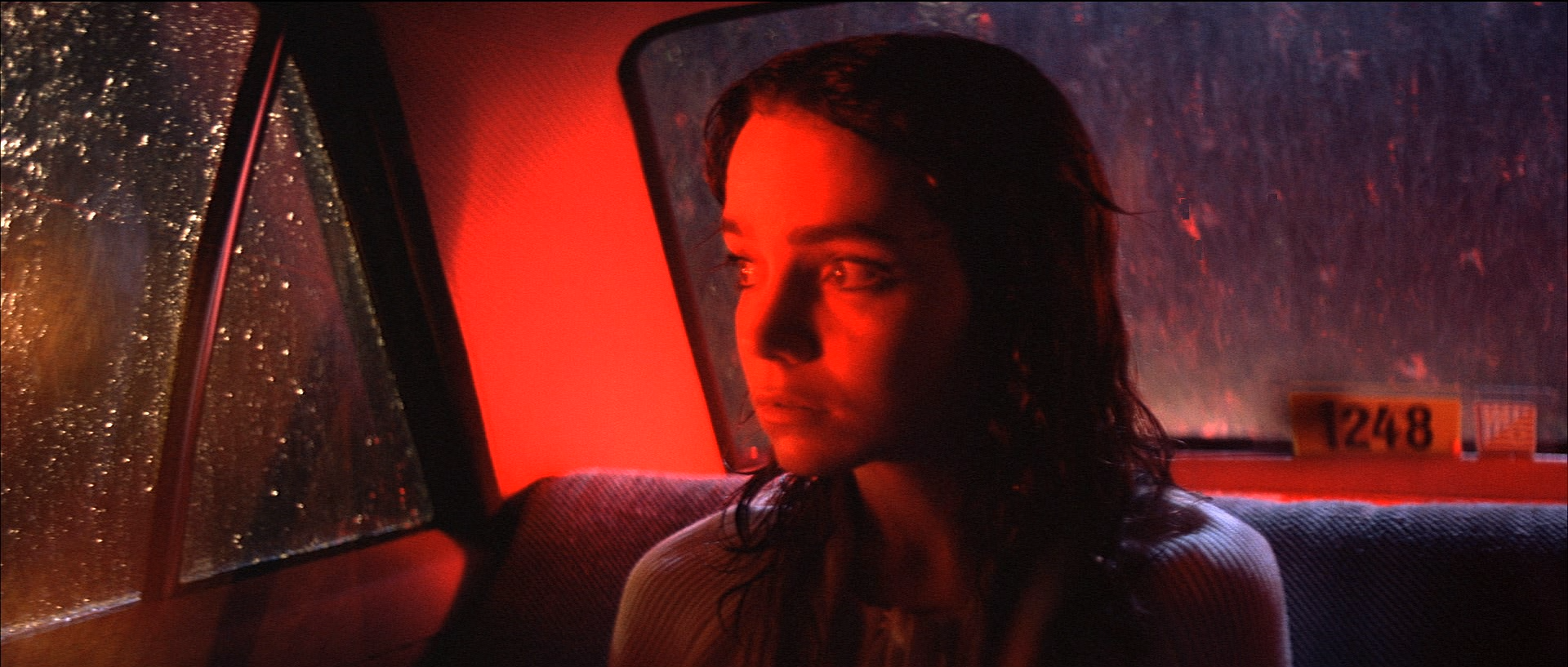
The biggest triumph of the picture is that it feels like a pure horror film, and this comes from its dreamlike atmosphere. The harsh use of red that bathes the film, like a floodlight at a lighthouse, particularly permeates the picture, even in the most mundane scenes, it appears like blood.

The camera work also contributes to the general ambience of the film. Dario Argento employs points of view shots from wine glasses, silent long takes and crane shots to great effect in unnerving the audience. Finally, the production design deserves particular credit as it gives the film this paradoxical quality of being beautiful in its depiction of death, which also feels ritualistic. It’s the final piece of the puzzle coupled with the cinematography, music and acting that make Suspiria, a truly surreal treat.

Posted in Uncategorized | Leave a comment

Brief Examination: A Most Violent Year (2015)

A-Most-Violent-Year-movie (1)

A Most Violent Year, the third film from independent writer/director J.C. Chandor is so chillingly precise that one could be mistaken for thinking that it is the relic of a bygone era of movies. However, this is not a disparaging remark upon the film because rather than being a stylistic exercise in directorial flexing, it proves to be a harmonious virtue in the film’s favour.

The picture tells the story of an immigrant turned businessman Abel Morales, who is trying to keep his business stable in the face of escalating problems and a wave of record breaking violence in 1981 New York City.From the title alone, one could make the meaningful assumption that the film is going to be a dripping blood bath of gargantuan proportions.

However, this proves not to be the case. The picture instead proves to be a fascinating character study of Morales. He does not want to embrace the Mob way of life, because in his mind that is giving into not only the wrong way of being a businessman but also the irrational, violent nature of man. It is an attitude that reflects in all aspects of his company. There is a plot point of his truck drivers having constant attempts on their lives, and a close friend advises arming his employees, an act he sees as inherently wrong.

Additionally, his desire to be legitimate, also has other deep seeded reasons. Ultimately he wants to show that his way is the right way as a means of asserting masculine power and control. His wife, Anna, has ties to a powerful Mob family, and it is a fact that has an ominous presence throughout.

Oscar Isaac’s performance is truly incredibly, feeling at times, like a young Al Pachino in mannerisms and cadence. However, this is not a carbon copy, as Isaac’s great subtly particularly impresses in a lot of moments. For example, near the end, there is a scene when he has a meeting with all the bosses of respective companies. During this scene, he is making a speech and Isaac’s great balance of respectability and casual, subtle nastiness is commendable, and an exhilarating piece of acting.

The presence of The Godfather is felt throughout, A Most Violent Year. However, it feels like a tightly constructed, less grandiose version of the iconic film, as well as thematically rich in its own right, and that is a triumph.

Posted in Uncategorized | Tagged , | Leave a comment

Review: Before Sunset (2004)

IMG_0001-0

Before Sunset represents the absolute pinnacle of the perniciously named romantic comedy genre. In fact, to almost categorise it as one seems like a disservice to both the film and the aforementioned genre. As a film, it has more in common with Woody Allen pictures; ideas bursting at the forefront. However, this is undervaluing it too. On the surface, one can liken it to Jazz in the sense that it has some counter-intuitive elements that are all fused together, but the result is seamless, smooth and utterly delightful.

The story picks up nine years after the events of the first picture, Before Sunrise. The film in its first quarter does elegant work of catching up the audience who may not have familiarity with Celine and Jessie’s first meeting. Whether it is the quick flashback shots of remembrance or directly addressing plot points and ambiguities of the prior film, it is neatly done.

The film again takes place in a stunningly beautiful European city, which this time is Paris due to Jessie being there for the last leg of his book tour. The capital is used sparingly, with minimal locations and scenery changes. However, the conceit of the film that is real time in the late afternoon results in some stunning, radiant shots, which particularly impress when Jessie and Celine are travelling on a boat overseeing the city.

This is a stark contrast to Venice in the first picture, which was infinitely unfolding like a rich tapestry of discovery, as young Celine and Jessie walked its streets through the course of one long embracing night.

Paris is also the city where Celine lives and from a screenwriting perspective, this seems adept as one could argue that she has the most development. We get to observe how life has changed her, romantically and politically, as well as hear interesting stories of her time in New York.

From an acting perspective, Julie Delpy rises to the challenges of her character tremendously well, and her best work comes towards the end of the picture, two scenes particularly cast an impression. The first is the car ride back to her house. Through the course of an intense emotional six-minute monologue, Delpy finely unravels her strong, impassioned persona. As she reveals how that one night with Jessie has affected her life in many painful ways, showing a deep seeded fear, frustration and vulnerability.

The second scene is near the end when Jessie puts on some music, and Celine starts recounting her experience at a Nina Simone concert. If the aforementioned scene was a powerful emotional outburst, then this scene is a relaxing, smile-inducing, seductive scene that reveals Delpy’s excellent comic talent and natural rhythm. It is truly the best scene in the film.

However, this does not take away from Ethan Hawke’s performance as Jessie. The screenplay gives him some beautiful monologues, mainly at the beginning of the film when he is talking to the press about his book. There is one where he is talking about an idea he has for a novel that lasts the amount of time of a pop song. Hawke delivers this with a great casual confidence while balancing this facade of calmness in the face of seeing Celine again.

The screenplay gives Jessie less in terms of depth, and his life experiences are put on the backburner. As a result, Hawke’s performance can be seen as reactionary through most of the film. However, Hawke brings his usual charm and likeability, that it offsets this potentially huge problem, in addition to delivering in the emotional scenes.

Finally, the film romantically deals with the reunion, which it does extremely well, evoking the real bittersweet nature of it, and almost how contradictory it can be. In one regard, Jessie and Celine are happy to see and be in one another’s company. However, on the other hand, their meeting brings up feelings of regret. In addition to a painful reminder of time and how they can’t escape it, nor the fate of what they desire or feel for one another, despite the lives that they presently lead.

Like many great cinematic works, Before Sunset transcends mere entertainment by directly speaking to the human condition. In particular, regret, the immediate choice and the lovely ways life can turn, even in the face of the impossibility of forces such as time and ageing.

Posted in Uncategorized | Leave a comment

Review: Birdman (2015)

Birdman-Movie-Poster-Michael-Keaton

There is something quite timely about Alejandro Gonzalez Inarritu latest picture Birdman in its depiction of Riggan Thomas attempting to find his artistic soul. In some ways, it feels like the bratty, louder younger sibling of Inside Llewyn Davis, which was a sobering, period effort on the same subject.

Birdman seems like it has come out from the 1950s, been given the William Castle treatment and inspired by Darren Aronofsky and his two films that examined the mindset and value of two forms of entertainment. The former being wrestling in the 2008 film, The Wrestler and the latter ballet in the 2010 picture, Black Swan.

The most discerning viewer could accuse the picture of being entrenched in such eye-rolling gonzo filmmaking that it merely serves as a distraction to cover up a lack of prevailing theme or anything meaningful to say. However, this reading would only be half right as Birdman does feel like it has something to say despite the way in which it presents itself.

Aside from the aforementioned thread of searching for the artistic soul. Birdman also paints a bleak, nasty and claustrophobic portrait of the theatre, acting, the pursuit of truth and criticism. Some of the best moments of the film are the raw rehearsal scenes that are thankfully entirely free of artifice, and instead to speak to the themes in a purposeful and subtle way.

Even if the film is not entirely successful, there is no doubt that Michael Keaton delivers a career-defining, tour de force performance that holds the film together. Perhaps the greatest irony of the meta-textual element of the film is that despite Mr Keaton being primarily known for playing the superhero Batman, and the film commenting on this in its way.

Mr Keaton’s performances in those two films were not overt and overshadowing, but instead quiet and fierce, particularly in how Tim Burton shot the Caped Crusader with a particular focus on the eyes, inducing intense purpose. But at the same time, there was an underlying spark of madness, particularly in the first picture that was just waiting to be unleashed.

Michael Keaton combines these two elements into a performance that very well carries the central theme on its sleeve. Whether it is some of the quiet, introspective moments where Thomas is front of a mirror or the raw and surreal scenes. Keaton balances these varying sides with ease and showcases why he has always been an appealing and talented actor. One wishes the film played more to his rhythm of slowing descending into utter depths of dire artistic salvation and life affirmation.

Finally, the score by Mexican Jazz drummer Antonio Sanchez was excellent in giving the film a distinctive identity. In its use throughout the film, the score was like a surreal homage to Taxi Driver. The 1976 picture had a great moment of realism when Scorcese was shooting on a busy street and employed a real group of street musicians in a moment where real music harmonised well with its purpose in the film. There are similar moments here.

It represents one of the outstanding aspects of Birdman, which overall is weaker in its portrayal of a man trying to find his artistic soul. Especially compared to the previously mentioned films, which were more interesting, engaging and dramatically fulfilling.

Posted in Uncategorized | Leave a comment

The Top Four Performances of 2014

Colourful 2014 in fiery sparklers

Despite the recently published figures that showed 2014 was one of the lowest attended years for people going to the movies, the year did not disappoint in terms of showcasing the best of the medium. One aspect, where this was clear, was in the realm of acting. The following four performers all share the common characteristics of playing characters who push boundaries in order to achieve simple, but impossible goals even in the face of overwhelming and deterministic forces such as time and mortality.

Scarlett Johansson’s performance in Under the Skin is an excellent recent paradigm of an actor and director collaboration. Johnathan Glazer uses Johansson as a sketch to make potent commentary on image and objectification while additionally changing our perception of the actress. Johansson adds to this vision by creating a fascinating portrait of a foreign being who learns what it is like to be human, with all the pitfalls that come with that. Her performance accentuates a film that is dazzling in showcasing the unexpected, unconventional and power of independent cinema.

The Grand Budapest Hotel’s central character Monsieur Gustave H is perhaps the most delicate character on the list because he could have easily become a one-note exercise in comic indulgence. However, Ralph Fiennes finds the humanity and innate melancholia while balancing this odd and quirky side that all combine to create a figure who encapsulates director Wes Anderson’s nostalgia for a Europe and time long gone.

Inside Llewyn Davis felt like an authentic piece from an era when the medium was pure, and not marred by commercialism. At the same time, it was also contemporary in its depiction of Llewyn Davis, a man struggling to find a break after the death of his musical partner. Part of his hardships are caused by his unlikeable, prickly demeanour. However, this is redeemed when we see Llewyn Davis perform. Oscar Isaacs during these moments, authentically shows us a rare exhibition of what art can do. It can redeem us, show us at our most vulnerable and remind us to fight even when it seems bleak, impossible and ultimately foolhardy.

Finally, Patrica Arquette in Boyhood was an exceptional reminder of just how powerful cinema can be in showing the mundane and seemingly everyday trials and tribulations of life. While the film on the surface is about a boy growing up between the ages of 7-18. The subtext that makes the central narrative fascinating is seeing the parents develop too and the effect of their parenting on how Mason will turn out.

Patricia Arquette’s Oliva is arguably the most interesting character because she is strong, tenacious and not held down because she is a single parent. She has goals, dreams and a vision of how her life should be, and that is admirable. Arquette’s finest scene is her last one which is a powerful reminder of not only the central theme of the film, but also how good things in life never truly last and how short they can feel.

Posted in Uncategorized | Leave a comment

Brief Examination: The Force Awakens- Title and Teaser Trailer

Star-Wars-The-Force-Awakens1

It is still hard to believe that Star Wars is coming back to the big screen. With the small nuggets of information that are creeping up on fans, week after week, this is seeming more and more like an exciting inevitability. The two big pieces of news that have emerged recently are the title and teaser trailer.

Briefly commenting on the title, it is very bold and unique. The first thing that stands out about it is its metatextual quality. It is announcing to the audience that Star Wars is coming back in a major way and is aware of its lofty ambitions. Additionally, the title still retains some of the cheesiness present in the other titles, which were fashioned after the Saturday-matinee serials that George Lucas grew up with and was one of his chief inspirations.

As for the eagerly anticipated teaser trailer, I loved how it provided an excellent microcosm of what this post Return of the Jedi world is going to look like. The vehicles are a little beat up; the environment looks harsh, and the galaxy looks like it is going to be shaken. Filmmaking wise, the balance of the stylistic differences between Original Trilogy and Prequel Trilogy were evident. Of the former, the beat up used future is visible, showcased with shots such as the first reveal of John Boyega’s character. As well as the junk yard, which shows us a glimpse of a Droid.

As for the latter some of the images had the clean, pristine quality, that many of the shots from the Prequels had. In fact, the broadsword lightsaber shot felt like a great homage to the Darth Maul doubled sided lightsaber reveal in Phantom Menace. Additionally, some of the speed and ferocity seems like it could come from the Episode I-III era. So far, it is clear that JJ Abrams has reverence for the saga as a whole, which is refreshing to see.

Additionally, as an aside the rolling Droid, was a great fine touch. It was a good reminder that the film is going to have the same kind of fascination of the odd and absurd alien creatures and robots as the originals did. The trailer was also being hyped for the apparent inclusion of new and original John Williams music. From the sound of it, this seems right, and the new material is hair-raising, experimental and intriguing in its use.

The tone of the teaser feels foreboding, urgent while additionally feeling like a literal and loving adoption of the infamous Lucas’s mantra- “Faster, more intense! This aspect coupled with a lack of the big three characters, and you have a trailer that is carving out a bright future for Star Wars. Like the best moments of the epic space saga, it sparks the imagination with images, which are exciting, mythical and finally, a grand reminder of the power of cinema.

Posted in Uncategorized | Leave a comment

A Personal Tribute: Mike Nichols

mikenichols__120530205508

Mike Nichols was a visionary director, his body of work was unparalleled in showcasing pure authenticity in what could be seen as the ordinary moments of life. He proved that the cinema can be intimate and small.

It was this aspect that was quite immediately clear when watching his films, which sadly at this moment stand at just two. In the 1967 classic, The Graduate, in one shot, Mr. Nichols illustrated the pitfalls and tragedy of youth, showcased in the lingering last moment of the picture.

Despite feeling elated at what we have just witnessed, the film leaves us with the subtle point that perhaps the rash action was a mistake. We see doubt slowly creep in, thus showing how many youth-oriented actions can end in misery. It is a point that is further emphasised when one reflects on Mrs Robinson and the thematic point of her character in relation to the narrative.

The Graduate was a film that Roger Ebert thought had lost its shine, citing that it was a film of its time. I respectively disagree with Mr Ebert as the film still feels important and seminal in its portrayal of growing up in one’s twenties.

Closer (2004) is another film that stood out at me and for reasons utterly opposed to The Graduate. The picture illustrates the sting of infidelity in such a resonate and cathartic way. The best demonstration of this was the scene when Larry (Clive Owen) finds out that his respective other, Anna (Julia Roberts) has been cheating on him. Aside from the writing and the location, Mr Nichol’s direction is key in synthesising dialogue, acting and shots to show how even the littlest details can affect an already painful revelation.

Whether you have seen one moment from his films or his entire filmography. There is no doubt of the impression that Mike Nichols has left on American cinema and the medium of film as a whole; he will be sorely missed.

RIP Mike Nichols

Posted in Uncategorized | Leave a comment