Two posts in one week? Sacrebleu, as the French would say. In all seriousness, I’ve been looking forward to doing a post on 28 Years Later’s one great shot. And the imminent release of its sequel, The Bone Temple, is a good excuse as any. What’s your favourite shot from 28 Years Later? Let me know in the comments below.
One Great Shot
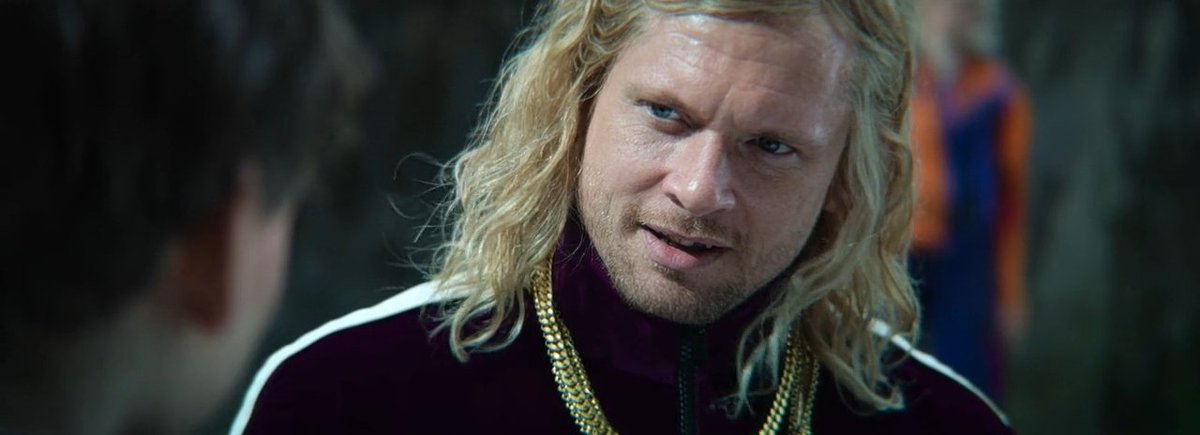
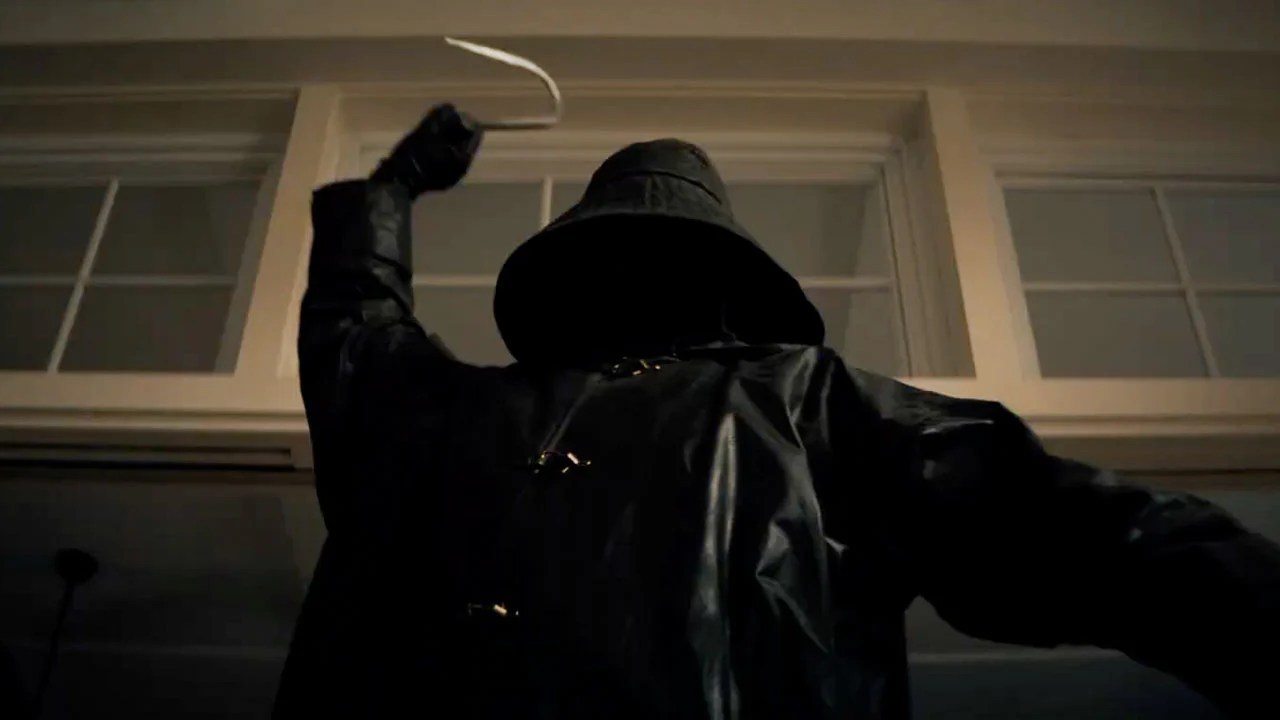
There’s an abundance of great shots in 28 Years Later. A simple medium shot of houses has the beauty of the mundane as Isla (Jodie Comer) wakes up and thinks she’s not on a post-apocalyptic island. There’s also a mythic grandeur to the series of shots that depict Spike’s (Alfie Williams) and Jamie’s (Aaron Taylor-Johnson) hurried return to their island home. However, the above shot of Jimmy Crystal (Jack O’Connell) resonates with me the most.
Like the film itself, it alludes to something sinister within British culture, namely, Crystal’s visual resemblance to Jimmy Savile. The infamous children’s presenter would go down in history as one of the worst predators with a large history of abuse that was only discovered after he passed away. I think that the truth of Savile was not discovered in the 28 Days Later universe, but he still carries weight as the Jimmy cult seems to carry out violent atrocious (in his name), etc. Or perhaps, they grew up with the presenter and fashioned themselves after him because he’s a beacon for innocence in their eyes.
At the same time, the shot visually tells the audience that Jimmy Crystal is the grown-up boy that we saw at the beginning of the movie. With a particular focus on the upside-down cross, the shot alludes to a wellspring of religious meaning in this universe. One hopes that future instalments will mine the depths of this set-up because a perverse religion based on Jimmy Saville is too good an idea.
Happy New Year, everyone. I hope you all have a wonderful 2026. I honestly did not know what the first post of the year should be. However, 28 Years Later: The Bone Temple is coming out soon, so what better way to prep for it than bringing back the one great shot series of posts? It’s been a while since I’ve done them, and they’re an excellent way of revisiting a film. So, with that said, what’s your favourite shot from 28 Days Later? Let me know in the comments below.
One Great Shot
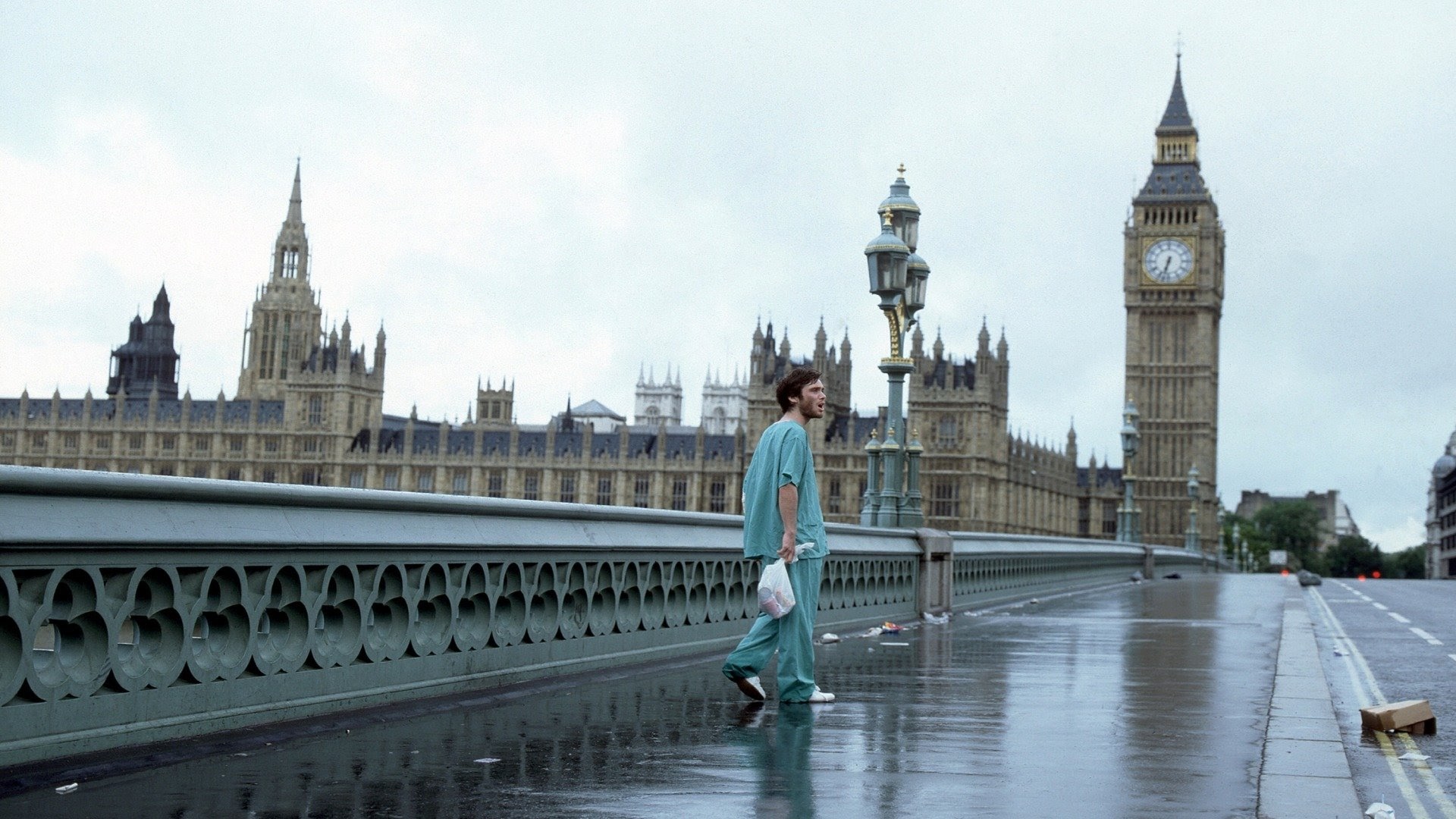
It’s amazing how much time can change the perception of a famous shot. Back in 2002, the above shot of Jim (Cillian Murphy) probably played as a statement piece. Zombie movies were rarely, if ever were set in the UK, and seeing one of London’s most famous landmarks (Big Ben) cements the sub-genre in our cinematic lexicon. However, in a post-COVID world, the shot takes on a starker and more haunting quality.
It’s no longer a novelty to see a Zombie film set in the UK. Instead, it’s a reminder of how life imitated art, as an empty London was precisely the state of affairs during the early stages of the first lockdown. In fact, the shot was like a short hand for what we were seeing on our television screens as a nation stayed indoors. At the same time, the shot has gained a newfound resonance in a post-pandemic world.
Jim’s occupation as a courier takes on a great significance because they was one of many essential workers who sacrificed their safety during the lockdown period. In this way, 28 Days Later is oddly prophetic in depicting what life would be like in a post-infection world. The humbleness of Jim’s occupation is also a great reminder of his simple beginnings and where he ends up, thus proving that any one of us can tap into our primal rage to save the ones we care about. It’s a vein that I hope is tapped into more in subsequent instalments of the 28 Years trilogy.
Compared to most other years, 2025 has been personally tough for me. For much of the time, I’ve felt like a boxer with their gloves up, responding to various events, whether self-inflicted or sheer dumb luck. But that has not diminished my love of cinema and what it has offered through the course of the year. Rather than just post pictures and quotes in a straightforward top ten list, I thought I’d discuss some of my favourite films of the year and the themes that have appealed to me.
The first and most pressing is the existential crisis that cinema has faced. Since its inception, the medium has faced challenges that were presumed to spell death, whether it’s the advent of sound or the ability to watch films at home (via physical media). However, between the pandemic, a sharp change in people’s viewing habits and the looming Netflix acquisition of Warner Bros, the cinematic experience has truly felt under threat.
In many instances, this has not felt true when attending certain movies this year. Revival screenings, such as Revenge of the Sith, felt like pre-pandemic cinematic experiences, when you never feared a movie would play to an empty crowd. My sold-out IMAX screening of Sinners somewhat restored my faith in the medium’s future. Given the nature of the film, it felt like a concert, with its musical sequences having the audience enraptured. On my first viewing, I read it as an interesting metaphor for cultural appropriation (through the lens of a vampire story). However, on subsequent viewings (aided by unique perspectives on the film), Sinners has really felt like a future classic to me, with its engaging mix of heartfelt drama and genre trappings that paint a remarkable portrait of what it is like to be an artist.
Despite being obviously high on Sinners, it’s not my favourite horror movie of the year. That honour goes to Weapons (along with my favourite film of the year). I’ve not felt that I was on the wavelength of a 2025 movie more than this sophomore effort from Zach Cregger. It really appealed to me because of its deft ability to be comedic and horrific. It also has themes that powerfully resonate, namely, in how we are all so caught up in our own torments that we can’t hope to engage with community tragedy. Instead, we only rage blindly and blame the wrong person because that’s all we can do. It’s also a film that’s yielded the most fascinating perspectives, given what it’s about. And like Sinners, it speaks to the power of the cinematic experience, as Cregger knows how to play with the audience through effective tension and humorous scenes.
Weapons and Sinners were actually good harbingers for a robust year for the horror genre. From 28 Years Later to The Monkey, the often-dismissed genre really came out to bat for the cinematic experience. The other horror picture that impressed me this year was Robert Eggers’ remake of Nosferatu. Herzog’s 1970s remake features in my top ten favourite films, so naturally, I was curious about Eggers’ interpretation. The result was an engrossing and much more dramatic version of the story that explored how a young woman’s sexuality is dismissed by men and society at large. It surprisingly moved me and made the best case for Eggers’ penchant for period authenticity. And like Weapons, it had a sublime dreamlike sequence that spoke to how the medium is still bursting with a creative, surreal spirit.
Horror also has an indelible presence in Rian Johnson’s latest Knives Out film- Wake Up Dead Man. There’s an ambitious flashback sequence that feels like a cross between Mario Bava’s and Dario Argento’s Italian sensibility (in terms of the use of colour and tone). The sequence depicts the breakdown of Jefferson Wicks’ (Josh Brolin) mother, Grace, who smashes up the church to look for her inheritance. Throughout the film, she’s labelled as the “harlot whore.” As much as the film is a microcosm for radicalisation in Trump’s America, Dead Man is equally about the killer coming to terms with Grace’s plight (a sort of wrestling with how the American conscience has contended with the MeToo movement). In this regard, it pairs well with Eggers’ Nosferatu remake because it’s about how Willem Dafoe’s character comes to understand and empathise with Lily Rose Depp’s Ellen.
Two other films that had surprising thematic ties were Avatar: Fire and Ash and Hedda. The former, insofar as Jake Sully’s (Sam Worthington) persistent appeal to Miles Quaritch (Stephen Lang) to gain a new perspective in his Avatar body. To paraphrase Jake- “You got new eyes, colonel, learn to open them.” In Nia Dacosta’s bold new interpretation of Henrik Ibsen’s famous play, Hedda (Tessa Thompson) is now a black, bisexual socialite who still harbours complicated feelings for her former flame, Eileen Lovborg (Nina Hoss). Like Jake, Lovborg equally appeals to Hedda to make something of her life other than continuing her persistent cycle of toying and torture of people. In today’s divided age, the empathetic reaching across from people whom we seemingly hold in contempt is as beautiful as it is stark.
Equally as striking was the earnest depiction of goodness in James Gunn’s Superman. On my first viewing of Superman, I was critical of the picture for its seemingly erratic nature. However, on subsequent viewings, I’ve found it to be a comforting and exciting new interpretation of the Man of Steel. Whilst Gunn’s irreverence is evident here, I never felt he was demeaning Superman; instead, he proudly displayed his humanity and ability to see the good in everyone. As he says to Lois in my favourite scene- “Maybe that’s the real punk rock.”
But as ever, no year is ever plain sailing for cinema and 2025 was no exception. If I were to bundle my assessment of the films that disappointed me, then it would come from directors I hold in high regard. By far, my least favourite film of the year is Ari Aster’s Eddington. It’s an indulgent, miscalculated and ultimately shallow experience. Aster’s exploration of how the pandemic changed us never fails to feel surface. I would give it credit if it were at least funny (from a satirical point of view), but it can barely be called a comedy. Instead, it sleepwalks from one social trend to another with a lazy shrug at what it’s saying. Beau is Afraid still remains Aster’s most divisive film, but for me, that effort had a clearer sense of what it was about. Eddington makes one point and keeps hitting it: the pandemic turns us all into human silos who fail to engage rationally with one another. I got that from moment one and still got it as credits rolled.
In the same vein, but not nearly as ruinous, was Paul Thomas Anderson’s One Battle After Another. Whilst there’s a lot about the film that I appreciate, it felt like a lesser effort from the great American director. This comes down to how shallow it is in addressing its politics and the struggle between motherhood and being a rebellious soul. As such, Battle felt like a film I could admire more then fully embrace.
The final movie I would put in the mixed-to-bad category is Thunderbolts.* Like Battle, it has some admirable parts. This mostly comes in the form of the third act, which depicts depression with a touching sense of empathy, and, like the best comics, uses it as fuel to power its storytelling. However, for much of the time, I found the typical MCU humour undercut moments of sincerity. Coupled with an abrupt ending that had the quality of winging it, and you have an average if not great MCU movie.
To tie everything together, this year’s Netflix movies have proven that there are still filmmakers who create work meant for the big screen. Guillermo del Toro’s resplendent Gothic imagery in Frankenstein was made for the cinema, often combining a sweeping and lush romantic quality that feels in keeping with the time period. And the set design of the central location in Wake Up Dead Man has a grandness that only a big screen can project. In my more pessimistic moments, I’ve thought about the next generation of filmmakers who are not beholden to the cinematic experience and instead have relied on TikTok and YouTube for their stories.
This year marked the release of two big films by big YouTubers. The first was Bring Her Back by Michael Philippou and Danny Philippou (of RackaRacka fame). Whilst I was mainly lukewarm on it, it was still an earnest and, at times, quite disturbing effort (although not as good as their first feature, Talk to Me). The second was Shelby Oaks by Chris Stuckmann. Oaks has had a compelling development. Initially, it was funded by backers on Kickstarter, picked up by Neon and eventually brought to the attention of Mike Flanagan. The film surprised me in its quality and subtext. It’s a film that comments on YouTube and its culture whilst depicting how tragedy can make us fall into the cycle of documenting our lives. Perhaps more than in his reviews, I felt Stuckmann’s love of cinema in every frame, and his fondness for Spielberg and Shyamalan, clearly on display.
It’s honestly great to see folks of my generation who grew up on YouTube and made it part of their identity be able to transition into making movies. It may be “Just a fool’s hope”, as Gandalf says, but it’s the one trend in 2025 that has made me hopeful about the future of cinematic storytelling.
Given the times that Tron has entered my life, I’m astonished that the franchise has been met with stony silence on the blog. Tron Legacy was my first midnight screening, and my first viewing of the original was a nostalgic time for me. Ares comes with a bit of mild curiosity, if not a slightly raised eyebrow. So, with that said, have you seen the latest Tron movie? Let me know in the comments below.
Brief Consideration
The Tron franchise is unique in that it’s been like a slow-evolving Pokémon that’s shed much of its identity, with each entry effectively a reboot (with loose connective tissue). This was not much of a problem for the 2011 film Tron Legacy, which made the series soar to subtextual heaven with its musings about creation and the legacy of its digital world. For my money, it’s near the top of the legacy sequels pile because it was never concerned with replication but rather innovation of its universe and aesthetic.
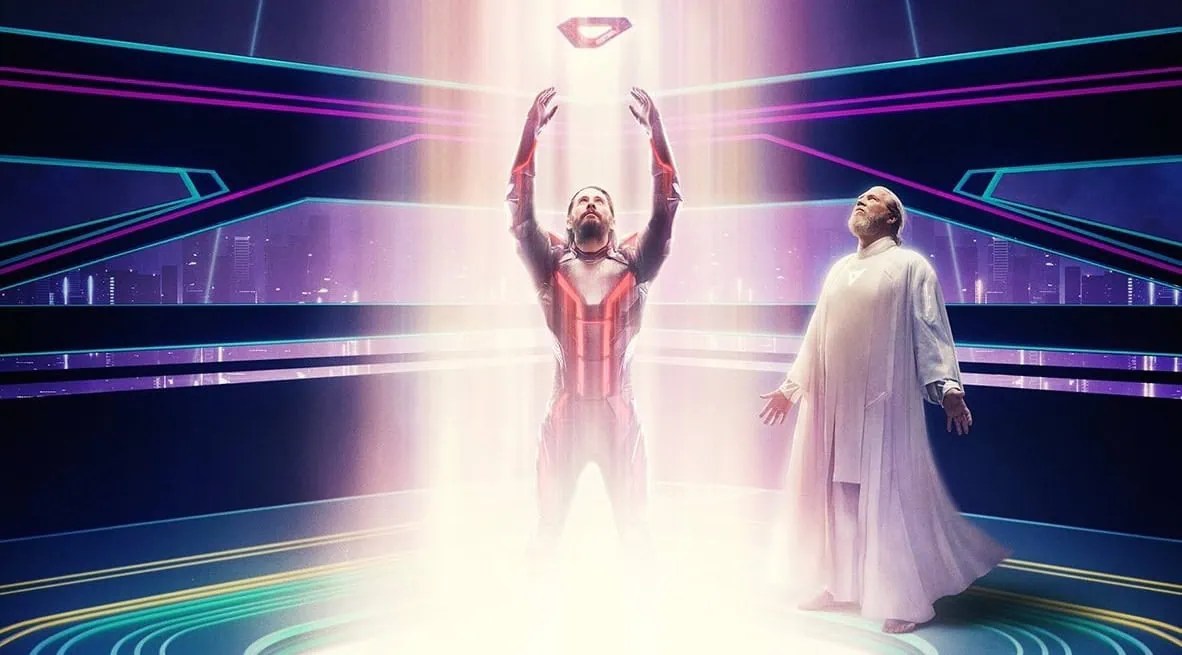
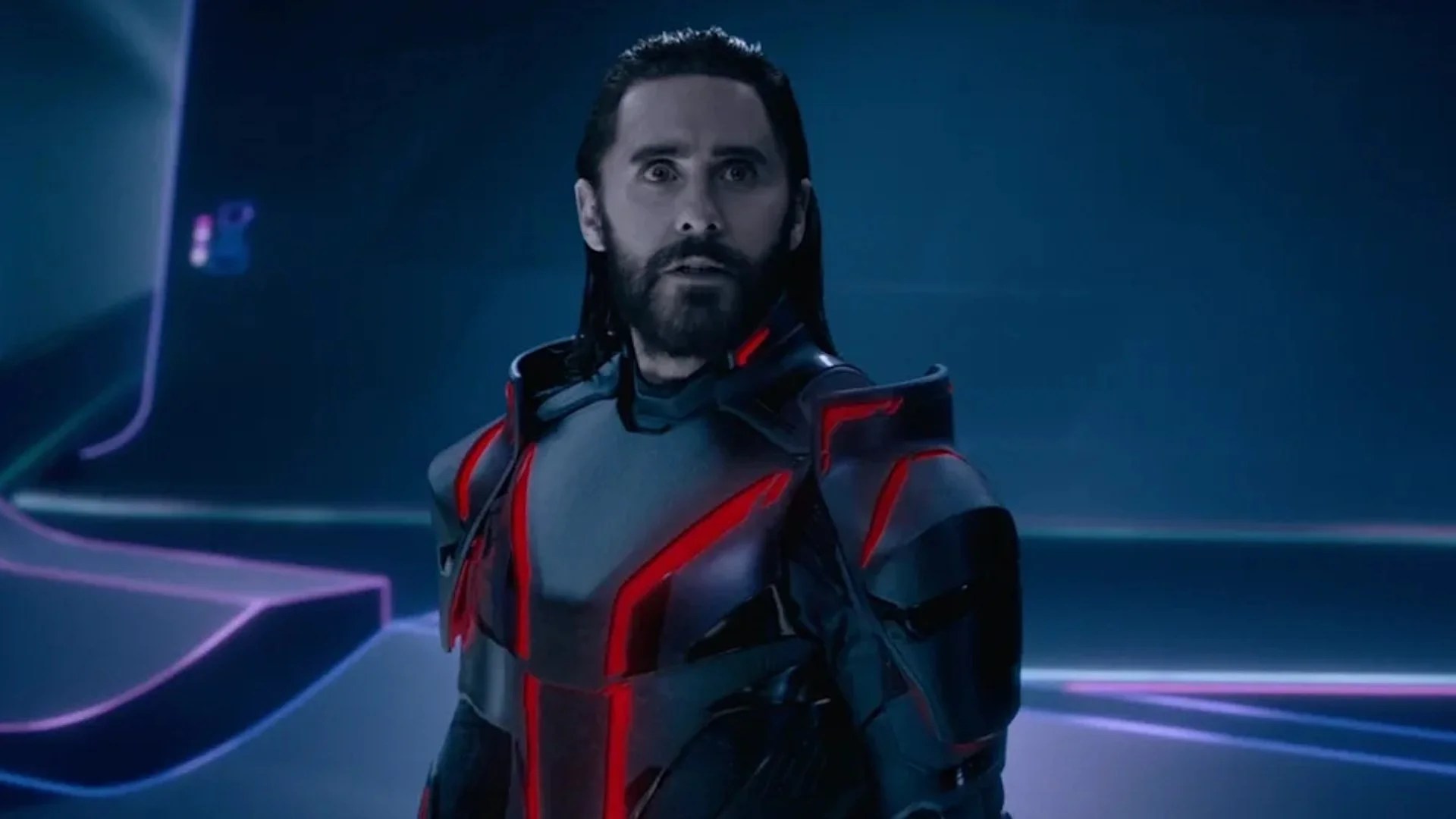
Tron Ares feels like it’s gone back to basics. For a franchise that’s had video games in its bones, it’s surprising that the 2025 film has chosen to embrace the medium entirely. The titular Ares (Jared Leto) refers to a program poised to be the soldier of the future, one that never tires and is easily replaceable. The catch of his creation is that he only lasts 30 minutes before he disintegrates. With this in mind, the movie depicts the search and hunt for the Permeance code, which will resolve this problem. The central figures chasing this MacGuffin are the CEO of Dillinger Systems, Julian (Evan Peters), and Eve Kim (Greta Lee), the current CEO of ENCOM.
In spirit, Ares does feel like its prior entries, insofar as it depicts corporate espionage. In fact, the film’s best sequence is a hacking of ENCOM that results in a grid-based face-off between Ares and ENCOM’s various security goons. The difference is in the emphasis. In the past, sequences like this would say things about the character, whether it’s Sam Flynn’s relationship with his birthright (ENCOM) or Ed Dillinger’s (David Warner) greed.
Unfortunately, for most of its running time, Ares exists at this level of simplicity, where its setup is clear but leaves little impact. And this is why it feels like an old-school video game: it has a threadbare narrative and character motivation that serve its plot, aka the acquisition of the Permeance code.
The actors do their best to elevate the material. Greta Lee, in particular, gives her part some emotional truth and a sense of determinism, even if the screenplay lets her down with a one-note purpose and motivation. Jared Leto injects the central character with a wry detachment that occasionally amuses. But it becomes problematic in his scenes with Kevin Flynn (Jeff Bridges). Their scenes reinforce how much Bridges has been a boon for the series, effortlessly walking the tight-rope between enlightened and casual that immediately feels disarming. Unfortunately, Leto does not have that same quality,
And despite some commendable filmmaking (medium shots of Light Cycles are the stuff of IMAX wonder) and the sublime industrial highs of Nine Inch Niles’ soundtrack, Ares feels like an unfortunate climbdown, even when it was pleasing me with its base thrills. After Legacy, I simply expected and wanted more.
Hello everyone. Rather than start with a quippy quote or a reason for my recent prolonged absence, I will instead share a little tidbit about my process. Typically, for movies that really resonate with me, I don’t write about them (for a while, if at all). This is because I like living with them and seeing how they change for me over time. Wicked has been one of those films for me (warts and all), bringing me comfort during some of my more tougher times in the last year or so. For this reason and because I initially missed it at the cinema, I decided to go to a double bill last night. The experience was interesting to say the least. Are you seeing Wicked: For Good this weekend? Let me know in the comments below.
Review
Wicked had its heart in the right place. It had a gooey emotional centre (courtesy of its two main leads) that combined with some quite potent subtext made the film a commendable prestige-esque musical. From a technical and filmmaking perspective, Wicked: For Good is better than its predecessor, even if it never fails to feel safe.
The sequel picks up five years after the original. It depicts Glinda (Ariana Grande) and Elphaba (Cynthia Erivo) further entrenching themselves in their respective roles as the Good Witch and the Wicked Witch of the West.
Wicked’s greatest weakness lay in its technical aspects. For one, its muted colour palette, combined with a digital sheen aesthetic, undermined its power as a musical. The timid filmmaking and staging of certain songs did not help either. For the most part, For Good fixes this issue with a brighter sheen and much more interesting sequences. The opening is a Hitchcockian-inspired sequence as the audience waits with baited breath as some animals free themselves from building the yellow brick road.
Jon M. Chu also flirts with horror, as some of the sequences have a classical sense of the genre, such as a scene in the third act that plays with wide-angle shots to depict an ironic twist on the Frankenstein story. But above all, I really appreciated how Chu was bolder with the camera; many scenes have more breathing room, with much more detail, as they’re not confined to close-ups and instead let the characters feel more lived-in in their space. Myron Kerstein’s slick editing also helps, with a persistent sense of propulsion and ambitious cross-cutting.
Subtextually, Wicked was about how social discord is managed through scapegoating an innocent group whose voices and presence are literally silenced. At the same time, there was a sense that the film was about activism, when it was performative and when it was genuine. For Good is about complicity in this system and how the two main characters perpetuate it by playing into their public personas. There was something tragically ironic and powerful about how Elphaba’s attempts at magic cause ruin and harm, which makes her journey from animal advocate to privately acknowledging her public moniker all the more potent.
Cynthia Erivo effortlessly conveys this transformation, particularly in the song “No Good Deed,” which is as much a statement piece as a Disney-esque villain song. For the most part, Elphaba’s storyline works. I also appreciated the layers that Jeff Goldblum adds to the Wizard. His performance does not feel phone-in, but rather good, insofar as it conveys a weight of shame and subtle showmanship.
On paper, Glinda has the more interesting storyline. She’s a figurehead who has no real sense of magic, but eventually discovers that her true power is being good, thereby turning her performative morality in the first film into reality. However, in execution, it appears quite muddled. This is mostly due to the character feeling very passive. It always feels like stuff just happens to Glinda, whereas Elphaba faces the consequences of her choices. There’s a bit of flirting with Glinda being the true main character of the story, but this is undermined by a contrived ending, along with a few other narrative elements that don’t feel as bold as they should have.
This is a shame, as Ariane Grande has been the MVP of the musical duology, often combining sublime comic timing with subtle flickers of emotion that break the pristine image Glinda has of herself. This is apparent in the new song, “The Girl in the Bubble”, which subverts and adds to Glinda looking at herself in the mirror. Despite great moments like this, there’s a sense that the material lets down the character.
This may be the most challenging preamble I have to write. It’s not due to a sense of writer’s block, but rather because it may compromise my ethos for this blog. I’ve never taken myself seriously because I’m just another schmo with enough gumption to hit send after a review has been written. The same could be said about my personal life, where I don’t broadcast my problems, but rather deal with them in my own way. As such, after a protracted absence, I try to deal with it with some jokey movie quote and a half-baked theatre stage metaphor.
But that’s not the case this time. Without going into it too much, my motivation has sunk to an all-time low. Part of this has come from falling ill recently and it lingering a little longer than necessary. But even my usual joy of the Halloween season has been absent. But hopefully that’s at an end now, and I’m glad to be back.
One Battle After Another came out during a self-imposed isolation, and despite the heavy hitters of horror cinema also being released at the same time, it’s the one film I most wanted to see. So, with that in mind, have you seen Paul Thomas Anderson’s latest? Let me know in the comments below.
Review
Early into One Battle After Another, a cocksure Perfidia (Teyana Taylor) states, “Make it good. Make it bright. Impress Me.” The line is tacit in conveying the weight of a new Paul Thomas Anderson film. For the most part, Anderson’s latest is a rollicking and often quite hilarious experience, but it lacks the depth of his other films. Partly based on Thomas Pynchon’s Vineland, One Battle After Another is about a former revolutionary, Bob (Leonardo DiCaprio), who must protect his daughter, Willa (Chase Infiniti), from a determined Colonel- Lockjaw (Sean Penn).
Whilst Anderson’s adaptation of Pynchon’s Inherent Vice primarily engaged as an experiential piece of cinema that plays like a mosaic of an era, One Battle feels much more in line with the director’s previous films. For one, Anderson has had a knack for portraying the strife between parents and children through quite an interesting lens (such as capitalism in There Will Be Blood and cycles of abuse in Magnolia).
There’s an emotional truth to this aspect in Battle, particularly in a touching coda that feels the closest to the confessional quality that permeated Magnolia. And conceptually, some fascinating dynamics are signposted but never explored, such as Perfidia’s revolutionary streak clashing with her duties as a mother.
But One Battle’s true Achilles heel comes from the handling of Lockjaw. Even when Anderson draws his antagonists in heightened ways, such as Philip Seymour Hoffman’s abrasive Dean Trumbull in Punch-Drunk Love, there’s a trace of humanity in them. The same could not be said for the Colonel. He’s cartoony on the page, and Sean Penn’s performance does not help matters either, playing him with the twitchy energy of an alien’s first day in human skin. This is a shame, as there are seeds of his revulsion and attraction to something he hates; however, this aspect had more finesse in the portrayal of Frollo from Disney’s The Hunchback of Notre Dame.
What remains is a propulsive and energetic verve that strangely works with Anderson’s filmmaking sensibilities. The use of large open spaces and patient cutting, which has become a staple of his modern work, is given a vivid and classical sense with the use of VistaVision. It particularly lends his third act a beauty and tension, as long shots of the desert landscape result in a protracted Hitchcockian-inspired car chase. This quality is also present in Jonny Greenwood’s score, which is a blend of tension-rising piano music and discordant xylophone use.
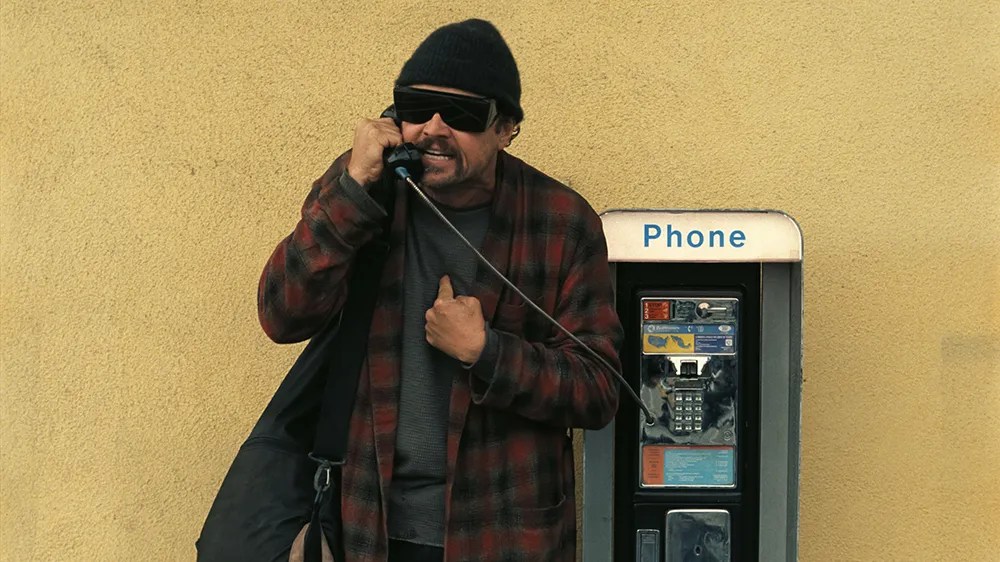
In this way, One Battle almost always exists in the planning and motion. Methodical and buttoned-up meetings, contrasted with the franticness of the best-laid plans going awry, are where the film gets its comedic mileage. This is also helped by Leonardo DiCaprio and Benicio Del Toro’s double act that plays like an earnest replay of Fear and Loathing in Las Vegas. DiCaprio’s signature anger and comic timing are also used to significant effect, threatening to almost shake the film up, even when the camera remains static. Chase Infiniti also casts a great impression with a performance that’s equal parts determined and vulnerable.
However, despite my goodwill towards these aspects of the film, One Battle After Another feels more concerned with the quirky pitstops of the journey than with its meaning. Much like Ari Aster’s recent picture, Eddington, its themes and politicking are surface-level and could have benefited from more refinement.
For fear of sounding repetitive, I was almost going to do a variant on the last preamble due to how it took a little longer than usual to gather my thoughts on Weapons. And for reasons that still seem out of reach, I’m still searching for why. But that’s foolhardy speculation. Have you had a chance to see Zach Cregger’s Weapons this weekend? Let me know in the comments below.
Brief Consideration
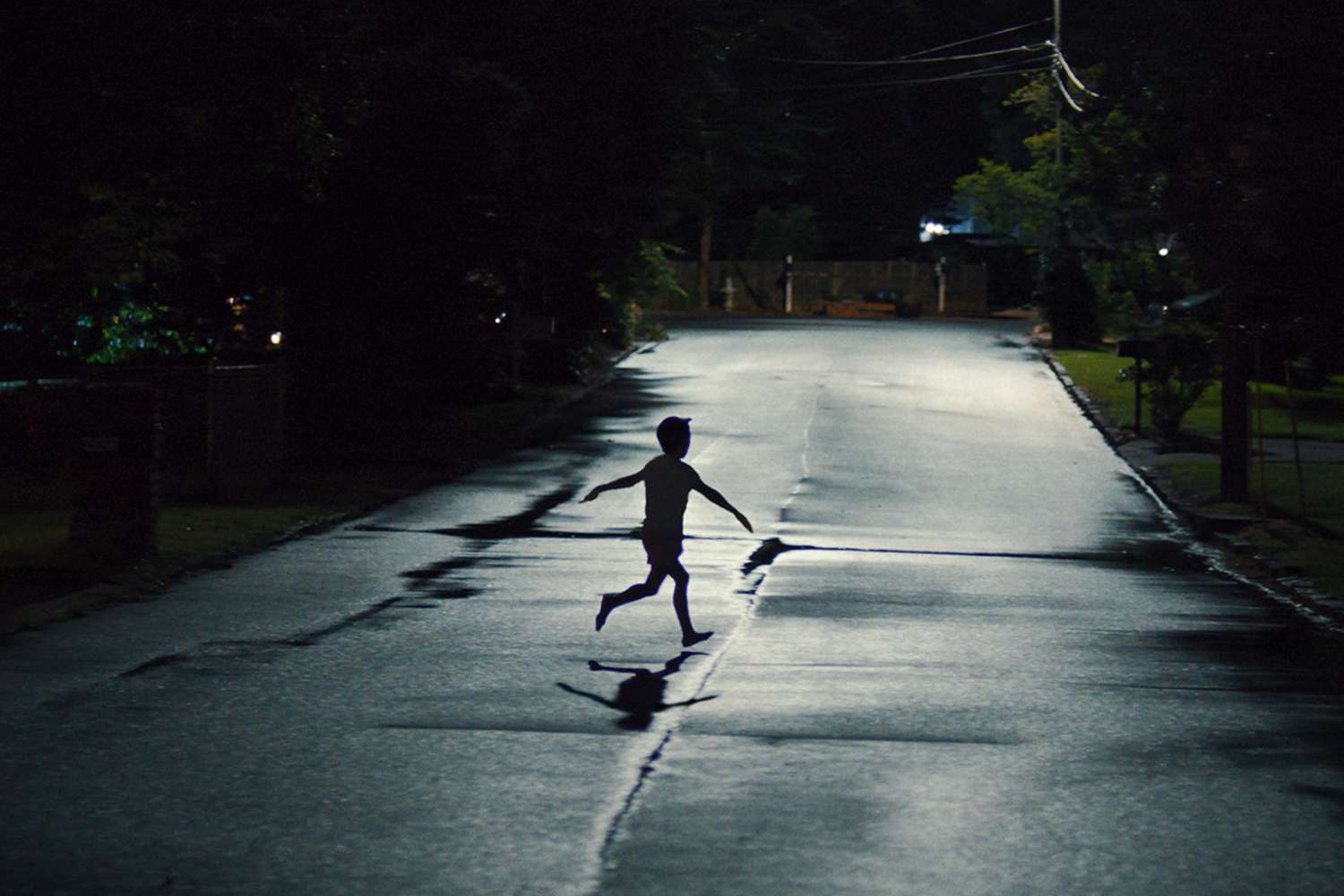
In an era where horror movies seem to be at near bursting point in terms of new releases, Zach Cregger’s Barbarian stood out. This was due to how it felt like a feature-length expansion of the Parlour scene from Psycho, in which both characters were acutely aware of the inherent distrust and danger from their inconvenient living arrangement. Cregger’s follow-up, Weapons, which depicts a community grappling with the sudden disappearance of 17 school children, is a much more ambitious and sly effort.
Rather than rely on a singular location and nesting doll narrative that fleshes out said location and the themes it fosters, Weapons feels much more expansive and fairy tale-esque in its storytelling. In fact, its primary source of inspiration is Magnolia in terms of how it uses its characters to sketch out its themes. The film is split into different parts that tell the story from the vantage point of many characters. The anthology-esque approach is bold and occasionally veers into leading down the garden path territory.
However, I think the structure (particularly emphasised in the sections about a cop and a drug addict) is part of the thematic point. Despite the central tragedy that has shaken the Maybrook community, the characters are far too caught up in their bullshit that they can’t see the forest for the trees when it comes to solving the central problem. They are an embodiment of the famous line from Norman Bates- “We are all in our private traps.” And as such, the stark title “Weapons” is not just how the central evil twists innocence and familiarity for selfish ends, but also how we are capable of doing that to each other (regardless of external manipulation).
The Bates quote also takes on significant meaning in the final stretch of the film, where we discover the nature of the antagonist and the psychological toll it takes on one character in particular. There’s a gut-wrenching emotional truth to these sections that’s as much an indictment of the systems in place as it is the notion of complicity in silence.
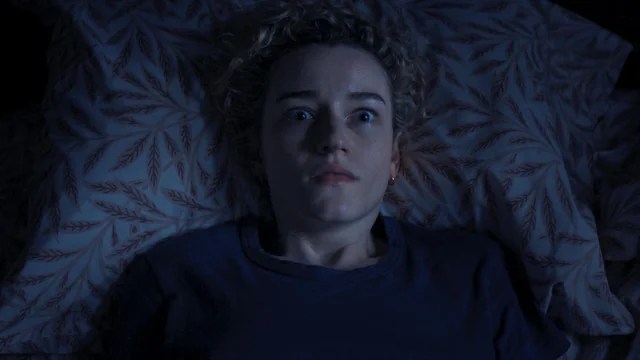
Cregger’s subtle direction impresses, particularly in instances when he plays with focus, often blurring the adult characters, which encapsulates the themes quite elegantly. He also juxtaposes this with quite exact and patient medium shots that give rise to a nerve-shattering tension that had me on the edge of my seat. And in a film with quite an ensemble cast, Julia Garner strikes a chord in a performance that balances fragility in the face of mounting public scrutiny and rarefied emphatic defiance.
As I sit here and write these words, I realise that this is one of those few times when I have writer’s block. So, dear reader, the following blog post is as much of a white knuckle ride for you as it will be for me. It’s likely because First Steps was my most anticipated movie of the year, or I don’t have much to say. Time will be the judge and jury on that score. With that said, have you seen Fantastic Four: First Steps? Let me know in the comments below.
Review
From a bonkers, unofficial Roger Corman-produced effort to the body horror-inspired 2015 reboot, Fantastic Four has had the worst luck when it comes to gaining silver screen prestige. This has been compounded by The Incredibles, which took the premise of a familial superhero team and delivered a jolting movie about middle-aged malaise, fanboy culture and exceptionalism. In fitting fashion, the 4th time is indeed the charm. The MCU’s debut of Marvel’s First Family is an engrossing effort that delivers in its family dynamics and imaginative cosmic scale.
The 2025 movie depicts the superpowered team 3 years into their careers as protectors of the Earth. However, life becomes harder for the team when, on the domestic front, Sue Storm (Venessa Kirby) and Reed Richards (Pedro Pascal) are expecting their first child. This happens amid an alien visitor – Silver Surfer (Julia Garner), heralding the arrival of a cosmic being, Galactus (Ralph Ineson), who intends to devour the Earth.
Much like WandaVision used a specific era of Americana to explore potent issues such as grief and power, First Steps uses the trappings of a retro-futuristic ’60s to fuel its drama and themes. In this case, the positive and pristine picture of America is akin to The Original Series of Star Trek, whereby humanity is inherently optimistic that it can resolve any difference, war, or problem that plagues the planet. At the same time, this TOS quality extends to the central drama of the movie, which is whether or not Sue and Reed sacrifice their child for Galactus to overlook their planet and, in turn, spare humanity.
On the one hand, this central moral conundrum matches the format of a TOS episode where there would be an ethical conflict or philosophical quandary that would be solved by Kirk, Spock and Bones, who represent different aspects of the human mind, etc. In First Steps, this exploration leads to a community’s broad definition of family in which the Fantastic Four feel responsible for everyone on Planet Earth as extensions of their own family. In this sense, there are also parallels to Star Trek, insofar as the team represents Earth, much like the original crew in TOS, in terms of their Five-Year mission, etc. This is illustrated in a plot point where Reed and his team leave the Earth to find and negotiate with Galactus and the Surfer.
The conflict also leads to drama about the notion of raising a superpowered being whose future is particularly uncertain. There’s great emotional truth in sequences, particularly a scene where Reed decides to stop studying baby Franklin because he believes it’s better to see how he turns out as opposed to analysing and predicting his powers. At the heart of Reed’s arc is his declaration that “Nothing will change” regarding Franklin. As a starting point for a metaphor about parenting, it’s solid. However, it could have been finessed to affect the entire team as opposed to just Reed and Sue.
And this ties into my central criticism of First Steps. Whilst I appreciate that it’s in its own bubble compared to the rest of the MCU, it could have been bolder in some of its storytelling because it’s so insular. The film exists on a strange line between breathless (in its world-building) and sometimes belaboured in other aspects. The result is that the stakes feel personal but not global because we don’t see enough of the world.
This is a shame, as First Steps feels like the most lived-in comic book movie since Watchmen. The set design is elaborate and detailed, with areas such as Ben Grimm’s school having a realistic texture. This is complemented by the use of scale, which makes the cosmic threat feel tangible. From Galactus’s Kaiju-esque towering presence to the Surfer’s balletic movements, First Steps does not skimp out on its galactic entities. In this regard, the movie feels like a loving tribute to Jack Kirby’s artwork that often shone with an enchanting power. Matt Shakman (primary director of WandaVision) also commendably depicts this scale in the filmmaking, whether it’s long shots of the Surfer’s movements or medium shots where Galactus’ body parts take up the entire frame. Also, like WandaVision, Shakman plays with aspect ratios and film format to immerse the viewer in the retro world (such as an early montage in grainy 16mm).
Despite having some initial rough scenes, Pedro Pascal won me over as Reed because of the quiet intensity he brought to the role. He’s often the person who comes up with the least popular answer to a moral problem, and Pascal’s reluctance to articulate that felt unique and human. Pascal is matched by Vanessa Kirby, who brings a grounded poise to Sue Storm and arguably is the soul of the quartet. Ben Grimm gets the least on the page, but Ebon Moss-Bachrach has a salt-of-the-earth charm that gives a lot of his scenes a genuine weight and pathos. But Julia Garner steals the show as the newly interpreted Silver Surfer, whether reflecting on her almost sensual movements or forthright vocals that have a semblance of tragic resignation. It does not hurt that the silver-coloured being has a haunting theme by Michael Giacchino, whose use of choral elements provides the film with its optimistic and imaginative punch.
“Well, well, well”, as Angelina Jolie’s Maleficent once said. There’s no reason for the quote other than to create a dramatic opening to the post. This is perhaps the longest time since I last saw a film and wrote about it. It’s not for lack of trying. It’s partly been down to time and a genuine bafflement about how I feel about the film itself. However, that stone has been turned, and with that said, have you seen the new I Know What You Did Last Summer? Let me know in the comments below.
Brief Consideration
Despite having the same screenwriter as Scream (Kevin Williamson), the original I Know What You Did Last Summer was a far more humble genre picture. It barely rose above mediocrity, thanks to some exciting sequences, its coastal setting, and a likeable cast. With this in mind, a legacy sequel would seem like a low-stakes and non-offensive trifle. However, the 2025 entry is anything but with an angle that shoots for the moon but never leaves the stratosphere due to a fundamentally muddled approach.
Taking place nearly 30 years after the original, the legacy sequel tells the story of Ava (Chase Sui Wonders), who returns to Southport for her friend’s engagement party. Whilst out there, she catches up with old college buddies who decide to take an inebriated, light night drive. Tragedy strikes when one of the friends causes a driver to steer off course. Whilst the group tries their best to save the driver from falling from a great height, they ultimately fail and vow to walk away, keeping the event a secret of silence. A year later, Ava’s best friend Danica (Madelyn Cline) has another engagement party. But this time, it has an ominous air as she receives an anonymous letter with the declaration- “I Know What You Did Last Summer.” The message sparks a chain of events that has echoes of the 1997 Southport attacks.
The second sequel exists on a tightrope between brutal and subversive. For every new grisly slasher sequence, there’s a twisty plot element. In theory, this is exciting, but in execution, it comes across as quite flawed. Critically, the new slasher film aims to add a dimension of empathy (especially around its central female friendship), but instead, it ends up feeling quite callous. For every instance of emphatic check-in and concern, there’s a shot fired at the notion of self-care. This chiefly comes in the film’s best sequence, where Danica’s boyfriend is murdered whilst she’s listening to a relaxation tape in a bubble bath. Through some savage editing and exacting medium shots, the sequence has tension and fun. However, it solidifies the film’s fine line between subversive and genuine.
This aspect is encapsulated in the twist ending. Conceptually, it builds upon some of the red herring material from the original film. However, given the events of the second film and the thematic mines this movie attempts to explore, it comes across as relatively shallow. As a means for the events of the original to gain prominence, it’s interesting. Still, we never hear the other side of the conspiracy beyond the superficial, immediate effects for some of the central cast. Along with an interesting idea of how one of the characters is processing the events sexually, you have a film that has more bark than bite. This is a shame as Jennifer Love Hewitt’s and Chase Sui’s performances occasionally imbue the movie with a fleeting sense of emotional truth.
If there’s one film that awakened me from my longer review-based slumber, then it would have to be a Superman film directed by James Gunn. He’s a filmmaker that I’ve enjoyed writing about over the year despite my misgivings with some, if not all, of his work. So, without further ado, I shall not leave you in suspense. Have you seen Superman this weekend? Let me know in the comments below.
Review
At this point, every new James Gunn movie feels like a referendum on the man’s work. For all his cult movie sensibility and Troma roots, I’m often left feeling quite emotionally distant from most of his output (courtesy of a mixture of sentimentality and irreverence). So, an inquisitive eyebrow was raised when he decided to tackle Superman, who arguably is one of the most wholesome characters in all of comics. The results are fascinating, if not a little scattered. Gunn’s 2025 interpretation of the Man of Steel throws a lot at the wall, but most of it sticks with a touching and thrilling sense of play that feels refreshing.
The newest Superman feature depicts the title character 3 years into his role as Metropolis’ protector. After experiencing his first defeat at the hands of another meta-human (superpowered beings) and getting involved in an international incident, Superman must come to terms with his role as a superhero, as mounting pressure comes from both his personal and costumed life.
The most commendable aspect of this newest incarnation is that it emphasises the “Man” in Superman. Part of this comes from the comic inspirations (mainly in the form of Grant Morrison and Frank Quitely’s All-Star Superman). The comic arguably marks Superman at his most wacky, combining many Silver Age ideas with a commendable sense of pathos through the character’s terminal plight.
Gunn takes this heart and goofiness as a mantra for his incarnation as he stuffs the movie (to near breaking point at times) with a lot of Silver Age material. Elements such as Krypto, a screeching Hawkgirl (Isabela Merced) and Guy Gardner (Nathan Fillion) exist without ceremony or buildup. Instead, they’re staples that permeate the world. In this way, Gunn’s sensibility reminded me a lot of George Lucas’ world-building in the Prequel Trilogy, whereby the excitement came from what visuals were just around the corner.
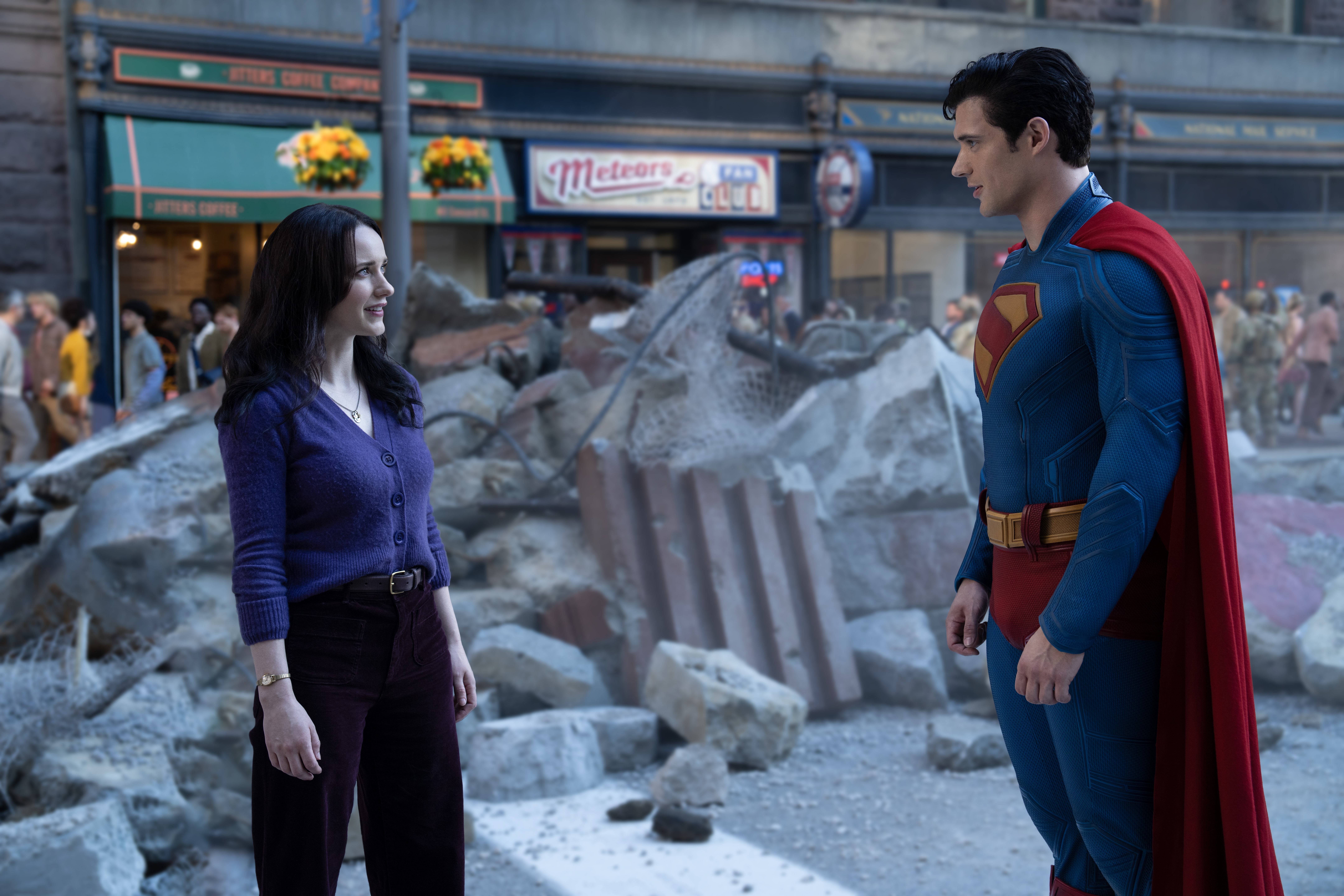
Gunn juxtaposes with some quite disciplined filmmaking. Even in his lesser efforts, I’ve appreciated how the director utilizes Mise-en-scène. In Superman, he uses the technique to punctuate his point about superheroes, insofar as they’re inherently unglamorous and fleeting. This occurs in the scene where Lois (Rachel Brosnahan) and Clark (David Corenswet) have an intimate conversation, set against the backdrop of the Justice Gang taking on a colourful threat. Medium shots and close-ups of the couple play against a carefully projected image that features a maelstrom of colour from an alien threat that emits a purple beam of light. At once, it’s postmodern in its portrayal of how disengaged audiences have become from the skybeam threat in comic book movies. It also illustrates how much Gunn values the emotions and intimacy we share, as Lois and Clark strive to mend the cracks in their relationship.
I also appreciated the operatic use of close-ups, whether it’s an incandescent Lex Luthor (in the third act) or the moment where Lois looks back and sees Metamorpho (Anthony Carrigan) for the first time. The moment is uncanny and deeply human, reminding me of the grace notes of empathy displayed in Gunn’s first feature, Slither, where Elizabeth Banks’ character stared at her husband (in his monstrous new guise). Moments like this moved me, along with Lois seeing Clark’s childhood bedroom, as she reflects on the life he had before her. And the editing makes some savage cuts that reminded me of panel transitions. The boldest being when a character is dropped in the third act, and it cuts to fizzy tablet being dropped into a water bottle.
On the page, Superman has a lot of ambition, including exploring how the story of the character has always been an immigrant one, which plays into modern ideas of birtherism that parallels Trump’s questioning of Obama’s heritage. At the same time, there’s a new wrinkle of how Clark keeps his adopted parents at arm’s length in favour of his Kryptonian birth parents, whom he credits as the reason for his existence as Superman. This is compounded by Superman’s place in a brewing foreign war. All these elements are excellent, but they’re never given the finesse to be explored meaningfully, so they drift either as awkward ideas that are swept under the rug (at worst) or represent half-baked musings (at best).
This is a shame, as the actors can only lift the screenplay up so much. David Corenswet makes for a towering Man of Steel, playing the character with the self-assurance of an unyielding football manager. Rachel Brosnahan is a formidable presence as Lois, who has an ear and drive for a good story. Nicolas Hoult is relatable and obsessive as Lex Luthor, who holds a profound hatred for the Man of Steel. But Edi Gathegi steals the show as Mister Terrific, whose deadpan delivery and dry wit encapsulate Gunn’s ethos of superheroes in this film. They may be superficially extraordinary, but they can still be absent-minded and all too human in their mundane struggles.









 SGS On Film