
Preamble
After last week’s personal post and my time away from blogging, I’m feeling quite warm and fuzzy about returning to write a preamble (like finding an old pair of comfy slippers). But anyway, culture moves at the speed of lightning these days. As soon as I left my screening of Weapons last year, I was semi-aware of Zach Cregger’s next movie, which was a feature-length adaptation of Resident Evil. At first, I was quite opposed to it, preferring Cregger’s experimental storytelling. However, as time has gone on, I’ve become quite eager to see a new vision for my favourite horror game franchise. With that said, have you seen Resident Evil? Let me know in the comments below.
Brief Consideration
With a bold, bloody red title card and a terse synth score, Zach Cregger’s Resident Evil has the air of a movie you’d find on cable in the early hours of the morning. Compared to his previous films, this is a much more humble outing for the founding member of “The Whitest Kids U Know.” His previous horror efforts (Barbarian and Weapons) tackled potent topics such as the MeToo movement and social disenchantment. However, Cregger’s version of Resident Evil is a pure horror/comedy hybrid that evokes the survival horror genre in a primal way.
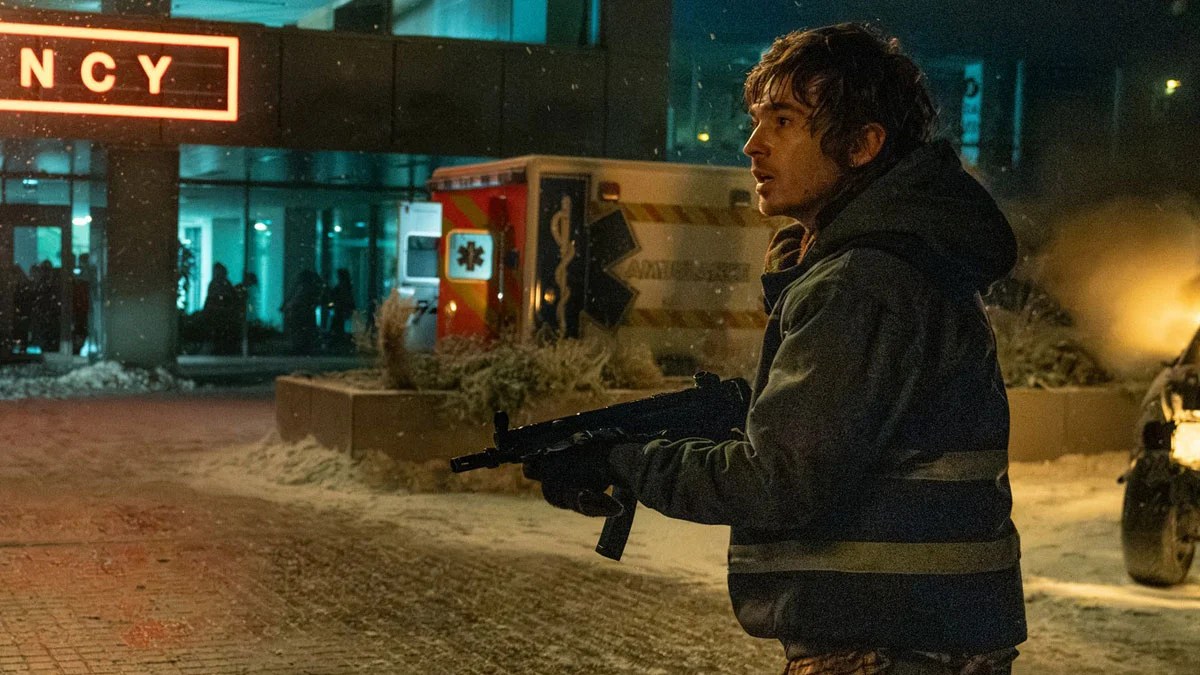
The 2026 adaptation depicts a hapless courier called Byran (Austin Abrams) who has to deliver an important package to a research facility in Raccoon City, which is in the midst of a zombie apocalypse.
A large part of why Resident Evil works is because of its moment-to-moment base thrills. Almost in real time, the movie captures how the video game franchise asks the player to confront survival. In fact, the main character is the closest that the franchise has had to an average person who has to contend with central horrific events. Austin Abrams’ performance injects Bryan with a palpable reliability, from his bewildered line readings to his accident-prone physicality.
He’s also heartfelt, particularly in an extended moment where he laments his choices and fate. Cregger’s screenplay does contain some touches of dark humour, namely how Byran’s timid desire to have a child with his girlfriend, Michelle (Sara Paxton), has ripples throughout the narrative. The fact that a deformed child proves to be his undoing and the character later has to confront childbirth via an infected maternity ward, is macabrely amusing.
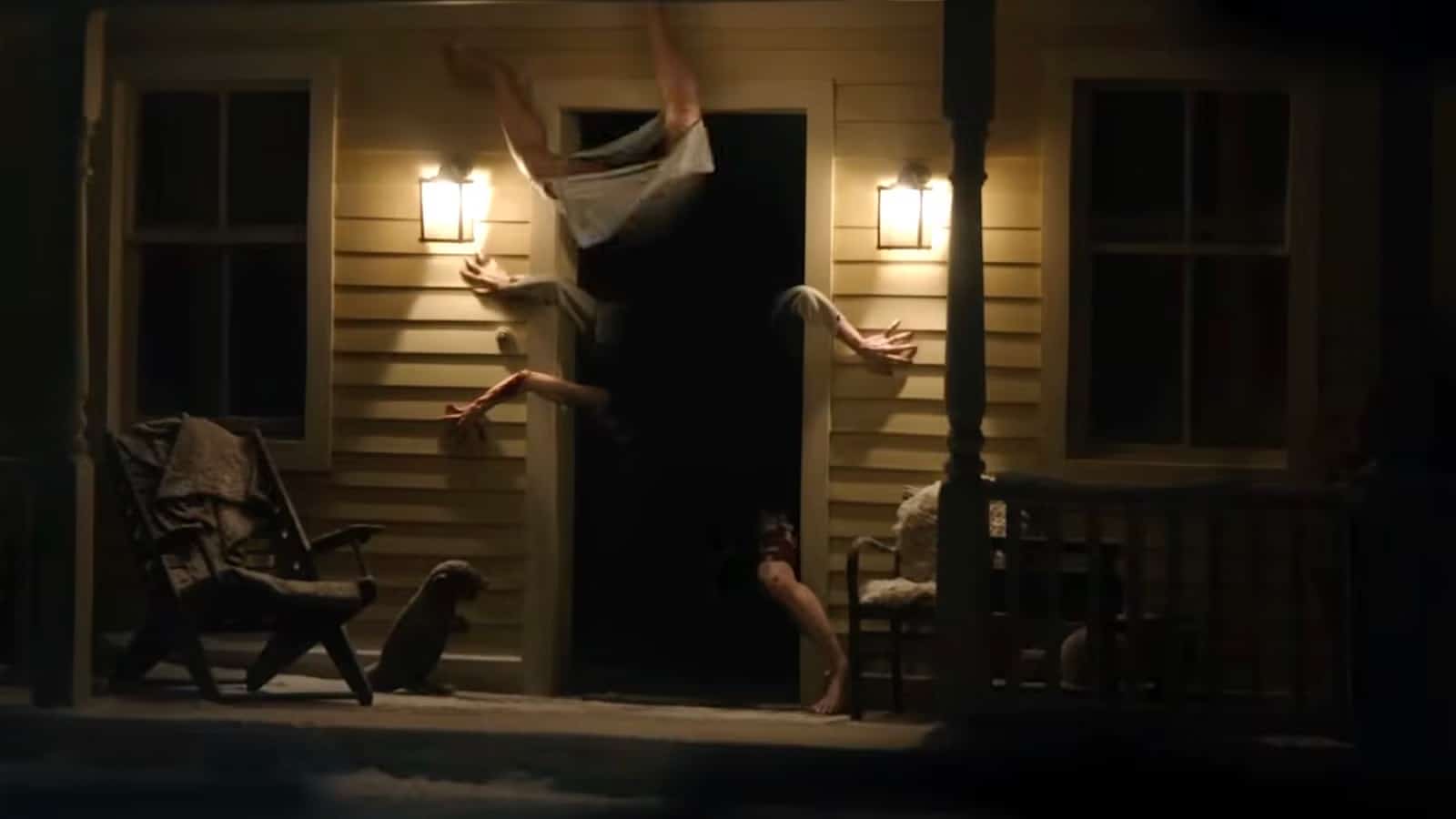
These moments are punctuated by hilarious physical comedy, such as Bryan putting down the arms of an infected woman trying to strike a zombie pose. The camera moves that struck me the most were instances of Cregger using point-of-view shots to evoke the feeling of the recent titles in the franchise (namely 7, 8, and 9).
The only aspect of the movie that gave me pause was Cregger’s postmodern touches. Byran is quite clearly drawn as someone who plays video games and uses that mindset to navigate many of the obstacles in his way. However, I felt this aspect needed a little more shading, as it just results in a few awkwardly delivered one-liners and an ending that skews more towards power fantasy than tragedy. The disconnect is quite jarring and results in the video game adaptation being Cregger’s least engaging effort (subtextually speaking).


