
Preamble
Its funny after writing a review that you feel there’s not enough powder (so to speak) for a premable. But the truth is, I’m really proud of my last post about Bride of Frankenstein, and I felt that following it up with another one great shot post (that I was not even sure about) did not seem right. So, I dived straight into The Bride! With that said, have you seen Maggie Gyllenhaal’s new interpretation of the Frankenstein story? Let me know in the comments below.
Review
From the Bride of Frankenstein to Poor Things, the female perspective of the Frankenstein story has been a large part of the fabric of cinema as much as the male one. It’s with this in mind that Maggie Gyllenhaal’s new version comes bellowing onto the stage, armed with an exclamation point. However, despite its brash exterior, the new vision proves to be frustratingly muddled and lacking in the courage of its storytelling convictions.
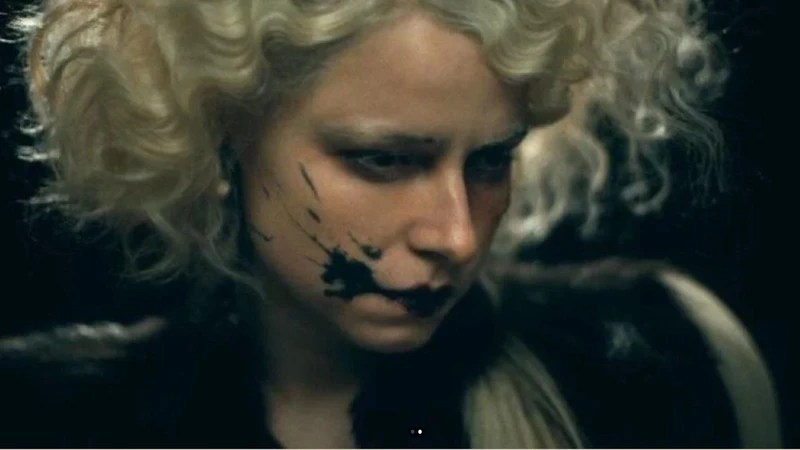
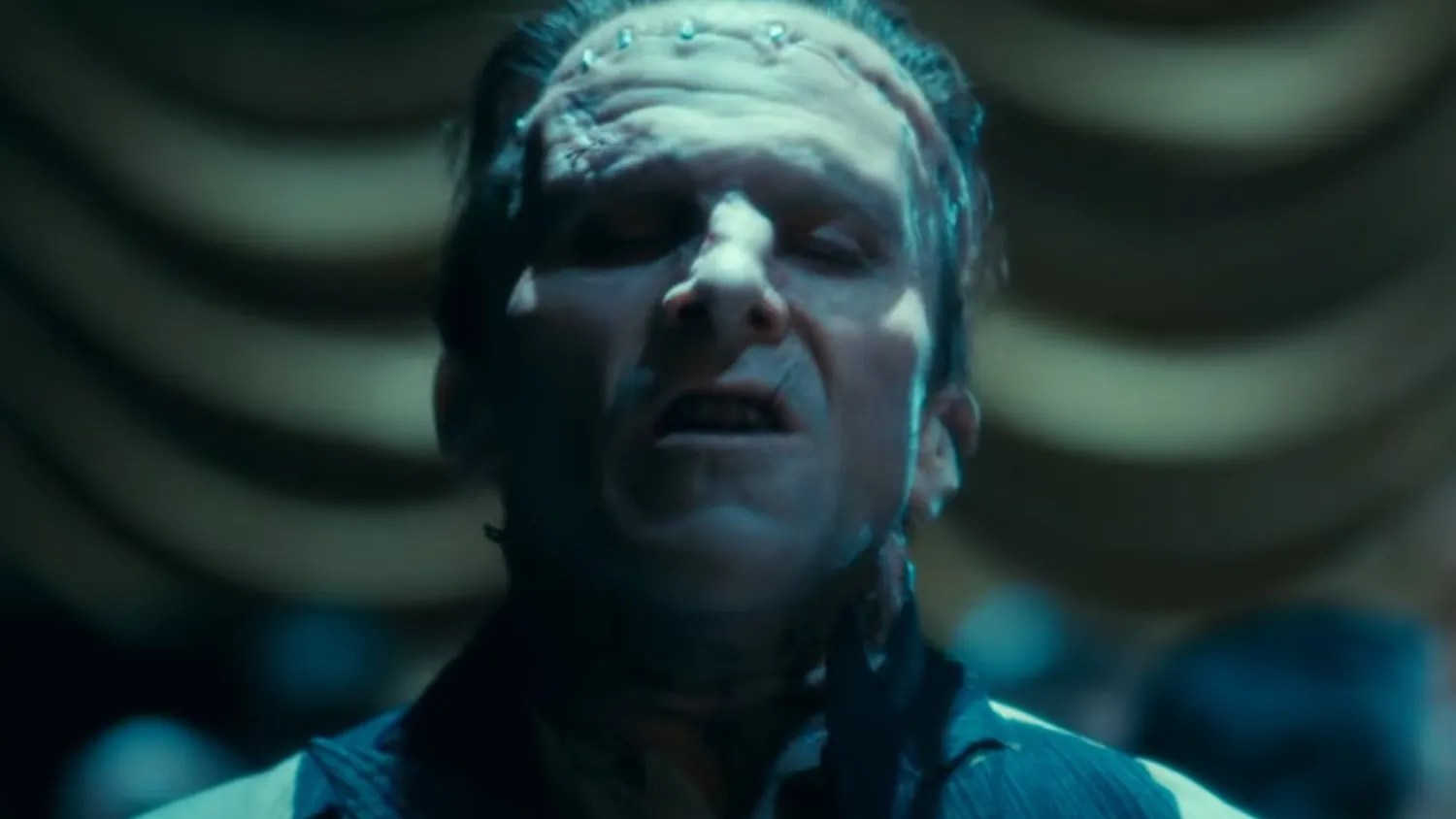
Taking place in 1930s America, the Bride posits that Mary Shelley (the original author of Frankenstein) is in the afterlife and is seeking to continue her Frankenstein story, arguing that her death prevented her from doing so. So, she possesses a young American woman, whom she calls Ida (Jessie Buckley), to carry out her will. However, this is complicated when Ida falls from a great height and is killed. Meanwhile, the Creature (Christian Bale) seeks a mate for companionship and love. He comes across a renowned doctor, Cornelia Euphonious (Annette Bening), who reluctantly brings Ida back to life.
The fascinating thing about the female perspectives in the Frankenstein stories is that there’s a dichotomy between the author and the creation. Bride of Frankenstein depicted Mary Shelley and the Bride as Id and Superegos creations that worked in tandem with the German expressionist trappings of the picture. Even in Poor Things, there was a conflict between the civilised and the uncivilised, as Bella’s (Emma Stone) lives are contrasted.
The Bride posits a similar dichotomy, with Mary Shelley as the rational Superego and Ida as the adolescent embodiment of the Id. However, in execution, it comes across as more of a gimmick than a genuine path of exploration. Aside from the beginning and a few dream sequences, Shelley’s voice and will are conveniently left at the door in favour of Ida’s perspective. This would not matter if the movie did not front-load her intention and role onto the story.
What remains is some of Shelley’s social intentions coming to fruition, but with not much connective tissue. To compound matters, Ida in the third act suggests a debate between her and Shelley, but we’ve not seen much if any conflict up until that point.
And that’s not to mention the huge grain of “Death of the Author” to ingest for the premise to even work. From my reading of the original text, Shelley grappled with male loneliness, making her seminal science fiction novel quite ahead of its time.
But above all, the film suggests that it’s moving to a point of “conscious uncoupling” between Frank and Ida. The exclamation point signals a new way that this archetypal character is defined. However, this is undone five minutes later by Ida, who now suddenly wants Frank again (after stating she does not want to be his bride). In this way, Gyllenhaal’s screenplay suggests it does not want to subvert or redefine the Frankenstein story with a bold new female perspective, but rather colour outside of the lines of the story very aggressively.
Instead, Gyllenhaal’s heart seems to be in the cinematic allusions she can cast with the story. The cinematography (courtesy of Lawrence Sher) uses natural lighting to paint the American-based setting with a murky and seedy edge. However, the true colour only comes from the films that Frank sees. It’s in these scenes where the director feels at home that splits the difference between the golden age musical and the Universal monster movie. Gyllenhaal’s choice to blur the lines between what we’re seeing and how the central couple project themselves is truly inspired and thankfully does not descend into a pastiche.
Likewise, the performances are committed and solid. Despite sounding a bit like a drunk Joanna Lumley in an episode of Absolutely Fabulous, Jesse Buckley proves to be a livewire in her dual role, balancing the character shifts with ease and grace. Christian Bale is a bundle of humility in a portrait of the creature who struggles with his lonely, base instincts. And Jake Gyllenhaal splits the difference between idealised and smarmy as an actor that Frank idolises.
There’s so much more I could say about the Bride! For one, the subplot involving two detectives is much better at articulating the picture’s gender politics and point than the central plot with the main players. And Hildur Guðnadóttir’s score is suitably brass in its Jazz and rock roots. However, for all the allusions to Bonnie and Clyde and a conceptually transgressive approach, the Bride is nothing more than a blowing raspberry experience.

 SGS On Film