
Preamble

In stark contrast to my last post, which seemed like a never-ending preamble, this one is going to be short and sweet. Suffice it to say, despite the many problems with the industry, there’s something warm and reassuring about the latest Alien film being deemed worthy enough for a theatrical release. So, with that said, have you seen Alien Romulus? Let me know in the comments below.
Review
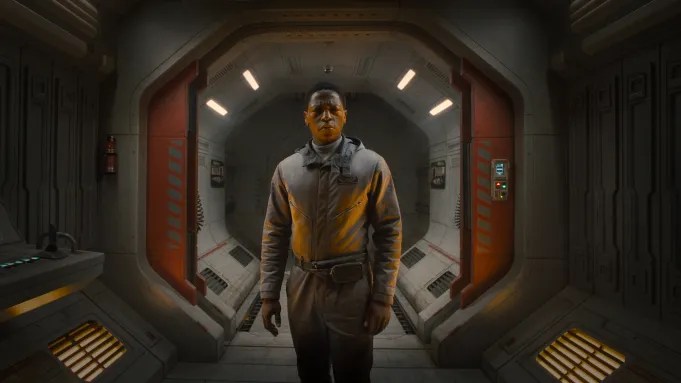
On the surface, the Alien franchise could be interpreted as an assortment of disparate styles and genres. However, this has always been the series’ greatest strength. Each film has felt like a unique auteurist vision without regard for franchise management. Even the flawed but occasionally impressive Ridley Scott helmed prequels seemed to be in conversation with the ideas that have fueled science fiction films such as 2001 and Blade Runner. With this in mind, it comes as something of a surprise that Alien Romulus flies in the face of this central virtue of the series. It’s the most self-conscious Alien film, but also one of its most thrilling, playing like a breathless horror rollercoaster that doesn’t let up in its intensity.
Set between the events of Alien and Aliens, Romulus is about a surrogate sibling pairing, Raine (Cailee Spaeny) and Android Andy (David Jonsson), who agree to help out on a mission to an abandoned spacecraft. Within it, they hope to find more fuel, so that they can put themselves into cryosleep to escape to the nearest planet (which is years away).
During many instances of Alien Romulus, I was reminded of the following quote from Gene Siskel about David Lynch’s direction for Blue Velvet- affirming that he is “playing the audience like a piano.” To his credit, director Fede Álvarez played me like a piano throughout the film’s two-hour run time. This is courtesy of some solid and tense set pieces. There’s a particularly taut sequence involving three characters who quietly make their way through a room of Facehuggers. Through minimal lighting and sound, I was enraptured and waiting with bated breath to see how the sequence would play out.
In this way, Álvarez draws upon the exact and patient filmmaking that defined his thriller- Don’t Breathe, which made the audience acutely aware of every minuscule sound and utterance. Likewise, Álvarez does the same in Romulus by playfully delivering common sound effects of the franchise as though they’re jump scares. But the filmmaking moments that stuck with me were the subtle and simple ones, whether it’s firmly held insert shots of two characters holding hands or a medium shot depicting a wordless face-to-face bonding moment in the third act. These intimate scenes are enhanced by Benjamin Wallfisch’s majestic score which captures an ethereal beauty in its use of strings that paint a picture of longing.
Cailee Spaney delivers a compelling central performance that walks a tight wire act between being tough and empathetic. But David Jonsson stole the show for me as Andy. In a franchise that’s been preoccupied with its android characters, Jonsson brings a touching sense of fragility and warmth to Andy, which juxtaposes with his cold and calculated demeanour in the film’s second half.
Despite these commendable aspects, Romulus does fall in considerable ways. It’s the sole film in the series that’s acutely aware that it’s an Alien film. Consequently, many lines and situations from previous films are quoted verbatim. It also feels the need to indulge in franchise management by appealing to the mythology laid down by Ridley Scott’s prequels. So, there’s this distracting tug-of-war between two aspects of the franchise that did not require reconciliation. But beyond this franchise homaging, I don’t feel the film adds much to the series. The original was transgressive in its psycho-sexual imagery and subversion of birth by depicting a perverse form of it in a male. In Romulus, the variation on this depicts a similar thing except it plays in front of a woman who is going to give birth.
There’s a twisted irony in this, but it’s not very potent or subtextually engaging. In fact, with instances like this, the film is playing catch up with recent body horror pictures such as The First Omen and Immaculate that played on the idea of perverse births and women’s bodily autonomy with much more meaning and inferred power.
For better or worse, Alien Romulus is in conversation with the franchise. In its direction and some aspects of its screenplay, it takes the pacing, casual dialogue and direction that made the 1979 film, so indelible. However, it’s marred by a persistent sense of reverence for its past. Even a go-for-broke third act and some stunning cinematography (via unique uses of lighting) can’t hope to contain the film’s fundamental issue. It’s the Alien film with the least to say.

 SGS On Film