
Preamble
After a bit of a humble start to the year, it’s great to return with my first review of 2026. And I could not think of a better one to start with. The Bone Temple is one of my most anticipated movies of the year. Ever since the ending of Years, I’ve been curious about how the story continues and the direction (courtesy of Nia DaCosta). With that said, have you seen The Bone Temple? Let me know in the comments.
Review
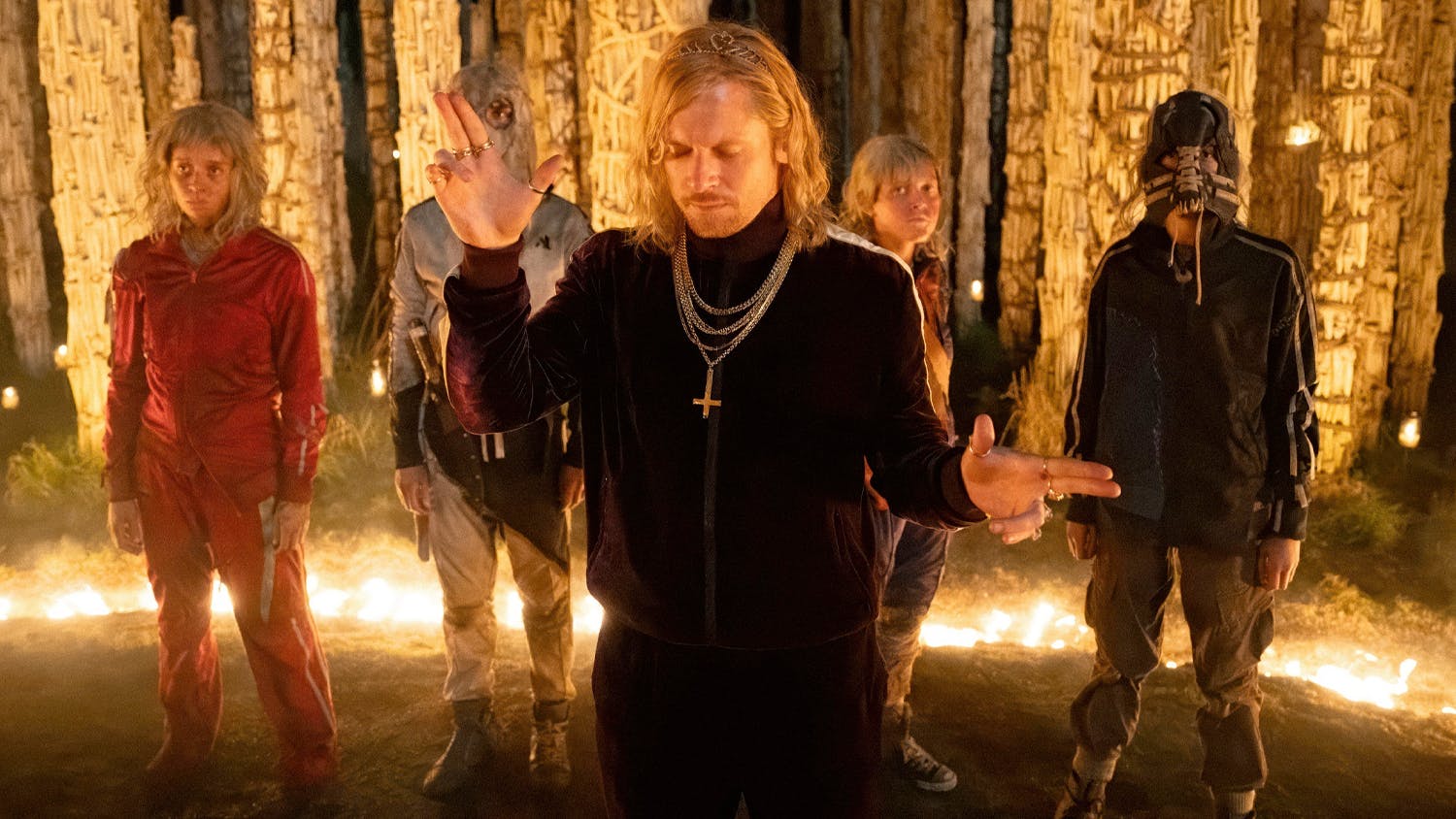
Perhaps more than any sub-genre within horror, the zombie movie is the most distinctive because it can serve as a canvas for examining humanity. This is evident in The Bone Temple, the daring and bizarre fourth entry in the 28 Days franchise. Picking up directly after the events of 28 Years Later, The Bone Temple depicts Spike (Alfie Williams) being initiated into the Jimmy Gang, led by Jimmy Crystal (Jack O’Connell). Meanwhile, Dr Ian Kelson (Ralph Fiennes) continues to explore his dynamic with the alpha-infected Sampson (Chi Lewis-Parry), whom he’s convinced can be cured of his affliction.
In many ways, The Bone Temple is audacious. For one, it has a slow, languid quality that lets audiences linger in the scene a bit longer. This is particularly the case in the film’s first half, where we see Kelson’s routine and interactions with Sampson. Their dynamic has echoes of Bub and Frankenstein from Day of the Dead, as well as the head zombie from Land of the Dead. The result is an exploration of humanity in a seemingly inhuman creature that, on the surface, has lost its rationality and compassion.
This is contrasted with the inhumanity of Jimmy Crystal, whose brand of sadistic satanism is a response to a longstanding childhood trauma that casts his long-dead father as a figure whose will he carries out. Jack O’Connell is simply captivating as Crystal, whether delivering recitations or the moments where he looks out of his element. As brash as the character is, O’Connell’s subtle facial expressions, when he questions himself (in the tail end of the movie), stuck with me the most, resulting in one of the most fascinating portraits of evil that I’ve seen in a while. The ever dependable Ralph Fiennes adds a showiness to Kelson that has echoes of his performance in A Bigger Splash. And Erin Kellyman really impressed me with a performance that is equal parts resilient and sensitive.
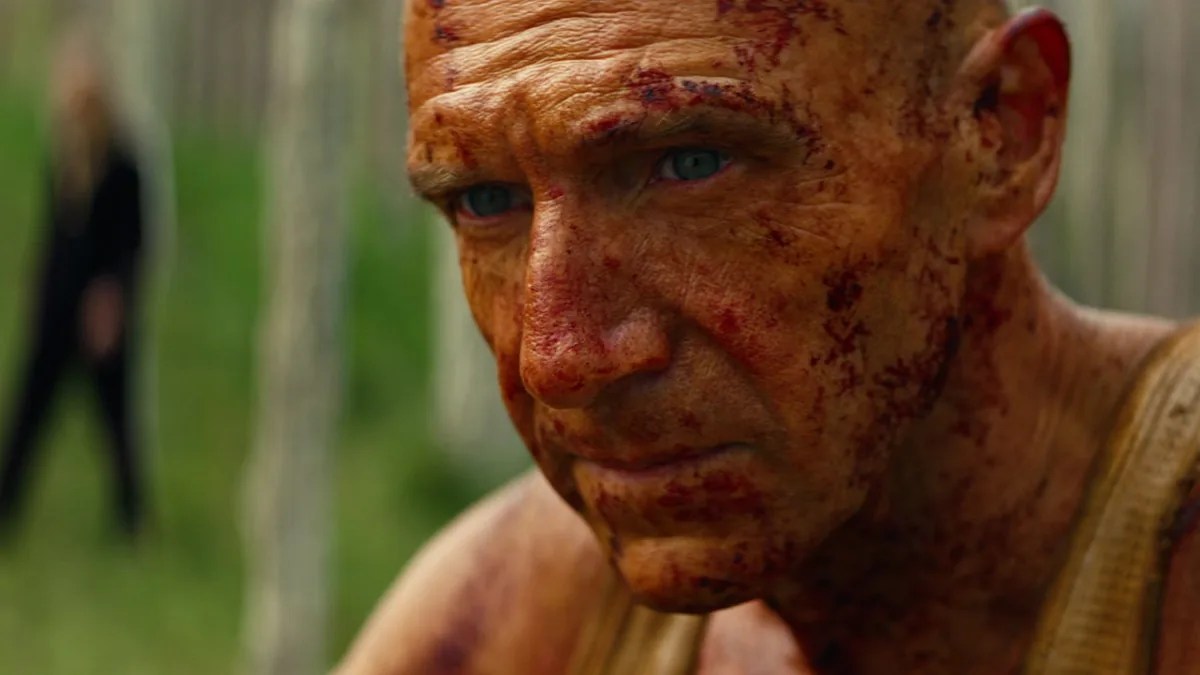
In contrast to Danny Boyle’s direction of 28 Years Later, Nia DaCosta’s direction is less showy and more subtle. Much like her legacy sequel to Candyman, DaCosta’s best filmmaking moments are when she’s playing with framing. The highlight is a close-up shot of Kelson with a blurry glimpse of Crystal in the background, suggesting the doctor’s obliviousness to the satanic leader. But there’s also a visceral sense to some of DaCosta’s camera moves, whether it’s a documentary-esque use of spinning camera in the opening fight sequence or the use of precise panning to immerse the viewer in an infected chase sequence.
On balance, The Bone Temple has impressed me more on reflection than when I initially walked out of it. This was mostly down to a feeling of being deflated by the ending. With what happens, the prospect of a third film becomes less enticing because the newer elements that have fueled this trilogy are no longer with us. This is combined with a sense that Spike felt less challenged here than in Boyle’s picture. There were a few times when Alex Garland’s screenplay pulled its punches to preserve Spike’s virtuous nature. What remains is a film that moved me much less than Years, but is much more interesting to think about than to watch at times.

 SGS On Film