
Preamble
By the time credits roll on the two plus season adaptation of The Last of Us Part II, I will be sounding like a broken record. And that’s in relation to over stating the importance of each episode as a small part of the larger story. It’s a testament to how much I value the video game’s narrative. But with that said, have you seen episode four of The Last of Us Season 2? Let me know in the comments below.
Review

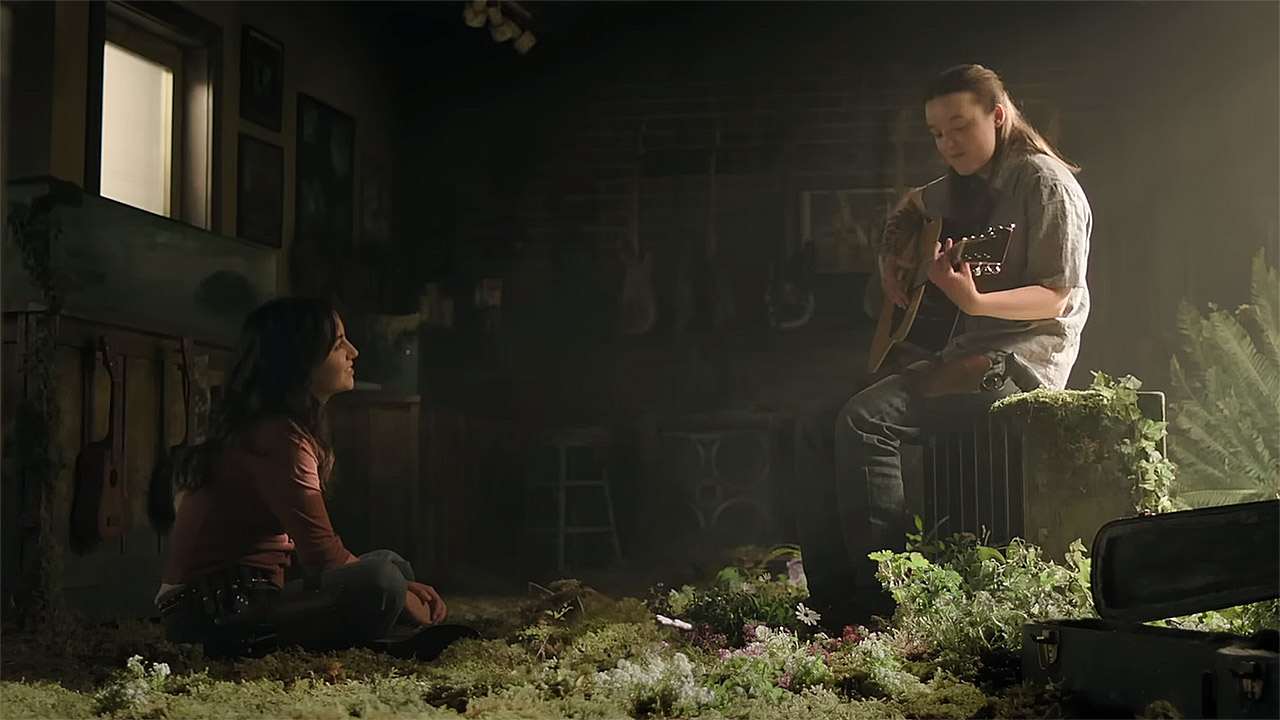
So far, season 2 of The Last of Us has surprised in its adaptation of the second game. With this in mind, Day One is haunting as much as it is intimate and touching in its depiction of the relationship between Ellie and Dina.
The fourth episode picks up with the young pair moving further through Seattle to reach Abby and her crew. Meanwhile, the leader of the WDF, Isaac, interrogates and tortures a member of the Scars (aka the Seraphites).
Day One returns to some of the interesting thematic material that pervaded Season 1 of the show, namely the emergence of leadership and power structures in this post-apocalyptic world. In a new scene for the show, we’re introduced to the central figure of the WDF, who gives a sense of who he was before the world went to hell. He also points to a karmic sort of equalitarianism whereby he got his wish of owning expensive kitchen utensils. This aspect had echoes of the ironies in Zack Snyder’s Dawn of the Dead remake, whereby the least looked upon in the societal and job hierarchy becomes the most stable authority figure in a crisis. At the same time, the new scenes involving Isaac paint him as a ruthless person who can radicalise and inspire (illustrated in the opening scene where he blows up a truck full of soldiers and gives a choice of death or compliance to the last one left standing).
Along with a bit more fleshing out of the Scars and their deified leader results in the show tapping a rich vein of what the title truly means for humanity. In his reprisal of his video game character, Jeffrey Wright brings a great deal of casualness that hides a truly dangerous and determined nature.
This aspect is juxtaposed with Ellie and Dina’s blossoming relationship. While I initially thought the pair stumbling on decayed Pride flags and decorations was a little overt. However, on reflection it was a good reminder of how much this relationship means to the LGBTQ + community. And in its unravelling, it’s endearing as much as it’s sweet. Like the best onscreen relationships, the emotional truth comes when one of the pair lets their guard down. And in this regard, Isabela Merced strikes a chord in her reaction to Ellie’s guitar playing as much as expressing the truth about her sexuality.
Visually, the set design proves to be the show’s secret weapon as long shots depict the Seattle streets with a beautifully faithful eye. The same could be said for the lighting that punctuates some of the episode’s most tense moments, such as a swarm of infected that attacks Ellie and Dina.

 SGS On Film