
Preamble
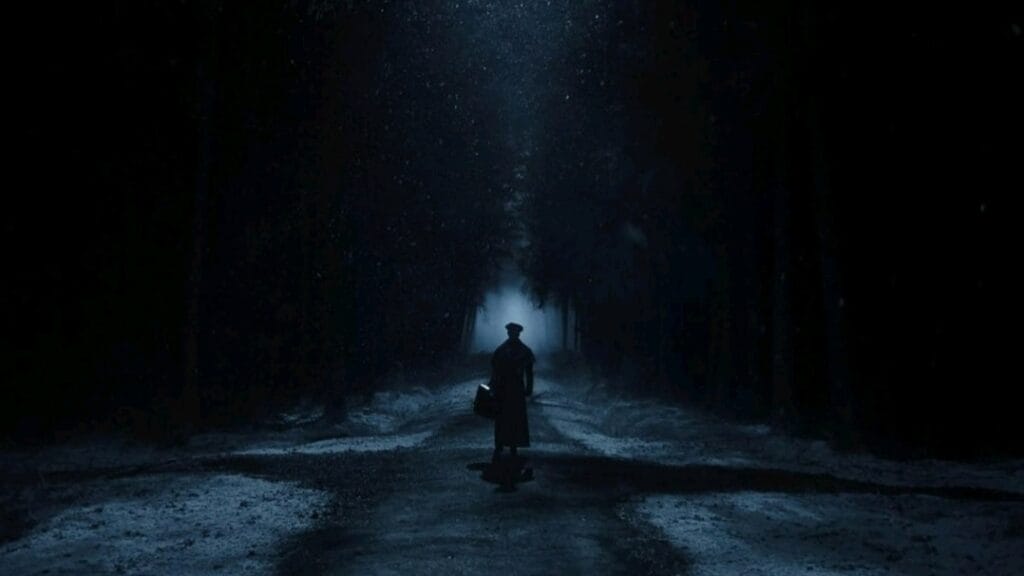
Much like Dune: Part Two from last year, I’ve been anticipating doing a one great shot for Nosferatu, since leaving my second viewing of the film. And much like the film itself, the shot in question was not quite immediate to me and altogether surprising. With that said, what’s your favourite shot from Robert Eggers’ remake? Let me know in the comments below.
One Great Shot

Although simple in conception, Robert Eggers’ close-up of the titular creature is the key to unlocking his vision of the film. For one, it’s a sleight of hand to show the audience a brief glimpse of the character. Up until this point, we’ve not had a good look at the vampire (aside from a subliminal flash in the opening scene). And in his home, Count Orlok is captured in a medium shot that’s illuminated via candlelight. The result is a dreamlike delirium that gives rise to a slow realization of the supernatural for Thomas Hutter.
In this way, Eggers matches the conviction of the original 1922 silent film, which was so convinced of the existence of vampires that you could feel it in every frame. At the same time, it has an air of homage insofar as it’s a claustrophobic version of Max Shreck’s vampire looking at deed papers with a fervent intensity. While that shot was captured in a medium shot, Eggers opts for something far more primal and unnerving. By getting the audience to see into the eyes of Nosferatu, the director subverts the typical sympathy notion that comes from looking at the eyes of a creature.
Instead, it’s an excellent visual showcasing of a line that the creature says later to Ellen- “I am an appetite. Nothing more.” The choice allows us to understand this urge by seeing how it stirs the creature and perhaps how it equally seduces Ellen. If the eyes are a window to the soul, then this close-up of Nosferatu reveals how he’s animalistic and black of heart. There’s no joy or spark, only a hunger to consume.

 SGS On Film