
Preamble

Well, here we are, my first review of a new release of 2024. And I could not think of a better film to start the year with. Not much to say here folks except, have you seen Poor Things? Let me know in the comments below.
Review
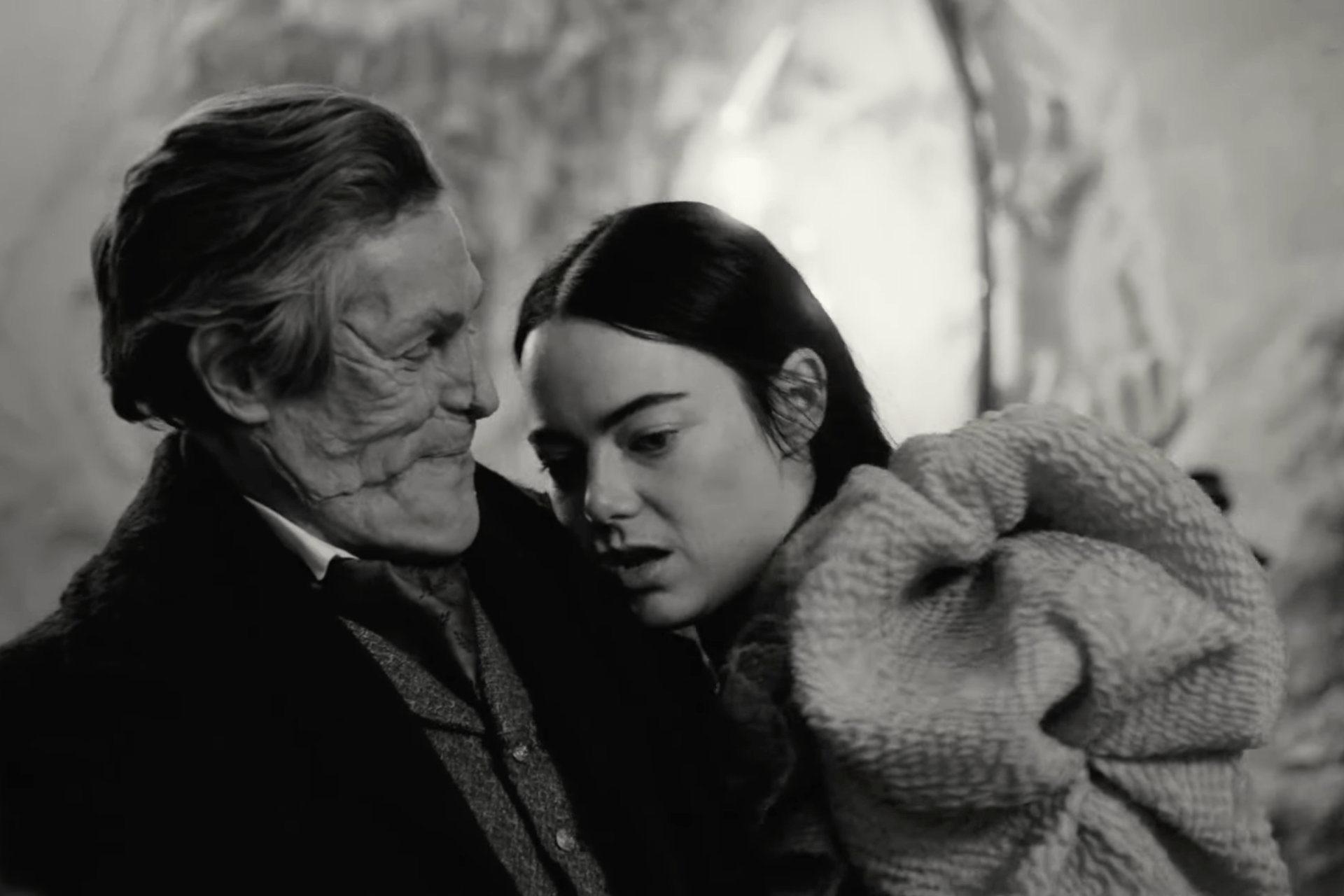
To say that Yorgos Lanthimos makes idiosyncratic films is an understatement. Between The Lobster and The Favourite, Lanthimos mines the depths of deep-felt human pathos, via absurdist premises and sharp, but ultimately eyebrow-raising humour. The same could be said about his new endeavour, Poor Things. It’s a spirited and mischievous film that owes as much to Frankenhooker and Vertigo as much as Mary Shelley’s Frankenstein.
Based on the novel of the same name by Alasdair Gray, Poor Things tells the story of a young woman called Bella (Emma Stone). She has the brain of an infant but the body of a fully developed woman due to being brought back to life by surgeon, Godwin Baxter (Willem Dafoe). After showing promising signs in her development and an insatiable curiosity about the outside world, Baxter and his assistant Max McCandles (Ramy Youssef) reluctantly let their stepdaughter and betrothed go to experience the world.
Despite its oddball premise, Poor Things remarkably proves to be Lanthimos’s most emotionally accessible film. This comes from screenwriter, Tony McNamara who leans into Bella’s innocence. Despite difficulties early on, there’s a persistent sense of awe in the way that characters perceive her. This later turns into a sheer giddy joy and heartbreak of experiencing Bella’s relatable emotions in discovering the world. The highlight being is when she discovers the notion of poverty in quite a stark manner. The operatic music (courtesy of Pop musician, Jerskin Fendrix) stands in for the character’s shrieks of horror and disgust at the unfairness she sees first-hand.
At the same time, Lanthimos’s direction evokes Bella’s eagerness for the world via wonderous low-angle shots that reveal quite an enriching set design that’s like a Frankenstein-esque melding of Lemony Snicket, early Tim Burton and steam-punk. This is contrasted with a seedy use of fish-eye lens shots that almost distort the world and made me feel like someone was constantly watching Bella through a peephole.
By the same token, Lanthimos’s trademark absurdist humour is still on full display. A recurring fart joke and Bella’s pointed childish naming of adult activities never fails to amuse. And in perhaps the most darkly pitched comedic notes, Max’s persistent sense of bemusement at Godwin’s horrific stories is a highlight.
Dafoe turns in a subtle turn as Baxter who constantly battles his emotions as a loving father and a curious academic. Mark Ruffalo is charming as a cad and a rogue English gentleman called Duncan Wedderburn, whose pristine social standing is always at odds with his private inclinations. However, Emma Stone delivers a memorable central performance that’s particularly impressive in its vocal elements. This comes from how the actress portrays Bella absorbing and dressing up in the accents she encounters, whilst never compromising the character’s sense of innocence and naivety (whilst in that vocal clothing).
Subtextually, Poor Things very much has Vertigo on its mind. Much like that film portrays its main character, Scottie (James Stewart) attempting to control and preserve the idea of a woman he loved, so does Wedderburn. In a sense, he wants to preserve the innocence that attracted him to Bella, so he can keep her trapped in an eternal cycle of selfish hedonistic fulfilment. And in the third act Bella discovers the former life she attempted to escape from (via suicide) in which she was married to an abusive and cruel man, Alfie (Christopher Abbot).
In an inverse of Wedderburn, he wants to trap Bella so she can remember the woman she used to be. This move again evokes Scottie’s third act manipulations of Judy Barton (Kim Novak). In fact, in the film’s most intriguing homaging of Vertigo, Wedderburn finds himself traumatised by Bella in a manner that echoes how Scottie was by Kim Novak’s incarnation of Madeline.
And despite the cult and midnight movie qualities of Frankenhooker, it has surprising links to Poor Things. Much like that film used satire to fuel how women were inherently controlled and used within the sex industry, Poor Things attempts to explore the implications of a nascent woman in the world’s oldest profession. Frankenhooker had an ironic twist of fate in its ending for its creator to become the thing he attempted to victimise (via his central experiment). Whereas Poor Things explores how Bella goes from someone who is perceived as a whore, and becomes an empowered individual. Her experiences within the trade come to shape her discernment and empathy towards the world.
This comes from Bella’s attempts to understand her male patrons with one scene depicting her asking a French client for a childhood memory. It’s this attitude that informs her choice to not let her ex-husband bleed out and die at the end of the film. In this regard, Poor Things is a gripping odyssey that shows how we can beat to the drum of our own eccentricities whilst having an understanding and compassion for how the world works.

 SGS On Film