Review: Trainspotting (1996)

trainspotting-scotland

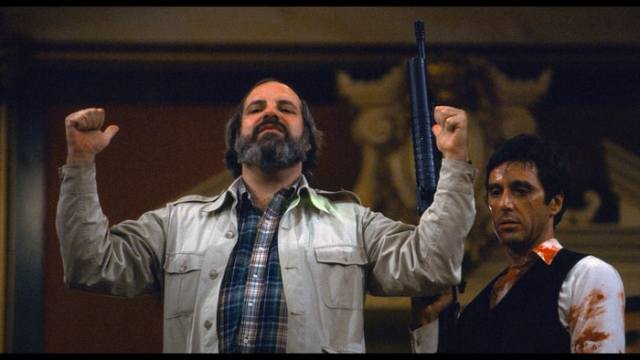
Every director has a call to arms film, a picture that is made with the passion of a thousand suns and wholly represents the filmmaker’s most personal and striking work; even if it is not necessarily their most accomplished or is an objectively sound cinematic endeavour. Danny Boyle’s Trainspotting is demonstrably indicative of this auteurist paradigm. It is a film in which every frame is filled with an energetic verve and an all-encompassing youthful apathy that is sadistically funny in its reach and commendably accessible in its emotional resonance.

The mid-nineties picture is about four young friends who must overcome heroin addiction and mundanity in the midst of being economically downtrodden in Scotland’s capital city- Edinburgh. On an initial viewing, the film is seemingly an unflinching and ghastly anti-drugs advocation. However, on subsequent re-watchings, the film feels like a universal story in which central character Mark Renton (Ewan McGregor) is attempting to escape his hapless working class existence.

McGregor’s performance is a staggering masterclass in subtlety and restraint. Some of his most compelling moments are ones in which he is somewhat physically static and evidently subdued in his reactions to other characters. For example, there is a scene in the second act when a friend of his expresses a curiosity in heroin. McGregor simultaneously illustrates the out of body experience of being high on the drug while also providing a quiet sense of judgement in his friend’s sudden interest of the substance. At the same time, there are small moments when McGregor imbues Renton with an animalistic fervency such as when he is at the regular drug den and asks “What is on the menu tonight.” While the young actor is delivering this line, he is in a physical stance that matches an unnervingly hungry frog awaiting a sizable portion of insects.

The picture marks the flourishing of Danny Boyle’s trademark directorial flourish which is a visceral surrealism. The stretch of film that embodies this quality is an extended sequence depicting Renton’s maddening breakdown in the midst of an earnest attempt to detox. The scene has various people in Renton’s life coming back to haunt him as he lies in bed. Boyle’s manipulation of the space- (chiefly manifested in the sheer long distance between the bed and the front of the room) combined with the use of Underworld’s Dark and Long in the background make for a harrowing scene that vividly illustrates the immense hardship of giving up illegal drugs.

Moments such as this inherently damage the film and result in it merely being perceived as an abhorrent illustration of the ill effects of drugs. This cardinal problem makes the proceedings one note, sadly to the detriment of the universality that comes from a strange third act excursion. While the last fifteen minutes feel like a purposeful evocation of Boyle’s consistently better film Shallow Grave, they do not harmonise with the rest of the film. The result makes one realise that the social and economic trappings of the four main characters do not factor into the narrative and only have cursory significance in the grand scheme of the picture.

Posted in Uncategorized | Leave a comment

Concise Review: Hunt for the Wilderpeople (2016)

wilderpeoplehecricky-0

Taika Waititi’s Hunt for the Wilderpeople is a heartening film that captures life in all its wondrous, macabre and awkwardly humorous turns. The picture is a marvellous marvel comprised of small moments that capture a rare sense of authenticity. Moreover, like Waititi’s previous directorial effort- What We Do in the Shadows, the picture has a notable affection for its characters, while also showing them at their most expressive, raw and downtrodden.

Shadows employed a documentary style that relied on natural lighting, lavish set design and stock footage in reinforcing its vampire’s domestic plight. Waititi comfortably widens the scope of his filmmaking canvas for the tale of a pop culture savvy teenager and cantankerous old man’s escape from child services across the New Zealand countryside.

Despite the picture primarily being filmed with the long-standing technique of a single-camera setup, cinematographer Lachlan Milne still manages to craft shots filled with detail and a sense of place. Most of these come from the film being shot on location in the New Zealand bush. As captured on film, the long and unwinding forest is dangerous, magical and picturesque. There is one particular scene where our two central characters look engulfed by the woods, which reinforces Waititi’s wise choice not to utilise soft focus in a lot of the shots in the film.

Finally, Hunt for the Wilderpeople is engaging because its cinematic references imbue the proceedings with a humorous edge and grand weight. For example, there is an exchange at the tail end of the picture when the head child welfare worker Paula (Rachel House) and Ricky (Julian Dennison) equates herself to the Terminator and her target to Sarah Conner from the first James Cameron picture. The moment accentuates her resolve and the stakes of conflict in a wry, amusing manner.

However, the most crucial scene that is indicative of this quality is when Ricky says to Hec (played with great subtlety by Sam Neil) that he wants to be a gangster in the vein of Tony Montana from Scarface. The aged man retorts angrily about the dangerous of the forest, and how the young man could not even survive against the wild elements lest being a gangster. The moment is a beautiful microcosm of the film’s natural ability to make moments feel life-affirming, comical and genuinely touching. Hunt for the Wilderpeople is retroactively my favourite film of 2016, a truly bold film that proves Cinema is still very much alive.

Posted in Uncategorized | Leave a comment

Concise Examination: The Last Jedi- Title and Teaser Poster

ne2iciw0xu0i49_1_b

The Last Jedi, which is the title for the upcoming eighth instalment in the Star Wars saga signifies a bold jolt in audience expectation for the December 2017 release. Firstly, it breaks the tradition of the title for second movies in the trilogies referring to military actions- Empire Strikes Back and Attack of the Clones. Instead, the three-word title sharpens its focus on the nearly extinct light side of the force. Grammatically, the word Jedi has been simultaneously used as plural and singular as a quote from Episode II attests “You must realise there aren’t enough Jedi to protect the Republic. We’re keepers of the peace, not soldiers.”

The opening crawl for The Force Awakens and the following dialogue from Yoda in Return of the Jedi (“Luke, when gone am I… the last of the Jedi will you be.”) clearly alludes to The Last Jedi being Luke Skywalker. The notion is a tantalising because the events proceeding Episode VII scared Luke and it will be fascinating to see the burden he carries knowing he is indeed the last of an ancient order. Or perhaps, it could allude to Rey being the Last Jedi that will be under Luke’s tutelage. Finally, the choice of red for the outline of the Star Wars wording accentuates the urgency of the title and represents an homage to the title poster for the Revenge of the Jedi (The original name for the Episode VI before it was changed to Return of the Jedi)

Posted in Uncategorized | Leave a comment

Concise Review: Don’t Breathe (2016)

stephen-lang-in-dont-breathe1

Director Fede Alvarez’s quasi-balletic free roaming camera and forensic tracking shots effortlessly make Don’t Breathe a finely crafted exercise in pulse-pounding tension. However, the real horror of the picture are the revelations of the film that cast retributive justice in a frightening new light. This aspect is particularly accentuated by Stephen Lang’s impressive central performance. He portrays the character with a great feebleness and vulnerability while also imbuing the blind man with a matter of fact rationality and a terrifying, unpredictable nature. The result is a grim and original portrait of female violation that had echoes of the slasher films of yore and the Josef Fritzl case in 2008.

Posted in Uncategorized | Leave a comment

Review: La La Land (2017)

LLL d 12 _2353.NEF

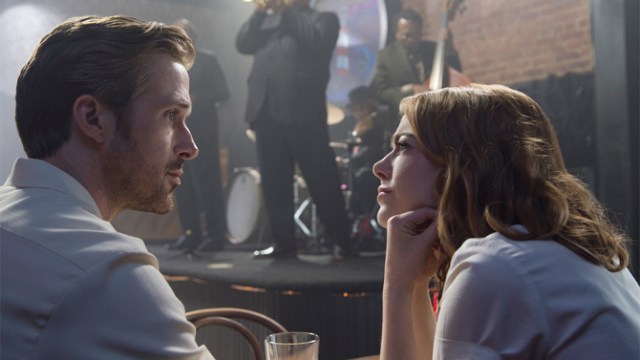
La La Land is a charming and exemplary film that reminds the viewer of the romanticism of Hollywood’s better days as well as the virtues of the cinematic experience. The former is illustrated in a quiet moment when aspiring actress Mia Dolan (Emma Stone) is walking down a street. As she is making her way down a darkened avenue, an elegantly constructed tracking shot reveals an elaborate painting of many actors from the movies’ great past. The latter is encapsulated in a wonderful sequence in which Mia and Sebastian’s (Ryan Gosling) romance blossoms during a revival screening of Rebel Without a Cause.

These series of scenes are wonderfully directed by Damon Chazelle who juxtaposes the magic of the big screen experience with the transformative moments it can establish. He conveys this by showing the flickering light of the projector shine on the characters’ faces and having their hands meet, which culminates in a newfound intimacy.

The picture was shot in CinemaScope- resulting in an exuberant portrait of Los Angeles. The sequence that strengthens this depiction is the opening musical number called “Another Day of Sun.” It showcases an ambitious dance scene in the midst of a frustrating morning traffic jam.

However, the most astounding aspect of La La Land is in its excellent representation of Jazz. If Chazelle’s last film- Whiplash showed the blood, sweat and physical anguish in the pursuit being a Jazz drummer then La La Land is a genial advocation for the virtues of the musical genre. At the same time, the picture also typifies the inherent conflict in the improvisational staple of the iconic style.

The fundamental problem with the film comes from the imbalance of interest in the central characters’ dreams. While Chazelle provides many reasons for Mia wanting to become an actress, I never felt that they were compelling or stirring. The problem is compounded by the elusive nature of Mia’s one-woman play. The audience never gets a sense of its story, purpose or Mia’s reasoning for deciding to do it in the first place.

On the other hand, Sebastian’s dream of opening a Jazz club resonated because it comes from a deep-seated desire of artistic expression. In some early scenes, Sebastian plays a Jazz piece on the piano much to the chagrin of his boss who wants the young musician to play Christmas music. The small section of music that the character plays feels like the last dying breaths of the musical genre as it struggles to find relevance and resonance in modern times.

Interestingly, this thread is explored as Sebastian becomes a keyboardist for a Jazz band called The Messengers who are fronted by his former high school friend Keith (John Legend). Legend’s character represents the contemporary sceptic of Jazz who believes it must change to survive, as opposed to being a pristinely preserved antique attraction. Sebastian’s time in the band also introduces the question of how the practical concerns of life can be at odds with achieving one’s inmost desires.

Finally, Ryan Gosling’s performance as the pianist and Jazz aficionado is remarkable and represents his best one to date. Gosling combines his compelling silent work- exemplified in movies such as Drive and Only God Forgives along with his penchant for physical comedy- combined with an endearing, passionate and driven nature that provides Sebastian with remarkable depth. Moreover, his performance during the solo piano sections (Incidentally, Gosling plays all the piano pieces himself) called to mind the great soul bearing efforts of Ethan Hawke and Oscar Issac in Born to Be Blue and Inside Llewyn Davis respectively.

The final moments of the picture when Mia and Sebastian lock eyes across a crowded room represent the actor’s singularly striking moment in the film. He gives Mia a faint smile before sitting down and playing another song. The expression carries a touching universality because it conveys a tough exterior attempting to bury feelings of regret and sadness even in the face of achieving success. With this in mind, the film’s title and iconic idiom become a bittersweet irony- reinforcing the necessities of life taking precedence over the romanticism of dreaming.


Posted in Uncategorized | 1 Comment

Review: Silence (2017)

js115353787_a-2016-paramount-pictures-all-rights-reserved_silence_trans5yqlqqeh37t50scym4-zegcv5yzlmao6lolmwyjrxns

For the much revered and venerated Martin Scorcese, Silence represents the director’s magnum opus. The film is a tremendously soul-stirring odyssey of devotion, persecution and theological struggle with Scorcese’s firm directorial hand at its most contemplative and visceral. The picture charts the journey of two Jesuit priests who travel to Japan to find their mentor and ascertain his apparent apostasy in the wake of a systematic torture of devout native Christians.

The first half of the picture shows Father Sebastião Rodrigues (Andrew Garfield) and Father Francisco Garupe (Adam Driver) visiting two downtrodden villages- who must secretly practice their outlawed faith. In these series of scenes, Scorcese presents an excellent portrait of faux ritual. The exacting patience and minimalism of these languid sequences particularly impress.

For example, in the first village, Rodrigues and Garupe perform sermons, baptisms and confessions in a tiny hut. Consequently, Scorcese’s static camera moves imbue the sequences with a compelling intimacy. Moreover, Scorcese’s longstanding editor, Thelma Schoonmaker makes these scenes resonate through her precise cuts in the religious ceremonies. The result is a sense of majesty and heartening comfort as the awe-struck facial expressions of the villagers are regularly shown in the centre of the frame.

Another small moment that encapsulates Scorcese’s considered approach is when Rodrigues is performing Communion with a small cracker. From the object, the camera pans 180 degrees clockwise. The audience is shown the majority of the villagers and ends with Rodrigues’s earnest face. The scene emboldens Scorcese’s exploration of man’s pride overtaking his conviction and purpose.

In the third act, Rodrigues is confronted by his mentor Father Cristóvão Ferreira (played with subdued enmity by Liam Neeson) who contends that Christianity is a lost cause in Japan. Crucially, he thinks the people who espoused belief in Christianity and died for their faith, in fact, died for Rodrigues. The subtle dramatic revelation casts the first half of the film in a fascinating light. It suggests the folly of Rodrigues’ belief in the face of the heart-wrenching cruelty he has witnessed and proposes that the revelation aspect of Christianity is fundamentally undermining its benevolent intentions.

The interplay between man’s violent nature and his unwavering faith is a theme that has pervaded Scorcese’s oeuvre. In Silence, it takes on a powerful new life because faith and violence are inseparable. Unbeknownst to Rodrigues, his steadfast commitment entails cruelty towards his fellow man despite never physically harming them himself.

During the same conversation, Ferreira makes a compelling case for why Christianity will die out in the country. The most convincing point comes from Japan being an enormous swamp where people worship nature. People inherently espouse the sun rising every day as opposed to the son of God rising after the second day. Rodrigo Prieto’s Cinematography accentuates this idea with these remarkable shots of the sun bathed in twilight. In other regards, Prieto makes Japan feel like an elusive spectre with these foggy, grey shots that engulf the land.

However, it is the last shot of the film in which a black rosary is revealed to be in the midst of Prieto’s burning body that stirs the imagination. It suggests the titular Silence does not necessarily exist between God and his loyal disciple but between the faithful and his devout belief- evoking a fierce internal loyalty that never truly died.

Posted in Uncategorized | Leave a comment

Review: The Lobster (2015)

960

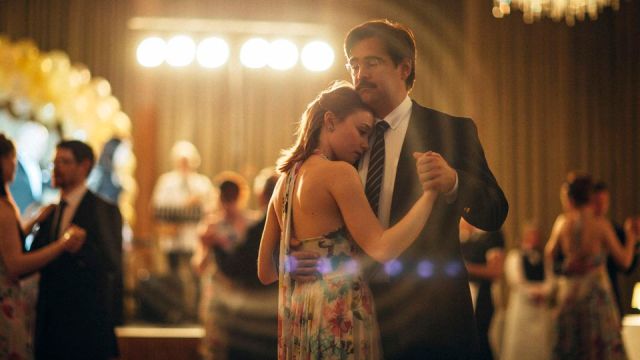
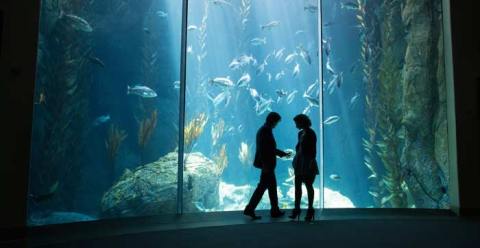
The Lobster is one of those rare films that make you want to climb the highest mountain and express your adoration for it with a fervent joyousness. It is so audacious and masterfully crafted, even a lengthy review could not begin to expound on its unique, singular vision. The picture imagines the world in amusing terms, whereby single people turn into animals if they cannot fall in love with a member of the opposite sex. Conceptually ludicrous to be sure. However, in execution, the absurdist premise is handled with a commendable dry wit. In fact, the humour becomes a constant rhythm that reinforces the absurd dystopian world.

The matter of fact narrator (Rachel Weisz) speaks of the varied people in the contained hotel (where the dating law is enforced) in a manner akin to a perceptive author. Her words paint a picture of an awkward assortment of people, whose smallest traits become defining. One such woman has frequent nose bleeds. She finds kinship with a man, who pretends to have them, by subjecting himself to continual head knocks.

There is a particually amusing scene in which this character discusses his duplicity with a man he has befriended; he asks earnestly, “What’s worse, to die of cold and hunger in the woods, to become an animal that will be killed and eaten by some larger animal or to have a nosebleed from time to time.” The question reveals the film’s exploration of sacrifice. There is a sense that in each of the human relationships, something is at stake and fundamentally lost.

In the hotel system, happiness is sacrificed due to desperation becoming the underlying emotion that motivates the single people to find a mate. In the Loner culture, romantic relationships are sacrificed for a life of solitude. And in the final moments, the idea of sacrifice is potently presented, as a genuine act of faith and love, so that one man can show commitment to the woman he adores.

Finally, The Lobster’s droll portrait of dystopia is accentuated by the filmmaking. One sequence feels like it is channelling the frantic mad capped violence in Battle Royale because of a series of slow motion shots. A particularly striking moment depicts the multiple hotel singletons running into the woods with their guns drawn in the midst of a mildly sunny day.

In keeping with the film’s counter-intuitive premise, the unusual uses of the camera linger. For example, the grizzly opening sequence is seen through a car’s windshield screen as a static camera is employed, and the windscreen wipers remove traces of rain in real time. In the second act, there is a small moment where the camera is focusing on a meeting in the hotel manager’s office. The shot has a refracted distortion, resulting in some of the characters being bathed in a warm heavenly glow.

The directorial choices serve to emphasise the film’s disorientating view of human relationships. To an outsider, they are seemingly ordinary. However, to the perceptive observer, they prove to be far more strange, elusive and amusing.

Posted in Uncategorized | 1 Comment

Year in Review: The Top Ten Films of 2016

1) Hell or High Water

72688

Hell or High Water is a layered and textured film that harmonies deft cinematic craft, a fascinating primary thematic exploration and small incidental moments. Consequently, the movie feels authentic, humorous and sharp.

2) Knight of Cups

knight-of-cups-2

Knight of Cups, is a wondrously reflective film that at once is about the soul’s attempt to ascend from its earthly bounds and at the same time, a meditation on the frustration of the creative process.

3) The Witch 

sc33_dinner-finished_1020-0-0

Eggers has constructed an intrinsically quiet and introspective film that when watching it strikes one as intruding upon an exceptionally powerful and private prayer.

4) Arrival

arrival4

Arrival is a magnificently cerebral and emotionally moving triumph.

5) Hail Ceaser!

screenshot-20

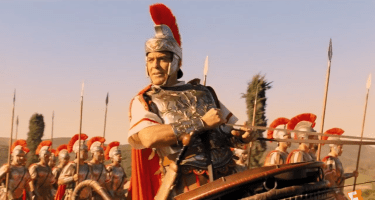
Hail Caesar is concerned with making us believe in extraordinary things through the power of the cinema.

6) De Palma

brian-de-palma-films

De Palma serves as an insightful documentary for advocating that a genre filmmaker can be an auteur.

7) The Neon Demon

neondemon-2__article-hero-1130x430

Nicolas Winding Refn’s poisoned penned letter to the modelling industry is a stirring and horrific fable that seamlessly blends Dario Argento’s vivid surrealism, Gothic horror and a captivating portrait of spurned innocence.


8)The Nice Guys 

nice_guys

The Nice Guys is an amusingly made picture with a subversive and witty screenplay. It also benefits from an outstandingly impish and physical comedic performance from Ryan Gosling.

9) Kontributsiya (The Contribution) 

b6tn4s93sx2op179wcprfb8nj

Kontributsiya (The Contribution) is a meticulous and sumptuous period piece, with scenes that are brimming with intensity and stirring dramatic weight.

10) The Jungle Book

jungle-book-light

The Jungle Book has fundamentally cemented my view that contemporary cinema can still excite and makes us wonder.

Posted in Uncategorized | Leave a comment

Editorial: The Virtues of Black and White Film

mad-max-fury-road-black-white-pic-3

George Miller’s ferociously savage and visionary post-apocalyptic film Mad Max: Fury Road has been recently re-released in black and white. The new version entitled the “Black and Chrome Edition” is the director’s preferred cut of the film. With this in mind, there is no better time to reflect on the virtues of the cinematic style, and in turn, assess the effectiveness of its use in Miller’s third sequel of the Mad Max franchise.

Primarily, black and white film creates a deep-seated sense of unreality that illustrates the inherent dreamlike quality that has been part of the cinema since its inception. Many early films of the medium employed the technique, and the result was instant cinematic immortality.

The Universal Monster Movies of the 1930s and 1940s had a majestic sense of terror and atmosphere that would have been undisputedly absent if they were in colour. Film Noirs would have lost their murky morality, high contrast potency and shadowy silhouetted shots.

And the projectionist’s vivid dreams of being the title character and winning the girl of his dreams in Buster Keaton’s Sherlock Jr. would have lost its charming romanticism; as he imagines himself as the famous detective on the movie screen that he sees every day. Black and White’s photography has a specificity and immediacy that makes it intrinsically cinematic. Perhaps the most striking examples of its power are in Orson Welles’ 1941 film- Citizen Kane. Two sequences, particularly linger in my mind when reflecting on the venerated picture.

The first is the opening scene. It starts with a series of upward panning shots as the camera travels up multiple outside areas of Charles Foster Kane’s empty and ghostly Florida mansion- Xanadu. In between shots of the metal fences and steel gate bars, we see clear glimpses of the foggy grey sky. They evoke a sense of Gothic tragedy as we look upon the dying moments of a man’s entire empire through the shots of the abandoned house. The opening is excellent in the context of the next scene which is a newsreel montage of Kane’s illustrious career and endeavours; including the building of Xanadu that conveys a sense of optimism.

The second is a scene in the tail end of the film. At this point, Kane is in his twilight years, and in the aftermath, of his second wife leaving him, he walks around his house in an emotionally frozen and dazed state. One of the rooms he walks into is a corridor filled with a seemingly infinite series of mirrors. The quick shot shows an endless amount of reflections of the deeply despaired and still Kane.

At this moment, the use of the format illustrates the sheer surreality of his descent into loneliness and despair; with the use of black at the very end of the row of mirrors in the room. At the same time, it also conveys how the character has now regressed, illustrating a larger point of how Kane has always sought to recapture a youth that has always eluded him.

In the introduction to the “Black and Chrome Edition,” Miller cites two reasons for the appeal of the form. Crucially, the monochromatic flourish makes the picture abstract due to the style still being able to extract the essential qualities of a scene with an atmospheric finesse. Moreover, Miller states that “Something about losing some of the information of colour makes it somehow more iconic.” Despite these virtues, the Australian director acknowledges that “There’s some information that we got from the colour [version] that’s missing.”

The most vital element that is lost in the alternative version is the acute sense that fresh greenery and nature have been lost as a result of a nuclear holocaust scorching the land. Consequently, the plot point of Furosia desperately trying to get to the mythical “Green Place” loses some of its potency and narrative significance. Moreover, in the third act, the oldest member of the Many Mothers tribe bonds with one of the five wives of Immortan Joe over the seeds and plants that she has collected over the years. Their vivid descriptions and preservation in the face of the old woman’s death lose something in black and white.

In fact, the majority of Mad Max Fury Road does not work in black and white. The primary reason is that the main uses of gravely brown and bright orange that permeate the colour palette of the original version clash with the stark colours. One could argue that bright colours have been used before in the format. For example, in an interview with Robert Altman, he claims that the Japanese Filmmaker, Akira Kurosawa was the first person to point the camera at the sun in his 1950 film Rashomon.

From this crucial declaration, one would guess that the visual look of Rashomon was filled with an over reliance of natural light. However, Kurosawa offsets this with how he shot the forest scenes. As the characters walk through them, they are seemingly endless, and the background looks like its sublimely changing form, which is achieved through the use of soft focus.

Another film that uses daylight within the context of black and white photography is Ingmar Bergman’s 1957 film Wild Strawberries. Most of the sequences have an idyllic quality that comes from the film being shot on location. Therefore, many of the sequences in the picture have a natural radiance. The film still engages in black and white due to the form seamlessly harmonising with the narrative, which depicts an ageing professor recalling his past experiences on a long car ride to Lund.

In considering the ascetics of Mad Max: Fury Road, it seems to owe an enormous debt to the exuberant use of colour in John Ford’s 1956 Western picture- The Searchers. For example, some of the most impressive uses of colour in the film, which occur in the opening Citadel scenes amaze the eye as much as the sequences where Ethan Edwards (John Wayne) rode through Monument Valley. At which point, one starts to see the problem with the picture in black and white due to its colour scheme not translating well in the form. Moreover, Miller demonstrably crafted in the movie in the vein of classic Westerns, which typically were in colour.

(John Ford did make a black and white Western with the 1962 film- “The Man Who Shot Liberty Vallance.” Critics cite it as “A fundamental reimagining [by Ford] of his mythic West” – a grittier, less romantic, more realistic portrayal of frontier life.” The point illustrates that the format served the narrative, themes and new portrait of Ford’s West.)

Despite this central problem, a few aspects of Fury Road work remarkably well in black and white. The storm sequence gets elevated to a masterfully constructed action sequence that has a feverish intensity and a nightmarish edge. Moreover, the nighttime scenes, which already had a sense of foreboding and tension rise to new heights of surreality. In particular, the sequence involving the blind Bullet Farmer, when he ravenously fires off a set of machine guns while shouting out passionate declarations seems like it has come out of a German Expressionist silent picture.

Finally, Charlize Theron’s performance as Imperator Furiosa is accentuated in black and white. The photography makes her come across as a character that could have existed in the annals of early cinema rather than a modern icon of hard-edged femininity. In particular, the intensity of her eyes reminded me of the shot in Metropolis when Maria’s Maschinenmensch double wakes up, which evoked a fierce purpose in a manner akin to Theron’s character.

Posted in Editorials | Tagged , , , , , , , , , , , | Leave a comment

Review: De Palma (2016)

rs-243885-de-palma-de-palma-still-scarface_rgb

The great surprise of the documentary De Palma is that it serves as an insightful document for advocating that a genre filmmaker can be an auteur. The picture simply shows the famed director Brain De Palma sitting down and talking about his life, the movies he made and the various cinematic techniques that have become synonymous with his name. The last aspect particularly fascinates because of the meticulous detail and effect that the stylistic flourishes have on the audience.

Directors Noah Baumbach and Jake Paltrow wonderfully make this potentially troublesome issue work by allowing the footage from the discussed film to play for a considerable amount of time. Then De Palma’s follow-up commentary is played over a small section of the moving images. With this approach, the viewer can passively admire the technique in its entirety before the famed director provides context for its use.

This aspect is evident when De Palma is talking about the utilisation of split screen for the prom massacre sequence in the third act of Carrie. Initially, he shot the entire scene with the technique. Though, he later realised that is was not visually appealing due to not being suitable for action.

The documentary is at its best when De Palma’s personal recollections from his past harmonies with deft cinematic craft. In one scene, the veteran filmmaker speaks of a time in his youth when he used to take photographs of his adulterous father for his mother. While this is being told, footage from Dressed to Kill is shown, which depicts the main character taking pictures of a woman and looking at them developing in his studio.

The moment serves as a crucial touchstone moment for the director and his much-maligned portrayal of women in his films. The story can be inferred as a dichotomy that on the one hand shows women as indisputable pillars of moral virtue that command absolute loyalty and curiosities that represent temptation and sin. De Palma further defends his portrait of the fairer sex by stating that he has been indulging in staples of the genre that have existed since the beginning of the cinema.

With this in mind, one could look at the director as an legitimate Neo Hitchcockian whose fascination with women were equally murky and wholly captivating. Or perhaps the current reading is a red herring, and a crucial point that De Palma makes at the beginning of the film is fundamental in understanding the thesis of his entire oeuvre. He states that the director creates romantic illusions and in turn makes the audience fall in love with them before demonstrably dispelling them.

Posted in Uncategorized | Leave a comment