Review: Prometheus (2012)

prometheus

In the warm and pleasant summer of 2012, I left Ridley Scott’s Prometheus with a sense of majestic confusion. The film had cast a spell of bewilderment that has been hard to untangle in the intervening years. This was in stark contrast to my fellow patrons whose vivid and graphic reactions were as acidic as the Xenomorph’s blood from the acclaimed horror franchise.

To say that Prometheus is a film that causes passions to run high (on both sides of the debate) is putting it lightly. On subsequent home viewings, the film has unravelled into a peculiar concoction that oozes with astonishing cinematic craftsmanship while simultaneously being confounding in its writing. Watching the film is akin to witnessing the last dying gasps of a conceptually ludicrous vaudeville production that is delivered with a considerable amount of gusto.

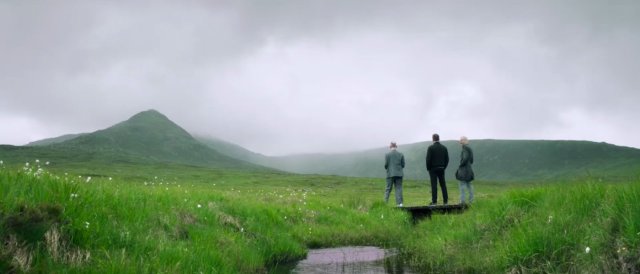
Conceived as a picture that retains the spirit as well as the DNA of 1979’s Alien: Prometheus chronicles a scientific expedition to the far-reaching moon of LV-223 for the purpose of finding the Engineers. They are beings who are considered the creators of humankind. In the writers’ audio commentary, co-writer Damon Lindelof states “For me, Prometheus was all about making an Alien-Blade Runner mash-up, using the best themes from both movies and dropping them all into the same world.”

With this in mind, one could read the film as a reversal of the hefty metaphysical strife of Blade Runner. Crucially, Lindelof articulates that Prometheus is about a human who goes to ask his creator for more life whereas, in Blade Runner, it was the replicant Roy Batty who desired the same goal from his maker (Eldon Tyrell).

While this is a conceptually sound idea, the execution is infuriating in its sheer amateurishness. At its worst, Prometheus indulges in fetishism for vagueness, a trait that emphatically espouses clarity as a troublesome menace to good writing, and it has plagued many films from The Force Awakens to Star Trek Into Darkness. Culturally, it is truly poisoning the movies; turning them from engaging pieces of art to novelty items that are supposedly orgasmic in their surprises. Instead, they are about as clever as a ten-year-old shouting boo.

Peter Weyland (Guy Pierce) is the man in Prometheus who seeks his creator’s wisdom to eternal life. However, his role in the film is regulated to a cameo as Lindelof considers his constant presence as detrimental to his vision of inane mysteries. There were scenes that had a young Weyland talking to his android creation David. (Michael Fassbender) However, they were exercised in favour of pointless intrigue. Worse yet, Weyland’s appeal for eternal life when meeting the lone engineer on the moon is on the cutting room floor. There is depth in a character expressing his desire, however, Lindelof didn’t get the memo. Blade Runner’s power came from Roy Batty’s violent and rhapsodic presence as well as a desire that blurred the line between human and android. Moreover, Batty truly learnt the value of mortality in his mournfully reflective final moments. By comparison, Weyland barely registers as a human being.

There are many instances of Prometheus decimating its depth in favour of a smooth two-hour running time. One of the picture’s sub-themes is how children view their elders. Elizabeth Shaw (Noomi Rapace) still clings to her father’s impactful words about choosing to believe as the lynchpin for her faith. David perceives Weyland as an obstacle to what he understands as freedom, slyly surmised when he says, “Doesn’t everyone want their parents dead.”

However, Meredith Vickers’ (Charlize Theron) relationship with her father, which is chiefly illustrated in a scene with Weyland in the third act feels superficial and sketchily developed. Theron’s best moment of acting is when she expresses her admiration for Weyland in the past along with her current source of disdain for the old man. The manner of her delivery and body language (in the moment she is kneeling down at her father’s side and placing her face on his hand) puts one in mind of the process of growing up; as it showcases a child’s shifting relationship with their parents; going from sweet and idealistic admiration to bitter resentment over major differences. Sadly, the moment is not present in the finished film, and consequently, the scene in its current incarnation feels like a race towards an eyebrow-raising revelation.

One does get the distinct impression that the third act of Prometheus collapses under the weight of its hide and seek antics. The most emblematic aspect of this quality comes from the portrait of the Engineers whose presence were scaled back as the production of the film wore on. In particular, a scene when an Engineer converses with David was cut because Lindloff found “it robbed him of any coolness or mystery.” The opening sequence originally had a number of the humanoid aliens and a striking moment in the initial filmed final confrontation had the lone Engineer observe a flickering colour projection of a young girl playing the violin. Contrary to the co-writers’ sentiment, the incomplete portrayal serves only to make the apparent divine beings seem like generic slasher movie fare as opposed to the fascinating creatures who were ascetically inspired by the works of Michelangelo.

In other regards, Prometheus is incredibly postmodern in its approach. The underhanded machinations of the corporate sleazes from the franchise are given overt life by Vickers. The basketball scene from Alien Resurrection is amusingly homaged here; proving that whether one is a Xenomorph/human hybrid or android that your physical prowess is proven by scoring a stupefyingly hard basket.

More noteworthy is the film retaining a quality that has permeated the series and imbuing it with striking immediacy. The Alien films have always had a subtle judgement of humanity.

In the first, our survival instincts are found wanting compared with the seemingly perfect Xenomorph, whose biology and design makes it the perfect embodiment of Darwin’s survival of the fittest. In Aliens, Ripley’s (Sigourney Weaver) maternal instincts are tragically found wanting when she discovers her daughter died while she was in cryosleep for 57 years. They are eventually tested as she must face the nightmarish Alien Queen, for the life of a little girl she has bonded with through the course of the movie.

In Alien 3, the judgement is religious in nature as the lone Xenomorph is viewed as the physical manifestation of God’s vengeance for all the prisoners on Fury 161. They believe that the creature is punishing them for their sins and their salvation might come from destroying it.

In Prometheus, David proves to be a constant source of judgement as his various responses towards the crew carry an underlying sense of delight at the fact that he is not a human being. A particularly amusing moment is when he says “Hopefully not too close” when responding to Charlie Holloway (Logan Marshall-Green) about simulated humanity.

In the context of the many androids that have pervaded cinema; David is less Pinocchio than a curious entity with negative intentions. Director Ridley Scott masterfully conveys this in David’s first appearance. The android walks into a darkened room; the pitch blackness off the cryo room represents his insidious impulses and the brightly illuminated background evoke his flourishing inquisitive nature. His morality is surmised in the scene when he is watching Lawrence of Arabia, and the titular character says “The trick William Potter is not minding that it hurts.” David repeats the line like a mantra. Fassbender’s performance is captivating because it submerges any aspect of the android in favour of a seemingly aloof disposition that hides a remarkably dangerous edge.

Even with its woefully executed premise, Prometheus strangely captures the spirit of Alien in a unique manner. In my revisit of the original picture, I was struck by how it felt like a terrifying evoking of Lovecraftian cosmic horror combined with a potently nasty sexual subtext. The primary strength derives from the sheer insignificance and helplessness of the human characters in the face of a motiveless creature of instinct. One notable scene melds both facets to disturbing effect: Lambert (Veronica Cartwright) is reduced to paralytic fear when she gets a glimpse of the creature. Her unseen and audible death sounds like rape is occurring rather than swift dispatching.

Prometheus’ sumptuous visuals and direction make humanity seem like an inconsequential species; the potent fear comes from the sheer unknown of meeting our makers. To this end, the picture achieves a certain amount of awe and terrifying wonder in its speculative musings. Humanity has never looked less worthy of consideration in any other Alien picture. The title ship looks like an insect while its travel through the galaxy as overarching clouds and looming landscapes diminishes its scientific and technological endeavour.

Scott’s cinematic artistry particularly shines in the opening sequence due to a series of aerial shots capturing earthly landscapes. The series of shots feel like a reinvention of the famed “phantom-ride” shot (in early cinema, director G.A. Smith, would put a camera on the front of fasting moving trains, which would provide a ghostly effect) and gives the audience the distinctive feeling that Earth is being viewed as a single-celled organism on a petri dish.

Despite this, the psychosexual subtext of Prometheus is lacking. Elizabeth Shaw cannot give birth and a plot point results in her removing an alien foetus from her belly. The sequence is undeniably great in its feverish intensity because of its uses of close-ups and graphic detail. Nevertheless, the permeating idea seems to be uninteresting and has the same amount import as someone shrugging their shoulders and saying in a detached manner, life is tough. Whereas, the subtext in Alien is riffing on instances of grotesque interspecies violations and genuine horror of gender-swapping birth.

The lingering existential question of Prometheus is what does the seemingly divine dimension add to the franchise? The answer may come in Alien Covenant or the various other planned instalments, and that potential vagueness might be most maddening of all.
Posted in 2012 Films, Reviews | Tagged , , , , , , , , , , , , | Leave a comment

Brief Musings on Movies (March 12th-March 19th)

Wild At Heart (1990)

wild-at-heart

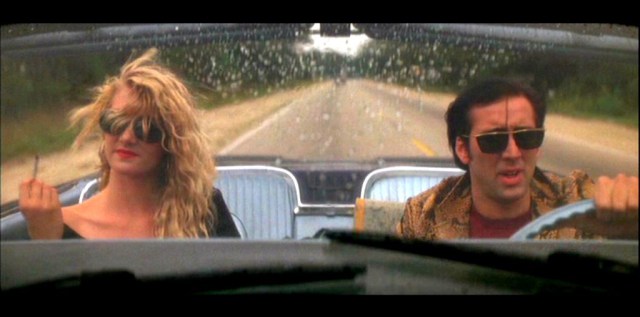
I am fundamentally undecided about David Lynch’s Wild At Heart. A part of me wants to endorse the picture solely for the fiery, passionate and erotically charged love story between Sailor (Nicolas Cage) and Lula. (Laura Dern) However, the Wizard of Oz references, retrograde spirit and surrealism are elements that a second viewing might bring much more clarity.

Breathless (1960)

entete

Jean-Luc Godard’s debut picture Breathless (À bout de souffle) is less a cinematic experience than a dream of free-flowing, manic energy, which is both alive and vibrant in every frame. It is one of those rare films that transcends cultural context and contemporary cynicism. Instead, the film effortlessly makes one feel as though a veil as been lifted and an entire world has been opened up; fundamentally showing cinema in a sharp, subversive and sublime new light.


Snake Eyes (1998)

Snake-Eyes-2

One of those few films where one can wholly embrace the performances, camerawork and pure cinematic artistry even in the face of an increasingly preposterous narrative that becomes so absurd in the third act that one swears they are watching a surreal comedic sketch on a beginner’s guide to atrocious storytelling.


The Black Dahila (2006)

movie-the-black-dahlia-thumb4

While the rich colour scheme comprised of ashy browns, striking uses of yellow and a lavish desaturated wash make The Black Dahlia a visual marvel; it is inherently a turgid and soulless experience with none of the portent, darkness or emotional resonance that the film ought to have. Not even Brain DePalma’s virtuoso camerawork can redeem this incoherent, overstuffed and ultimately floundering spectacle.

The Curse of Frankenstein (1957)

4039-4218

Hammer Horror’s The Curse of Frankenstein is a slasher film of manners. Instead of an iconic masked individual who has a weapon and methodology of killing, the picture’s central antagonist who is responsible for the piling bodies is Baron Victor von Frankenstein. (Peter Cushing) Less a wolf in sheep’s clothing than a wolf with the veneer of respectability and comfort; Cushing imbues the character with a cold and harsh resolve that result in occasional moments of subtle paternal outpouring and comic moments of wit such as when he cocks his left eyebrow after brazenly dispatching of a distinguished Professor.

More interestingly is some of the cinematic choices and narrative decisions that enhance this vision. The end of one scene, when Frankenstein expresses a constant desire to acquire a brain of a genius is slyly cut with the next sequence, where he is laughing and expressing the admiration of his host’s intellect.

Quite crucially, the creature (Christopher Lee) Frankenstein creates is destroyed at the end. Consequently, in the film’s horrific final moments (Courtesy of a shot of a guillotine from a window sill vividly showing the Baron’s doomed fate.) Frankenstein is seen as the central monster of the picture; one who can be clearly seen and is not in the least part supernatural, in essence, a slasher movie villain with a human face.

Posted in Uncategorized | Leave a comment

Review: The Death of Superman Lives-What Happened? (2015)

the-death-of-superman-lives-what-happened

Some of the greatest stories are the ones lost to time. Consequently, the mind indulges in endless speculation into the reasoning for the failed endeavour and an acute sense of wistfulness at the absence of the narrative. One such tale in contemporary cinema is Superman Lives, a tragically forsaken effort from Tim Burton that is fascinating to consider in light of the current deluge of superhero films.

Jon Schnepp’s 2015 documentary, The Death of Superman Lives: What Happened? is a wondrous tapestry of boundless enthusiasm and imagination for the auteurist studio picture. As interpreted by Burton, Superman is the ultimate outsider who grapples with feelings of isolation and self-loathing of his plight and alien heritage. As one commentator remarks, he is a man who deep down wanted to die.

The only sense of narrative that is revealed about the film is that it was going to be based on the comic book story- “The Death of Superman.” With this in mind, the rest of the film is an informative discussion of various concepts that were being bandied about in pre-production. These are punctuated with the stunningly detailed concept art and the other primary thread of the evolution of Superman’s costume throughout the film. (Primarily shown in the behind the scenes footage of the costume tests with Nicolas Cage and Tim Burton between 1996-1998)

An assortment of these ideas include the central villain Brainiac being conceptualised as a technologically advanced Grim Reaper, his ship having the visage of a giant skull and the HR Gigar inspired Krypton that synthesises metallic and organic life. However, the most striking piece of concept art is James Carson’s cyber infused black and silver reborn costume. Not only is it striking in of itself but it is also is an updating of Burton original sketch of Superman, thus illustrating the director’s artistic sensibility being filtered in a unique manner.

The real heart of the documentary is the producer Jon Peters who looms over the making of the film like a large shadow. On the one hand; he is a buffoonish wild man whose demands varied from a giant spider to Superman not flying (apparently) interspersed between many headlocks and full-lipped kissing of the director. On the other hand, he was a tireless and passionate advocate of Burton’s vision for the picture and insightful in his recollection of the picture. A particularly candid moment is when he expresses his doubt over the box-office prospects of the film, however in the same breath expresses that the movie was worth rolling the dice over.

Peters may have finally had his dream of seeing a giant spider fully realised in the odious Wild Wild West. However, Burton’s vision of the Man of Steel is sorely missed in today’s studio driven rush of cinematic universes, and throughout its running time, The Death of Superman Live earnestly reminds the viewer why.

Posted in Uncategorized | Leave a comment

Recollections of a Screening: Beginning of an Unknown Century (1967)

Introduction

Shepitko-Resized-1080x600

Beginning of an Unknown Century is the fourth film in Kino Klassika’s “A World To Win: A Century of Revolution on Screen.” Inspired by Karl Marx and Fredrich Engles’ famous declaration in The Communist Manifesto, the season aims to educate and inform the public on the wave of Soviet Film that had swept Russia for a hundred years. The season runs from 17th February to April 15th at the prestigious Regent Street Cinema.

Unknown Century was initially intended as a collection of four short films whose sole purpose was to commemorate the 50th anniversary of the 1917 Revolutions that toppled the Tsarist aristocracy and culminated in the ensuing Soviet Union regime governing Russia. However, the authorities during the Leonid Brezhnev era of the Soviet rule upon examining the first two parts decided to ban the film because of its bleakly provocative presentation of the revolutions.

It was not until 1987 when the film was shown for the first time in the country, a saddening fact that was made all the more tragic by the death of director Larisa Shepitko. (Shepitko directed the second part of the film) The film screened on International Women’s Day, resulting in a timely and sombre reflection on the young director. Francine Stock in her introduction of the film-maker stated that Shepitko’s other three films varied from a “Timeless and tender portrait of middle-aged women” (Wings) to The Ascent, which possesses an “immediacy [in its] modernity.”

The context of the film’s release history and its subsequent rediscovery feels like a small revolution in demonstrating the transcendent power of cinema and how it can overcome censorship and garner empathy from a contemporary audience.

Angel

MV5BYjQ1MmIyN2UtZjZmZi00ZThiLTkwMWItZTViZTJiNGZlMjVmXkEyXkFqcGdeQXVyNDM4NzM3NjA@._V1_

Adapted from Andrei Smirnov’s novella, Angel depicts a disparate group of people and their tension-filled train ride through post-revolution Russia. The film’s opening in which the audience is shown an assortment of claustrophobic close-ups of improvised people on the slow moving locomotive encapsulate the film’s humanism. This central virtue admirably balances the horror of the situation and the seemingly jubilant moments of relief.

One scene has a buffoonish man revelling in the taste of milk as a lingering shot shows the man pouring the liquid all over himself in a state of pure ecstasy. Moments such as this are accentuated with the picture’s black and white photography. In particular, the white permeates the visual tone and makes one think they are watching the film through a perfectly preserved snow globe, which lends the picture with an innocent dreamlike atmosphere.

At the same time, the horror of the Revolution looms over the film like a haunting spectre. One subtlety harrowing scene has a little girl walking innocently through the woods with tense musical stings and confined close-ups accompanying her innocent steps. The moment suggests the inescapable nature of the Revolution and how it’s irrevocably tied to the youngest members of society. This inevitable quality also has a significant relation to the title character who is the presumably fabled Angel of Mercy, appearing in all white and having perpetual scowl of judgement.

In the end, he captures the large group of characters and violently punishes one of them for their past crimes while serving in the army. The dramatic scene illustrates the film’s conception of the Revolution as a character; it will cause even the most unassuming participant to be caught up in patriotic sentiment and punish those who abandon its painstakingly subscribed ideals.

Homeland of Electricity

Beginning of an Unknown Century

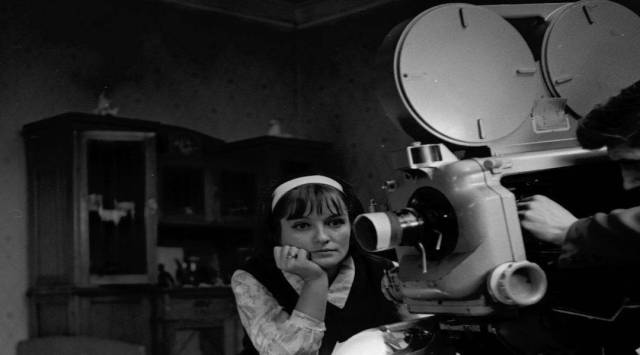
Larisa Shepitko’s segment of Beginning of an Unknown Century is a haunting spiritual experience that combines the visual allure of a Western with the Theological import of an Ingmar Bergman film.

An especially striking sequence depicts a young man (The man in question is a technician who is tasked with providing electricity for a poor farming community) conversing with an ancient looking woman who expounds upon the nature of her faith. She expresses the futility of prayers in the face of her entire family passing away- concluding that it has become a meaningless habit. While the strikingly dramatic speech is being delivered, Shepitko’s employs a medium paced 360-degree panning shot of the environment.

The juxtaposition of nature and humanity is conveyed in a captivating manner as the old woman’s words feel like a flame in the wind, flickering into ceaseless obscurity much like her prayers to the Almighty. In cinematic terms, the Supreme Being seems like he has a substantial presence in the film.

One small moment in the tail end of the picture has a static wide-angle shot of many farmers working in the fields. The impressive shot is contrasted with many lingering moments of the sky. The small scene gives the audience a sense of God directly watching his creation in a manner akin to a human being gazing at an ant farm.

While the Revolution has cursory mentions in the dialogue, the film feels like it embodies the spirit of 1917. The picture presents a steadfast portrait of a community. In fact, the last moments of the film encapsulate this idea in a particularly poignant manner. In what seems like an act of divine intervention, rain pours over the villagers’ famine infested lands. They all stand in awestruck solidarity awaiting a promising future much like the people of Russia in the aftermath of the revolution.

Posted in Uncategorized | Leave a comment

Review: Blue Velvet (1986)

maxresdefault

Watching David Lynch’s much-venerated film, Blue Velvet is akin to seeing an artist creating a solid outline for a painting and then proceeding to ruin it with sloppy brush strokes that are delivered in an infuriatingly lackadaisical manner. The narrative weaves the tale of a young college student called Jeffery Beaumont, (Kyle MacLachlan) who gets a glimpse of the seedy and macabre underworld that exists within the underbelly of a pristinely picturesque American suburban town.

The picture deftly illustrates the inherently voyeuristic nature of the cinema in a scene when Beaumont is watching singer Dorothy Vallens (played with sobering fragileness by Isabella Rossellini) undressing through the shutters of a closet in her apartment. A static wide angled shot depicts the apparent unravelling of the seductive singer as she takes off her wig and goes into the bathroom to have a long agonised look in the mirror. Lynch’s unflinching directorial choice makes the audience equally as complicit in the act of watching as Beaumont.

And the film’s central metaphor of darkness residing even within the most peaceful and seemingly innocuous small-town is wonderfully encapsulated in the opening sequence. Lynch’s lush imagery primarily encapsulated in the shot of blooming red flowers set against the backdrop of a white picket fence and clear blue sky is juxtaposed with interesting elements. These include a woman watching a black and white scene on television showing a shadowy figure sneaking around a house with a gun in his hand that pervades the frame.

Blue Velvet is at its most cinematic fulfilling in moments such as this. However, the film is woefully marred by a conceptual confusion and overt melodrama- resulting in awkward writing and Lynch’s least satisfying portrait of surrealism in his entire oeuvre.

If one is to take Lynch’s central metaphor at face value, then it can be inferred as wanting. Crucially, the underworld Beaumont discovers existing within his hometown feels about as threatening as a pack of hyenas snarling at a parade of elephants.

The problem is compounded by the picture’s villain, Frank Booth. (Dennis Hooper) Sure, his introductory scene is a disturbing portrayal of torture, made, even more, frightening by Rossini’s emotionally anguished performance and Angelo Badalamenti’s score that is the musical equivalent of a sting from a scorpion’s tail.

However, the scene introduces various elements that remarkably diminish his character. Most notably, the extended sequence reveals that Booth is impotent as he gains sexual satisfaction from non-penetrative straddling Dorothy in a low lit environment while repeatedly asking the singer not to look at him during the act. There is a sense with this last part in particular that if Frank cannot be seen, then he cannot be judged for his lack of sexual prowess.

With his previous actions in the sequence, particularly the small moment when he looks at a naked Valance while repeatedly uttering Mummy, one could read the situation as a possible recreation of a memory of childhood abuse at the hand of his maternal figure.

Elsewhere, Booth comes across as a pathetic man whose various attempts at being tough becomes laughable. His repeated uses of the expletive “Fuck!” , asking Beaumont to feel his muscles after beating him up and his general shouty manner all combine to create an oafish and outdated portrait of masculinity. The film is under the delusion that it is still the 1950s and greasers remain the toughest and scariest people on the block.

The choice feels whiplash-inducing particularly when our young characters start moralising about the nature of evil in the world. Booth is held up as a terrifying figure of malevolence and the so-called satanic figure of Lumberton, however, the conception of the character combined with Hooper’s performance feels like an incongruous misstep in Lynch’s vision for the picture.

On reflection, the flaw also chips away further at a much more problematic aspect of the film. In essence, Lynch has conceived of a black and white tale that has aspects of the grey at the edges of its foundations. While I applaud the renowned director for crafting a counter-intuitive picture that stands out from the rest of filmography, on closer examination, some of the thematic similarities have been expressed with far more wit, sophistication and cinematic potency in his other films.

Consider the sequence when Jeffrey Beaumont and Sandy Williams (Laura Dern) are sitting in a car reflecting on Frank Booth and the strangeness of the world. They park next to a Church where an organ serves as the primary source of music in the scene. In many ways, it is the centrepiece of the film as it expresses that love will always overcome the seemingly never-ending force of evil in the world. The theme is expressed in the form of a dream that Sandy has where thousands of Robins are unleashed upon a world of unending darkness.

The pervading humanity should make the scene engage the senses and mind. However, contrived dialogue, awkward line deliveries and the choice of the Church organ make the scene feel like an overwrought mess.

Compare the sequence with the multiple numbers of scenes in The Elephant Man when John Merrick (John Hurt) is expressing his gentle and joyous observation of humanity. Or even the awkward moments of humanity in Eraserhead, with particular reference to Henry Spencer having dinner with his girlfriend’s parents and the moments that involve Spencer and his mutant spawn. One can see from these examples that Lynch’s humanism is alive, authentic and wonderfully moving.

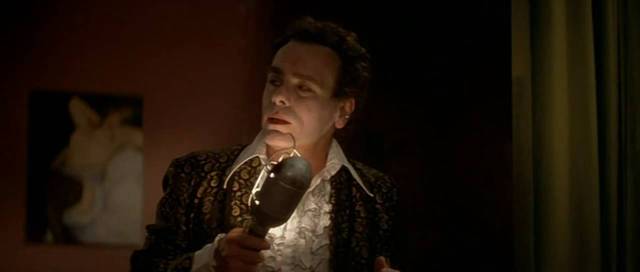
Finally, the film’s most surreal sequence that involves a lip-synch rendition of Roy Orbison’s In Dreams draws comparisons with the far superior scene involving Rebekah Del Rio’s Spanish version of Roy Orbison’s Crying from Mulholland Drive. In Blue Velvet, the scene is a quirky flourish that attempts to make Booth’s world much more interesting. In Mulholland Drive, the scene is a cinematic manifesto where Lynch illustrates the illusory nature of film-making and how the audience can still be moved by the evidently presented facade.

In essence, Blue Velvet proves that Lynch’s surrealism falters when his portrait of reality is seemingly ordinary and mundane.

Posted in Uncategorized | Leave a comment

Review: Snoopy and Charlie Brown- The Peanuts Movie (2015)

pnts-062_600

Snoopy and Charlie Brown: The Peanuts Movie is a marvellous reminder of the enduring appeal of the Charles M. Schulz’s comic strip. It’s commendable how well the film elegantly showcases the Peanuts universe without ever feeling the need to compromise its unique spirit. In fact, some of the film’s best sequences are the ones in which the original comic strip is evoked amidst the three-dimensional animated sequences.

One such example comes at the beginning of the picture when Charlie Brown is reflecting on the fact that his new neighbour (the iconic Little Red Headed Girl) will not know who he is at all. He ultimately views this as a blessing because she will not have any knowledge of his past embarrassing moments. While he is articulating this sentiment, the audience is treated to some of these awkward situations via animated comic strip panels that appear in a thought balloon that is hovering above Charlie Brown’s head.

Additionally, the humour of the Peanuts is substantially articulated and preserved throughout the film. Whether it is Charlie Brown hyperbolically expressing pessimism about his prospects over the little Red Headed Girl being his book report partner or the scenes that are dedicated to Lucy’s amusing attempt at being a psychiatrist. The writers firmly understand that the kids in Peanuts are absurdist and poignant illustrations of adulthood. Moreover, the screenplay fundamentally makes Charlie Brown a character who does not revel in his misfortune. There is potent positively to this version of the loveable blockhead that makes him endearing.

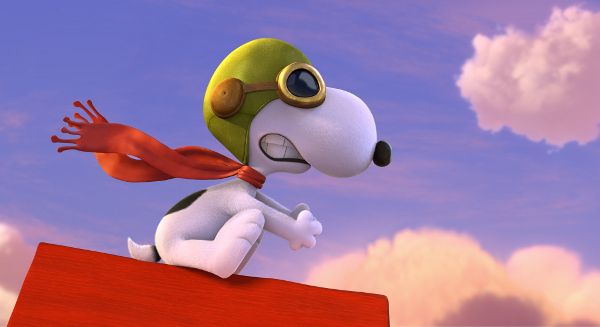
However, despite these seemingly good points, there is a central problem at the heart of the picture, which is surmised in the title. The character of Snoopy is not employed effectively in the film. Through the course of the film, there are sections dedicated to Snoopy writing chapters about an idealised version of himself called “The Flying Ace” and his subsequent attempts to rescue a girl that he had a chance encounter with, who is named Fifi.

The first sequence comes after Charlie Brown’s recent attempt to impress the girl of his dreams, which expresses an interesting parallel of idealisation and failure in both characters’ romances. However, as the picture goes on these sequences feel much more scattered and less connected with the narrative. One could argue that Snoopy’s antics in previous iterations has always been random vignettes. However, in this film, it felt particularly glaring and problematic because the punchline of the chapters leads to a repeated joke that has occurred many times.

Nevertheless, the sequences in of themselves do represent some of the best cinematic images of the entire film. One particular chapter abandons the vibrant and warm embracing colour scheme of the everyday sequences and instead dazzles with a blue twilight bathed skyscape where Snoopy takes on the fearsome Red Baron plane in the film’s most exciting sequence.

Posted in Uncategorized | Leave a comment

Concise Reviews: The Planet of the Apes Series (1968-1973)

Planet of the Apes 

quzydzt

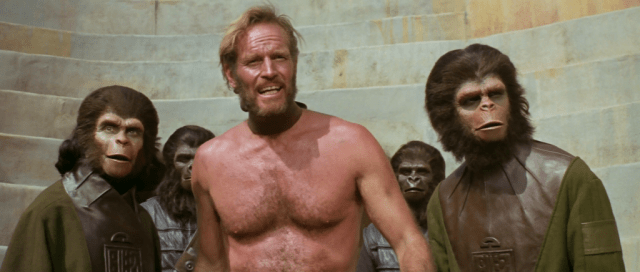
The 1968 classic is an earnest science fiction film that is as concerned with its debates as much as the unravelling of its culture and society. The film is held together by a weighty central performance from Charlton Heston. His silent work is as compelling as his arrogant grumblings on the ills of man. These elements combined with some of the strangest fusions of image and sound, and you have some compelling imagery that startles the senses and sits alongside the ideas. It is a film that emphatically transcends the genre in a year where it unquestionably took a paradigm shift.

Beneath the Planet of the Apes 

beneath-the-planet-of-the-apes-mutants

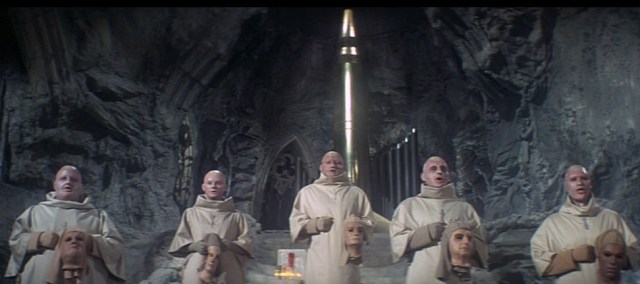
The 1970 follow-up is interesting in the layers that it adds to the original picture. This is evident with the addition of a third race. They are telepathic humans who reside in the Forbidden Zone and ultimately believe that they are peaceful, despite what they do with the power of suggestion. Their insertion creates an interesting conflict for the Apes, and the majesty of their kin is illustrated with great, elaborate production design. Furthermore, the film retains some of the exploration, horror and social commentary of the original 68 film. However, all these ideas ultimately lack cohesion in a movie that is frustrating with its maddening mix of inadequate film-making, rushed storytelling and engaging imagery and scope.

Escape from the Planet of the Apes

escape-from-the-planet-of-the-apes-5

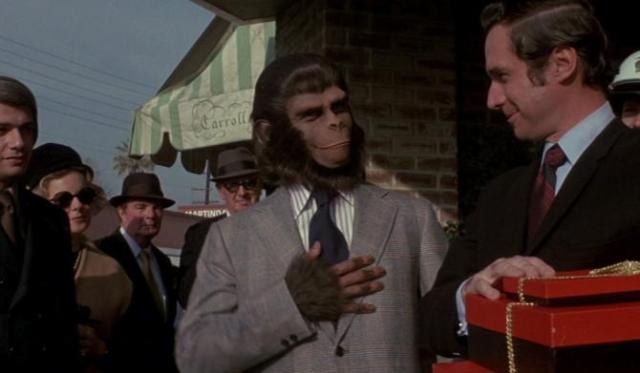
Conceptually, Escape feels like an interesting precursor to Star Trek IV: The Voyage Home as well as a comedic take on alien invader pictures of the 1950s. But the film is much more than that, showcasing great science fiction ideas in its screenplay. These vary from the implications of the Metaphysics of time, animal rights to ethical questions about the preservation of the human race. Combined with great performances from McDowell and Hunter, Jerry Goldsmith’s amusing variation on his original score and sure-handed direction, this third instalment establishes Apes as a firm film series.

Conquest of the Planet of the Apes

conquest-of-the-planet-of-the-apes00074-660x280

With a passion in its heart and revolution on its mind, Conquest rips the science fiction shackles that had previously held it. In its wake, we are left with a picture that is steadfast in its vision of cruelty and suppression. While the choice to shoot the film at the back lot of Fox seems cheap in conception. It provides the movie with a great claustrophobic feeling; that is paid off with the dizzying close-ups of Ceaser in the gripping finale. Coupled with gritty greys and blacks in the cinematography and excellent use of shadow and you have an Apes film that has entered the 70s, not only topically, but also in its film-making.

Battle for the Planet of the Apes

conquest-of-the-planet-of-the-apes00175-660x280

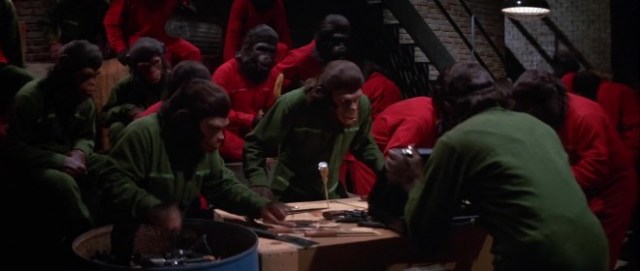
The Planet of the Apes franchise comes to a grinding halt with the last chapter that ends with a whimper. This is due in part to a lousy screenplay that has unforgivable contrivances, terrible dialogue and an unclear narrative thread. The direction feels uninspired, with bad set design, makeup and effects. Most disappointingly, the film lacks any intriguing ideas that permeated the prior pictures, which resonated even when they were occasionally going off the rails. The only saving graces prove to be Roddy McDowall as Ceaser and some of the restored footage. The most notable of which is the penultimate scene where we see the origin of the nuclear worshipping cult that was in “Beneath The Planet of the Apes.”


Posted in Rare Posts, Rare Reviews | Tagged , , , , , , , | Leave a comment

Concise Review: La Belle et la Bête (1946)

MP_PH_16_TE_XXX_XXX_BD

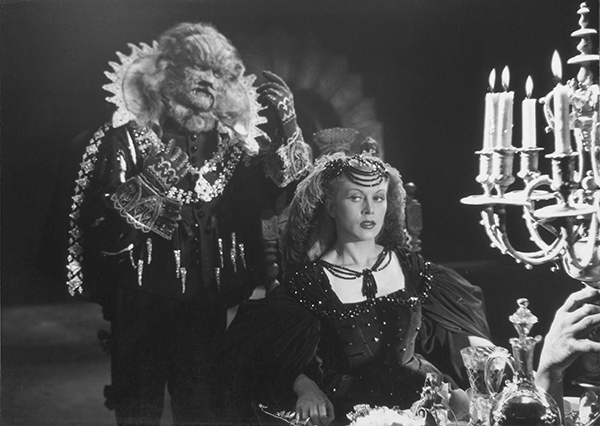
Jean Cocteau’s La Belle et la Bête is a dance engulfed in shadow. The more faithful 1946 film injects the proverbially touted “Tale as old as time” with the riveting tension of an Argentine Tango. While the titular character Beauty spends time in an enchanted castle, she is approached by the Beast at the same time every evening. Their meetings become passionate and suspense filled dances in which one can be either ravished or mauled.

Part of this anticipation can be attributed to Jean Marais’ compelling performance as the Beast. Marais portrays the creature with a prideful nobility and heartbreaking vulnerability. The haughty aspect is expressed whenever the Beast is speaking as well as the small gestures provided. Some notable actions include the occasional subtle elevation of his head or whenever he is playing with some of the individual pieces of his jewel-encrusted necklace. Whereas the sheer exposed nature of the character is manifested in Marais’ eyes that create a deep-seated sense of wounded shame as the conflict of his animalistic and human side rages.

Despite the film cinematically adhering to the era of German Expressionism, particularly with the use of shadows created by the naturally lit candles throughout the duration, visually, the picture feels more in line with the Universal Monster Movies of the 1930s and 1940s. For example, the seemingly depth filled frame (particularly evident in the scenes that take place on the castle grounds) recalls the atmospheric woods scenes in George Waggner’s 1941 The Wolf Man. And the imaginative castle interiors called to mind the extensive laboratory of the James Whales’ Frankenstein pictures.

Finally, in a somewhat elusive new wrinkle to the original story Beauty has a cantankerous suitor called Avenant (Jean Marais) who ends up attempting to steal treasure held within a stronghold of the Beast’s castle. He is eventually killed by an animated statue of the Roman goddess Diana. As this happens, the Beast is transformed back into the Prince. There is a suggestion that the Prince has assumed the form of Beauty’s rejected admirer. However, this merely feels like a disinterested shrug. The choice has no psychological or narrative interest and in the end seems like an odd addition.

Despite this aspect, much like the Rose represents a pledge in the film, the picture promises cinematic immortality for the much-cherished love story.

Posted in Uncategorized | Leave a comment

Concise Review: John Wick (2014)

4560_john_wick

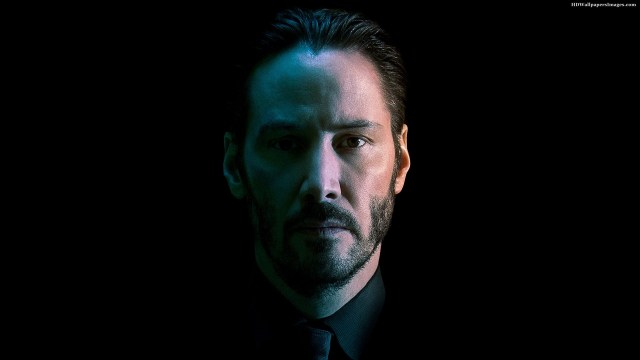
John Wick is an excellent action film. It takes conventions of the genre such as the revenge and coming out of retirement staples and injects them with emotional weight, gravitas and a commendable sense of history. The titular character (played with a startling earnestness by Keanu Reeves) wants to get revenge on Iosef Tarasov (Alfie Allen) because he stole his car and killed his dog. The latter represented a sense of hope as the canine was the last gift from wife before she passed away.

As Wick returns to his former occupation, the film provides the character with a legendary reputation. Many times throughout the picture, the central antagonist Viggo Tarasov (Michael Nyqvist) refers to his former colleague as the Baba Yaga (bogeyman). And nearly every person that Wick encounters has a passing familiarity with his occupation and status. In fact, most of the film’s humor derives from some of these meetings.

For example, in the instances when the hotel manager or cleaning crew converse with Wick, they talk to him with a poker-faced, dry digression. The result is the violent acts in the background having a blackly comic edge as they are juxtaposed with the detachment of the professionals that Wick meets. The choreography impresses with its sharpness and brutality. And one action sequence that takes place in a club feels inspired by the silhouette fight in Skyfall and the Tech Noir of James Cameron’s The Terminator.

Posted in Uncategorized | Leave a comment

Review: T2 Trainspotting (2017)

t2-trainspotting-trailer-5

T2 Trainspotting is a compellingly sobering follow-up to the much revered 1996 film. If its predecessor was the equivalent of a potently furious punk anthem than the 2017 release is akin to a melancholic and reflective Jazz Blues song with improvisational moments that feature an energetic, youthful zeal. The grim spectre of the past permeates the picture as moments from the original are mesmerizingly recalled in a visually dynamic manner. For example, early in the film when Mark Renton (Ewan McGregor) is conversing with his father and asking about his mother; there is a subtle silhouette of his long dead maternal figure in the empty spot at the kitchen table- where she would have been sitting.

The most vivid instances of the bygone days being visually conveyed come in the third act. There is a scene when Daniel “Spud” Murphy (Ewen Bremner) recalls the opening scene from Trainspotting as he looks upon an empty street. The small moment illustrates the significant meaning that people attach to seemingly familiar and mundane places.

Moreover, in the third act, Spud recalls an emotional memory involving Francis “Franco” Begbie (Robert Carlyle) that provides the title of both films with meaning and perspective. As the former is expounding upon the event, the memory is visually shown on the wall and is engulfed with a darkly blue tint that makes the moment feel like an immediate and surreal dream while simultaneously looking like a twisted Norman Rockwell painting.

And in the last scene, director Danny Boyle seamlessly blends past and present as the moment when young Renton is getting high in his room is juxtaposed with the present day character dancing to Iggy Pop’s Lust for Life. Soon after, the space between Renton and his bedroom seems to stretch to infinity. The effect is Boyle’s visceral surrealism taking on a new-found maturation.

The prevailing sombre sensibility of the film imbues its characters with a compelling weight. Instead of being exotic asides that punctuated Renton’s drug-laden odyssey in the original; the supporting players of T2 are interestingly drawn human beings who are weighed down by the decaying nature of time. Simon “Sick Boy” Williamson (Johnny Lee Miller) has become disenchanted and bitter since the last time he has seen his best friend. Begbie’s volatile disposition has increased because of his twenty-year incarceration. And in the most engaging side plot of the picture, Spud channels his rock-bottom existence by embracing the past through the written word.

While McGregor dominated the last film like a sweeping hurricane, Carlyle is the acting tidal wave of T2, delivering a wonderfully moving and nuanced performance. Carlyle retains Begbie’s violent live wire nature, but it is his more quiet and reflective moments that cast an impression. Two scenes particularly impress.

The first is a scene when the hardened criminal returns to his family home to say goodbye. At this moment, Carlyle imbues Begbie with an astute and calm demeanour with his vocals and facial expressions. There is also a sense of profound regret that comes from Carlyle shaky delivery mainly evident when talking to Frank Jnr. (Scot Greenan) The scene is a harrowing and touching confession as the character acknowledges his shortcomings and lack of opportunity which will be redeemed by his son; who he states will be a better man than could ever hope to be.

The second is a moment in the tail end of the picture. At the height of Begbie’s hostile and murderous state, Renton calmly reminds his close friend about the first time they met in school. He recalls how Begbie was an older protective figure who would always make him feel safe. Carlye’s facial expressions in the midst of Renton’s plea for mercy is tear-inducing as the audience get a glimpse of the boy who once watched over Renton. At the same time, Carlye contrasts this with his desire for revenge, which is conveyed in the actors’ intensely animalistic eyes. The moment is a microcosm for the sequel in general; it refuses to get rid of its ingrained attributes despite possessing a self-awareness of the effect of two decades on its black comic heart.

Posted in Uncategorized | Leave a comment